dailynewsnblog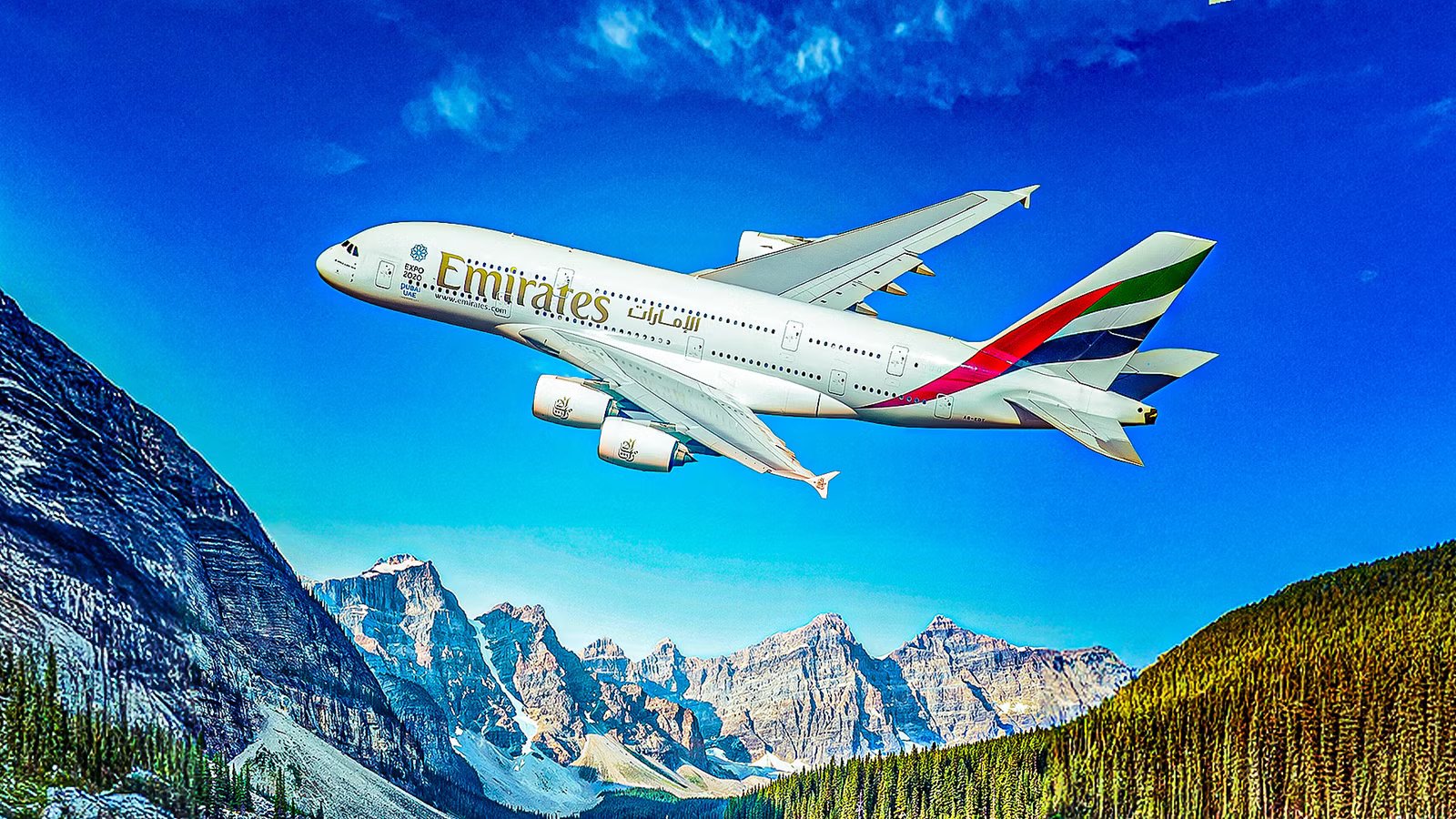
 Emirates is extending the suspension of Airbus A380 service on two key long-haul markets, with an updated schedule filing showing the superjumbo will be absent from Washington Dulles International Airport (IAD) for the entire winter season and from Düsseldorf International Airport (DUS) for all but two months of it.
Both routes were scheduled to reinstate the A380 from November 1, but the latest Cirium data shows the Dubai-based carrier will deploy its 354-seat Boeing 777-300ER for the vast majority of the 2026-27 winter season instead. Düsseldorf will see temporary A380 service in December and January with Emirates, while Washington Dulles won’t see a single superjumbo flight this winter.
Emirates’ Schedule Changes: Washington & Düsseldorf

After pulling the A380 at the end of August, the airline had planned to reinstate its daily superjumbo service to Washington Dulles on November 1, using its 489-seat, three-class jets, which feature 14 First Class, 76 Business Class and 399 Economy seats.
However, the latest schedule removes the A380 from IAD for the entire winter season, with the type not returning until March 28, 2027, at the earliest. This will see capacity drop from 489 to 354 seats per flight, a reduction of 135 seats per flight, or around 27.6% less capacity.
Emirates A380 Winter 26/27 Schedule | ||
|---|---|---|
Destination | Previous Plan | Updated Plan |
Washington Dulles |
|
|
Düsseldorf |
|
|
Düsseldorf will also see significantly reduced A380 service this winter season. Emirates had initially planned two A380 flights per day in November before switching to one daily A380 service from December 1. It will now drop the A380 entirely in November before operating one daily A380 service in December through January 31, 2027, then pulling the A380 thereafter.
No A380 Service At Washington Dulles This Winter

With Emirates removing the A380 since the beginning of this month, Washington Dulles currently has just one A380 operator in German airline  Lufthansa, which uses its 509-seat A380s on a daily frequency. However, Lufthansa’s Munich–Washington route is seasonal and concludes in late October, leaving IAD without any A380 flights for the entire winter.
Catch what other flight trackers miss
Emergency squawks, holds, NOTAMs — live signals, no signup.
Open tracker
Catch what other flight trackers miss
Emergency squawks, holds, NOTAMs — live signals, no signup.
Open tracker
Emirates began flying to Washington Dulles in September 2012, initially with the Boeing 777-200LR before its first A380 flights in 2016. Its annual passenger count to IAD peaked in 2018 and 2019 at over 290,000, along with strong load factors averaging around 79%. It then built back much of its capacity following the COVID pandemic, logging nearly 275,000 passengers in 2023, but traffic has steadily reduced since then.
In 2025, it managed just over 260,000 passengers but saw its average load factor decline dramatically, reportedly dropping from 76% to under 69%. As passenger numbers only dropped slightly compared with 2024, the decline in load factor shows that Emirates scheduled more seats than demand required. The switch to the smaller 777-300ER will help the airline better match capacity with demand on the route.
Over 50 Emirates A380 Destinations In December

Emirates’ schedule for December reveals the airline will be serving a total of 53 destinations worldwide with its A380 fleet. This includes four in the United States —  Houston George Bush Intercontinental Airport (IAH),
  Los Angeles International Airport (LAX),
  New York JFK Airport (JFK) and
  San Francisco International Airport (SFO) — with Washington Dulles set to be reinstated by the end of March 2027.
Europe is the largest market for Emirates’ A380s, with the carrier operating an average of 14 daily departures to European airports in December. The UK makes up the bulk of these services at up to 14 peak daily flights across five airports: six to London Heathrow Airport (LHR), three each to London Gatwick (LGW) and Manchester (MAN), and one each to Birmingham (BHX) and Glasgow (GLA).
The airline is the world’s largest A380 operator by a considerable distance. Its fleet currently has 116 A380 airframes, although fewer than 90 aircraft are listed as active by ch-aviation. The carrier had planned to get up to 110 aircraft into active service by the end of 2026, but has scaled back due to the ongoing impact of rising fuel prices.