dailynewsnblog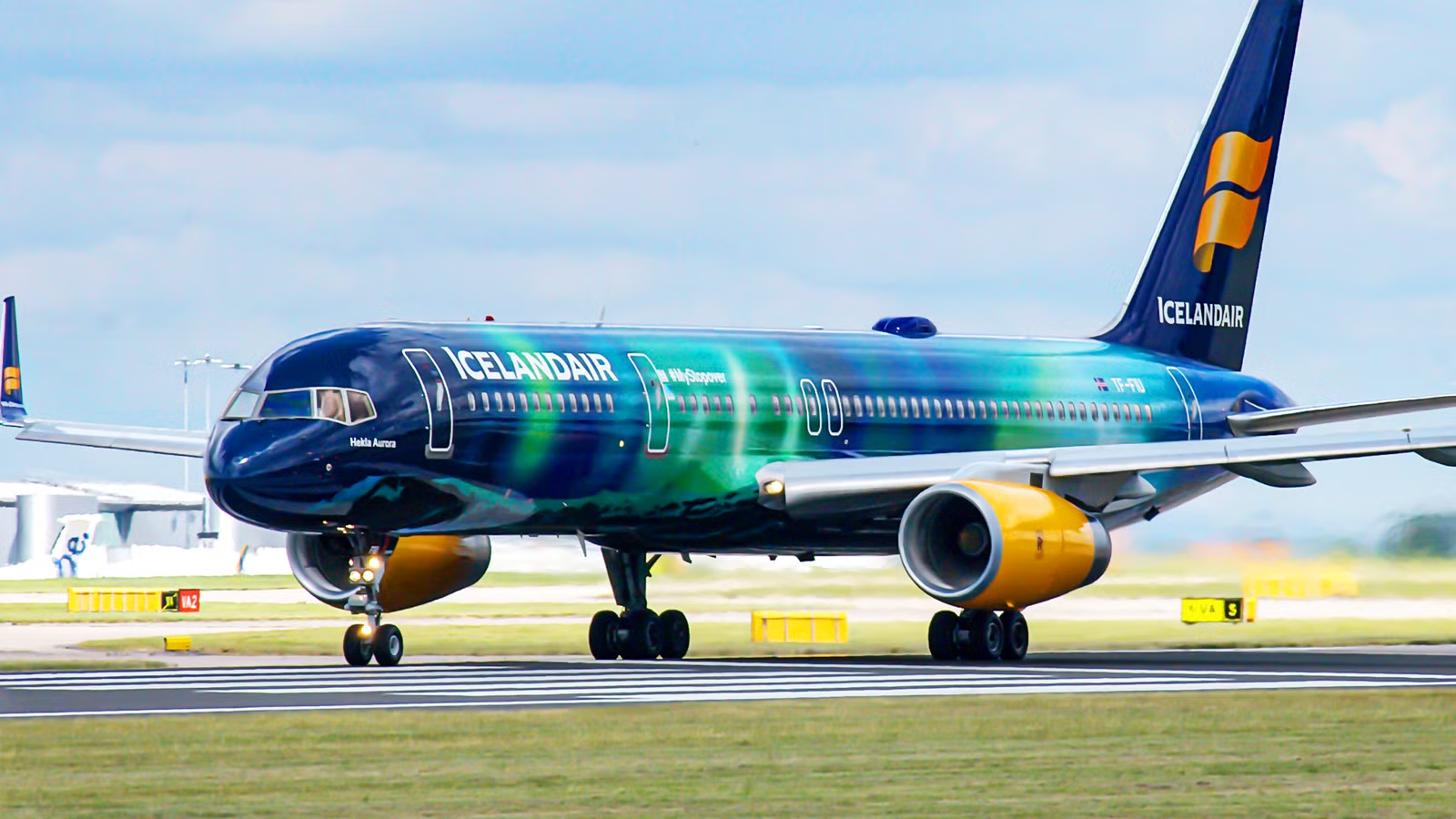
The single most effective flying billboard in transatlantic aviation history is no longer flying, nor is it sitting in an aviation museum. Instead, the iconic Icelandair Boeing 757-200, registered as TF-FIU, famous worldwide for its hand-airbrushed Northern Lights livery, has been stripped and reduced to scrap metal in a teardown facility. An airframe that single-handedly redefined global airline tourism marketing and carried millions of transatlantic passengers across 31 years of continuous service met its final, irreversible end.
The dismantling is a poignant moment for Icelandair, which built its entire international strategy around long-haul narrowbody operations. Airlines routinely retire aging commercial jets, but carrier executives’ decision to let scrap crews destroy their most recognizable flagship has surprised many aviation enthusiasts. Why did an aircraft that inspired global affection and anchored a nation’s tourism boom face complete destruction rather than preservation?
From Renton To Reykjavík

Before becoming a flying piece of art, TF-FIU was simply line number 603 rolling off the assembly track at Boeing’s Renton factory in July 1994, according to Planespotters.net. Delivered new to Spanish flag carrier  Iberia, the twinjet spent 10 years flying medium-haul European routes under registration EC-609. Iberia relied on the 757 to connect Madrid with high-density European hubs, using the exceptional thrust provided by two Rolls-Royce RB211 engines to operate efficiently out of warm, high-altitude Mediterranean airports.
Icelandair acquired the aircraft in 2004 as part of an aggressive expansion strategy to capitalize on Iceland’s unique geographical location. Operating out of Keflavík International Airport(KEF), the airline deployed TF-FIU across demanding North Atlantic routes between Europe and North America. Across its first decade with the Icelandic carrier, the twinjet accumulated tens of thousands of flight hours, proving the extreme structural durability of the Renton-built airframe in harsh subarctic weather.
Dozens of standard 757 aircraft quietly handled everyday passenger runs across the Atlantic, so the aircraft was not particularly special to begin with. In late 2014, Icelandair executives realized this reliable twinjet could serve a far greater commercial purpose. Rather than letting TF-FIU age quietly into operational retirement, airline leadership selected this specific airframe for an unprecedented engineering and artistic conversion that would forever alter the visual identity of North Atlantic aviation.
On To The World Stage

To bring the iconic livery to life, a team of international airbrush artists worked continuously to apply the custom livery. Teams hand-painted three delicate layers of shimmering green, purple, and blue paint across the fuselage, replicating the movement of the northern lights. Inside the passenger cabin, engineers installed a bespoke lighting system featuring LED modules programmed to project dancing auroras across the ceiling.
On February 4, 2015, the transformed twinjet made its maiden flight, marked by the green illumination of Reykjavík’s Hallgrímskirkja church to celebrate the launch. The flagship immediately became the centerpiece of the transatlantic stopover campaign, attracting global attention at airports across North America and Europe. Flying daily routes spanning 3,000 miles (4,828 kilometers), the jet transformed routine airport taxiways into instant social media spectacles.
Preserving a hand-painted masterpiece exposed to high-altitude ultraviolet radiation, subarctic ice, and abrasive jet fuel exhaust created an immense maintenance burden. Touch-up work was needed after every heavy maintenance check to keep the delicate gradient paint from peeling under extreme atmospheric friction. As the underlying airframe approached its third decade of operation, the financial calculus of maintaining both the artwork and the aging mechanics became unsustainable.
Unable To Keep Up With The Latest Technology

Airline preservation and charter conversions rarely succeed when an aging airframe reaches its heavy maintenance threshold. For a 30-year-old 757-200, entering a multi-week heavy structural check alongside major Rolls-Royce RB211 engine overhauls requires a multi-million-dollar capital investment. When total maintenance expenses exceed the residual market value of an aging twinjet, commercial carriers almost universally choose retirement over life extension.
Maintenance checks were not the sole factor influencing Icelandair’s decision. Fuel burn economics were what really sealed the fate of TF-FIU across transatlantic routes like Reykjavík to  Boston Logan International Airport(BOS) or
  London Heathrow Airport(LHR). Modern replacements such as the 737 MAX 8 and Airbus A321LR consume up to 30% less fuel per passenger seat while offering similar range profiles. As Icelandair began to phase out its other 757 aircraft, including the Vatnajökull glacier livery jet three weeks prior, keeping a single 757 active was highly inefficient for pilot type ratings and spare parts inventory.
Retiring TF-FIU on October 12, 2025, following flight 1100 out of Reykjavik Airport(RKV), marked a clean operational break for the carrier. However, once the decision to decommission an iconic aircraft is finalized, the airframe is no longer a celebrated marketing ambassador but a valuable source of harvested spare parts.
Providing Parts For Remaining 757s

Once TF-FIU completed its farewell flight, technicians immediately prepared the aircraft for component harvesting. Rather than being towed to a museum, the celebrated jet entered a teardown facility to be stripped. The iconic exterior livery remained intact during initial disassembly, creating a surreal contrast as workers dismantled the flying artwork piece by piece.
The highest-value components removed during early teardown phases were the two Rolls-Royce RB211-535E4 engines. The team carefully packaged high-demand engine modules, landing gear assemblies, and auxiliary power units for shipment to third-party aircraft parts distributors. These harvested components continue flying on, providing essential spare parts for the dwindling global fleet of active 757 freighters and passenger jets. Once technicians stripped all certified airworthy items, heavy hydraulic machinery moved in to slice the aluminum hull into scrap metal.
The complete destruction of TF-FIU is a prime example of commercial airline asset management, as sentimentality never overrides secondary-market scrap values. Harvesting components from a single retired jet can generate hundreds of thousands of dollars in usable spare parts and supports remaining fleet operations. As the last pieces of aluminum enter industrial recycling furnaces, Icelandair faces the immediate challenge of filling the long-range narrowbody capability gap left by the departure of its iconic twinjets.
In Comes Airbus

Replacing the 757-200 across North Atlantic routes is a major challenge, especially since the 757 has no like-for-like alternative. The twinjet occupied a unique sweet spot in commercial aviation, combining powerful Rolls-Royce engines with high-lift wings to operate out of short runways in harsh environmental conditions while carrying heavy payloads over 3,500 miles (5,632 kilometers). Of course, 737 MAX 8 and 9 aircraft efficiently handle shorter European and East Coast routes, but they lack the raw takeoff performance required for deep North American destinations.
With this in mind, Icelandair decided to move over to Airbus by ordering A321LR and A321XLR aircraft to complement its  Boeing fleet. The A321LR offers a range of 4,000 miles (6,437 kilometers), and the longer-range A321XLR will allow the carrier to expand routes deep into the Pacific Northwest and West Coast year-round, successfully matching the payload flexibility that once made TF-FIU indispensable.
Modern Airbus narrowbodies easily surpass the legacy twinjet in fuel efficiency and cabin quietness, yet no standardized factory delivery can quite replicate the unique marketing power of a hand-airbrushed flagship. Ultimately, the permanent loss of TF-FIU leaves Icelandair without an aircraft that can truly captivate passengers worldwide, even if its replacement is better operationally on paper.
An End Of The Special Livery Era

The destruction of TF-FIU is a clear move for Icelandair toward operational hyper-standardization in commercial aviation. In an era where carbon accounting, fleet commonality, and strict lease returns dictate airline strategy, custom hand-painted flagships are becoming endangered assets. While vinyl wraps and decal stickers offer cheaper, temporary alternatives for marketing campaigns, they lack the physical presence and artistic craftsmanship that transformed Hekla Aurora into a global cultural phenomenon for over ten years.
Whether next-generation fleets can generate similar emotional resonance will depend on how carriers style incoming aircraft like the A321XLR. With Icelandair preparing for deliveries through 2029, airline executives face a clear choice between uniform efficiency and bespoke brand storytelling. If carrier leadership opts against recreating custom livery flagships on new airframes, TF-FIU will remain the peak moment of specialized aviation marketing, proving that an individual aircraft can elevate an entire national tourism industry.
As aluminum scraps from TF-FIU are repurposed into industrial materials, its legacy lives on in digital archives, aviation photography logs, and passenger memories. Fleet spotters across the North Atlantic will watch closely as new Airbus aircraft enter service over the coming years, eager to see if Icelandair will once again dare to paint the northern lights across the Arctic sky or leave Hekla Aurora as an unmatched legend of the skies.