dailynewsnblog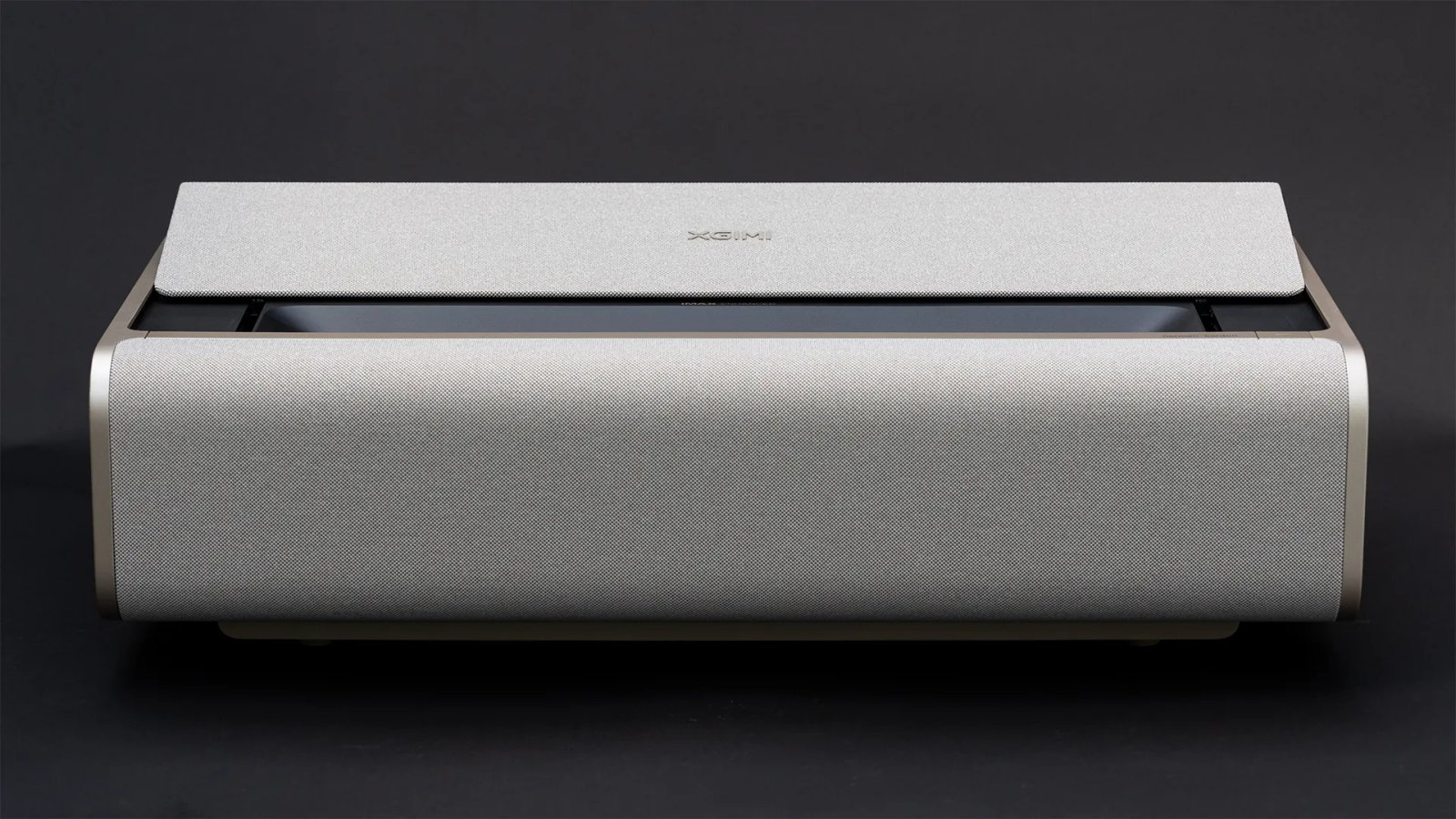
The Xgimi Aura 2 is an ultra-short-throw projector and the first of its type I’m reviewing at CNET. It’s a stylish model with a great sliding lens cover and decent sound for its size. Like all UST projectors, it’s expensive for the performance you get, but if you can’t fit a traditional projector in your room, the Aura 2 will work well without spending too much.
Spending more will get you a regular short-throw projector with a brighter picture and better color, but for the simplicity of one box to replace a TV, the Aura 2 is a good place to start.

Pros & Cons
-
Stylish design -
Motorized cover -
Decent bass for a projector
-
Still expensive, but all UST projectors are -
Heat issues restricted brightness in testing
Specs and such
As is typical with UST projectors, the Aura 2 has no optical zoom or lens shift. Instead, careful setup is required to get a rectangular image that fits your screen. Alternatively, you can use keystone correction and digital zoom to adjust to fit whatever space you have, but this means you’ll get lower resolution and overall brightness, as you’re not using the full DLP chip.
Xgimi claims 2,300 lumens of brightness for the Aura 2, and in its most accurate mode, I measured 1,199. There is a High Power mode that boosts brightness to an as-measured 1,748, but this proved exceedingly frustrating to test as the projector would almost immediately disengage this mode due to temperature issues. In fairness, my lab was warm, but not that warm.
 Geoffrey Morrison/CNET
While it’s incredibly rare for a projector to meet its brightness specs in actual testing, this is maybe 200 lumens further from their claims than I’d ascribe to unit variation and testing methods. It’s reasonably close, though, and in the ballpark of other UST projectors I’ve since tested.
 Geoffrey Morrison/CNET
Contrast is very good at 2,091:1, which is better than most recent 4K non-UST projectors I’ve measured. It’s early days in my UST testing, though, so we’ll see how this compares with others in the category as I review more. Subjectively, it’s a high-contrast image that’s at least as good as that of some traditional projectors at the same price.
Connections
- Audio: eARC, Optical, 4x15W speakers, Bluetooth 5.2, 3.5mm headphone
- Internet: Wi-Fi 6, Ethernet
- Streaming interface: Google TV
Given that a UST projector is more likely to be the central hub for an entertainment system, it makes sense to have multiple HDMI inputs. Inside the unit is the standard Google TV interface that nearly every other projector has now.
 Geoffrey Morrison/CNET
While I’ll always recommend pairing any display with a decent speaker system, it’s understandable that many (most?) potential buyers of UST projectors will just be using it on its own. So the speakers become especially important. The Aura 2 has four 15-watt speakers that sound decent, graded on the curve of audio from a projector. The sound system plays decently loud, though not quite as loud as the competitive AWOL Vision Aetherion Pro. The midrange is a little shouty, and at higher volumes, the high frequencies are a little piercing. There are multiple modes and settings to try to get the most out of the small drivers. The Dialog Enhancer boosts voices at the expense of overall fidelity. The surround sound feature makes the audio seem bigger, but flattens the bass and sounds worse overall.
Picture quality comparisons
Epson Lifestudio Grand Plus
AWOL Vision Aetherion Pro
I’ve long resisted reviewing UST projectors for a variety of reasons, but I’ve given up, and here we are. So in this first round, I got the Epson Lifestudio Grand Plus and AWOL Vision Aetherion Pro in addition to the Aura 2. Depending on when you’re reading this, those reviews might be live already. Something to keep in mind, the Aura 2 is, as of this writing, around $1,000 less expensive than those two projectors. I connected them to a distribution amplifier and viewed them side by side on a 102-inch, 1.0-gain screen. I strongly recommend pairing a UST projector with either an ambient light-rejecting or ceiling light-rejecting screen. For testing, measurements and consistency with other reviews, I used my standard screen but also checked how they all looked on a CLR screen.
 Geoffrey Morrison/CNET
Given its lower price, it’s probably no surprise that the Aura 2 is the dimmest of these three projectors. That said, it’s not exactly dim. It has a brightness similar to the BenQ TK705STi, a traditional short-throw projector (so coffee table placement rather than TV stand placement). It’s also not that much dimmer than the Aetherion Pro. In high-brightness mode, the Aura 2 is actually a little brighter, but, as mentioned above, it really didn’t like being in that mode. Both of these projectors are barely more than half the brightness of the Epson LifeStudio.
Color-wise, there’s an argument as to whether the Aura 2 or the Aetherion Pro should be second to the Epson. The Aetherion is capable of deeper colors with HDR content, but overall, its color looks less accurate. The Aura 2 looks more natural with most content, but lacks the vibrancy of some deeper reds and greens that the AWOL can manage. The AWOL will have more “wow” factor on its own, but the Xgimi is more accurate. So they’re close, which is technically a win for the Xgimi since it’s so much cheaper.
 Geoffrey Morrison/CNET
In terms of contrast, all three have decent contrast ratios. The Epson is the worst, which isn’t much of a surprise, as that’s LCD’s biggest weakness. The AWOL looks a little better than the Xgimi, and the measurements support that, with an equally punchy image but slightly lower black levels. It’s not super noticeable when you’re watching actual content, though.
Lastly, there’s detail. While all three projectors are technically 4K, the Xgimi and AWOL look sharper than the Epson. Detail is one of DLP’s main strengths.
 Geoffrey Morrison/CNET
So, subjectively, the Aura 2 is probably a little behind the AWOL Aetherion Pro, but since it costs so much less, I’d have a hard time recommending people spend more on that projector unless they liked the, admittedly cool, sci-fi design. The Epson is far brighter and has better color than either, but it’s also a lot more expensive.
Sliding into living rooms
While our UST testing is still in its early days, the Aura 2’s motorized sliding cover stands out as being far more important than you might think. Maybe your house is a dust-free, sterile white room, but I would guess most aren’t. An upward-facing lens gathers dust the second you take it out of the box. Some sort of cover is necessary, and while even a repurposed towel or shirt would be fine, there’s a clean elegance to the Aura 2’s cover.
 Geoffrey Morrison/CNET
But that cover means nothing if the performance is mediocre. Despite being roughly 2/3 the price of the Epson and AWOL Vision, the Aura 2 held its own. It’s not quite as bright, fair, but its color and contrast are comparable. I’ll probably always point out that you can get better performance for less money with a non-UST projector, but the UST premium isn’t too bad for the Aura 2. Plus, it looks pretty stylish.

See full bio