dailynewsnblog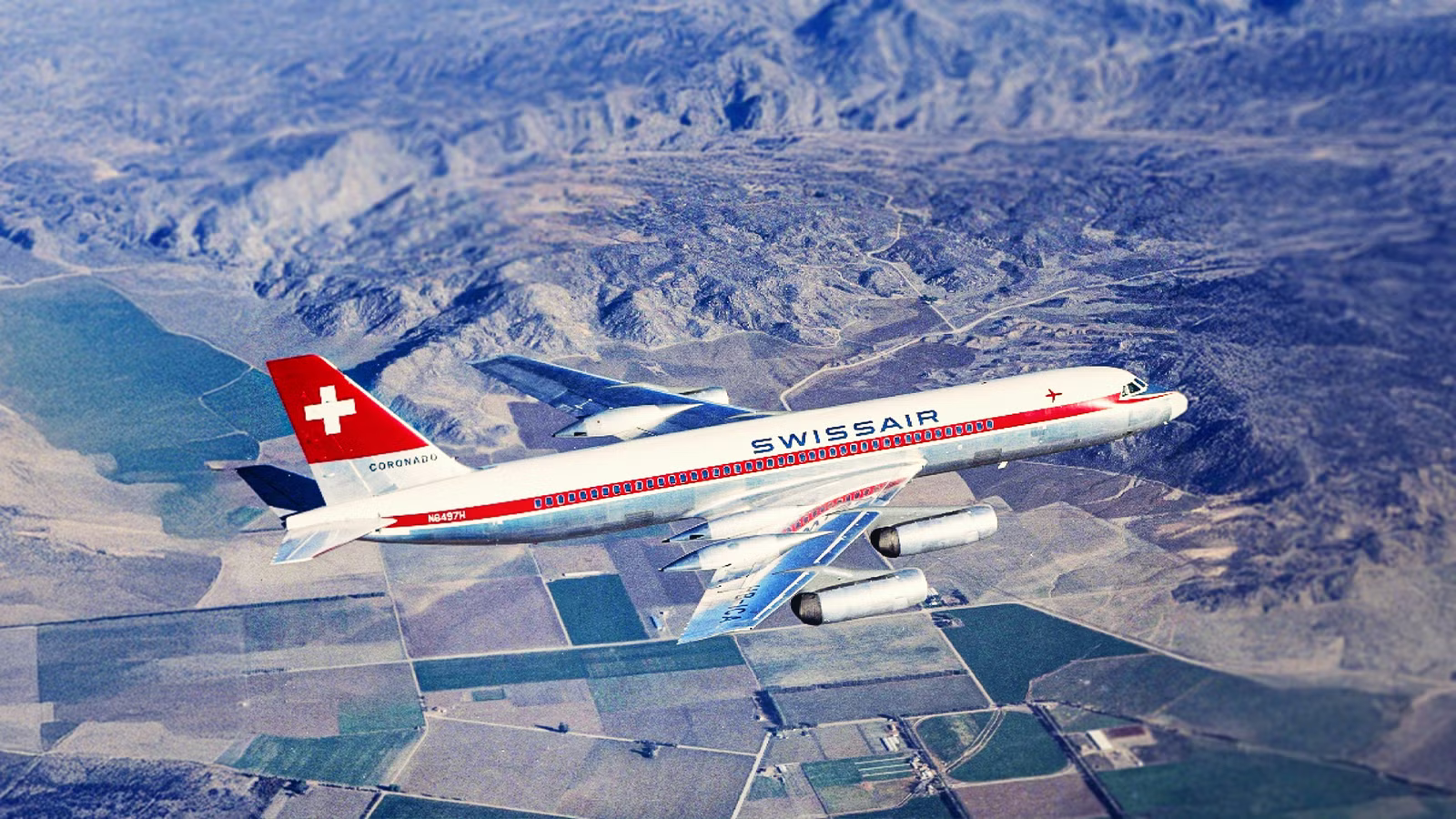
In the late 1950s and early 1960s, airliners and their engines were still taking shape. History had yet to decide which competing engineering solutions and pathways would define aviation’s future. At the time, it was unclear if the future was supersonic airliners (e.g., Concorde) or turbofans with aft-fans. Modern analogues include the future of blended wing bodies (e.g., JetZero), the return of supersonic airliners (e.g., Boom Supersonic), open-fan engines (e.g., CFM RISE), and hybrid engines.
Unfortunately for General Dynamics, the company made a particularly costly bet with its ambitious Convair 880 and 990. Convair prioritized speed over economics, producing aircraft faster than its Boeing and Douglas competitors but with fewer passengers and operating costs it struggled to match. Its engine supplier, General Electric, made another unconventional bet with the CJ805-23, an aft-fan turbofan that attempted to extract turbofan-like efficiency from a turbojet-derived architecture. Both bets ultimately failed.
The Two Convair Airliners

The Convair 990 Coronado was an early American narrowbody four-engined jet airliner built by General Dynamics’ Convair between 1961 and 1963. It was derived from the original shorter Convair 880 at  American Airlines’ request for a lengthened variant that would increase seating capacity from 88 to 110 passengers, or between 96 and 121 passengers. American wanted the aircraft to be more fuel efficient.
  Delta Air Lines entered service with the Convair 880 in 1960.
The Convair 990 Coronado’s contemporary competitors were the Boeing 707 (today mostly surviving as the KC-135 tanker) and the Douglas DC-8. Although the 990 had a lower seating capacity, it cruised about 25 to 35 mph (40-56 km/h) faster than both competitors. At the time, increased speed was still considered a defining attribute of future airliner design.
While it was the fastest airliner in the world when it entered service, the title of the world’s fastest airliner goes to the supersonic Concorde and the Soviet Tu-144. During the 1960s, both increased airspeed and increased fuel efficiency drove airliner design. Since then, increasing airspeed has largely fallen by the wayside as fuel efficiency and lower overall operational costs have taken center stage. One of the most memorable features of the Convair 990 was the General Electric CJ-805-23 and its goal of producing a fuel-efficient aircraft that could fly faster than its competitors.
GE’s Floundering 1960s Commercial Engines

Today, GE Aerospace is the largest jet aeroengine manufacturer in the world, outpacing Pratt & Whitney and Rolls-Royce in market share. But before 1968, its presence in the airline industry was its engines on around 100 Convair 880 and 990 jetliners. In the 1960s, the US aeroengine landscape was vastly different from today. At the time, Pratt & Whitney dominated the commercial jet engine industry, with its engines powering the Boeing 707, 727, 737, and 747 families, as well as the Douglas DC-8 and DC-9 families.
Pratt & Whitney had established an overwhelming lead in the commercial jet market, while GE remained largely confined to military aviation. In 1966, the US government selected GE to power Boeing’s Supersonic Transport, but that was later canceled before it got off the ground. GE’s only in-service engine in the commercial sector was the CJ805. Innovative, certainly, but it was produced in small numbers and ultimately doomed the aircraft.
“In the late 1950s, GE developed a variant of the J79 military turbojet, called the CJ805, for the Convair 800. For the follow-up Convair 900, GE developed the CJ805-23 with an aft-mounted cruise fan,” GE explained. “While Convair planes were the era’s fastest passenger jets, it was a bumpy ride. Plagued by poor aircraft sales and engine technical challenges, GE delivered its last CJ805 engines in 1962.”
The manufacturer wouldn’t get its ‘big break’ until 1968 with the CF6 (entered service in 1971).
The Unique Aft-Fan GE CJ805-3

The CJ805-3 first entered into service in 1960 on the Convair 880. The engine had been developed through the 1950s and was a commercialized version of the military J79 turbojet. This early engine was a civil turbojet engine built for the Convair 880. But American Airlines wanted a competitive edge and asked Convair to develop a larger and faster version of the Model 880.
Catch what other flight trackers miss
Emergency squawks, holds, NOTAMs — live signals, no signup.
Open tracker
Catch what other flight trackers miss
Emergency squawks, holds, NOTAMs — live signals, no signup.
Open tracker
This led to the Model 990, with a design speed of Mach 0.91. To power it, GE produced a turbofan version of the CJ805-3 turbojet. According to The Smithsonian, “GE began development of an aft fan engine, the J79-X220, later designated CJ-805-23. This uncomplicated and low cost development increased take-off thrust by 40%, lowered specific fuel consumption by 15%, and reduced takeoff and landing noise.”
Convair 880 | Convair 990 Coronado | |
|---|---|---|
First flew | 1959 | 1961 |
Entered service | 1960 | 1962 |
Seats | 88-110 | 96-121 |
Range (per Jane’s All the World’s Aircraft 1965–66) | 2,500 nautical miles (Model 22M with 16,000 lb or 7,300 kg reserve fuel) | 3,300 nautical miles (with 18,000 lb or 8,200 kg reserve fuel) |
Sold/built | 65 | 37 |
Initial market projection | At least 237 | Unclear (hundreds) |
Engines | 4x GE CJ805-3B turbojets | 4x GE CJ805-23B aft-fan turbofans |
Major customers | TWA, Delta, Northeast | American, Swissair |
The CJ805-23 became the first US turbofan and was the first turbofan in the world to enter airline service (on the Convair 990). The engine is remarkable for its aft fan, rather than the conventional forward-facing fan. Unfortunately for Convair, the fast airliner attracted few sales, and General Dynamics ultimately canceled the project at huge loss. However, the engine gave GE experience that would later support the corporation’s future commercial aircraft engine business.
How The CJ805-23 Worked

The General Electric CJ805-23 is arguably one of the strangest airliner engines ever built. General Electric mounted a single-stage fan behind the turbojet to create an aft-fan turbofan. While it was innovative, it was ultimately a technological dead end. The military J79 came with a single-spool compressor that rotated at a very high speed.
This was ideal for a turbojet, but too fast to drive a large front fan efficiently. Pratt managed to solve the issue by designing a two-spool JT3D engine, but GE wanted a cheaper solution and to reuse as much of the J79’s architecture as possible. The engine was successful by many measures, including being safe (for the time). However, it had major drawbacks.
The rear fan produced vibration issues in some operating regimes; the drivetrain proved maintenance-heavy; it had poor fuel economy compared with the rival PW JT3D, and it produced a very smoky exhaust. The engine was a significant improvement in fuel efficiency over the military J79, but it was insufficient to match the JF3D, which entered service in 1961 on the Boeing 707. The engine became a major problem for Convair, which had designed the 990 around that unique engine, making it unable to integrate the more successful JT3D.
Why The Convair Failed

The Convair 880 and Convair 990 Coronado remind us that the engineering marvels aviation enthusiasts may focus on (e.g., high cruise speed) are not always what makes an aircraft program ultimately successful. Only 65 Convair 880s and just 37 Convair 990s were built. By contrast, around 900 Boeing 707/720s and over 550 DC-8s were built.
The biggest mistake of the Convair was optimizing for speed at a time when airlines were buying for economics. Another issue was that the Convair airliners entered service in 1960 and 1962, after the Boeing 707 (1958) and DC-8 (1959) had already secured much of the market share. Airlines were wary of a third aircraft type unless there were compelling reasons. An early issue was that the Convair 990 initially failed in its core promise of being faster.
Early flight testing found it had more drag than planned, limiting its speed to around Mach 0.84. Redesigns helped it reach its promised Mach 0.89 cruise, but by then the program was delayed and customer confidence was damaged. American significantly reduced its original order. Another issue was that it was developed in an era of cheap, plentiful gasoline. But the oil shocks of the 1970s devastated the world’s less fuel-efficient airplanes and cars.
A Tale Of Two Aerospace Companies

Ironically, the Convair 880 and 990 can be seen as the breaking of General Dynamics’ commercial airliner ambitions and the making of General Electric’s. General Dynamics was forced to accept a commercial catastrophe. To break even, General Dynamics would have needed to have sold perhaps three times as many. It was also a short-term disaster for General Electric, but one that it could build on and turn around a decade later.
General Dynamics took around $425 million in losses in 1960s dollars, a massive hit. While it didn’t destroy the company, its $143 million loss in 1961 alone was the largest in US history, at a time when its military F-102/F-106 sales were also waning. But the company survived, and its F-16 Fighting Falcon greatly helped its recovery (later sold to Lockheed). But it would never again design a commercial airliner independently.
General Electric’s story was almost the inverse, even though it also lost around $80 million and paused its commercial ambitions. While its rear-fan turbofan engine had been a financial disaster, it laid the foundation for designing the CF6, the world’s most successful widebody engine. Fast-forward to today, and GE Aerospace (and Rolls-Royce) has dislodged Pratt & Whitney entirely from the widebody margin (apart from military KC-46s), and it is the largest aero engine company in the narrowbody market through its CFM joint venture.