dailynewsnblog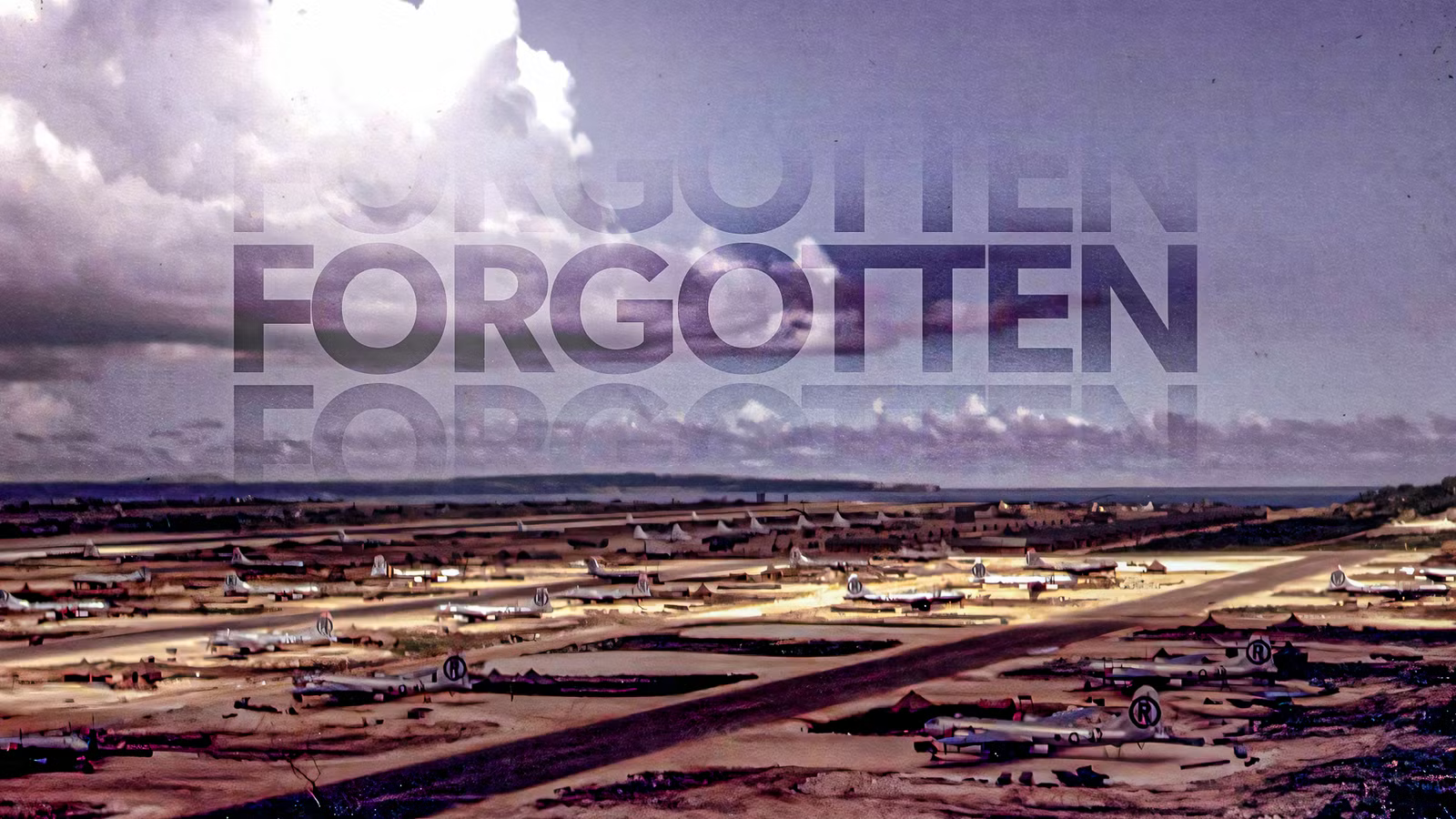
The Department of Defense, and especially the US Air Force, is investing billions in airfields and facilities across the end of the Pacific Theater in order to support much larger force concentrations and more advanced weapon systems. That means building new integrated air defense systems, upgrading runways and hangars, and constructing classified spaces for mission planning involving stealth aircraft.
Among the numerous sites receiving upgrades are long-standing hubs like Andersen Air Force Base, which is slated for a massive missile defense upgrade. Meanwhile, there are also numerous plans to enhance bases in Korea, Australia, and, of course, major posts at Kadena and Misawa air bases in Japan. Yet, some of the standouts on the list for improvements are small airfields, some of which have been completely disused since the end of WWII.
Northwest Field, Guam
The $8 billion project to expand second island chain defenses

Andersen AFB remains the hub the rest of the network is built to protect, and the Pentagon is treating it accordingly. To supplement it, Northwest Field is now an immediate tactical overflow zone on the main island of Guam, ensuring aircraft can still operate even if Andersen’s main runways are targeted or cratered. The upgraded secondary field is part of an $8 billion broader Enhanced Integrated Air and Missile Defense System. As Newsweek reported, it will be built around 16 separate interceptor and radar sites layering Aegis Ashore, Patriot and THAAD batteries across the island.
Northwest Field, once a derelict WWII-era strip, has now been rebuilt with two 8,000-foot (2,438-meter) runways capable of handling strategic airlift and Marine Corps tactical aircraft, along with 27 parking and hardened munitions bunkers constructed since 2024. Reactivated as an official ACE training site, Northwest Field already proved its purpose in 2025, serving as a staging point for Resolute Force Pacific, an Air Force-wide exercise simulating war with China.
This auxiliary strip features complete clearing and structural pavement reconstruction engineered specifically for rapid, expeditionary combat turnarounds. Spreading aircraft across dozens of open parking spots rather than hiding them is the same logic driving construction 1,700 miles (2,736 km) southwest, where the US Air Force is racing to finish an air base whose principal asset is that Beijing does not expect anyone to use it at all.
Peleliu Airstrip, Palau
Reclaiming Sledge Airfield 80 years later

No site in the network fits the description of an airfield disused since WWII more completely than Peleliu. The Japanese-built strip on the tiny Palauan island was the scene of one of the war’s bloodiest amphibious battles. Nearly 1,500 Americans and 11,000 Japanese died in fighting so brutal that the memoirs of US Marine Eugene Sledge called the island “an alien, unearthly, surrealistic nightmare.” Peleliu Airstrip has now successfully returned to service for austere environmental training.
Sledge Airfield was rebuilt by the US Marines as a critical island-hopping intercept point and refueling hub within the first and second island chain defense network, as Harvard detailed. It is now regularly capable of recovering C-130 transport aircraft and tactical fighter deployments for the first time since the late 1940s. Drawn from the 7th Engineer Support Battalion, troops spent months in 2024 clearing brush, felling trees and removing unexploded ordnance before a KC-130J Hercules tanker landed on the rebuilt 6,000-foot (1,829-meter) strip on June 22, 2024.
Palau’s president has embraced the American presence for reasons rooted in its own geopolitics. It is one of the few nations that still formally recognizes Taiwan, and its Compact of Free Association with Washington gives the US exclusive military access in exchange for economic aid and defense guarantees.
China’s Ministry of Foreign Affairs has rejected any characterization of Peleliu or broader Palau infrastructure as US base-building. A spokesperson told Reuters in April 2025 that further American military entrenchment was “far-fetched, slanderous, and completely fabricated nonsense” and accused Washington of “provoking trouble in the region.”
RAAF Base Tindal, Australia
The USAF’s $200+ million upgrade in the outback

Originally built as Carson’s Airfield in 1942, RAAF Base Tindal evolved from a World War II standby bare base into one of Australia’s most vital, heavily upgraded northern strategic defense hubs, hosting Lockheed Martin F-35A Joint Strike Fighters and joint international exercises. Since 2022, the United States has been quietly building dedicated infrastructure at Tindal to house up to six nuclear-capable B-52 bombers, according to the Aviation Geek Club.
Unlike Guam or the Marianas, Tindal sits outside the range of most Chinese short and medium-range ballistic missiles, which is precisely the point. The total American investment is budgeted at roughly $200+ million, according to Stripes. The base has also become the operating base for Australia’s fleet of MQ-4C Triton surveillance drones, with a purpose-built hangar and supporting infrastructure completed as of January.
RAAF Base Tindal lies near Darwin in the Northwest Territory. Upgrades slated to support the exponentially expanded USAF presence include a squadron operations facility, a dedicated maintenance center, jet fuel storage tanks, and an ammunition bunker. A parking apron sized for six B-52s is scheduled for completion in late 2026.
To accommodate the influx of rotational allied forces, contractors built 108 high-density live-in accommodation units, an advanced air movement terminal to process large cargo manifests, and a state-of-the-art air traffic control tower. Operating from Tindal, the Tritons provide uninterrupted 24-hour maritime intelligence, surveillance, and reconnaissance across the South China Sea, the Arafura Sea, and the Indian Ocean, funneling real-time targeting data directly to units across the entire theater.
Basa Air Base, Philippines
Investing $66 million in joint air ops

Basa Air Base in Pampanga province, home to the Philippine Air Force’s sole fighter squadron, has been undergoing runway reconstruction and airfield infrastructure modernization for years in anticipation of frequent use by heavy USAF jets such as the Boeing KC-135 Stratotanker and KC-46 Pegasus. The centerpiece was a $25 million, 9,186-foot (2,800-meter) runway rehabilitation, completed in November 2023.
The Enhanced Defense Cooperation Agreement allocated over $66 million of a $500 million foreign military financing package the State Department has called a “once-in-a-generation investment” in Philippine force modernization. In August 2024, the Pentagon awarded a further $32 million contract, funded under the Pacific Deterrence Initiative rather than EDCA itself, for a 625,000-square-foot parking apron with space for 20 aircraft, positioned near Basa’s existing US-funded humanitarian assistance and disaster relief warehouse.
Unlike Tinian or Peleliu, Basa was never abandoned. It has hosted the Philippine Air Force continuously. Basa’s location matters as much as its runway: it sits within range of the Luzon Strait chokepoint separating the Philippines from Taiwan, a fact underscored in 2025 when the Philippine Navy opened a new coastal facility on Batanes Island, which lies closer to Taiwan than to Manila.
Now, American funding has transformed it from an underfunded partner airfield into what officials increasingly describe as a future home for the Philippines’ first modern multirole fighter squadron. Rather than standing up an isolated unit, the funding creates a shared, plug-and-play architecture that directly supports USAF and joint allied operations.
Because the infrastructure is built to universal US military standards, the USAF can seamlessly rotate its premier assets into Basa. This has already been operationalized during high-end bilateral exercises like Cope Thunder, which saw USAF F-22 Raptors deploy directly to Basa. According to the IndoPacific Report, the air base was vital to practice integrated air-to-air and air-to-ground missions.
North Field, Tinian
A $400 million rebuilding project

The Pentagon selected North Field on the island of Tinian for a $400 million reconstruction effort that integrates with a broader program to resurrect a chain of airstrips in the region left to run by both the American and Japanese military after 1945. It was from this very air base eight decades ago that the Boeing B-29 Superfortress took off to drop the only atomic weapons ever detonated in anger.
Today, Tinian is being reactivated to bolster the shared defense of two nations that were once bitter enemies but are now close allies united against regional aggressors. North Field sat essentially untouched for nearly 80 years, its four 8,500-foot (2,591-meter) runways swallowed by jungle after the US abandoned it following Imperial Japan’s surrender. The military had done only modest patchwork in the 2000s and 2010s, using one runway area as a semi-improved strip for austere training.
Two of the four runways are targeted for completion by 2027, and initial flight operations were scheduled to begin on May 31, 2026, with roughly 250 personnel set to support Army units at North Field during Exercise Valiant Shield 2026. Airmen have now cleared 99% of the vegetation from more than 20 million square feet of degraded pavement, a joint effort by Navy Seabees.
Air Force engineers and Marine Corps engineer teams that the Pacific Air Forces describes as one of the most extensive rehabilitation projects in Air Force history. Tinian’s importance is compounded by the fact that North Field is only one of three simultaneous projects on the same 101-square-kilometer island. There is also a separate $384 million expansion of Tinian International Airport along with new fuel storage facilities at Tinian’s port, which round out roughly $1.5 billion in combined military construction on the island.
The central question, though, is not whether the United States can rebuild this network in time, but whether a scattered archipelago of small, austere runways can actually survive. The true challenge is standing against an adversary that has spent the same three decades building ballistic missiles, stealth fighters, and aircraft carriers to attack every one of them.
Catch what other trackers miss
Emergency squawks, holds, NOTAMs — live signals, no signup.
Open tracker
Catch what other trackers miss
Emergency squawks, holds, NOTAMs — live signals, no signup.
Open tracker