dailynewsnblog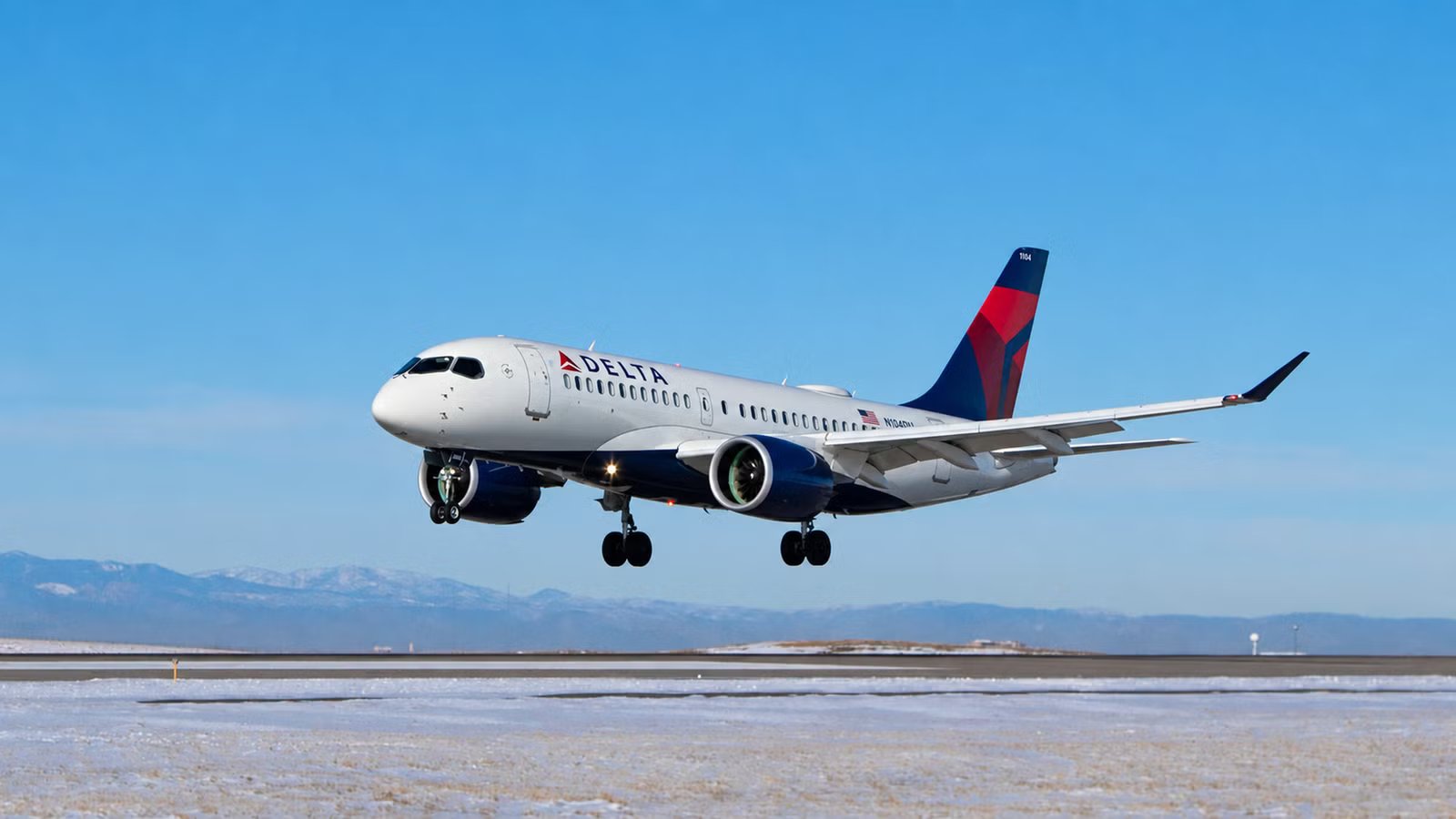
 Hartsfield-Jackson Atlanta International Airport (ATL) retained its position as the world’s busiest airport in 2025, handling 106.3 million passengers. It is also the center of
  Delta Air Lines‘ network: the carrier currently advertises nearly 1,000 peak-day departures from Atlanta to more than 200 destinations. Yet a comparison of Delta’s network over the past couple of years versus the forward-looking schedules stretching into summer 2027 reveals eight destinations that have lost Delta-operated Atlanta service.
Those cuts initially look like a collection of underperforming routes. Yet the traffic figures suggest something more complicated. One route genuinely struggled, but the others were filling 80% (or more) of their seats. So why were they cut? The answer reveals interesting insights into Delta’s network planning and hub strategy, and why the airline says route decisions weigh not only financial performance but also aircraft and staffing allocation, competition, and strategic value.
Delta Has Removed Eight Routes From Atlanta

Cirium provides the route data, and for this analysis, Delta’s forward-looking network through July 2027 was compared with historical routes going back to the beginning of last year. This revealed eight legacy routes the airline won’t fly going forward.
Destination | Start/Return | Final Service | Frequency | Aircraft |
|---|---|---|---|---|
Fresno | June 2024 | September 2025 | Daily | Boeing 737-800 |
Oakland | June 2024 | June 2025 | Daily | Boeing 737-900ER |
Rapid City | May 2025 | September 2026 | 4x weekly | Airbus A319 |
Santa Barbara | June 2024 | January 2026 | Daily | Airbus A220-300 |
St. Vincent | December 2025 | September 2026 | Daily | Boeing 737-800 |
Stuttgart | March 2023 | October 2024 | 4x weekly | Boeing 767-300ER |
Traverse City | May 2021 | September 2026 | 4x weekly | Airbus A319 |
Vancouver | May 2026 | September 2026 | Weekly | Boeing 737-900ER |
Three of the cuts came from the same California expansion back in June 2024. Delta launched brand-new daily Atlanta flights to Fresno and Santa Barbara, while also restoring Oakland, Burbank and Reno. Fresno, Santa Barbara and Oakland have subsequently disappeared, while the other two survived. Santa Barbara was particularly notable because Atlanta became the airport’s longest-ever scheduled route.
Stuttgart Airport (STR) and St. Vincent sit at opposite ends of the historical spectrum. Delta served Stuttgart since 1986, notably because of corporate and industrial ties, providing nonstop service connecting the global headquarters of Mercedes-Benz and Porsche with their North American headquarters. Delta suspended the route, restored it in 2023, and officially ended it last year (though the last flight was in October 2024). St. Vincent, meanwhile, was completely new to Delta when it launched in December 2025, but the initially ambitious daily service was progressively reduced before the final flight last week.
The remaining changes are less conventional exits. Traverse City and Rapid City were seasonal routes that finished this month and are not scheduled to return, while Vancouver International Airport (YVR) only loses Delta-operated service. WestJet continues flying nonstop between Atlanta and Vancouver, and as Delta’s Canadian partner, provides codesharing and reciprocal SkyMiles benefits on the route.
Several Cut Routes Were Actually Near-Full

A route cancellation naturally invites the assumption that Delta could not adequately fill the aircraft. Yet an examination of available Department of Transportation (DOT) data on average load factors across the routes makes that explanation hard to justify, as all but one route operated at or around 80%, with Rapid City as high as 91.8%.
Destination | Average Load Factor | Period Used |
|---|---|---|
Fresno | 84.8% | Jun–Sep 2026 |
Oakland | 80.1% | 2024 operation |
Rapid City | 91.8% | Jun–Sep 2026 |
Santa Barbara | 78.7% | Jun 2025–Jan 2026 |
St. Vincent | 47.1% | Dec 2025–May 2026 |
Stuttgart | 79.7% | 2024 operation |
Traverse City | 80.6% | Jun–Sep 2026 |
Vancouver | 90.7% | May 2026 |
St. Vincent is the obvious economic failure. Its monthly load factor fell as low as 39.1% in February, before recovering to 66.3% by May. St. Vincent’s tourism minister later said Delta reported passenger volumes well below projections, insufficient premium demand, and high fuel costs, with aircraft flying less than half full on average over the six months. It’s not at all surprising that the route was cut.
Santa Barbara’s numbers were less dramatic, but steadily deteriorated from 83.1% in June 2025 to 69.7% by January this year, so the route’s demise is not so surprising. But Fresno presents a much bigger puzzle: its final full summer months were around 85% full. Rapid City’s operation was stronger still, regularly exceeding 90%, including 96.6% in September. These are hardly the sort of numbers that would get a route cut.
Load factor, however, measures occupied seats rather than profitability. A near-full aircraft can still have weak yields, an unfavorable mix of connecting passengers, high seasonal costs, or simply generate less money than the same aircraft could elsewhere. Delta has made this distinction explicit when removing other nonstops while continuing to offer the market through its hubs. And aside from St. Vincent, that seems to be what has happened here.
How Delta Retains Passengers After Cutting Atlanta Flights

That leads to perhaps the most important feature shared by these cuts. St. Vincent is the economic outlier, while at each of the other seven destinations, Delta has a realistic way to keep passengers inside its own network, or that of a close partner, after eliminating the Atlanta nonstop. It therefore does not necessarily have to surrender all the underlying revenue when it removes the aircraft.
Cut Route | Delta’s Best Replacement | Main Competitive Threat | Retention Outlook |
|---|---|---|---|
Fresno | Via Salt Lake City | American Airlines via Dallas/Fort Worth / United Airlines via Denver | Good, but exposed |
Oakland | Via Salt Lake City; Atlanta nonstop from nearby San Francisco | Other Bay Area hub options | Good |
Rapid City | Via Minneapolis-St. Paul | United Airlines via Denver / American Airlines via Dallas/Fort Worth | Very good |
Santa Barbara | Via Salt Lake City, increased to 3 daily | United Airlines via Denver / American Airlines via Dallas/Fort Worth | Good, but exposed |
St. Vincent | No obvious Delta/partner replacement | American Airlines via Miami | Poor |
Stuttgart | KLM Royal Dutch Airlines via Amsterdam | Lufthansa Group hubs | Good |
Traverse City | Via Detroit and Minneapolis-St. Paul | American Airlines/United Airlines via Chicago O’Hare | Very good |
Vancouver | WestJet nonstop to Atlanta | None | Very good |
That is particularly compelling at Rapid City and Traverse City. Delta still operates four daily flights from Rapid City to  Minneapolis-St. Paul International Airport (MSP), while Traverse City has twice-daily flights to
  Detroit Metropolitan Wayne County Airport (DTW) and another daily flight to Minneapolis in the current September schedule. Santa Barbara Airport (SBA) went further, explicitly saying that when ATL disappeared, Delta would increase Salt Lake City International Airport (SLC) to three daily departures. Delta has used similar hub-retention logic elsewhere when withdrawing a nonstop.
The partner cases are even cleaner. Stuttgart Airport said travelers would be rebooked through  Amsterdam Schiphol Airport (AMS) or
  Paris Charles De Gaulle Airport (CDG) when the ATL nonstop ended, with KLM Royal Dutch Airlines and
  Air France handling the connections as part of their joint venture with Delta. In Vancouver, WestJet simply keeps its existing Atlanta nonstop in place.
Meanwhile, capacity has been going elsewhere. Delta’s peak Atlanta schedule has grown by roughly 12% in just two summers, reaching nearly 1,000 daily departures this year, with over 1.1 million weekly seats. In most affected markets, Delta can still retain passengers through another hub or a close partner, allowing it to remove the nonstop without necessarily losing the customer. That gives the airline more flexibility to redeploy aircraft and crews toward routes with stronger economics or strategic value.