dailynewsnblog
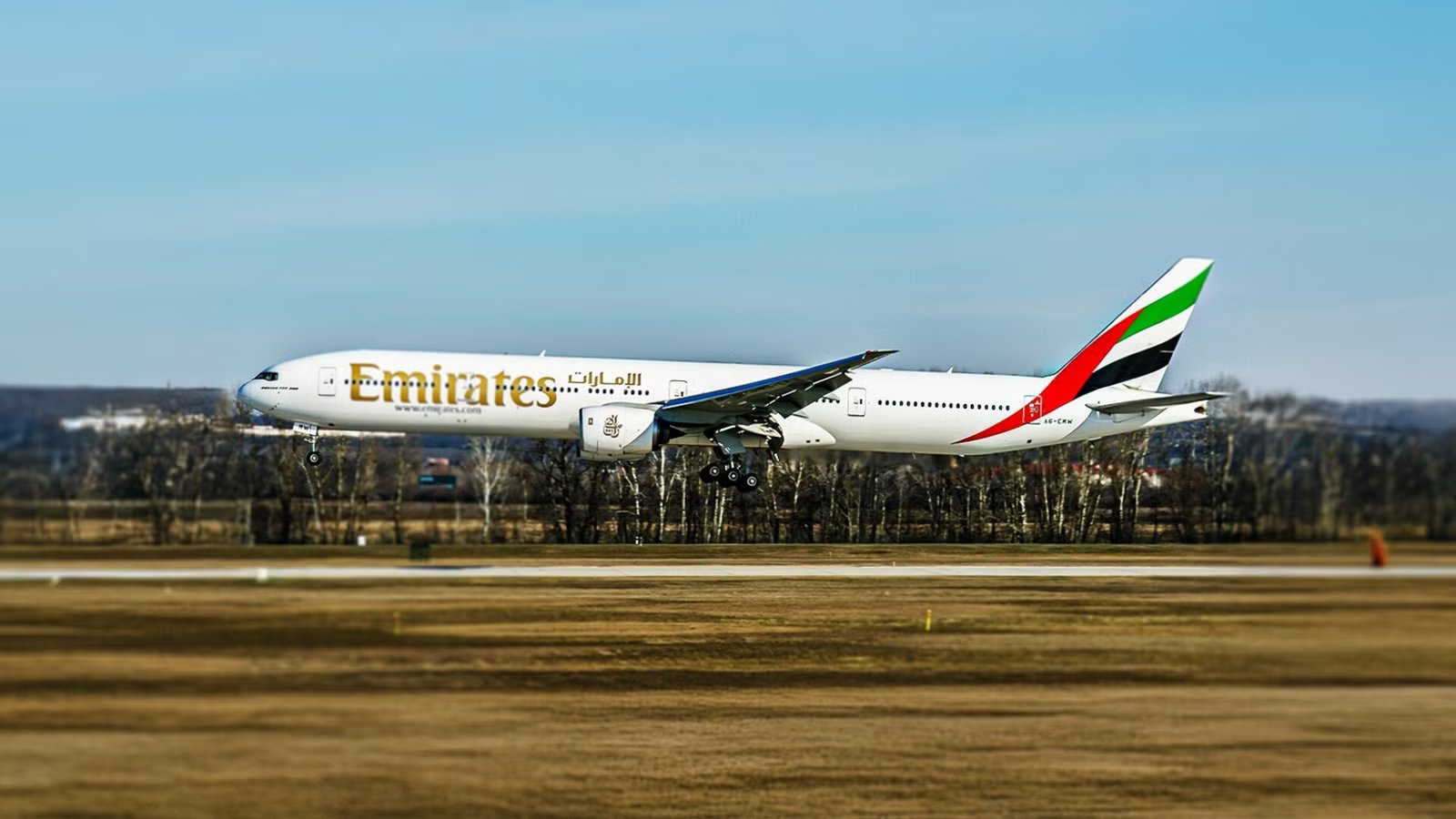
In a highly intriguing development, EgyptAir has revealed flights to  Sydney Kingsford Smith Airport (SYD) via Singapore Changi Airport (SIN). The long route will take off in 2027, with “launches” in the title conveying that things are in motion, not that flights have started. Covering 7,859 nautical miles (14,555 km) each way, the long link will have a block time of around 20 hours back to Africa.
Aviation Week shows that the carrier previously flew from Cairo International Airport (CAI) to SYD via SIN until 2002, when the Airbus A340-300 was deployed. A return via Kuala Lumpur was planned but did not happen. When the route is back in 2027, EgyptAir will become the second African operator to fly Down Under, after South African Airways. It has pipped Ethiopian Airlines to the post.
EgyptAir From Cairo To Sydney Via Singapore

The return to SYD and SIN was revealed on September 8. When writing on September 9, all other details, except the relaunch year, are not known. This includes the start date, frequency (probably three weekly), schedule, and pricing. The brand-new 340-seat Airbus A350-900 is due to operate. The airline’s first A350 was delivered earlier this year.
SYD stated that, “The proposed service will be the first direct link from Sydney to Cairo for Singapore and Australia, with Egypt Sydney Airport’s largest unserved market in Africa for Australian travelers.” They had forgotten about the previous operation, but that is OK, as it was nearly a quarter of a century ago. It will effectively be a new service, not least because EgyptAir is quite a different operator nowadays.
Loading map…
Drag to explore
Hang On: EgyptAir To Sydney?!

That is a fair question. The long route perhaps does not immediately seem obvious. Booking data via OAG Traffic Analyzer shows that CAI-SYD had 27,000 round-trip local passengers in 2025. Everyone flew indirectly, mainly, of course, via Gulf hubs.
It was the second most-trafficked market between Africa and SYD. Only Johannesburg’s  O. R. Tambo International Airport (JNB) to SYD had more passengers (70,000). Qantas serves that airport pair nonstop, with all flights being on the Airbus A380.
A problem is that CAI had a 23% lower average base fare than JNB. That, in itself, is concerning. Yet the upcoming route from Egypt via SIN will also cover 32% more distance and, therefore, be substantially more expensive to operate. No wonder Qantas serves JNB and not CAI. JNB has lower operating costs and is higher-yielding.
EgyptAir Will Be Actively Targeting European Cities Via Cairo

The arrival of EgyptAir at some point in 2027 will help with lower fares and more choice to Europe, the Levant region of the Middle East, and parts of North Africa. This will, of course, be great for passengers, if not for the airline.
Depending on the specific schedule and days of operation, many cities could be reachable via CAI. For most of them, flights would only cover 1% to 7% more distance than flying, say,  Emirates via
  Dubai International Airport (DXB). EgyptAir’s additional stop in SIN (for a two-stop service) will increase the duration and reduce competitiveness, which may mean the airline will have to discount further. Then again,
  Turkish Airlines currently also stops en route in Southeast Asia to/from Australia.
EgyptAir is particularly well-placed for flights via CAI to Southern European cities. Some have good traffic to/from SYD, including Rome (74,000), Athens (70,000), Milan (49,000), Madrid (38,000; Singapore Airlines resumes flying there soon),  Josep Tarradellas Barcelona–El Prat Airport (BCN; 32,000), Venice (16,000), and so on. Flying SYD-SIN-CAI-BCN would only be 1% or so longer than flying via DXB.
But it’d also capture passengers flying to/from Northern Europe, including  London Heathrow Airport (LHR), which would only cover 3% more distance than flying via the Gulf. Moreover, booking data shows that LHR is Turkish Airlines’ top sixth freedom market to/from SYD. EgyptAir has been boosting frequencies on various European routes recently, including LHR. Three daily flights are now available.
More interesting are the places with less competition, such as Beirut (88,000 SYD passengers), Tel Aviv (19,000; the route returns next year), Amman (15,000), and Baghdad (10,000). Then again, EgyptAir’s SYD capacity will be shared with SIN, with passengers also ending or beginning their journey in Lion City. It will not have many seats to fill with the likely frequency. The real question is whether it can achieve reasonable yields on the very long service.