dailynewsnblog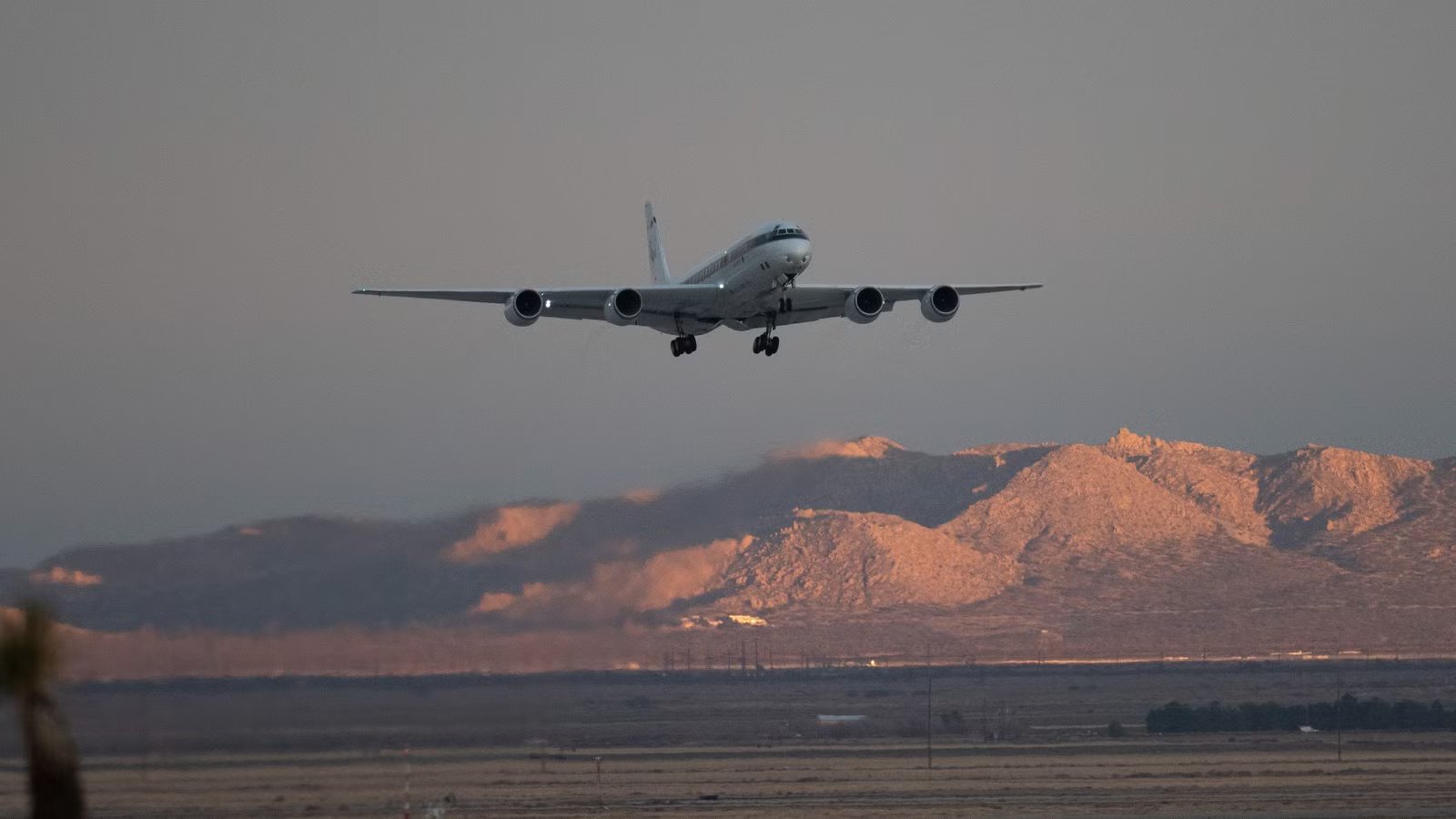
The Aviation Herald reported that one of the last airworthy Douglas DC-8 jets in the world suffered a severe mishap in the Democratic Republic of Congo on Tuesday morning. Tail number 9S-AJO of Trans Air Cargo Service was photographed with collapsed nose gear after veering off the Kinshasa N’djili International Airport (FIH) runway at 7:30 AM.
Even basic details have been slow to come forward but it appears the accident occurred during takeoff run. It is now believed that there is just one operational DC-8-70 freighter jet left in the world following what may be a hull write-off crash for 9S-AJO.
One Runway Excursion Wipes Out Half The Global Fleet

The DC-8 that crashed on Tuesday morning is the only airframe listed as active under TACS. However, the cargo operator is shown to have two other jets of the same type stored for parts cannibalization. It also scrapped a third hull in 2024, according to data from Planespotters. These reserve planes are essentially the only source of new parts with the Douglas assembly line shuttered since 1972.
The availability of parts from these airframes could theoretically allow the 56-year-old cargo jet to return to the air if the damage is minor. Preliminary information has indicated a potential hydraulic fault but the aircraft was reportedly moving at high speed and suffered significant damage. The DR Congo Permanent Bureau of Aviation Accident and Incident Investigations immediately dispatched mishap investigators.
Ultimately, it is highly unlikely that 9S-AJO will ever take flight again. Assuming the airframe and critical system pass inspection, the cost of labor to overhaul it may exceed the value of the plane. Even if the carrier can pull entire systems or major components from its decommissioned jets, the intensive nature of the work and subsequent inspections are likely to exceed the actual market value of the plane.
The Struggle Of A Bare-Bones Cargo Business Model

When an airline operates on an absolute minimum budget with vintage planes, their business model actually makes them more vulnerable to a total write-off after a single bad accident. Repairing a collapsed nose gear and a warped or torn underbelly on a half-century-old jet requires specialized aerospace engineering teams. Shipping heavy tools and fabricating custom metal patches could easily cost $5 million to $10 million.
Low-cost operators, often based in developing regions, will buy three or four retired planes just to keep one or two flying. This strategy makes it possible for the carrier to limp along its legacy jet despite the virtual total absence of supply chain support. However, they typicaaly cannot swap out broken main fuselage beams or the heavy attachment points where the landing gear struts are mounted to the plane.
For a giant air freight hauler like UPS or FedEx, if one plane crashes, they have dozens of others making money every day to cover the loss. A bare-bones operator simply does not have the cash reserves to pay for a repair that costs more than the asset itself. Because the repair cost is much higher than what the plane is worth, the aircraft is declared a total loss. In order to fly these planes as long as possible, the company relies heavily on the skill of its aircrew and maintenance technicians.
The Low-wage, High-skill Trap For Vintage Jet Carriers

To fly a classic quadjet safely, a pilot actually needs more refined ‘stick and rudder’ skills and flying experience than one does to fly a brand-new, computer-assisted Airbus or Boeing jetliner. Unsurprisingly, because these bare-bones cargo companies operate on razor-thin budgets, they cannot afford top-tier, highly experienced crews. This is one of the most risky paradoxes in the world of commercial aviation.
Because a bare-bones operator is trying to save every penny, they cannot pay the high salaries offered by major international airlines. This leaves them with two main types of pilot recruiting pools. The first, and most common, are young professionals that have only recently got their licenses while others are veteran pilots in the twilight of their career.
Still, the air crew only has so much control over variables like weather, runway conditions, or mechanical malfunctions. Ultimately, the business model of a bare-bones operator forces them to play a high-stakes gamble. In the case of TASC’s 9S-AJO, its fortune appears to have finally run out and the final destination it is most likely down for is the Boneyard.