dailynewsnblog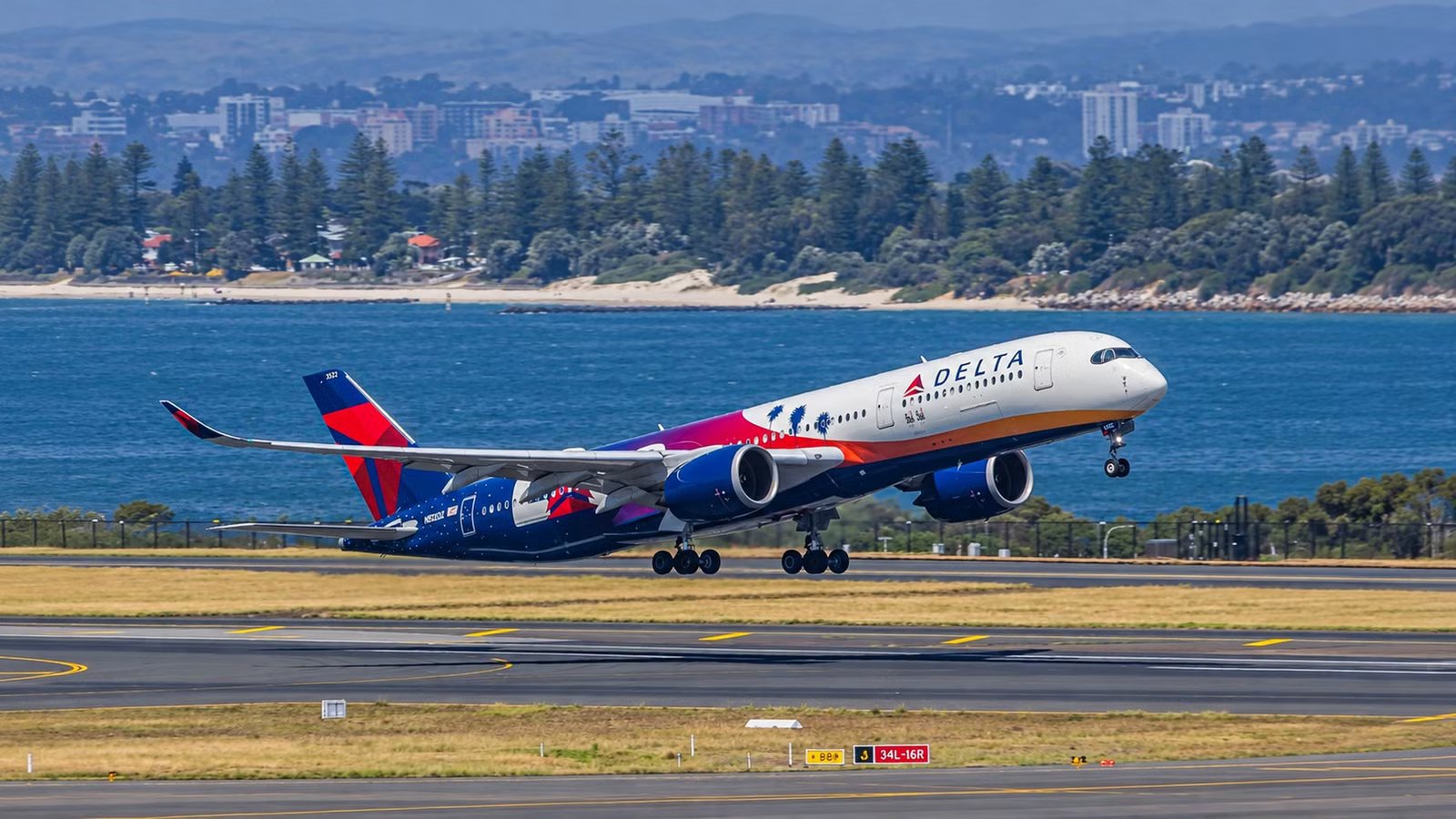
 Delta Air Lines is preparing to restore one of the longest routes from its
  Hartsfield-Jackson Atlanta International Airport (ATL) hub, with nonstop service to Tel Aviv’s Ben Gurion Airport (TLV) currently scheduled to return on December 19, 2026. The 6,460-mile route will use the Airbus A350-900, with DL271 from Tel Aviv scheduled for as much as 14 hours westbound.
Delta relaunched nonstop flights to Tel Aviv from its  New York JFK Airport (JFK) hub this past weekend, but the Atlanta route has been slower to return following its 2023 suspension. However, despite returning after a lengthy absence, Atlanta-Tel Aviv is hardly new for Delta. The airline first launched the route in 2006, withdrew in 2011, then revived it in 2023 before the outbreak of war in Israel brought that comeback to an abrupt end. Its latest attempt will initially be smaller than the daily operation Delta offered during 2023, but the underlying attraction of Atlanta remains the same: connections.
Delta Has Tried Atlanta-Tel Aviv Before

Delta’s latest Atlanta-Tel Aviv comeback is scheduled to begin on December 19, after the airline extended its pause of the route through December 18. The first eastbound flight, DL270, is scheduled to leave Atlanta at 11:55 PM, arriving in Tel Aviv at 6:25 PM the following day. The return, DL271, leaves Tel Aviv at 10:45 PM and reaches Atlanta at 5:32 AM the following morning, with a scheduled block time of 13 hours and 47 minutes. This will rise to more than 14 hours later in the winter schedule.
Flight | Route | Operating Days | Departure | Arrival | Scheduled time | Aircraft |
|---|---|---|---|---|---|---|
DL270 | Atlanta — Tel Aviv | Tuesday, Thursday, Saturday | 11:55 PM | 6:25 PM+1 | 11h 45m | Airbus A350-900 |
DL271 | Tel Aviv — Atlanta | Wednesday, Friday, Sunday | 11:45 PM | 5:32 AM+1 | 13h 47m | Airbus A350-900 |
The three-times-weekly Airbus A350-900 service is smaller than some previous incarnations of the route. Delta first inaugurated Atlanta-Tel Aviv in March 2006, initially operating daily with a Boeing 777-200ER. Annual traffic climbed to north of 150,000 annual passengers, while the airline dropped frequencies back to four-times-weekly in its winter schedule from 2009. This led to a notably successful route, with average load factors that were at least five points above Delta’s broader Atlantic network.
Year | ATL–TLV Passengers | ATL–TLV LF | Delta Atlantic LF | Difference | Operating Note |
|---|---|---|---|---|---|
2006 | 114,346 | 79.0% | 79.9% | -0.9 pts | Launched March 27 |
2007 | 163,471 | 84.2% | 80.4% | +3.8 pts | Full year |
2008 | 158,177 | 85.8% | 79.4% | +6.4 pts | Full year |
2009 | 150,470 | 86.2% | 81.1% | +5.1 pts | Full year |
2010 | 135,134 | 88.5% | 83.4% | +5.1 pts | Full year |
2011 | 64,700 | 88.0% | 81.3% | +6.7 pts | Service ended August 31 |
2012–2022 | — | — | — | — | Route not operated |
2023 | 99,608 | 82.4% | 85.0% | -2.6 pts | Service returned, then suspended |
The 2011 withdrawal therefore had nothing to do with the performance of the route — Delta was still filling 88% of seats, 6.7 percentage points above its overall Atlantic load factor. However, the route was suspended as part of a broader plan to reduce transatlantic capacity by 10–12%, with high fuel prices and weaker demand specifically cited.
It was only in 2023 that Delta chose to revive the route, returning with a three-times-weekly A350 service that leverages Atlanta’s enormous connecting network. Esty Herskowicz, Delta’s sales manager for Israel, had the following to say at the time:
“Delta is delighted to be offering a daily nonstop service to Atlanta — the world’s leading hub and gateway to the Americas. Being able to offer our customers another nonstop link from Tel Aviv to the United States will allow even more opportunity for growth in both business and leisure sectors between our two countries.”
However, this second incarnation lasted only until October 2023, when Delta suspended all Tel Aviv flights following the October 7 attacks and subsequent war, and the Atlanta route has since gone through a succession of planned restart dates as security conditions changed. Delta originally announced that ATL-TLV would return on April 15, but subsequently pushed the restart to August, then most recently extended the pause to December 18 — making December 19 the current target for the route’s third beginning.
Almost 9 In 10 Passengers On The Route Connect In Atlanta

The numbers from the 2023 operation reveal why Delta keeps returning to Tel Aviv from Atlanta. OAG Traffic Analyzer booking data shows approximately 90,000 passengers on the ATL-TLV route had transited via Atlanta to/from other US cities. That means nine in ten passengers were connecting rather than beginning or ending their journey in Atlanta — precisely the role Delta envisaged when it relaunched the route and promoted more than 200 onward connections.
Rank | Top Connecting Market | Peak Daily Flights | Most Commonly Used aircraft |
|---|---|---|---|
1 | Los Angeles | 12 | Airbus A321 |
2 | Dallas/Fort Worth | 8 | Airbus A321 |
3 | Miami | 9 | Boeing 757-200 |
4 | Orlando | 15 | Boeing 757-200 |
5 | Detroit | 12 | Airbus A321 |
6 | Tampa | 12 | Boeing 757-200 |
7 | Fort Lauderdale | 12 | Boeing 757-200 |
8 | Las Vegas | 11 | Boeing 757-200 |
9 | Houston | 8 | Airbus A320 |
10 | St. Louis | 7 | Boeing 737-900ER |
The composition of that connecting traffic is especially revealing.  Los Angeles International Airport (LAX) was the largest feeder, despite already having a nonstop connection to Tel Aviv with EL AL, showing the power of Delta’s hub-to-hub dynamics. Then four Florida airports — Miami, Orlando, Tampa and Fort Lauderdale — appeared in the top ten, indicative of the massive connecting role that Delta plays for the Sunshine State.
Overall, the top ten markets offer nearly 100 daily connecting flights for the ATL-TLV routes. More broadly, the more than 1,000 peak-day departures at Atlanta explain why the city’s local traffic to Israel is almost immaterial to the route. Unlike the point-to-point routes that EL AL flies to six of the largest US cities, Delta can efficiently collect Tel Aviv-bound passengers from across its domestic network, while distributing inbound passengers across hundreds of onward flights.
11 North American Airports Will Link To Tel Aviv Next Summer

Delta will return to an increasingly competitive market in Israel. Current schedules for next summer indicate that Tel Aviv will have nonstop service from 11 North American airports, including nine US gateways and  Toronto Pearson International Airport (YYZ) and Montréal–Trudeau International Airport (YUL).
 Air Canada currently shows daily Toronto service and three weekly Montreal flights, while EL AL’s October return to
  San Francisco International Airport (SFO) will combine with
  United Airlines‘ newly announced three-times-weekly SFO service from March 2027, giving San Francisco six weekly flights by next summer.
TLV-North America Market | Peak Summer 2027 Frequency | Airlines |
|---|---|---|
New York JFK* | 8 daily | EL AL, Delta, Arkia, American |
Newark | 6 daily | EL AL, United |
Los Angeles | 8 weekly | EL AL |
Toronto | Daily | Air Canada |
Miami | Daily | EL AL |
San Francisco | 6 weekly | EL AL, United |
Boston | 4 weekly | EL AL |
Chicago O’Hare | 4 weekly | United |
Atlanta | 3 weekly | Delta |
Washington Dulles | 3 weekly | United |
Montreal | 3 weekly | Air Canada |
*Israir could add further New York JFK capacity, but its Summer 2027 schedule remains unclear.
EL AL has the largest collection of US point-to-point markets, but United’s strategy is increasingly broad, with Tel Aviv service planned from its hubs at  Newark Liberty International Airport (EWR),
  Chicago O’Hare International Airport (ORD), Washington Dulles International Airport (IAD) and San Francisco.
  American Airlines is also expected to restore JFK-TLV in March 2027.
Delta will have JFK and Atlanta, and also announced plans last year to launch a daily nonstop from  Boston Logan International Airport (BOS) to Tel Aviv using the Airbus A330-900. However, those plans have been paused, and the airline has not announced any start date. Atlanta will consequently be one of Tel Aviv’s smallest North American routes by frequency, but one of the most consequential for Delta, as the Atlanta-Tel Aviv route will restore a one-stop service to Israel through its largest hub.