dailynewsnblog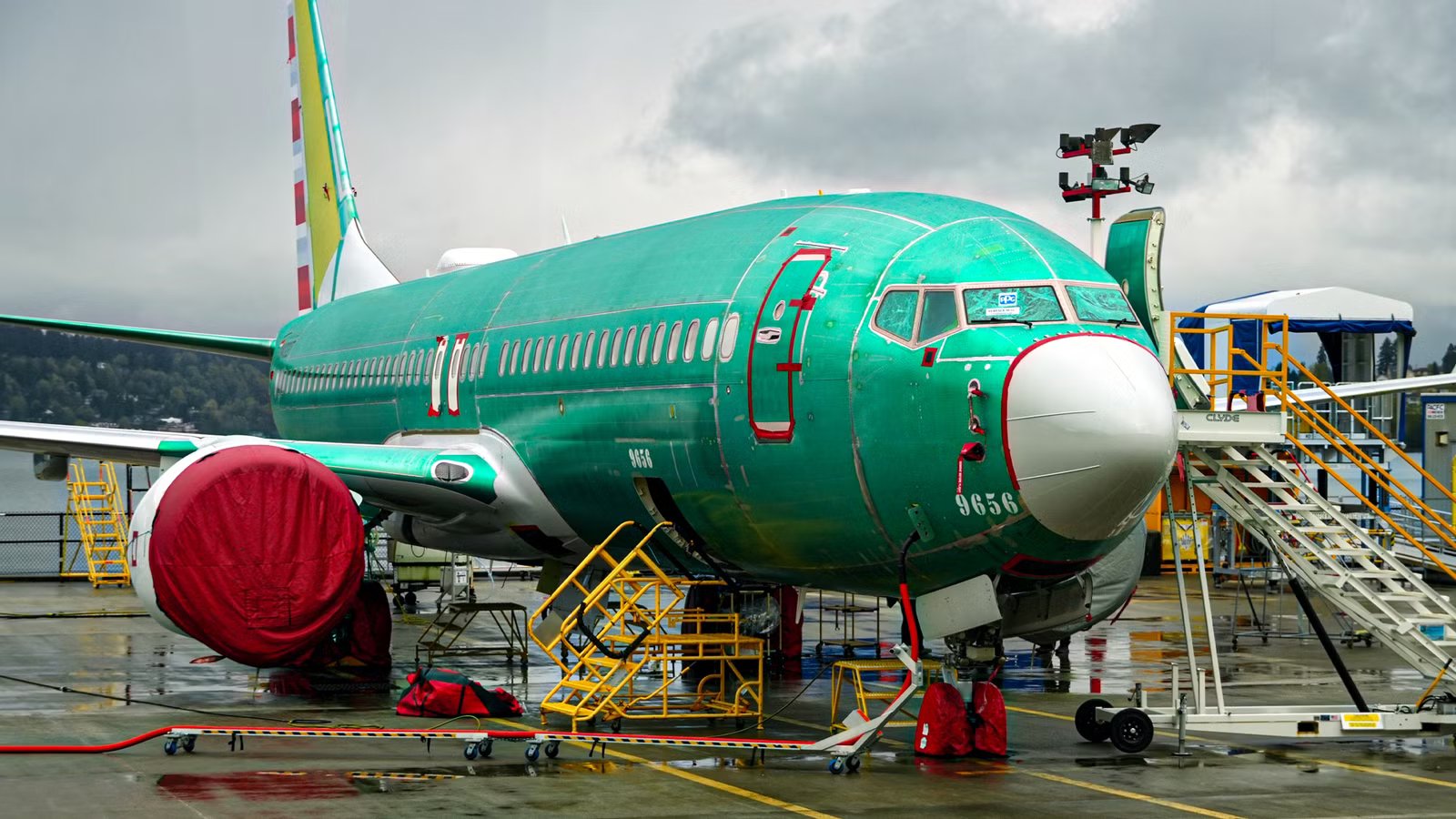
Nearly 17,000  Boeing engineers and technical workers overwhelmingly voted to reject contract offers and authorize a strike in late August, throwing the aerospace giant’s fragile operational recovery back into jeopardy. Organized under the Society of Professional Engineering Employees in Aerospace (SPEEA), 88% of the Professional Unit and 90% of the Technical Unit authorized a walkout that could begin as early as October 7. The vote arrives just two years after a 53-day machinist strike crippled factory assembly lines, but this white-collar standoff brings a fundamentally different threat.
The pressure lands at a critical juncture for Boeing’s narrowbody program. After the Federal Aviation Administration capped 737 MAX output at 38 aircraft per month following the January 2024 door-plug blowout, Boeing spent nearly two years working through regulatory gates before having approval to reach 42 jets per month, with plans pushing toward 47. Without the Organization Designation Authorization personnel and liaison engineers who evaluate structural non-conformances and oversee final airworthiness paperwork, that production pace collapses.
Tensions Have Been Rising

The August rejection vote sent an undeniable signal to Boeing leadership that technical staff remain deeply dissatisfied with corporate governance and workplace culture. Over 92% of eligible voters cast ballots across both units, with 64.25% of the 13,000-member Professional Unit and 71.87% of the 4,000-member Technical Unit voting down the company’s proposed agreements. While SPEEA’s negotiation team initially presented the contracts, members rejected them because of stagnant baseline salary progression, mandatory overtime allowances up to 112 hours per quarter, and rigid on-site work policies that fail to account for rising regional living costs.
Tensions escalated immediately following the vote when Boeing functional chief engineer Ben Nimmergut announced that management was activating its “strike contingency plan,” as reported by Quartz. Boeing abruptly withdrew promised early-ratification incentives, including a 3% retroactive pay boost and a 40% increase in annual incentive targets, and diverted those funds into contractor recruitment and strike preparation. Within days, the planemaker began posting contractor job listings for replacement engineers and technicians.
Catch what other flight trackers miss
Emergency squawks, holds, NOTAMs — live signals, no signup.
Open tracker
Catch what other flight trackers miss
Emergency squawks, holds, NOTAMs — live signals, no signup.
Open tracker
Despite management’s aggressive posture, both sides returned to the bargaining table in late August to survey membership demands ahead of the October 6 contract expiration. Union surveys show that immediate, guaranteed base wage increases and larger performance-based raise pools rank as top priorities for nearly 13,000 responding members, according to Yahoo Finance. With SPEEA members serving in essential regulatory delegation roles, Boeing’s management faces a narrow window to reach an agreement before white-collar technical walkouts paralyze the company’s certification pipeline.
Production Could Cease Entirely

In Boeing’s Renton factory, assembling a 737 MAX relies as much on technical documentation as on tools. Whenever factory technicians encounter a build discrepancy, such as a structural gap exceeding 0.03 inches (0.76 mm) or a misaligned panel, work at that workstation freezes immediately. Mechanics cannot alter structural components on their own authority, as every issue generates a Non-Conformance Report (NCR) that needs a liaison engineer to inspect the hardware, run stress calculations, and sign off on a disposition before work resumes.
Under Organization Designation Authorization rules established by the Federal Aviation Administration (FAA), nominated Designated Engineering Representatives (DER) certify structural and design compliance. Federal regulations strictly prohibit non-delegated managers from signing these legal airworthiness documents. If delegated engineers walk out, final sign-offs stop completely, leaving finished jets grounded at the factory regardless of assembly completion, and that is a major concern stemming from this industrial action.
Boeing’s manufacturing strategy relies on avoiding traveled work, meaning unfinished airframes cannot move over to subsequent stations. Under a work stoppage, unresolved non-conformance files would saturate factory tracking systems within three to five days. Without engineers on the floor to clear paperwork or DERs to execute final certifications, the Renton assembly lines would grind to a halt.
Losing Hard-Earned Progress

Following the January 2024 door-plug blowout on an  Alaska Airlines 737 MAX 9, the FAA capped Boeing’s 737 MAX output at 38 aircraft per month to enforce strict quality oversight. Boeing spent nearly two years auditing factory processes before regulators approved a rate increase to 42 jets per month in October 2025, followed by a transition toward 47 aircraft per month by mid-2026. Reaching this pace required activating a fourth 737 assembly line at the Everett facility, the first 737 line outside Renton in over 50 years, to relieve floor constraints and accommodate the high-density build schedule.
Surging production to 47 jets monthly relies heavily on synchronization with major suppliers like Spirit AeroSystems, which fabricates around 70% of the 737 structure including the fuselage, and CFM International for LEAP-1B engines. Tier-1 suppliers calibrated their capital investments, staffing, and component sub-assembly rates to match Boeing’s 42-to-47 monthly ramp. If a SPEEA walkout halts engineering dispositions and prevents airframe completions, fuselages and engine sets will rapidly stack up across staging yards, creating noticeable inventory bullwhip effects across the global supply chain.
A white-collar stoppage quickly turns this carefully orchestrated supply network against itself. Without floor engineers to clear non-conformance paperwork or ODA representatives to grant flight releases, completed airframes cannot leave factory tarmac stalls. Fuselages arriving from Spirit’s Wichita facility on railcars would quickly fill storage tracks in Washington, forcing Boeing to throttle or completely halt supplier shipments. What took nearly 2 years of regulatory auditing to build could unravel in less than 2 weeks of engineering inaction.
An Industry-Wide Crisis?

The 737 MAX 10 completed its final certification flight on July 28, ending 976 test flights and shifting the program entirely into the paperwork phase. With the smaller MAX 7 receiving FAA approval on August 3, final certification for the MAX 10 depends on safety assessments, compliance documents, and regulatory sign-offs. Because SPEEA engineers write these compliance reports and manage Organization Designation Authorization files, an October 7 work stoppage would immediately freeze regulatory processing for both the MAX 10 and the upcoming 777-9.
For key airline customers, another certification freeze disrupts multi-year fleet plans and capital investments again, after multiple instances of this happening already.  United Airlines holds firm orders for 167 MAX 10 aircraft, with chronic delays already forcing the carrier to hold over $10 million in lie-flat seats in storage because they cannot fit on other airframes.
  Southwest Airlines depends on Boeing maintaining a steady 42-to-47 monthly production pace for MAX 7 and MAX 8 deliveries to retire aging 737-700s, while Alaska Airlines relies on MAX 10 arrivals to properly see out its transcontinental route expansion.
A walkout threatens to push commercial MAX 10 deliveries further into 2027 and 2028, handing Airbus additional competitive upside with the A321neo. With little choice but to extend leases on older aircraft or trim flight schedules, key domestic carriers face mounting operational costs. What began as a labor contract dispute over engineering wages risks becoming a multi-billion-dollar fleet crisis across the airline industry.
Time Is Running Out

With formal contract talks resuming on September 8 ahead of the October 6 expiration deadline, as reported by The Seattle Times, Boeing management and SPEEA negotiators face a narrow window to avert an October 7 work stoppage. Although Boeing initially reacted to the rejection vote by withdrawing early ratification perks and posting replacement contractor listings, management cannot realistically substitute 17,000 engineers and technical workers during a production ramp.
The contract standoff highlights a persistent challenge to Boeing’s engineering culture and regulatory delegation privileges. Years of corporate restructuring, cost-cutting, and friction over quality control have eroded white-collar morale and strained trust between leadership and technical staff. Capping wage adjustments below regional inflation risks accelerating the departure of experienced Designated Engineering Representatives and floor liaison engineers to competing aerospace firms.
For an enterprise working to restore public and FAA confidence following major quality crises, preserving Organization Designation Authorization integrity and retaining veteran technical talent is far more critical than short-term labor savings. Resolving these structural grievances is the only way Boeing can stabilize its technical workforce and maintain the engineering rigor required for high-rate narrowbody manufacturing.
Engineers Make Production A Reality

The October 6 contract deadline is a defining operational inflection point for Boeing. Sustaining an ambitious assembly cadence of 42 or 47 narrowbodies per month cannot be achieved through factory throughput alone and desperately needs the continuous, rigorous paperwork and safety sign-offs of a dedicated technical workforce. Without SPEEA engineers to process non-conformance reports and issue FAA airworthiness documentation, the 737 MAX production lines will freeze, no matter how fast wrenches turn on the factory floor.
Ultimately, this labor dispute reaches far beyond the bargaining table in Seattle. With delivery slots for United, Southwest, and Alaska hanging in the balance and 737 MAX 10 certification on the line, an engineering walkout would ripple across the global airline market. For Boeing, agreeing on a fair contract with its engineering union is no longer just a human resources objective; it’s fast becoming a key element of its survival.