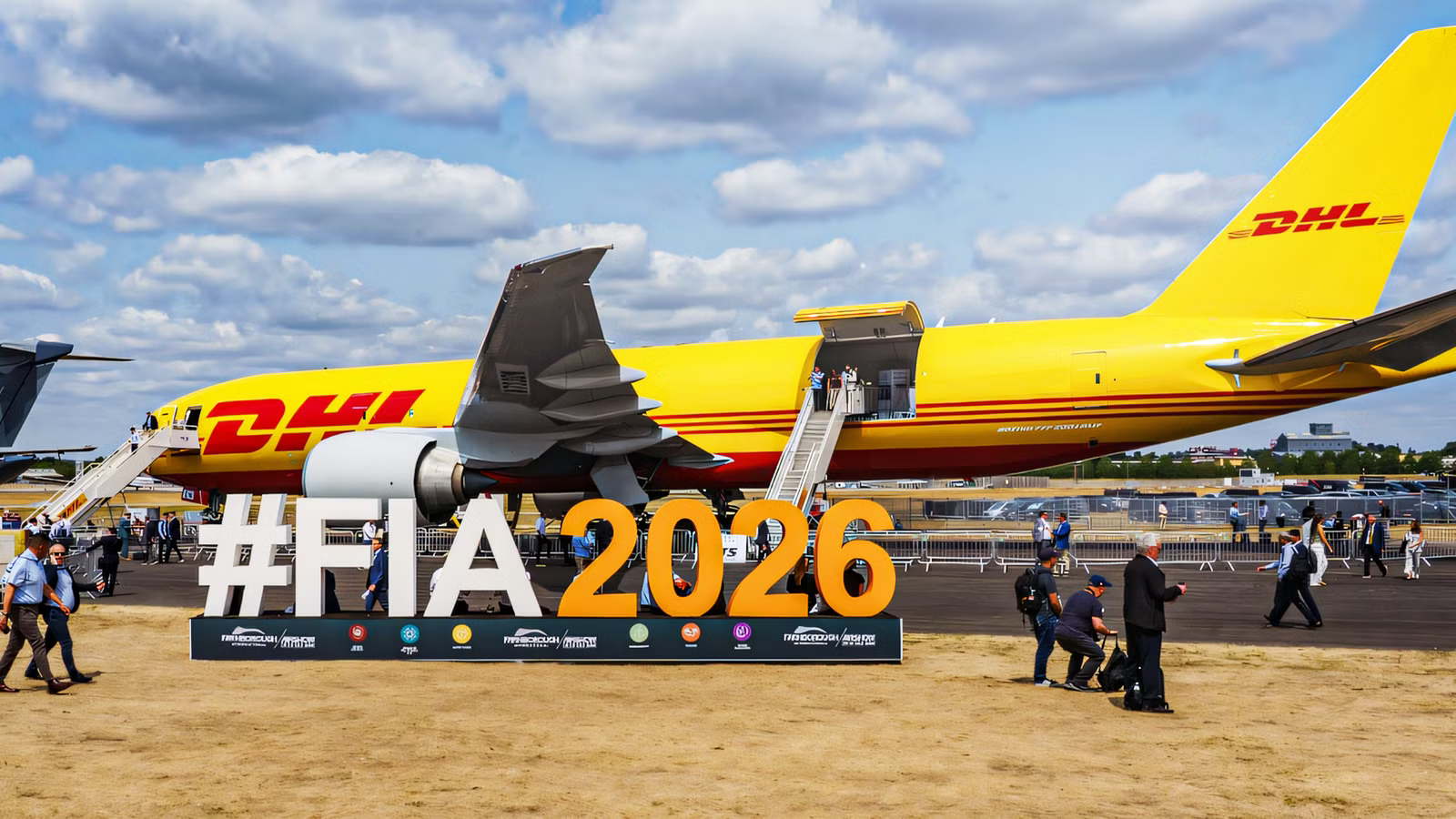
Mammoth Freighters delivered its first converted  Boeing 777-200LRMF freighter to Texas-based lessor Jetran on August 21, 2026. The aircraft, a former Delta Air Lines 777-200LR built in 2009, will enter revenue service with DHL Air UK as part of DHL Express’s intercontinental cargo network. It is the first of 13 Mammoth-converted 777 freighters committed to DHL and the first aircraft produced under a conversion program that received FAA certification in April 2026 after years of development delays.
The delivery matters because the 777-200LRMF matches the factory-built Boeing 777F on payload and range at a significantly lower acquisition cost, giving DHL widebody freighter capacity without factory-build pricing or delivery backlogs. Mammoth’s larger 777-300ERMF conversion is nearing certification and will open a pool of over 800 additional airframes for conversion. Readers can follow the aircraft as it begins DHL operations using Simple Flying’s Live Flight Tracker.
The First Mammoth-Converted 777 Has Been Delivered

Mammoth Freighters delivered its first converted Boeing 777-200LRMF freighter to Texas-based lessor Jetran on August 21, 2026. The aircraft, MSN 32222, was delivered under its registration N703DN and will be operated by DHL Air UK as part of DHL Express’s international long-haul cargo network. The airframe is a 2009-built Boeing 777-200LR that previously flew passengers for Delta Air Lines before entering Mammoth’s conversion facility in Fort Worth, Texas.
The delivery came five weeks after the aircraft made its public debut on static display at the Farnborough International Airshow in July 2026. Mammoth Freighters received the FAA Supplemental Type Certificate for the 777-200LRMF conversion program in April 2026, clearing the regulatory path for commercial deliveries to begin. The STC authorizes the permanent modification of the 777-200LR passenger airframe into a dedicated freighter configuration, including the installation of a large maindeck cargo door, reinforced cargo floor, and advanced cargo handling systems. The certification process took longer than Mammoth originally projected. DHL had initially expected its first converted 777 in 2024.
Mammoth CEO Bill Tarpley described the delivery as “a defining moment for Mammoth Freighters,” marking the transition of the company’s 777-200LRMF program from development and certification into commercial operation. Jetran CEO Jordan Jaffe said that accepting the first aircraft “goes beyond simple fleet growth” and validates the engineering and production quality of the program. Additional deliveries from Jetran’s order book, including aircraft destined for both DHL and Qatar Airways Cargo, are scheduled to follow in the coming weeks. The 777-200LRMF is Mammoth’s flagship conversion product, offering long-range, high-capacity cargo capability on a twin-engine platform with the widest cargo door in commercial freighter operation.
Catch what other flight trackers miss
Emergency squawks, holds, NOTAMs — unique signals, live, no signup.
Open tracker
Catch what other flight trackers miss
Emergency squawks, holds, NOTAMs — unique signals, live, no signup.
Open tracker
What The 777-200LRMF Is And How It Differs From The Factory-Built 777F

The 777-200LRMF is a passenger-to-freighter conversion of the Boeing 777-200LR, one of the longest-range commercial aircraft ever built. Mammoth Freighters strips the passenger interior, reinforces the cabin floor for cargo loading, installs a large maindeck cargo door, and fits an advanced cargo handling system. The converted aircraft has a payload capacity of approximately 231,000 lb (104,800 kg) and a range of approximately 4,800 nautical miles (8,890 km) at maximum payload. Those figures are close to the factory-built Boeing 777F, which carries approximately 227,000 lb (103,000 kg) at a range of approximately 4,970 nautical miles (9,200 km). Both aircraft are powered by variants of the GE90 engine family, the most powerful commercial turbofan in service.
The conversion’s maindeck cargo door is 163 inches (4.14 meters) wide, approximately 16.5 inches (42 cm) wider than the factory-built 777F’s cargo door at 146.5 inches (3.72 meters). Mammoth markets this as the widest cargo door in commercial freighter operations. The wider door allows larger and more irregularly shaped cargo to be loaded onto the maindeck without the dimensional constraints that the factory freighter’s narrower opening imposes. The maindeck accommodates 22 standard 96 x 125 inch pallet positions in the primary configuration, comparable to the factory 777F’s capacity.
The critical difference between the two aircraft is cost. A new-build Boeing 777F lists at over $350 million before negotiated discounts. A Mammoth 777-200LRMF conversion, while Mammoth has not disclosed its pricing publicly, is estimated to cost approximately $100 million less than a factory freighter, according to Mammoth vice president of marketing and sales Brian McCarthy, who told FlightGlobal that the converted aircraft gets “very close to a factory [build], without the extra $100 million.” Boeing only produced approximately 60 777-200LRs during the variant’s production run, which limits the total addressable market for conversions to roughly 40-50 candidate airframes after accounting for government-operated aircraft and others unlikely to be converted. McCarthy predicts Mammoth will convert the majority of those remaining aircraft.
DHL’s Order And What Comes Next

DHL Express originally ordered nine Mammoth-converted 777-200LRMFs through Jetran in April 2023, with deliveries initially expected to begin in 2024. The program’s certification timeline slipped, pushing the first delivery to August 2026, approximately two years behind the original schedule. During that period, DHL increased its commitment from nine aircraft to 13, a vote of confidence in the conversion program despite the delay. Four of the 13 aircraft are expected to enter commercial service before the end of 2026. The remaining nine will follow through 2027 as Mammoth ramps up production at its Aspire MRO conversion facility in Fort Worth, Texas.
Jetran’s total order book with Mammoth covers more than two dozen 777-200LRMFs. In addition to the 13 for DHL, five aircraft are committed to Qatar Airways Cargo under a separate agreement. Additional deliveries from Jetran’s order book for both DHL and Qatar Airways are scheduled in the coming weeks following the first handover on August 21. Ethiopian Airlines has also been identified by FlightGlobal as a future operator through Jetran’s pipeline. Mammoth has received more than 40 firm orders across its 777-200LRMF and 777-300ERMF conversion programs, combined, with customers spanning express integrators, cargo airlines, and lessors.
The first aircraft has been allocated to DHL Air UK, where it will operate as part of DHL Express’s intercontinental long-haul network out of the United Kingdom. DHL Express operates a global air cargo network with dedicated freighter aircraft flown by the company’s own airline subsidiaries and partner carriers. The Mammoth-converted 777s will integrate into that network alongside DHL’s existing fleet of factory-built 777Fs, 767-300Fs, 757-200s, and A330 freighters. The converted aircraft are not replacing the factory-built 777Fs. They are supplementing them by adding widebody long-haul capacity while replacing older 747-400 freighters that DHL has been leasing from operators, including Kalitta Air.
Why DHL Needs Converted 777s When It Already Has Factory-Built Ones

DHL has operated factory-built Boeing 777Fs since the late 2010s, ordering 14 in 2018 with deliveries through 2021, followed by additional orders that have continued to grow the fleet. These are new-build freighters ordered directly from Boeing at full production pricing. They form the backbone of DHL Express’s long-haul intercontinental cargo operation, replacing the older 747-400 freighters that the company had been leasing from third-party operators. The factory-built 777Fs are operated by DHL’s own airline subsidiaries and partner carriers on the highest-volume routes in the network, connecting hubs at Cincinnati/Northern Kentucky International Airport (CVG), Leipzig/Halle Airport (LEJ), and Hong Kong International Airport (HKG).
The converted 777-200LRMFs serve a different purpose in the fleet strategy. New-build 777F production slots from Boeing are limited and carry multi-year delivery backlogs. The conversion program gives DHL access to widebody freighter capacity on a faster timeline and at a lower capital cost than waiting for factory-built aircraft. DHL described the Mammoth-converted 777s as part of its fleet modernization program and as a bridge toward the next generation of purpose-built freighters, specifically the Boeing 777-8F and the Airbus A350F, both of which are expected to enter service in the late 2020s. The converted aircraft provide the capacity DHL needs now while the new-build programs work through their development and certification timelines.
The economic case for conversion extends beyond the acquisition cost. The 777-200LR and the factory-built 777F share the same pilot type rating, which means a DHL pilot qualified on the 777F can fly the 777-200LRMF without a separate type rating. The maintenance infrastructure, spare parts inventory, and ground-handling equipment are common to both variants. DHL is not adding a new aircraft type to its operation. It is adding more 777 freighter capacity using airframes available on the secondary market at a fraction of the cost of a new-build order, converted to a specification that closely matches the factory freighter and can be integrated into the same fleet operation.
Mammoth Freighters And The 777-300ERMF Coming Next

Mammoth Freighters was founded in December 2020 and is headquartered in Fort Worth, Texas, with engineering offices in California and Oregon. The company is backed by funds managed by affiliates of Fortress Investment Group and holds a Boeing licensee agreement for its 777 conversion programs. In less than six years, Mammoth has gone from a startup with no certified product to delivering its first aircraft to a customer operating it for one of the world’s largest cargo carriers. The 777-200LRMF delivery to Jetran for DHL is the company’s proof of concept, the first physical demonstration that its conversion can produce a freighter that meets FAA certification standards and enters commercial service.
The next product in the pipeline is the 777-300ERMF, a conversion of the larger Boeing 777-300ER. The 300ERMF offers 25% more cargo volume than the factory-built 777F and a payload capacity of approximately 98,000 kg (216,000 lb). The 777-300ER shares the same wing, engine pylons, and center wing box as the 777-200LR, with the primary structural difference being 33 feet (10 meters) of additional fuselage length. Mammoth expects FAA certification for the 300ERMF before the end of 2026. The launch customer is AviaAM Leasing, part of Avia Solutions Group, which has ordered six aircraft. The 777-300ERMF opens a significantly larger pool of conversion candidates than the 200LRMF because Boeing built over 800 777-300ERs compared to approximately 60 777-200LRs.
Mammoth is scaling production capacity to meet demand across both programs. The company currently operates five conversion lines at the Aspire MRO facility in Fort Worth and has opened two additional lines at STS Aviation Services in Manchester, England. Plans for further capacity in Asia-Pacific are underway. Mammoth targets a conversion turnaround of approximately 5.5 months per aircraft once the production process reaches steady state, which the company expects to achieve by late 2026. Israel Aerospace Industries certified its own competing 777-300ER freighter conversion, the 777-300ERSF, in September 2025, making it the first to market on the larger variant. Mammoth’s 300ERMF will compete directly with IAI’s product when it receives certification, giving cargo operators and lessors a choice of conversion provider on the airframe that will define the next decade of widebody freighter capacity.