dailynewsnblog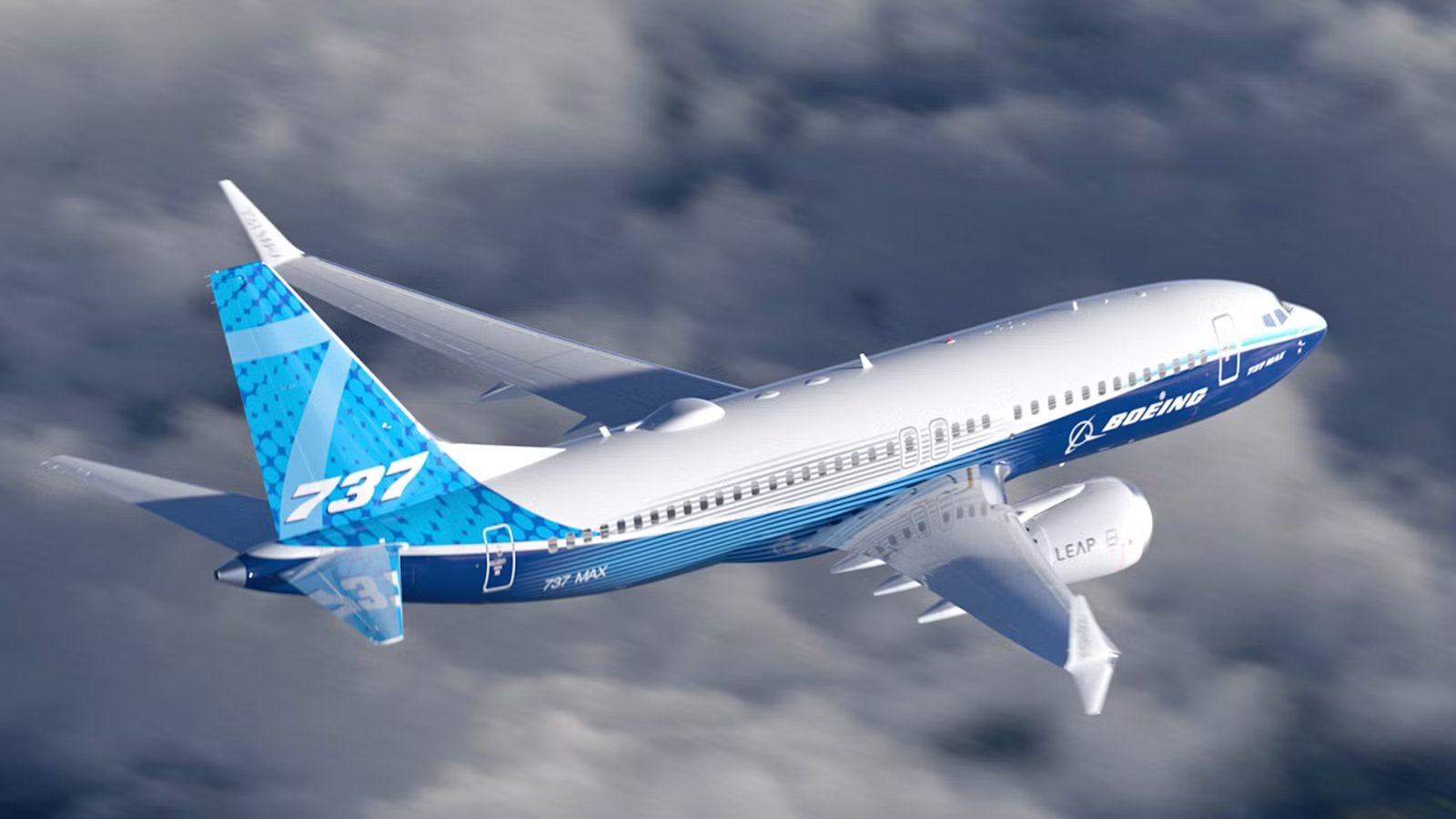
 Boeing launched the Boeing 737 MAX program in 2011 to compete with Airbus’ newly launched A320neo. The aircraft family offered efficiency gains over previous-generation 737s through several design updates, including the Boeing Advanced Technology winglet, which reduced fuel use and CO2 emissions by at least 14% compared with Next-Generation 737s. However, the program soon faced a series of challenges that would make it one of the most troubled in the manufacturer’s history.
The Boeing 737 MAX 8 and MAX 9 entered commercial service in 2017 and 2018, respectively, but two fatal crashes involving the MAX 8 in 2018 and 2019 led to the worldwide grounding of the fleet and a major regulatory review. The fallout from the crashes continues to affect the planemaker and the 737 MAX program today. Meanwhile, Boeing’s plans for the rest of the MAX family moved at a much slower pace. Certification of the MAX 7 and MAX 10 has been delayed for more than a decade. The MAX 7 has just recently received its certification.
The MAX 7’s Decade-Long Certification

On August 3, the US planemaker announced that it had received type certification from the Federal Aviation Administration (FAA) for the smallest member of the 737 MAX family. The MAX 7 typically seats 135 to 160 passengers in a two-class configuration and has a range of up to 3,800 nautical miles (7,038 km). Like other 737 MAX aircraft, it reduces fuel consumption and CO2 emissions by 20% and its noise footprint by 50% compared with the aircraft it typically replaces.
The aircraft has faced several challenges since Boeing launched the program. The manufacturer originally expected to certify and deliver the first MAX 7s to customers in 2019. However, the certification process took much longer than expected as the FAA increased scrutiny of the MAX program following the fatal crashes in 2018 and 2019, and Boeing faced broader concerns about its production and quality systems.
Those concerns intensified after the January 2024 incident involving an Alaska Airlines 737 MAX 9, when a door plug separated from the aircraft during flight. In addition, the MAX 7 also faced a specific technical hurdle. In 2023, the US planemaker identified an issue with the engine anti-ice system that could cause the CFM LEAP-1B engines to overheat during continuous operation. Resolving the issue became a key requirement before the aircraft could complete its certification.
What Happens Now?

Certification clears the way for deliveries, but they won’t start immediately. Boeing has repeatedly said it expects to deliver the first MAX 7 in 2027. There is still work to complete before the aircraft can be handed over to customers. The planemaker needs to bring some of the MAX 7s already built into the final certified configuration, complete the required inspections, and obtain individual airworthiness certificates. Cirium data shows that around 30 MAX 7s have already been assembled and are awaiting delivery.
Boeing has started updating these aircraft to reflect changes made during the certification process. Boeing is preparing the first aircraft for  Southwest Airlines, the MAX 7’s launch customer. The airline will then have its own preparations to complete before the aircraft can enter passenger service. Southwest has said it expects to need around six months after certification to add the MAX 7 to its operating specifications, update its manuals and maintenance procedures, and complete crew training.
The Dallas-based airline has more at stake than any other airline. The carrier currently has more than 250 MAX 7s on firm order. At one point, it had an order for around 300 aircraft, but due to certification delays, it adjusted its MAX 7 order to MAX 8. The aircraft is intended to replace its aging 737-700s while keeping the airline’s fleet based entirely around the 737 family. Southwest is targeting the first quarter of 2027 for the MAX 7 to enter revenue service. Its published schedule through March 2027 does not yet include MAX 7 flights, however.
The Airlines Waiting For The MAX 7

Boeing currently has a backlog of more than 4,000 737 MAX aircraft, but the MAX 7 accounts for only a small share of that total. Of course, Southwest accounts for the vast majority of the MAX 7 orders. The other confirmed US customer is leisure carrier Allegiant Air, which currently has around 24 MAX 7s on order. The airline originally ordered 50 aircraft and held options for another 50, but later changed its plans.
Furthermore, the MAX 7 has also lost some customers during its long wait for certification. United Airlines and Canada’s WestJet originally ordered the type, but both airlines eventually moved their MAX 7 orders to the larger MAX 8. The changes left Southwest and Allegiant as the main customers for the aircraft, alongside smaller orders from Luxair, Ruili Airlines, and SkyUp Airlines. Boeing also has 16 MAX 7s listed for an unidentified customer.
Airline | Publicly disclosed aircraft order |
|---|---|
Southwest Airlines | 256 |
Allegiant Air | 24 |
Luxair | 4 |
Ruili Airlines | 2 |
SkyUp Airlines | 2 |
Unidentified | 16 |
The MAX 7 will be assembled at Boeing’s main 737 production sites in Renton, Washington. The new North Line at Boeing’s Everett facility does not have the tooling needed to build the aircraft. Besides, 737 MAX production has faced several setbacks over the past few years, but Boeing is now gradually increasing output and is also looking at how far it can take production. A couple of months ago, CEO Kelly Ortberg told CNBC that the company was studying whether it could eventually reach a production rate of 70 aircraft per month.
Can The MAX 7 Find A Market?

Indeed, the certification is a major milestone for Boeing, but the bigger question now is whether the MAX 7 can find a market comparable to that of the larger members of the family. So far, the aircraft remains a niche proposition. Its operating costs are close to those of the MAX 8, yet it carries fewer passengers. Pilot salaries, airport fees, and other fixed costs do not fall by much when an airline chooses a smaller aircraft, which makes the larger MAX 8 more attractive on a cost-per-seat basis.
In addition, the long delay has made that problem even harder for the US planemaker. In recent years, airlines have moved towards larger narrowbody aircraft as passenger demand has grown. As noted previously, some customers that originally wanted the MAX 7 have already moved to the MAX 8. In fact, Airbus also faced a similar problem at the smaller end of its narrowbody range; the Airbus A319neo attracted only around 57 orders.
Besides, the MAX 7 is entering a market where the Airbus A220 has already established itself. Bombardier originally designed the A220 as a clean-sheet narrowbody, giving it a more modern design than the MAX 7, which is a shortened version of the 737 family. The A220 offers strong fuel efficiency and passenger appeal in the same broad market segment. That said, there is one area where the MAX 7 has a clear advantage. It has a range of up to 3,800 nautical miles (7,038 km).
That capability could make the aircraft useful on thinner routes where capacity needs to be kept low. So far, however, airlines have shown little interest in using the MAX 7 for that role. Independent analysis from Leeham News suggests that the aircraft could still find more customers because of its performance advantages, including the longest range of any 737 MAX variant. Even so, the analysis expects the MAX 7 to remain a niche narrowbody rather than achieve the kind of market success seen by the MAX 8.
The MAX 10 Is Next In Line

Moving forward, the MAX 10 certification is next. Boeing has completed the final planned certification flight for the aircraft. FAA Deputy Administrator Chris Rocheleau said in July that the MAX 7 was “literally around the corner” and that the MAX 10 would be right behind it. The planemaker is now working to complete the remaining development assurance reviews and system safety assessments before submitting the final certification documents to the FAA.
The manufacturer is testing an enhanced angle-of-attack (AoA) system on the MAX 10, which will be available on the MAX 7 as well. Boeing is aiming to complete MAX 10 certification later this year and start deliveries in 2027. The aircraft was originally expected to enter service in 2020, but its testing program did not begin until 2021, and Boeing initially targeted 2023 for its entry into service.
The MAX 10 matters far more to Boeing commercially than the MAX 7. The manufacturer has more than 1,500 MAX 10s on order globally, accounting for more than a quarter of its outstanding MAX orders. The aircraft is also Boeing’s main answer to the Airbus A321neo at the upper end of the single-aisle market. Getting the MAX 10 certified would therefore give Boeing access to a much larger part of the narrowbody market than the MAX 7.
What Certification Means For Boeing

Overall, the MAX 7 certification is a major milestone for Boeing. It removes one of the longest-running unresolved issues in the 737 MAX program after years of delays, technical problems, and increased regulatory scrutiny following the two fatal crashes in 2018 and 2019. The aircraft has taken far longer to reach this point than the planemaker originally expected, but it has now cleared the certification process.
That does not mean the MAX 7 will enter service immediately. Boeing and Southwest still need to prepare the first aircraft for delivery and complete the required work before it can enter passenger service. The first deliveries are expected in 2027, and Southwest is targeting the first quarter for the aircraft’s entry into revenue service.
What remains less certain is how successful the MAX 7 will be in the market. The aircraft has a useful range advantage and could suit airlines looking for a smaller aircraft for longer routes, but most of the market has moved towards larger narrowbodies. For now, the MAX 7 looks likely to remain a niche aircraft in Boeing’s 737 family rather than become another high-volume member of the MAX program.