dailynewsnblog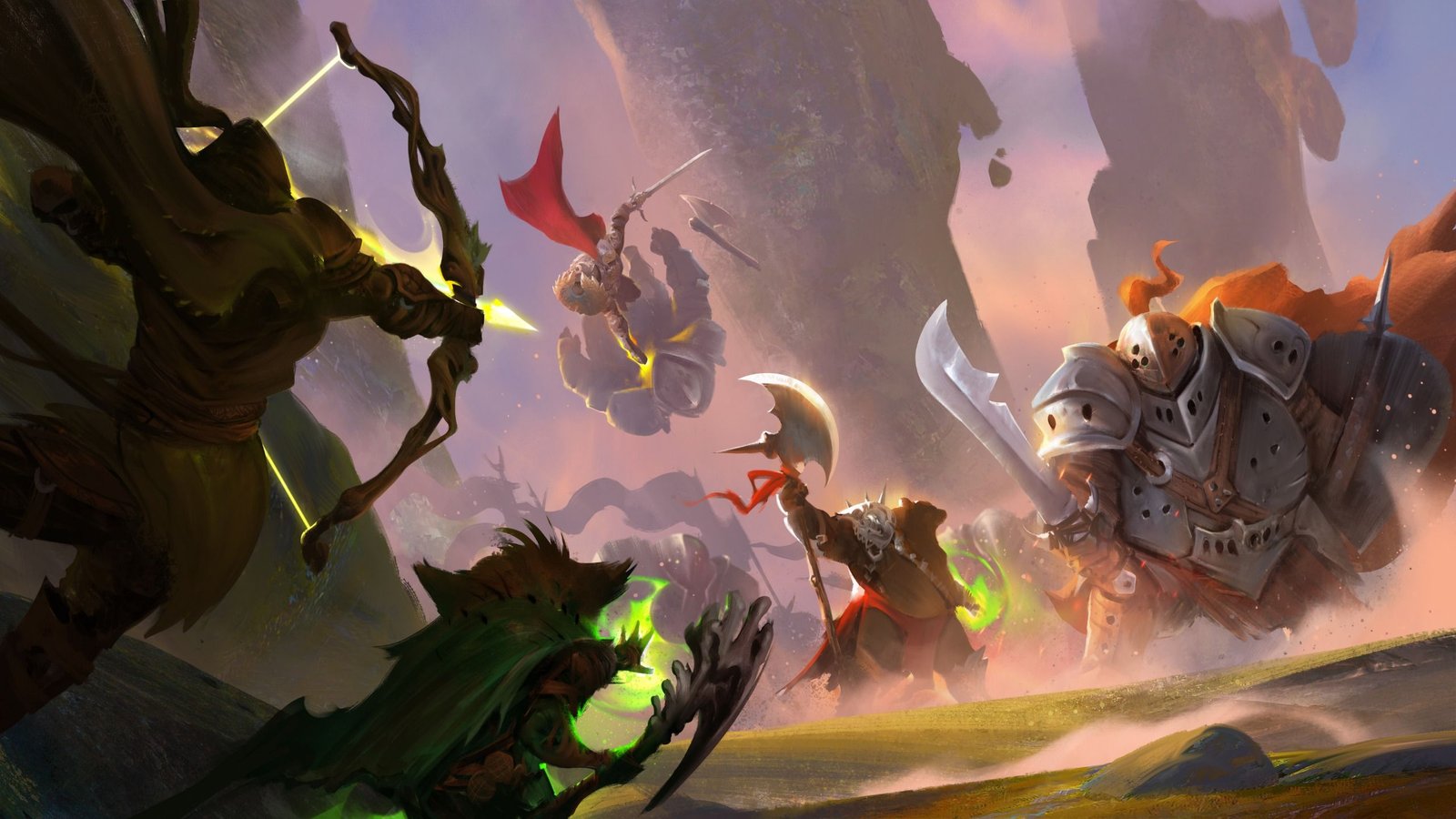
There are few things as exciting as the prospect of a new MMO. And when that new MMO is from ArenaNet, the studio that’s been focused on Guild Wars for more than two decades, the excitement is even greater. Having seen Guild Wars 3 in action at Gamescom, and spoken to game director Colin Johanson and lead combat designer Kevin Stocker, my excitement has been justified.
Just as Guild Wars 2 was dramatically different from its predecessor, Guild Wars 3 is not a simple sequel. It’s distinct from GW2, a very different kind of MMO, and one that even in the short space of time I spent watching it being played is full of novel ideas.

The first big change is in its setting. The clock has been turned back 1,000 years, and we’re heading to Orr—a land that in GW2’s era is a post-apocalyptic hellscape, but at this earlier point is a verdant wilderness teeming with spirits.
Latest Videos FromPC Gamer
“The origins of the Guild Wars franchise originate out of Orr,” says Johanson. “This is a time before the gods have left the world, very shortly after Grenth has usurped Dhuum and become the god of death. This is a time where the first guilds are starting to rise across the world, and before the very first Guild War takes place. And there is 21 years of Guild Wars history, and so much of it originates out of this timeline and this setting.”
As someone who’s been playing Guild Wars since I was still in university, a trip back in time to see what led up to all the events I’ve played through is an exciting prospect. So the choice in setting offers a lot to veterans, but ArenaNet also picked this era because it’s a great starting point for new players. You don’t need any foreknowledge, because nothing that happened in the previous games has come to pass in Guild Wars 3. We’re all going in pretty fresh.
The joy of movement

The focus of this first hands-off demo is movement and combat, and it doesn’t disappoint. Stocker takes control of a Warrior as Johanson talks me through what’s happening. The Warrior jumps off a cliff, and immediately brings out her glider—a familiar mode of transport for Guild Wars 2 players. But then something new happens. Stocker spots some creatures below, so he attacks them from above, seamlessly swapping from gliding to a drop attack. This is all part of the new momentum system, and it’s awesome.
One of our big goals when we make a new game in the Guild Wars franchise is to set out and try new things.
Colin Johanson
“One of our big goals when we make a new game in the Guild Wars franchise is to set out and try new things, and to innovate and to push the genre forward,” says Johanson. Early on, the team identified movement as one of the places where it could shake MMOs up, building on the work it did in Guild Wars 2 with gliding, jumping puzzles and mounts.
“One of the things that you constantly see [in MMOs] is that there’s this really stop-start nature to movement,” he continues. “You’re running, then you stop and then you jump, then you stop and then you glide. Everything feels very clunky.”

ArenaNet wanted to evoke action games, where there’s no stopping and starting, just seamless switching between different styles of movement. Thus momentum became a “core component” to Guild Wars 3. The result is that there’s now mantling, wall running, gliding in all directions, and your speed actually matters. The faster you’re moving, the more force you’re building up. This is how it affects combat.
“It ended up being a really natural development to bring the two systems together,” Stocker tells me. “As soon as we got to the point where you could wall run into this leap and slam sequence, it was a huge hit in the studio, and so we took a step back and went through all of the combat—we’re we’re going for a much more visceral like kind of action combat—and did a bunch of work to tie everything together. So everything you’re doing in movement, whether it’s dashing or wall running or gliding, seamlessly goes into your combat skills and actually pays off.”
So the more momentum you have, the greater the impact you make when you’re attacking. Doing a drop attack from a great height increases both the damage of your attack and the radius.
Knockabout

This ties nicely into combat’s increased physicality. You can knock enemies around—and be knocked around yourself—netting you extra damage. Kicking a monster into a wall will do more damage than just kicking it. And you can knock enemies off cliffs, doing even more damage, or killing them outright. Guild Wars 3 also takes into account the size of your opponent. So you’ll need more momentum to knock back larger enemies.
Even in a hands-off demo, it was clear how different this is going to feel compared to other MMOs. Knockbacks are a common tool in countless MMO arsenals, sure, but they are usually designed to stun or to give players breathing room. And on the rare occasion when you can knock an enemy off a ledge, like in Star Wars: The Old Republic, it often breaks the encounter. It’s usually far from a combat pillar.
Guild Wars 3’s classes also feature different skills that enhance these abilities—basically multiplayer combos. When Johanson and Stocker teamed up to explore a ruined temple, Johanson was able to use Stocker’s shield as a springboard, increasing their momentum and allowing them to get behind the enemy, to target a weak point.

While I didn’t see the Ranger class, Stocker tells me it has a particularly cool ability that creates a vortex that sends all their allies up into the air, where they can comfortably pull off their aerial attacks.
Customising your build and bringing the right skills to defeat enemies is another huge part of combat.
Colin Johanson
We eventually get to my least favourite part of MMOs and RPGs: the spider section. Stocker is taking his warrior through an arachnid-infested den that’s covered in sticky webs. My phobia flares up. “These are really difficult to kill,” says Johanson. “It takes a long time because of their webs.” Their webs can target players, slowing down both attacks and movement, but they can also spread across the ground, affecting everyone in the area.
But there’s good news for my fellow arachnophobes—they can be handled deftly with the right build. “Customising your build and bringing the right skills to defeat enemies is another huge part of combat,” says Johanson. And conveniently, Stocker has an ability that modifies his attacks, and those of his allies, by adding fire damage. This tears through webs, so you can quickly set your allies free. Spiders are particularly weak to fire damage, too, so they go down rapidly.
Feed your spirit

Earlier I mentioned that Orr is teeming with nature spirits. They weren’t the focus of this first demo, but I did get ArenaNet to share a little bit about what role they’ll play. Because the gods haven’t yet seen fit to share magic with mortals—despite the region being rife with it—the denizens of Orr have needed to find other ways to take advantage of it. The Vaelwardens have access to crafted signets that give them access to magic, but much of the magic in Guild Wars 3 comes from befriending spirits.
Back in the ruined temple, Stocker uses a spirit to illuminate the darkness. “You can actually befriend it and eventually summon it so that you can see in dark places,” says Johanson. And your mounts, both flying and ground-based, will be spirits as well, which you’ll need to befriend before you can take advantage of their movement capabilities.
Your enemies can use spirits as well. We meet a fire-spewing foe in the temple who has captured a spirit and stuck it in a backpack—this is what’s fuelling their fire attacks. What’s cool, though, is this makes them vulnerable. So you can use momentum to get behind them, damage the backpack, free the spirit, and then easily take out the defanged enemy.

In a relatively short space of time I got to see so many things that Guild Wars 3 is doing differently, and it’s properly exciting to see an upcoming MMO that isn’t content with just doing the same thing over and over again, or trying to drum up nostalgia for old sandbox MMOs. Guild Wars 3 seems to be confidently charting its own course—which in turn has given me a lot more confidence in its ability to have some real staying power.
Of course, there’s still a lot of questions. How is it handling PvP, for instance? PvP has always been central to the series, so expectations are high. Magic, spirits, mounts, dungeons, character progression, character customisation—there’s a lot to dig into between now and its beta, due in autumn 2027.