dailynewsnblog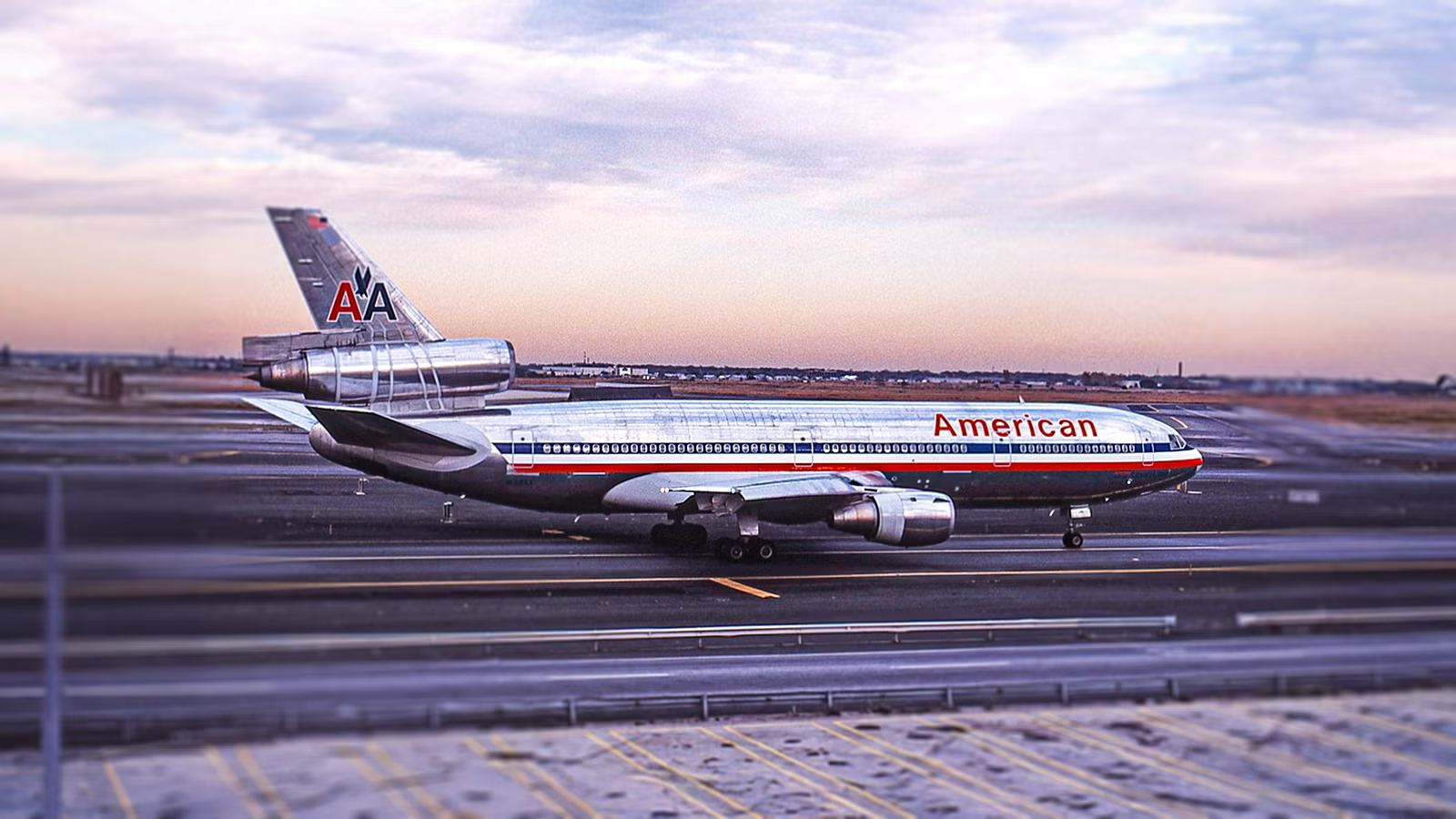
The McDonnell Douglas DC-10 entered service in an era when commercial aviation was learning how quickly a seemingly isolated design weakness could become a system-level emergency. Within its first decade, a series of accidents exposed vulnerabilities involving cargo doors, pressure loads, hydraulic systems, engine pylons, and flight-warning equipment. The resulting engineering changes did more than keep the DC-10 flying. They helped establish a more demanding approach to redundancy, containment, maintenance, and failure tolerance that remains central to transport-aircraft certification.
The important legacy is therefore not simply the DC-10 itself, but the engineering philosophy developed around it.  American Airlines Flight 96 in 1972 demonstrated how a door could appear secured even when its locking mechanism was not fully engaged.
  Turkish Airlines Flight 981 in 1974 showed the consequences when a similar failure produced catastrophic structural damage. American Airlines Flight 191 in 1979 exposed the danger of allowing a maintenance procedure to damage a critical pylon. Later, United Airlines Flight 232 in 1989 demonstrated that even multiple hydraulic systems could be vulnerable if their routing allowed a single event to disable them simultaneously. Each tragic episode yielded a different lesson, and eventually several mandatory modifications were issued through FAA airworthiness directives.
Cargo Doors
How a false lock exposed a dangerous design flaw

The DC-10’s aft cargo door became one of the aircraft’s defining engineering controversies because its original design allowed a particularly dangerous failure mode. On June 12, 1972, American Airlines Flight 96 suffered separation of the aft bulk cargo compartment door at approximately 11,750 feet (3,580 meters). The resulting rapid decompression caused the cabin floor above the compartment to fail, although the aircraft was able to land safely. The NTSB determined that the door’s latching mechanism could appear closed even when the latches were not fully engaged and the locking pins were not in place.
A cargo door failure could become a structural and flight-control problem because the sudden pressure differential could load the cabin floor. The NTSB therefore recommended two complementary changes. First, the locking system needed to make it physically impossible to place the external handle and vent door into their normal locked positions unless the locking pins were properly engaged. Second, the cabin floor also needed relief vents, so pressure could equalize more rapidly following a cargo compartment decompression.
The subsequent Turkish Airlines crash outside Paris demonstrated why relying on voluntary improvements was inadequate. Flight 981 suffered a cargo door failure in 1974, and 346 people were killed. The accident intensified pressure for mandatory corrective action rather than treating the problem as an operator-level service issue. That regulatory lesson remains relevant to modern aircraft design. Today, the goal is to design aircraft in a way that makes it difficult or impossible to establish an unsafe configuration without detection. The DC-10 cargo door modifications helped push that concept into a more explicit part of transport aircraft safety thinking, where mechanical interlocks, independent indications, and pressure-relief provisions are considered together rather than as isolated features.
Floor Venting
Controlling decompression before it could spread

The cargo door problem also produced a second engineering lesson: preventing the initial failure is only part of the safety equation. Designers must also limit the consequences if the first barrier is breached. When the Flight 96 door separated, the decompression did not remain confined to the cargo compartment. The NTSB found that the pressure event caused the cabin floor above the compartment to fail. That created the possibility of damage spreading into systems and structures located within or beneath the floor. The investigators consequently recommended relief vents between the cabin and aft cargo compartments to reduce pressure loading on the flooring during a sudden decompression.
An aircraft cannot be designed on the assumption that every component will remain intact throughout its entire service life. Instead, engineers must consider what happens after an initial failure and create pathways that prevent one event from becoming several. This became especially important for widebody aircraft because their lower decks contain baggage, cargo, wiring, plumbing, and other systems beneath occupied areas. The DC-10 experience showed that pressure-management features could protect structures beyond the component that initially failed.
The NTSB also recommended improving the viewing window and illumination around the cargo door lock pin area to positively verify proper engagement. A safe design should support both mechanical security and reliable human verification. Modern transport aircraft use far more sophisticated sensing, indication, and structural protection than the DC-10 did, but the underlying principle is familiar. Designers increasingly ask how a failure will propagate, which barriers can stop it, and whether the crew or maintenance personnel will receive an unambiguous indication before the aircraft reaches a hazardous state.
Hydraulic Redundancy
Protecting backup systems from one common failure

The DC-10’s hydraulic architecture provided three independent systems, but independence is useful only when a common event cannot disable them simultaneously. That vulnerability became starkly visible in United Airlines Flight 232, which suffered an uncontained engine failure in 1989. Debris damaged all three hydraulic systems, leaving the crew without normal flight-control capability. The accident killed 111 people, although 184 occupants survived the crash landing.
Catch what other flight trackers miss
Emergency squawks, holds, NOTAMs — live signals, no signup.
Open tracker
Catch what other flight trackers miss
Emergency squawks, holds, NOTAMs — live signals, no signup.
Open tracker
The post-accident engineering response included additional protection for the third hydraulic system. The FAA required an enhancement that could isolate part of the hydraulic network, while operators had provisions for flow-limiting fuses. The system was designed to preserve hydraulic capability if damage occurred in the tail-engine area. The enhanced architecture was later incorporated into the McDonnell Douglas MD-11. A redundant system can still fail as a group if its supposedly independent elements share a vulnerable location. Modern aircraft certification therefore places substantial emphasis on physical separation, damage tolerance, and the possibility of common-cause failures.
The DC-10’s later modifications illustrate that evolution. The NTSB noted that its hydraulic lines serving the three systems had been routed through vulnerable areas, and the post-232 changes sought to prevent one localized event from draining the systems together. They also examined the broader problem of protecting essential systems from damage caused by structural failures or other secondary events. This principle now appears throughout transport-aircraft architecture. Electrical wiring, hydraulic lines, flight-control systems, and other essential equipment are not evaluated solely on the presence of a backup for each system. Engineers must also determine whether the same fire, rupture, structural failure, or debris event could defeat several backups at once.
Flight Warnings
Adding redundancy when critical alerts could disappear

American Airlines Flight 191 exposed another weakness that was less obvious from the cockpit. During takeoff, the left engine and pylon separated from the wing, severing hydraulic lines and causing the outboard leading-edge slats on the left wing to retract. The resulting asymmetric configuration increased the wing’s stall speed. At the same time, the separation disrupted electrical power and disabled several indications, including the captain’s stall-warning stick shaker and the slat-disagreement warning system.
The crew did not know the engine and pylon had separated. They interpreted the emergency as an engine failure and followed the applicable procedure, reducing speed toward V2. The damaged left wing then stalled, producing an uncontrollable roll. The NTSB identified the asymmetric stall and ensuing roll as the probable cause, while also citing the loss of stall-warning and slat-disagreement indications.
The regulatory response included AD 80-03-10. The FAA required two autothrottle or speed-control computers, each receiving information on the positions of both outboard wing-slat groups, and a second stick shaker at the first officer’s position. Either computer could activate either stick shaker. The objective was to provide more reliable warning and speed-control information when a slat-related abnormality occurred. This represented a move away from the assumption that a single warning channel was sufficient. Modern flight decks contain far more sophisticated redundancy, including multiple sensors, computers, displays, and warning systems.
Maintenance Practices
Designing against errors introduced on the ground

American Airlines Flight 191 showed that an aircraft’s safety could be compromised by the way it was maintained, not only by a defect in its original design. During engine and pylon removal, an improvised forklift procedure placed excessive loads on the structure and damaged the pylon attachment area. The damage later contributed to the engine and pylon separating during takeoff.
The investigation found additional cracked pylon mounts on other DC-10s, prompting the FAA to address the maintenance procedure across the fleet. The episode helped establish a broader principle in transport-aircraft safety: critical maintenance tasks must be evaluated as carefully as the components themselves. Today, aircraft manufacturers and regulators consider how maintenance procedures could introduce damage, how technicians can access critical components, and how inspections can detect problems before an aircraft returns to service. Sadly, the world was reminded that work remains to be done on this front after the tragic crash of UPS Airlines Flight 2976 in November 2025, an MD-11. The DC-10 experience helped make maintenance-induced failure a formal part of the safety equation rather than an issue considered separately from aircraft design.