dailynewsnblog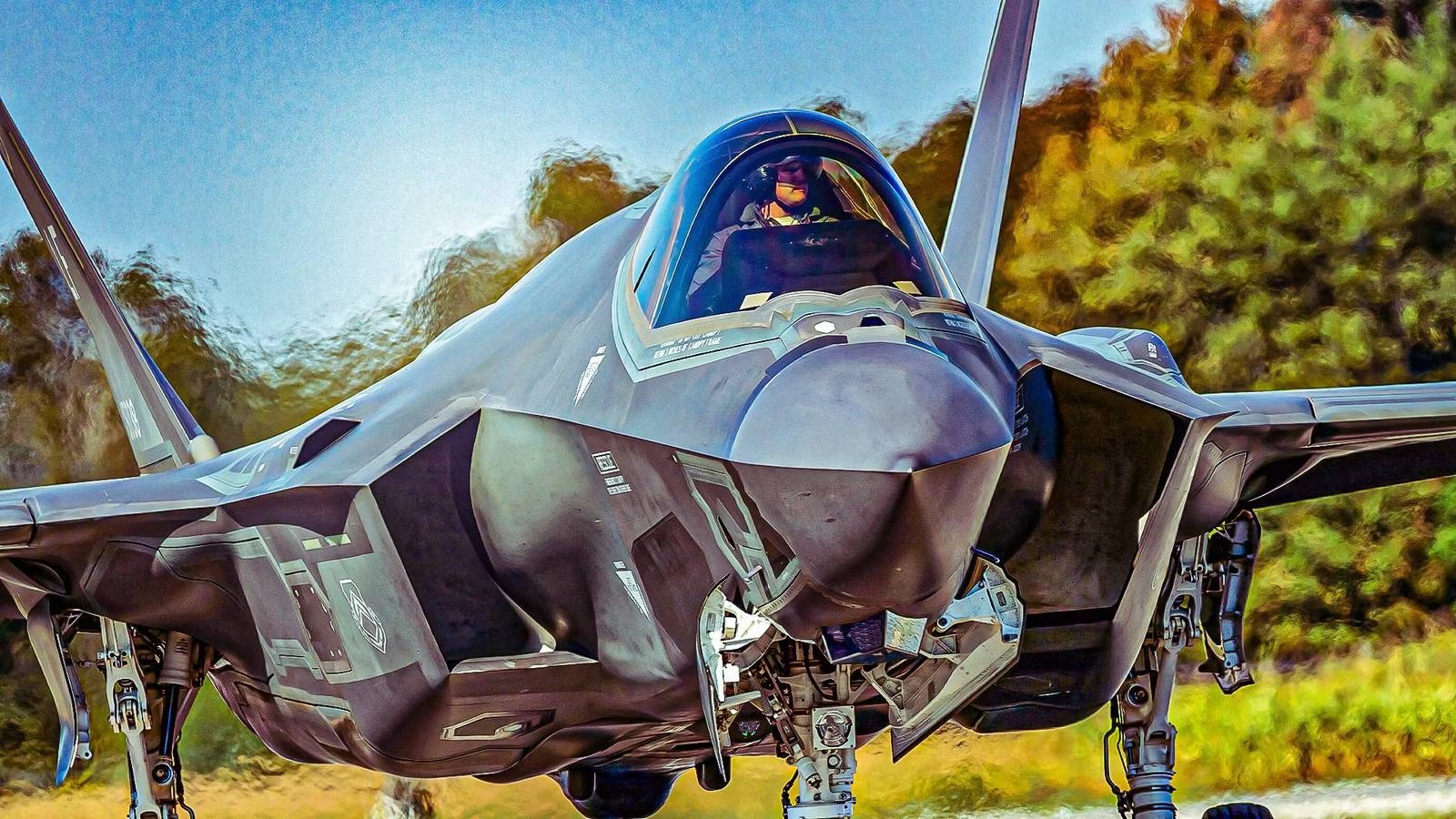
The top headlines about the US Navy today revolve around Ford-class supercarriers and the delays, deficiencies, and design changes that affect these crucial platforms for naval aviation. However, the ‘Pivot to the Pacific’ requires many different flying units beyond simply the aircraft carriers and their Air Wings.
In the past two decades, the Navy has invested heavily in Maritime Patrol aircraft, uncrewed aerial vehicles, tiltrotors, and the world’s first operational tailhook stealth fighters. The five squadrons in this review field some of the latest and greatest capabilities the Navy has to offer. Each of them is forward deployed across the first or second island chain to support the American military and US allies across the Indo-Pacific region.
VUP-19 Big Red
MQ-4C Triton drones fly from Guam for 24+ hours and over 7,400 nautical miles.

Unmanned Patrol Squadron 19 is the newest kind of aviation unit in the Navy. The mission of the sailors and officers assigned to the Big Red is to fly the Northrop Grumman MQ-4C Triton high-altitude long-endurance unmanned aerial vehicle. The Triton is one of the most exquisite drones in the US arsenal with a powerful suite of radar, electro-optical, and electromagnetic sensors. These are highly modified versions of the RQ-4 Global Hawk and have a steep price tag of nearly $200 million each.
VUP-19 and the Triton are critical to a renaissance of Maritime Patrol capability in the US Navy. For decades, the only real tool America’s Navy has had for ASW was the Lockheed P-3 Orion turboprop MPA. While the Orion was optimized for anti-submarine warfare, the Triton has maximized its endurance and altitude performance to exponentially enhance both on-station time and area coverage per sortie.
Big Red is based at Andersen Air Force Base in Guam, the largest stronghold of American air power in the second island chain. However, troops and Triton drones regularly perform rotational deployments to forward bases in Japan such as Naval Airfield Misawa or Marine Corps Air Station Iwakuni. This ensures that the persistent surveillance power of the Triton supports the fleet across the theater alongside the Marines, Army, Air Force, and America’s allies like the Japanese Self-Defense Forces.
VP-26 Tridents
Supporting rotational deployments to the US 7th Fleet out of Misawa, Japan.

The ‘Tridents’ of Patrol Squadron 26 are forward-deployed to Kadena Air Base in Okinawa, Japan, alongside the US Air Force, even though their actual home base is in Jacksonville, Florida. This squadron operates the Boeing P-8A Poseidon MPA to work in tandem with the Triton drones and provide persistent intelligence, surveillance, and reconnaissance, as well as anti-submarine capability.
While the MQ-4C functions as a remote sensor node, the Poseidon carries the firepower to respond when threats are detected. The aircraft that VP-26 flies are militarized versions of the Boeing 737-800 airliner. Instead of a passenger cabin, the deck is filled with modular weapon stations while the cargo hold has been replaced with a bomb bay. It also has the capability of mounting standoff long-range anti-ship or air-to-ground missiles on wing pylons.
The Tridents are just one of 12 active duty Maritime Patrol squadrons in the Navy, two of which are typically forward deployed to Japan at any given time. There are six permanently based at Naval Air Station Whidbey Island in Washington State, as well as six at NAS Jacksonville. Typically, one will be posted at Kadena, while another is often at NAF Misawa to maximize presence over the key sea routes around Japan, Taiwan, Korea, and other strategic points.
VRM-30 Titans
The Navy’s first CMV-22B squadron.

Fleet Logistics Multi-Mission Squadron 30, also known as the Titans, is the US Navy’s first operational squadron to field the Bell-Boeing CMV-22B Osprey tiltrotor. The new rotary wing platform replaced the old Grumman C-2A Greyhound turboprop transport plane. Where the Greyhound typically flew two-aircraft detachments, VRM-30 now deploys three CMV-22Bs per detachment, giving strike groups added lift capacity as well as a longer range than its predecessor and runway independence.
The transition was a controversial one as the older fixed-wing, tailhook plane was still a valuable asset and actually carried a higher payload as well. However, the Navy chose to modernize for the versatility of the tilt rotor but, more importantly, the power plant of its new stealth fighters could not fit in the Greyhound. In order for the Carrier Air Wing to truly fight a conflict against a near-peer adversary, the ability to land a new engine on the deck is crucial to sustaining combat operations.
Specifically, the CMV-22B can fit a Pratt & Whitney F135 turbofan engine for the Lockheed Martin F-35C Lightning II. It does, however, sacrifice 4,000 lb (1,814 kg) of total payload compared to the C-2A. However, in exchange for that trade-off, the Navy not only has the ability to support its new Joint Strike Fighter, but it can also perform vertical replenishment on smaller vessels at sea. It also does not need to land using the arresting wire or take off with the catapult, making every sortie simpler and more efficient.
VAQ-135 Black Ravens
Airborne electronic attack and radar-jamming to secure Pacific airspace.

The Black Ravens are a tactical electronic warfare squadron, or VAQ-135, which operates the Boeing EA-18G Growler. The squadron’s jets are a modified version of the F/A-18 E/F Super Hornet that has been optimized for EW to support Navy strike fighters to overcome advanced integrated air defense systems. Many Growlers are deployed on carriers alongside the other squadrons of the Carrier Air Wing, but the VAQ-135 is currently on a rotation for land-based expeditionary operations at Misawa Air Base in Northern Japan.
The Growler succeeded the venerable Grumman EA-6B Prowler, which pioneered the tactics and technology during the Vietnam conflict and later air campaigns in the Middle East. The primary system is the ALQ-99 Tactical jamming system carried in the form of two external pods under the wings. These pods not only intercept and analyze signals intelligence from the enemy but also shut down the airwaves by jamming radio signals to disrupt communications and radar.
Meanwhile, mounted on the wingtips is the ALQ-218 receiver system, which provides a highly sensitive 360-degree electronic surveillance capability. These are crucial in geolocating enemy emitters like radar sites or surface-to-air missile batteries. It can also be extremely valuable in finding warships on the high seas or even hostile aircraft. Then, for kinetic lethality, the Growler carries AGM-88 High-speed Anti-Radiation Missiles (HARM), which can track enemy radar signals down to the source and destroy them.
The Growlers are some of the most advanced tactical EW platforms in the US Armed Forces and the entire Western bloc of allied military air power. EA-18G squadrons provide support to the 7th Fleet as well as the Japan Air Self-Defense Forces when they deploy to Misawa or Kadena. The EW capability is crucial in supporting other regional partners as well, like the Royal Navy or Royal Australian Air Force.
VFA-147 Argonauts
A new F-35C squadron operating from MCAS Iwakuni, Japan.

The US Navy is still pioneering strike fighter tactics with the world’s first fifth-generation tailhook jets, the F-35C JSF. VFA-147, the Argonauts, has achieved a number of historic firsts for America’s Navy. Originally based on NAS Lemoore, the Navy’s master jet base on the West Coast, VFA-147 was the first operational F-35C squadron in the Navy in 2018. It was also the first to deploy aboard a carrier when it was assigned to USS Carl Vinson in 2021.
Currently, VFA-147 is the forward-deployed stealth strike fighter squadron supporting the Seventh Fleet and the USS George Washington’s air wing. When this squadron is not at sea aboard the George Washington, it is based at Marine Corps Air Station Iwakuni just south of Hiroshima, Japan. These aircraft represent a paradigm shift in Naval Aviation and provide some of the most game-changing tactical capabilities for the US and its allies in the region.
The JSF is not only an invaluable asset because the F-35C is a stealth aircraft but also thanks to its immensely powerful data link capabilities. The ‘kill web’ technology exponentially increases the lethality of every other platform connected via the ‘combat cloud.’ Its radar-evading skin allows VFA-147 to slip past advanced early-warning radars that would easily pick up legacy fighters like the Super Hornet and pick out enemy targets with impunity.
In a Pacific conflict, an adversary like China relies on advanced surface-to-air missile systems to keep US aircraft carriers at bay. VFA-147 acts as a ‘day-one’ strike asset. They can fly deep inside these missile engagement zones undetected, locate mobile missile launchers, and destroy them from close range using precision weapons. Yet, the F-35C is less of a traditional dogfighter and more of an airborne supercomputer.
If a war starts with China, the US and its allies plan to win by using one giant, connected network of stealth fighter jets. Because the US, Japan, Australia, South Korea, Singapore, and even the United Kingdom’s Royal Navy all fly the same F-35 aircraft. In the next several years, there will be over 300 permanently assigned, with an additional 1,000 total JSFs available to deploy in the region across all of these Coalition Air Forces.