dailynewsnblog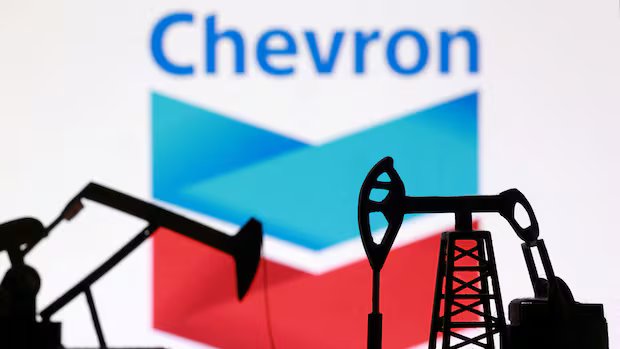

Listen to this article
Estimated 4 minutes
The audio version of this article is generated by AI-based technology. Mispronunciations can occur. We are working with our partners to continually review and improve the results.
Chevron will invest more than $7 billion US through its Venezuela joint ventures to double oil production to about 600,000 barrels per day over the next five years in the South American country, the U.S. oil major said on Wednesday.
Under new agreements, Chevron’s Petroindependencia joint venture will expand to include two adjacent areas in the Carabobo region located in Venezuela’s vast Orinoco Belt.
“Chevron’s history in Venezuela spans more than a century, and our expanded position reflects our confidence in the country’s deep resource potential and its ability to compete for investment within our portfolio for decades,” Chevron CEO Mike Wirth said in a statement.
The announcement comes just days after U.S. President Donald Trump unveiled an unprecedented deal involving a fifth of Venezuela’s oil reserves, with the American government taking an equity stake in a private oil firm operating there. Chevron’s expansion is separate from that endeavor, but it further cements Trump’s efforts to expand output in Venezuela.
Oil from the deal could hit U.S. reserves in November, White House spokesperson Anna Kelly told Fox News’s America Reports on Wednesday.
World’s largest reserves
Venezuela has the world’s largest oil reserves, but its current output is only about 1.25 million barrels per day (bpd), down from the more than three million bpd it achieved two decades ago, following years of mismanagement and underinvestment by state-run oil firm PDVSA.
Venezuela’s total oil output is expected to reach two million bpd by the end of this decade, U.S. Energy Secretary Chris Wright said on Wednesday.

Chevron said its new agreements also provide enhanced fiscal, commercial and legal terms to protect the long-term investments, adding that total production costs are expected to be less than $20 US per barrel.
The joint venture’s infrastructure is in good shape and development in the new areas will build off existing facilities and pipeline infrastructure, Wirth said in a CNBC interview.
Wirth and other Chevron executives met with interim Venezuelan President Delcy Rodriguez on Wednesday. It was Wirth’s first visit to the country.
“Our ability to grow at low cost is quite different than if we were going into a greenfield area that didn’t have roads, that didn’t have water, that didn’t have power,” he said on CNBC.
Besides Chevron, oil producer ENI, investor KEO Capital and energy firm Primavera, a firm co-founded by billionaire Fred Ehrsam to invest in Venezuela, are among the companies set to sign energy agreements in Venezuela as soon as Wednesday, two sources close to the preparations said. Most pacts imply project expansions that have been in negotiation as part of the migration of dozens of energy contracts to new terms under a sweeping oil reform approved in January.
Wright, who arrived in Caracas late on Tuesday, and Venezuela’s oil minister, Paula Henao, are expected to oversee the signing of the contracts, officials have said.
U.S. pushes energy investment
Following the U.S. capture and removal of former Venezuelan president Nicolás Maduro from office in January, Trump pushed a $100-billion US reconstruction plan for Venezuela’s energy sector, urging U.S. oil companies to invest in the country.
While Chevron’s Venezuela operations have continued uninterrupted for at least 100 years, fellow oil producers ExxonMobil and ConocoPhillips exited the country in 2007 when their assets were nationalized under the previous government of president Hugo Chávez, and have remained on the sidelines.

An electricity crisis has plunged Venezuelans into the dark months after the U.S. took over the oil industry and devastating earthquakes hit the country. Here are the facts.
Chevron has operated in Venezuela since 1923 and has three joint ventures in the country. Petroindependencia and Petropiar operate in the Orinoco Belt, while Petroboscan operates in western Zulia state.
Even as Chevron is expanding its already firm foothold in the country, the U.S. stake in oil firm North American Blue Energy Partners’ plan to develop 17 oilfields holding about 64 billion barrels of crude reserves would create a new behemoth, said Oswaldo Felizzola, co-ordinator of the energy center at the Superior Administrative Studies Institute in Venezuela.
“We must understand that the rules of the game are changing — a massive U.S. oil company is set to emerge from the NABEP deal,” he said.