dailynewsnblog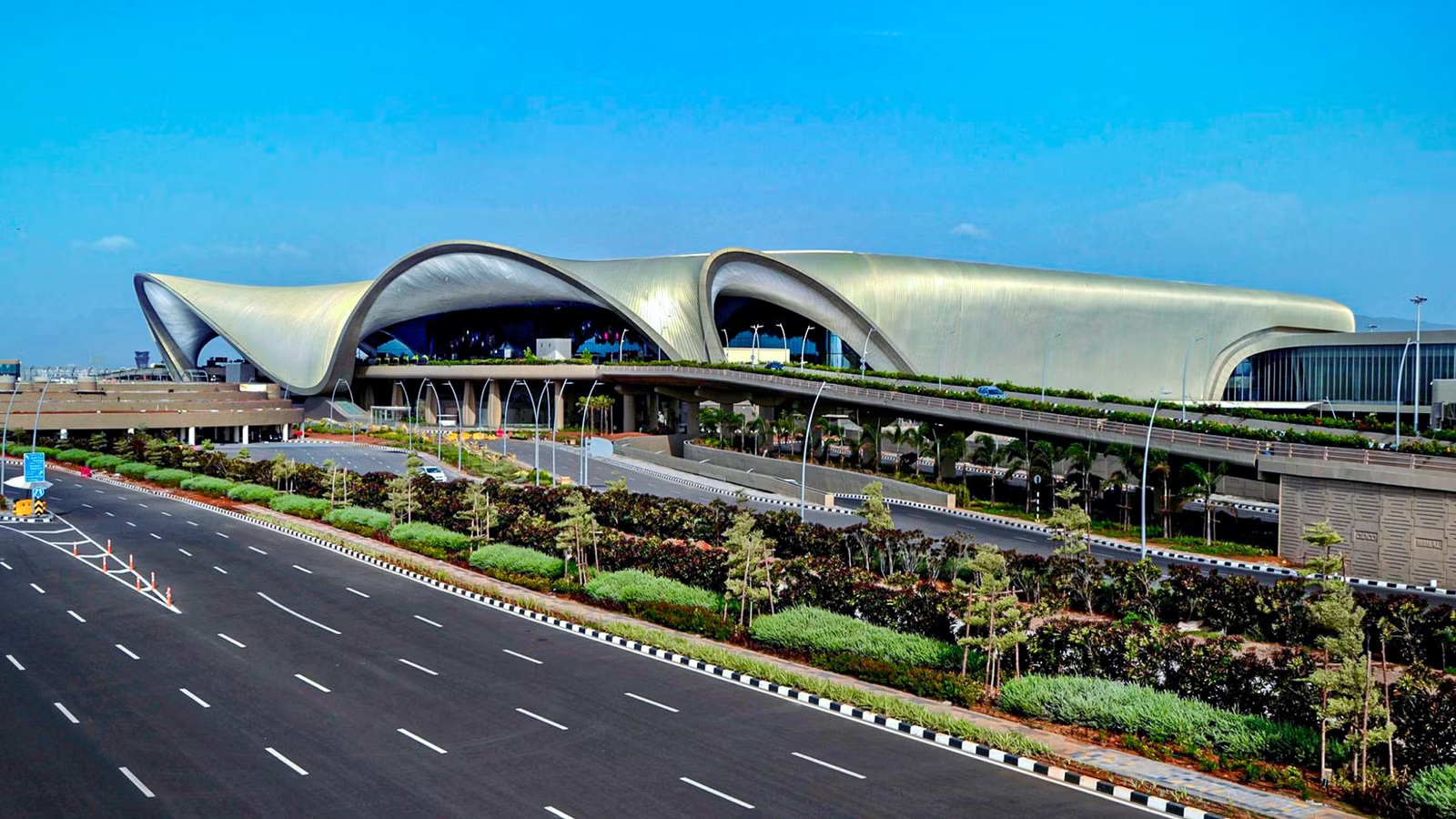
There is no doubt about it: demand for air travel is growing. The International Air Transport Association’s (IATA) mid-growth scenario sees global total revenue of passenger kilometers increasing by 3.1% annually to 20.8 trillion by 2050, for instance. Airbus then forecasts, somewhat conservatively compared to its closest rival, that 42,060 new aircraft will be needed by 2045. Indeed,  Boeing expects this figure to sit closer to 44,000, with half replacing existing models.
Essentially, whatever source or metric you pick, the conclusion is broadly the same: Demand is on the up, so the supply of fresh jets, people to crew them, and infrastructure to accommodate them will have to grow accordingly. It is no surprise, therefore, that development of new and existing infrastructure is continuously ongoing. Within the last year alone, a string of new greenfield airports have opened their doors to operators to some extent. So where are these, what stage of development are they at, and how significant will they ultimately be in the future?
Latest Greenfield Airports To One Day Handle 382 Million Passengers Annually

Some five greenfield sites have welcomed inaugural flights in recent months. All told, these will one day collectively have capacity for 382 million passengers a year, based on current plans. Cargo capacity between them is forecast to grow to 11.75 million tonnes in the meantime.
These are largely confined to Asia, with Australia’s Western Sydney International Airport (WSI) representing the only recently opened greenfield development elsewhere. Notably, India accounts for three of the five on its own: Navi Mumbai International Airport (NMI), Noida International Airport (DXN), and Alluri Sitarama Raju International Airport (VTZ). Also in Asia is Vietnam’s Long Thanh International Airport (LTH).
Recent greenfield airports and their future planned annual capacity:
Airport | Country | Passengers | Cargo |
Navi Mumbai International Airport (NMI) | India | 90 million | 3.2 million tonnes |
Noida International Airport (DXN) | India | 70 million | 1.5 million tonnes |
Alluri Sitarama Raju International Airport (VTZ) | India | 40 million | 0.25 million tonnes |
Long Thanh International Airport (LTH) | Vietnam | 100 million | 5 million tonnes |
Western Sydney International Airport (WSI) | Australia | 82 million | 1.8 million tonnes |
The reasoning behind this is simple. According to Boeing’s latest Commercial Market Outlook, it is in the likes of these “transitioning and emerging markets” where a greater proportion of demand for new aircraft will come over the coming decades. Namely, China, the Middle East, Latin America, South Asia, Southeast Asia, and Africa will make up about 55% of the 44,000 new deliveries anticipated in the US manufacturers’ case. So, simply put, these are where growth is fastest, and infrastructure is being built accordingly. More specifically, India’s aviation market itself is in the midst of a massive expansion.
India’s Three New Airports Part Of Massive, Widespread Expansion

Today, India has over 155 operational airports, according to industry publication International Airport Review. Just 12 years ago, in 2014, that number was closer to 74. What is more, that level of growth shows little sign of slowing just yet.
Come 2040, the Airports Authority of India (AAI) aims to have increased the figure to 300. Around 50 of the new sites are set to be developed over the next four years alone. All of this has been made possible under the country’s Ude Desh ka Aam Nagrik scheme. Launched in 2016, this ultimately aimed to improve the affordability and accessibility of air travel for everyday citizens.
As AAI chairman Vipin Kumar flagged, India — the world’s most populous country — “has enormous untapped potential in the aviation sector.” Having spent over a billion dollars so far to unlock this, with plans to splash several more in the years ahead, Navi Mumbai, Noida, and Alluri Sitarama Raju are the latest additions to what is a much larger and more ambitious expansion program.
Navi Mumbai, Noida, And Alluri Sitarama Raju Themselves

Collectively, the three new Indian airports are set to accommodate 200 million passengers per year once at full capacity. As it stands, though, this number is far lower, at 38 million, given each site’s infancy. Navi Mumbai, the longest-serving of the trio, was only inaugurated in October, for reference.
Operations at the new Mumbai site, which was built to complement the city’s main Chhatrapati Shivaji Maharaj International Airport (BOM), began soon after in December, with international services kicking off in July. One 12,100-foot (3,700-meter) runway and a single terminal building have so far been built on the 2,866-acre (11.6 sq km) site, leaving initial capacity at 20 million passengers. Plans are to add another parallel strip and a further three terminals ahead, taking capacity to 90 million passengers.
India’s latest greenfield airports:
Airport | Existing infrastructure | Initial annual passenger capacity |
Navi Mumbai International Airport (NMI) | One 12,100-foot (3,700-meter) runway One terminal Approx 67 stands | 20 million |
Noida International Airport (DXN) | One 11,200-foot (3,400-meter) runway One passenger terminal Approx 25 stands | 12 million |
Alluri Sitarama Raju International Airport (VTZ) | One 12,500-foot (3,800-meter) runway One terminal Approx 18 stands | Six million |
Noida and Alluri Sitarama Raju have officially opened their doors in the months since, adding initial annual capacities of 12 million and six million to India’s airport network respectively. Inaugurated in March, Noida welcomed maiden operator  IndiGo in June to cover domestic routes. International operations will get underway “in the coming months,” with its ultimate master plan set to take today’s one-runway hub to a capacity of over 70 million. Two months after Noida, in August, Bhogapuram-located Alluri Sitarama Raju was officially opened and saw
  Air India commence domestic services to Delhi. The smallest of the trio in terms of passenger capacity, it will be developed to handle more than 40 million people a year over time. However impressive, that figure is set to be dwarfed when Asia’s other brand-new mega-airport is fully up and running.
Vietnam’s Long Thanh Targeting 100 million Capacity

To the east in Vietnam, Long Thanh is under construction with the aim of eventually serving 100 million passengers per year. Even in its initial phase of operations, utilizing one of the four planned terminals, the airport will be able to handle 25 million travelers and 1.2 million tonnes of cargo annually. As a result, it is set to outdo each of its Asia-based counterparts that opened around the same time.
Around 25 miles (40 km) east of Ho Chi Minh City, Long Thanh sits close to Vietnam’s most populous city. It will ultimately help ease congestion at the existing Tan Son Nhat International Airport (SGN), with scheduled services set to begin in December this year. That said, a handful of arrivals were already welcomed in December 2025 during a ceremonial opening that included flights operated by Vietnam Airlines, Vietjet Air, and Bamboo Airways.
One of two 13,100-foot (4,000-meter) runways has been completed thus far, with the second parallel strip due to be finished by September, according to the Vietnamese government. Vietnam Airlines, VietJet Air, and Vietravel Airlines are all set to move in once operational later in the year, with longer-term plans set to see much of Ho Chi Minh’s international traffic move to Long Thanh. Such thinking behind a dual-airport system is also being replicated in Australiaand the world’s other recently opened greenfield hub.
Australia Also Opening Brand New Mega-Airport

Sydney is also being graced with a new hub designed to supplement its existing operations. In the Australian city’s case, Western Sydney will complement Sydney Kingsford Smith Airport (SYD). Like in Ho Chi Minh, the new site in Sydney will by no means take on a secondary role.
Long-term, plans are for Western Sydney’s capacity to grow to 82 million passengers each year. As a point of reference, its counterpart recorded footfall of 42.54 million in 2025. Cargo volumes at the new hub are expected to reach 1.8 million tonnes over time, too. It is in this space where Western Sydney has already opened for business. Qantas in July launched its first freighter services from Western Sydney, ahead of Jetstar getting passenger operations underway later in the year.
As with each of the other clean-sheet hubs that have begun opening their doors of late, the building at Western Sydney is far from finished today. A single 12,100-foot (3,700-meter) runway and sole terminal mark the first phase of development, allowing for ten million flyers initially. Only after the second runway and all four planned terminals are constructed over the coming decades will footfall be able to near the 82 million headline figure. Needless to say, few airports currently enjoy so much traffic today.
New Mega-Hubs Would Be Among The Largest Globally By Current Standards

Were the five new hubs discussed above to open at full capacity, rather than in phases, three would be capable of closing in on a spot among the world’s current ten busiest airports by footfall. Just one, Hartsfield-Jackson Atlanta International Airport (ATL), surpassed 100 million passengers in 2025, based on Airports Council International data. Number ten on the list, Denver International Airport (DEN), welcomed just over 82 million in the meantime.
Naturally, none of the greenfield developments have been designed to host so many people at once upon opening. Instead, phased construction will allow growth in line with projected demand, as outlined by the likes of IATA, Airbus, Boeing, and others. But with the likes of Long Thanh, Western Sydney, and Navi planning to ultimately welcome 100 million, 90 million, and 82 million people per year, respectively, it is clear where the industry sees air travel going and how preparations are being made today.