dailynewsnblog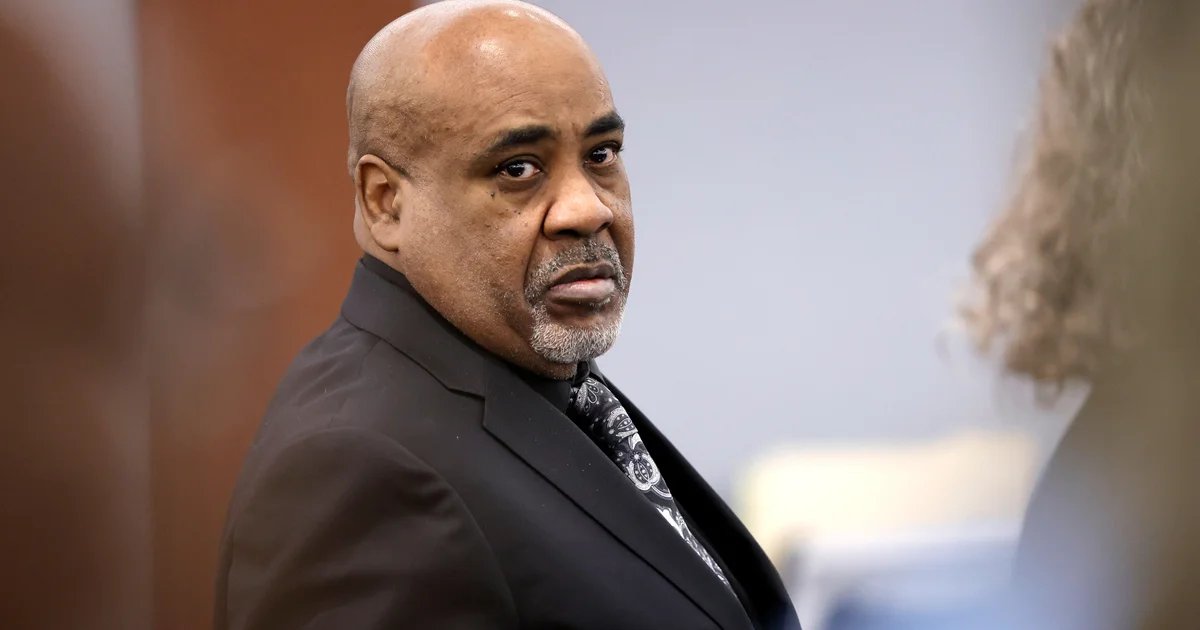
Michael Sanft, the defense attorney for Duane “Keffe D” Davis, who was convicted of first-degree murder for the 1996 shooting death of Tupac Shakur on Monday, accused the jury of harboring “preconceived notions” about his client.
“I’m surprised. With the amount of evidence that should have been considered by the jury, I don’t believe that they went through it,” Sanft said in an interview with CBS News on Tuesday, referring to the less than three hours the jury took to reach the guilty verdict. “My feeling is that they had preconceived notions, and those notions was what led to the conviction for Duane Davis.”
Nevada law does not require juries to deliberate for a set amount of time before reaching a verdict.
When asked whether he had those same concerns about the jury’s impartiality at the start of the trial, Sanft said there were “bigger issues” at the time and that he was mainly focused on various pre-trial motions concerning evidence that would be allowed.
According to the prosecution, Davis procured the gun used to shoot Shakur and orchestrated the Sept. 6, 1996, Las Vegas drive-by in retaliation for the beating of Davis’ nephew, Orlando “Baby Lane” Anderson, earlier that night. Chief Deputy District Attorney Binu Palal stated Davis was “hunting” for Shakur and Death Row Records co-founder Marion “Suge” Knight, who was also wounded in the shooting but survived.
“It is a slam-dunk, absolutely no defense to murder case,” argued Chief Deputy District Attorney Marc DiGiacomo in his closing statement.
Steve Marcus/Pool Photo via AP 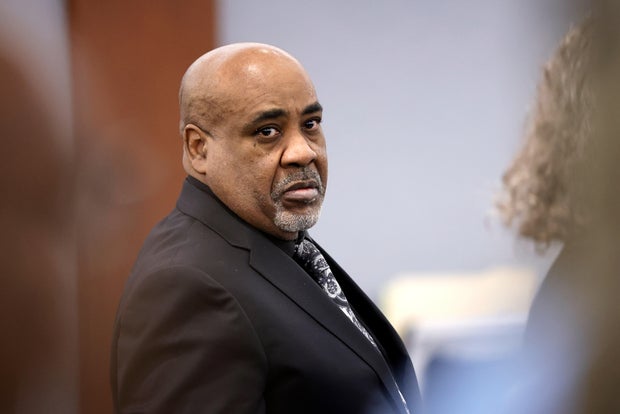
While prosecutors did not allege Davis was the shooter, in Nevada, a person can be found guilty of murder if they help somebody else commit the crime. Prosecutors played audio from a 2008 interview with detectives in which Davis said it was Anderson who fired the shots after Davis passed the gun to the backseat of the car they were in. Anderson was never charged with the murder and died in an unrelated shooting about 20 months after Shakur. Today, Davis is the only person allegedly involved in the shooting who is still alive.
Davis, who pleaded not guilty to the charges, was initially offered protection from prosecution in exchange for collaborating with authorities, but the release of his book “Compton Street Legend” in 2019 and various public interviews he gave invalidated that agreement, prosecutors argued. In the book, Davis placed himself in the Cadillac involved in the shooting and described getting the Glock .40 from a drug dealer named Eric “Zip” Martin. (He later claimed that he had “never read” the book and was merely given a co-author credit).
Sanft described Judge Carli Kierny’s decision to allow evidence of Davis’ “other bad acts,” including his gang leadership and drug trafficking past, as “inappropriate.” He also took issue with Kierny’s instructions to the jury that, if they believed Davis’ self-incriminating statements, they wouldn’t need to find corroborating evidence.
“Going into the trial, we knew already that we were behind on the scoreboard,” he told CBS News. “It’s like a football game where it was 52 to 0 walking in at the opening kickoff.”
As a result of the judge’s instructions, Sanft said he was put in a position of having to undermine his own client’s credibility.
Asked if he still believes in this approach, Sanft described it as “the only defense strategy when you have an individual that’s being convicted just on his words alone, without any facts to support the words that he said,” insisting that there is no proof that Davis was even in Las Vegas on the day of the shooting.
“There is no actual evidence that supported the conviction,” he said. “There was a feeling that it was the right thing to do, but not with real evidence.”
Davis’ sentencing is set for Oct. 13, and he faces a maximum sentence of life in prison. According to Sanft, he plans to appeal the conviction in a process that could take over a year.