dailynewsnblog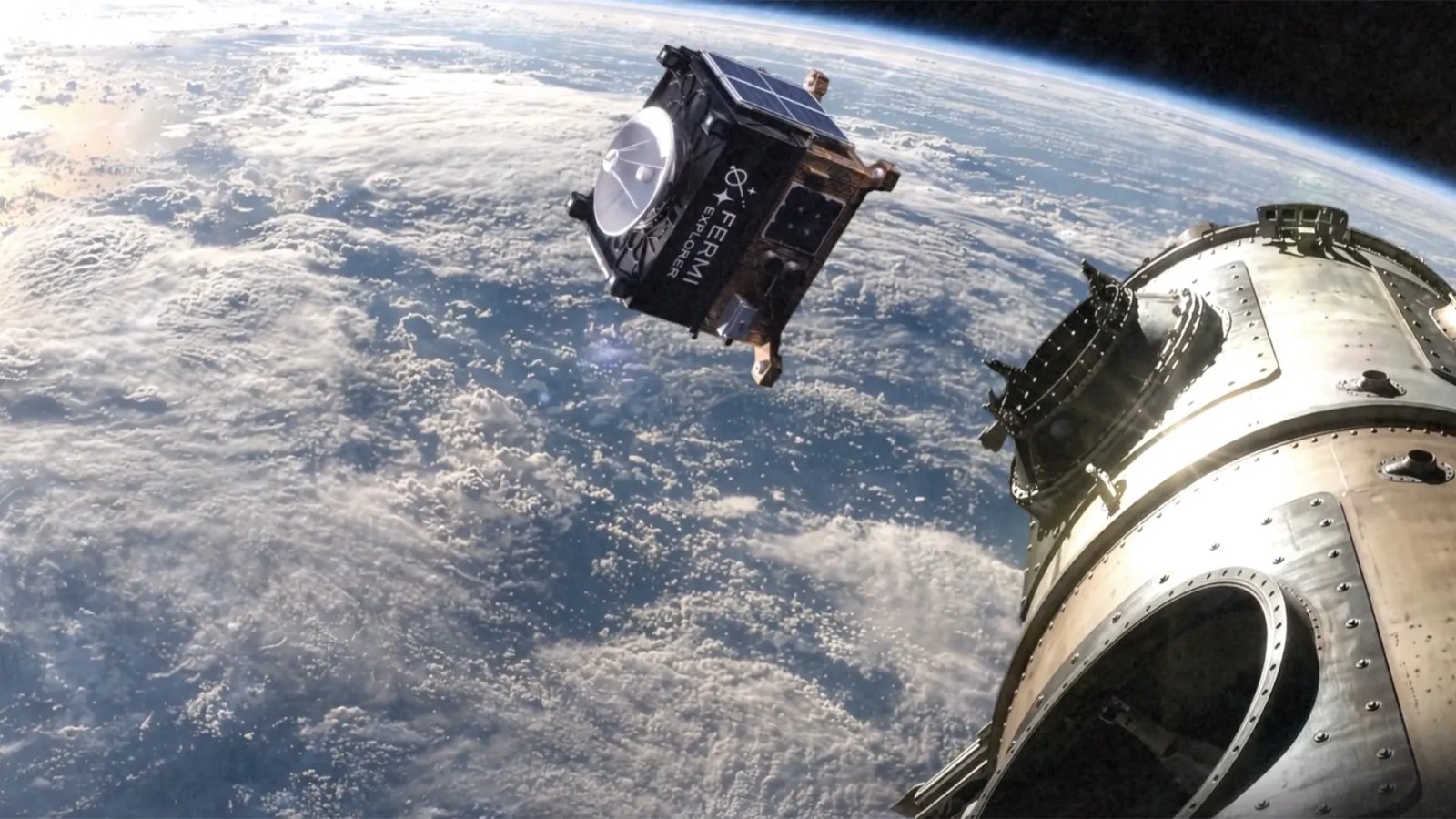
A group of executives and entrepreneurs led by Starcloud co-founders Philip Johnston, Adi Oltean and Ezra Feilden teamed up to develop humanity’s first interstellar spacecraft. If everything goes according to plan, it will launch in 2029, headed for Alpha Centauri, the closest star system to our solar system. But it won’t reach its destination for about 80,000 years.
Known as Fermi Explorer, this non-profit mission aims to build a 10cm cube weighing about 1 kilogram (about 2.2 pounds). Once the cube is built, they plan to attach it to a propulsion system, take it to space and launch it toward Alpha Centauri. It’s the technological equivalent of taking a hefty rock into space, throwing it at Alpha Centauri and waiting for it to get there.
“The mission is intended to make the idea of interstellar travel real, and to encourage more people to confront one of humanity’s biggest unanswered questions when we look beyond our planet,” the group said in a post on X. The post is accompanied by a video showing the Fermi Explorer being overtaken by hundreds of faster spacecraft also bound for Alpha Centauri.
The wait for this mission to go interstellar is unreal. The exact wait to mission completion is 79,800 years, according to the Fermi Explorer mission calculator, which means once this thing gets underway, it won’t be the problem of anyone currently living, or anyone else, for a few thousand generations.
Just getting out of the solar system will take longer than any road trip any human has ever taken. The spacecraft is expected to circle the sun for 12 years in an oval orbit. The boosters will fire when the spacecraft gets closer to the sun, a process called the Oberth maneuver, thereby gaining speed through multiple orbits as it approaches escape velocity. Once done, it’ll launch itself and keep going, and going, and going. The Fermi Explorer’s technical feasibility assessment says it should leave the solar system by the early 2040s.
It’s quite a different mission from what Starcloud’s co-founders usually work on: putting data centers in space to power AI. The company plans to launch its first such full commercial data center, called the Starcloud-2, in 2027, but it did send an Nvidia H100 GPU into space via Starcloud-1 in 2025.
More symbolic than scientific

Interstellar travel takes so long that humanity has focused far more on speeding up the journey than actually making it. One of the big projects addressing this was Breakthrough Starshot, a multi-billion-dollar initiative that would’ve used laser-based propulsion to propel a ship to another star in a matter of decades rather than millennia. That project collapsed in 2025 with no launches.
The only other interstellar missions ever conducted, Voyager 1 and Voyager 2, entered interstellar space in 2012 and 2018, respectively, over four decades after their launches.
According to the non-profit group, the purpose of the Fermi Explorer is to just toss something into the cosmos and see what happens. It sounds silly, but it’s the truth. The group’s thinking is based on the Fermi Paradox, which seeks to explain why there are so many stars and planets yet no signs of extraterrestrial life.
One potential reason is the Fermi Great Filter, which suggests a barrier so hard to cross that intelligent life rarely survives long enough to be detected.
There are dozens of potential filters, ranging from the various steps of abiogenesis — the natural process by which life arises from non-living matter — to technological filters such as the inability to get into space, or, once there, the lack of motivation to search beyond a species’ host star.
“By launching the Fermi Explorer mission, we can for the first time tick two possible Fermi Great Filters off the list,” the group wrote on its website. “That it is impossible for an intelligent species to leave their nearest stars (and) that all intelligent species decide not to leave their home star for some reason.”
The goal is to fund and build this entire project for about $15 million, using existing technology and piggybacking on a commercial rocket, such as SpaceX’s, to reach orbit. This project exists only to prove that humans can and are willing to do it, even if it’s something no one alive today is ever going to witness.

See full bio