dailynewsnblog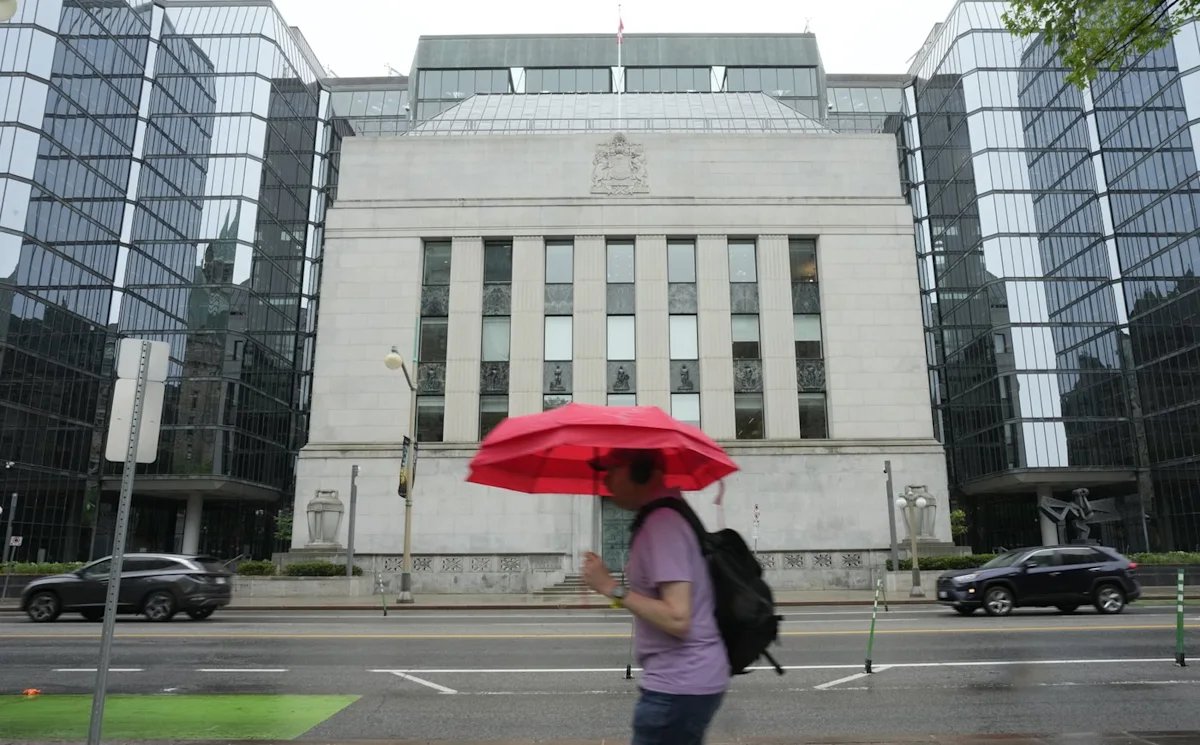

OTTAWA — The Bank of Canada finds itself in a familiar dilemma this week as the escalating trade war with the United States casts an uncertain light over Wednesday’s interest rate decision.
The central bank has kept its benchmark rate on hold at 2.25 per cent for nearly a year now.
Before trade talks between Canada and the United States fell apart earlier this month, economists and financial markets alike had widely expected the Bank of Canada would stick to the sidelines for the rest of the year and into 2027.
Recent tariff volleys have changed the economic context.
On Aug. 22, the U.S. imposed 50 per cent tariffs on roughly five per cent of Canadian exports and Canada plans to retaliate with its own counter-tariffs starting Sept. 8. U.S. President Donald Trump has also threatened steeper levies on autos and auto parts starting Jan. 1, 2027.
Most economists still believe the Bank of Canada will stick to the status quo as it tries to get a sense of how prices and the economy react to a re-escalating trade war.
“The bank has been always hesitant to make a move on rates that they might have to retrace later, because things are so uncertain,” said Tony Stillo, director of Canada economics at Oxford Economics.
Financial market odds for a seventh straight hold in the policy rate stood at 99 per cent as of Friday afternoon, according to LSEG Data & Analytics.
Over the spring, Bank of Canada governor Tiff Macklem routinely said that if the energy price shock tied to the war in Iran started to show signs of spreading beyond gas pumps, the central bank might be forced to step in with consecutive interest rate hikes to keep inflation tamed.
He similarly warned that any tightening of trade restrictions between Canada and the U.S. might push monetary policymakers to instead ease the policy rate.
Fresh gross domestic product data from Statistics Canada on Friday showed the economy grew at its fastest pace in more than three years in the second quarter following a year of little growth.
But most forecasts, including the Bank of Canada’s outlook, expect that pace to slow somewhat in the second half of the year.
“I don’t want to overemphasize the negativity, because it is possible that both sides could de-escalate in the months ahead. But I think we do have to brace for a tough spell for a little while here,” BMO chief economist Doug Porter said in an interview.
He said it’s still possible the Canadian and U.S. trade teams reconvene to avoid further escalation in the weeks ahead.
But absent a return to the negotiating table, Porter said he’s expecting the third quarter of the year to look much like the early days of the trade war in 2025, when a lack of clarity about tariffs weighed heavily on business activity.