dailynewsnblog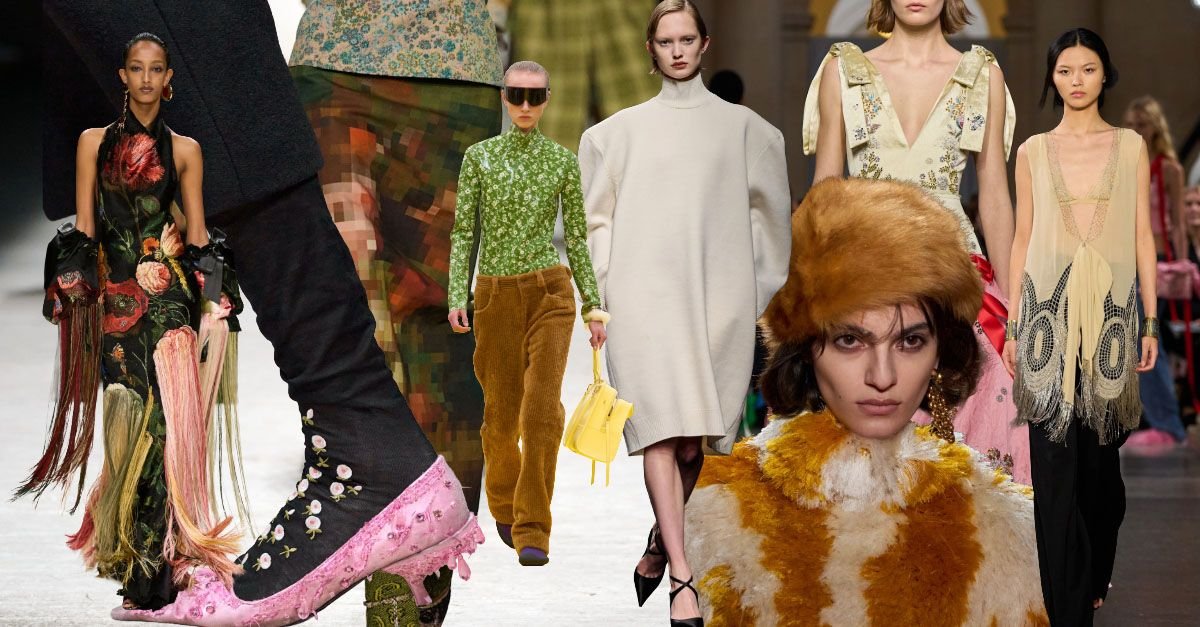
It might seem trite to summarise the general fashion mood thus far in 2026 as a slow shift from quiet luxury into an era of maximalism, but if one was tasked with summarising it into 10 words, this would be the answer. Whilst a more pared-back approach to style is still prevalent in everyday dressing, the runways have never been more colourful: both literally and figuratively. Since the autumn/winter 2026 shows were presented earlier in spring, fashion’s new focus has provided a sense of rejuvenation and energy after a long period that in retrospect has felt quite lacklustre. Print, texture and accessories in bolder hues from the spring/summer 2026 collections were finally available to shop, divisive footwear has dominated the conversation and nostalgic trends such as noghties surfercore and the exponential growth of turquoise and aqua shades, have informed fashion’s new mood, which is more unexpected, joyous and frankly outlandish than ever.
“Joy” is a word that was used a lot to describe the debut collections for spring/summer 2026, and one would argue this has continued into autumn. As fashion stylist and commentator, Chani Ra said on the Who What Wear UK vodcast, Hot Topics, “I don’t care about cost per wear, I care about cost per joy.” We have since had chance to digest the new energy and interpretations these new designers have of their houses, so the autumn/winter collections presented more practicality (as they usually do), and felt less like a competition to be the biggest, boldest, brightest of them all. But this hasn’t compromised their use of colour or texture, it’s just made it a little more considered.

(Image credit: Launchmetrics: Chanel)
One of the biggest takeaways critics have come to consider is that it’s not just what you are buying, but how you are wearing it. As Barbara Janeczek, curation manager at global fashion shopping platform Lyst, points out, “A/W26 feels less about the hot piece and more about hot styling. I’m much more interested in how things are being put together: unexpected layers, sheer fabrics under tailoring, taffeta during the day, sporty pieces with silk. Texture is doing a lot of the work,” she says. This was certainly evident at Celine, where rings, cummerbunds and medallion belts were come of the most-talked about details. For Janeczek, it was the work of Raf Simons and Miuccia Prada; “The Prada show felt like the blueprint, with models transforming through multiple looks in real time. It made me want to go home, open my wardrobe and see what else I could do with the clothes I already own.” Take note.
Latest Videos FromWho What Wear
Lyst’s quarterly index, of course, is one of the most-cited references for fashion analysis, and Q2 came out in the midst of the summer. What Janeczek suggests it can tell us for how consumers are approaching style right now, is how we shop. “For a while, we were all looking for the perfect classic: the perfect blazer, loafer, white shirt. I think now we want those pieces to work just as hard, but say a little more about us,” she comments. “There has been a shift from brand-first shopping to mood-first shopping. The products people want don’t necessarily belong to one aesthetic, price point or even traditional definition of fashion anymore. What connects them is that they feel right for a particular moment,” she reports. What’s more, is she believes “we’re moving away from the idea that everyone wants to subscribe to one dominant aesthetic. The years of quiet luxury haven’t disappeared. People still care about quality, longevity and strong design codes, but there’s more personality and playfulness.” Read ahead for the autumn/winter 2026 trends we think will dominate the season.
17 Key Autumn/Winter 2026 Trends
1. ART DECADANCE

(Image credit: Launchmetrics: Rabanne, Fendi, Chanel)
Fashion nostalgia is hardly new, it seems each season a previous decade receives its turn to once again be in the spotlight. For spring/summer 2026, Mugler, Saint Laurent, Versace and Valentino sought inspiration from the ‘80s, with powerful, high-waisted silhouettes, primary hues and jewel-like door-knocker earrings. As well as the ‘80s, designers will often look to ‘70s bohemia and principles set in ‘90s minimalism (lest we forget Love Story and the impact of Carolyn Bessette-Kennedy’s style on wider culture earlier this year). Adding to this, no one can ignore the return of the Y2K aesthetic in the last five years or so. But this season, nostalgia has come from the elegance, excess and grandeur of the ‘20s. Chanel was the most prominent example; think drop-waist hemlines, T-bar court heels and long strings of pearl necklaces. For Fendi and Rabanne, it came more by way of embellishment and detail; fringed soft silks, beaded scallop sequins layered with delicate lace and unfitted silhouettes that alluded to the ‘garçone’ androgyny that rebelled it’s Victorian predecessors.
“As showcased this season, the Roaring 2020s have officially arrived, despite a somewhat delayed entrance sprung on by a global pandemic. This time around, however, these aren’t designs that encourage slurping down moonshine in speakeasies. (Unlike Countess LuAnn says, life is not always a cabaret.) The revival of this decade has taken a more prim route, with the silhouettes of note more commonly associated with what the bob-haired socialites would wear to lunch than the wardrobe of any flapper. Debaucherous it is not, with the drop-waist dresses, T-bar shoes and tasselled cocktail tops rooted in a sense of realism instead of fantasy,” says Ava Gilchrist, Who What Wear UK’s SEO writer.
“This is due to the fact that designers who mined this decade for inspiration weren’t looking at it through rose-tinted glasses, but lifting directly from the women of note whose personal style has reverberated through the ages: Louise Brooks, Josephine Baker, Zelda Fitzgerald. Take Chanel, for instance. Matthieu Blazy began his tenure as creative director by subverting and exploring quintessential signatures instilled by Gabrielle Chanel from the brand’s inception. Slouchy tweed jackets were styled alongside knee-grazing skirts and loose-fitting jersey dresses, with fluidity and functionality key components of this redux,” she continues.
Shop the Trend:

RABANNE
Sequined Chainmail Mini Dress

LE SUNDIAL
Lee Velvet Clutch

Rabanne
Embellished Headpiece
2. WALL STREET SLEAZE

(Image credit: Launchmetrics: Gucci, Givenchy, Tolu Coker, Jean Paul Gaultier, McQueen, Saint Laurent, Ralph Lauren)
Tailoring in autumn is hardly a new concept, we anticipate seeing some kind of sartorial styles in almost every major collection on the runway. Whilst last season’s ‘high society’ trend evoked a new ‘ladylike’ approach to tailoring which will continue into autumn—think skirt suits from Ralph Lauren and Jacquemus as well as Jonathan Anderson’s more casual take on styling Dior’s iconic Bar jacket—there’s a new mood for suiting that feels more of an ode to corporatecore seen in both the ‘80s and ‘90s for A/W26. It’s slick, sexy and almost costume-y.
Who What Wear UK’s fashion editor, Remy Farrell, comments, “there’s something of the ‘90s thriller trope in autumn/winter’s darker approach to power dressing for 2026. Patrick Bateman pinstripes, Basic Instinct bodycon and Silence of the Lambs slate grey suiting; with heels sharp enough to be wielded as weapons, and oxblood accents (just look at the dark beauty looks showcased at Gucci), this is a trend that proves the wearer is not to be messed with. Whether this is thinly veiled social commentary (and the capitalist overtones cannot be overlooked), or just the natural evolution of the autumnal vamp in the post ‘Boom Boom’ era, one thing is for certain. Tailoring is bigger, bolder and badder than previous years, but if your take on suiting is undone shirts and baggy trousers, it’s time to tuck them in and belt up—razor sharp precision is the new look du jour.”
Shop the Trend:

GIVENCHY
Pinstripe Wool Blazer

GUCCI
Savoy Horsebit Pumps

GIVENCHY
Striped Wool Midi Skirt
3. SPLIT PERSONALITY

(Image credit: Launchmetrics: Mugler, Paloma Wool , Valentino, Marc Jacobs)
Even the most dedicated minimalists will find it hard to resist the gorgeous display and use of colour in 2026. This year we’ve been witness to some divisive and frankly uexpected shades surfacing as lead colour trends. Whilst the perhaps cliché ‘pop of red’ may feel obvious, hues such as a deep, royal purple like that of a Quality Street sweet wrapper, which is finally having its moment (and will continue to do so as we move into the winter period), was one we wouldn’t have expected some years ago.
Whilst these bolder tones will continue to hold force in autumn, it’s the way they’re styled together that feels most exciting. Carolyn Mair, author of The Psychology of Fashion, suggests “the return of bold, sometimes unexpected colour combinations reflects a growing appetite for visibility, individuality and emotional stimulation. Bold jewel tones attract attention and stimulate us visually and emotionally, and when two strong colours are combined, it amplifies the effect.” A plethora of designers—from Marc Jacobs, Valentino, Mugler, Prada and Tory Burch—placed two, sometimes three, contrasting shades beside each other, something we’re less used to seeing in winter collections. “Maximalism feels remarkably easy this winter with the arrival of the two-tone colour trend. Bold shades are being placed side by side with such confidence that the idea of a colour “clash” seems to have been entirely forgotten. At Mugler, chartreuse met bright blue, whilst Akris paired forest green with bubblegum pink, creating deliberately unexpected palettes,” notes Natalie Munro, Who What Wear UK’s news writer.
The secret to this, of coure, is all in the styling. Take note from Tory Burch and Bottega Veneta, who find contrast with something as small as a shirt collar and cuff beneath a crew knit jumper. Similarly, at Valentino, like with Celine menswear spring/summer 2027, it was all about a jusxtaposing cummerbund or sash. At times it felt more subtle, say, with a soft grey or pairing two hues within the same colour family; olive and lime, for example, but on the whole it was a vibrant display of unabashed saturated shades. As Munro notes, “rather than committing to a single head-to-toe hue, this double-dose of colour takes an ’80s approach to maximalism: bold, slightly abrasive, yet always powerful. More than anything, I see this as a point of empowerment. Don’t forget that fashion doesn’t always need to be harmonious or carefully considered; sometimes the most compelling looks come from simply trusting your instinct, regardless of whether they’re traditionally thought to work together.
Shop the Trend:

LOEWE
Plush-Trimmed Sweater

VALENTINO GARAVANI
Plissé Satin Belt

DRIES VAN NOTEN
Paisley Jacquard Midi Skirt
4. CHECK, PLEASE

(Image credit: Launchmetrics: Chloe, Burberry, Dior, Louis Vuitton, Dries van Noten)
In case you missed it, prints will dominate in this seemingly more maximalist era we’ve arrived at. Probably the leading print on the A/W26 runways, and the most wearable, is checks. Plaid, in various forms, was so present this season, Who What Wear UK’s junior writer, Brittany Davy, questions whether it will replace polka dots as the most ‘hyped’ print. “Let me start by saying that I have absolutely nothing against polka dots; in fact, I can totally see why this playful print has made its way back into the mainstream after years of quiet luxury. However, I’ve just always found them a tad too girly for my personal style. Which is why the checks that cropped up all over the AW26 runways feel way more enticing to me. Spotted on the likes of Chanel, Chloe and Dries Van Noten, this versatile print is sure to dominate both the luxury and affordable market this year,” she says.
The biggest takeaway to consider is how the varying displays of this print. It was equestrian at Acne Studios, refined yet preppy at Celine and Dior, bohemian at Chloe and a little more librarian-coded at Rabanne. Other designers played more with texture. Louis Vuitton showcased it on wooly separates in vibrant hues, Dries van Notes juxtaposed with jacquard and tapestry florals, and Chanel most notably offered a chainmail check version of the classic tweed jacket. As Davy comments, “whether you prefer the quintessentially heritage check that leans more into the equestrian aesthetic or prefer an edgier tartan that perfectly emulates the grunge era of the ‘90s, this print is sure to be everywhere this season.”
Shop the Trend:

MARNI
Checked Cotton Mini Shorts

BURBERRY
Opal Check-Trimmed Penny Loafer

Dries Van Noten
Gingham Puffer Jacket
5. LIFE IN PLASTIC

(Image credit: Launchmetrics: Saint Laurent, Tom Ford, Chanel, Loewe, Chloe, Marc Jacobs)
Plastic has mostly dominated this year on the footwear game. From Chloe’s Polly Pocket princess jelly shoes, to Bottega’s plastic clogs (and who can forget the Saint Laurent clear PVC brogues at the menswear spring/summer 2027 show this summer?), PVC footwear has carried a sense of novelty that evokes the Aqua lyrics “life in plastic, it’s fantastic” to run through one’s mind. Fun, fantastical and surprisingly durable quality, the popularity, divisiveness and conversation around these in shoes has contributed to fashion’s new mood this year. But it’s not just shoes. A/W26 also displayed plastic, or plastic-looking materials on the runway for all kinds of ready-to-wear garments, from raincoats at Saint Laurent and Tom Ford, to sheeny separates at Marc Jacobs and Loewe.
“Do you want the surface answer or the deep answer when it comes to the A/W26 plastic trend?” questions Pennant. “Because just like the man-made material itself, the light-catching allure of its clinical physicality or a fabric’s stunning artificial sheen will never truly disappear, and high fashion has revelled in that—some more literally and ironically than others. Bottega Veneta sent plastic bags down the runway, whilst Marc Jacobs’ collection boasts both rigid Polly Pocket proportions and Quality Street wrapper dresses and separates. Chanel shifted from transparent silk layers at spring summer haute couture to liquid latex lines in the ready-to-wear tweed that also nod to the realisation that the iconic Parisian house is the luxury fetish du jour. And who wasn’t seduced by the glossy see-through menswear shoes at Saint Laurent or the way the transparent PVC and vinyl outerwear and skirts spotted at Tom Ford contrasted with razor-sharp tailoring?”
But, in a world where fashion is seen as one of the more unnecessary polluters, plastic as a fabric is at the core of the problem. “It’s all very compelling, easy to clean, and quite provocative, possibly a recession indicator, but is such surface subversion really worth it at the expense of the environment?” Asks Pennant. “To be honest, this plastic phase feels reckless after a summer of sweltering heatwaves and wildfires that has pushed the effects of climate change front of mind. But that’s the palpable tension that TikTok trend analyst Mandy Lee puts this increased plastic visibility down to, calling out plastic bonnets and raincoat innovation as cornerstones to the “purpose-driven fashion in the form of weather protection” that we’re likely to see next season.”
Shop the Trend:

Saint Laurent
Tie-Neck Trench Coat in Beige

STAUD
Cleo Leather-Trimmed Pvc Tote

Saint Laurent
Brigitte Leather-Trimmed Pumps
6. SCHOOL’S OUT

(Image credit: Launchmetrics: Celine, Conner Ives, Zimmerman, Tory Burch, Chanel, Tolu Coker, Ralph Lauren)
A leading trend for AW/26 has to be preppy style. Whilst at first connotations of prep may allude to things we have seen before, and actually quite recently—some kind of blazer-clad, boarding school house for yuppies in the ‘80s—this is much more all-encompassing. Let’s begin with the team sports. Cricket jumpers à la Zimmerman and Ann Demeulemeester, rowing blazers at Dries van Noten and equestrian themes and striped rugby shirts at Stella McCartney—this is not sports from your typical schoolyard football game that had jumpers for goalposts. Adding to the athleisure motifs fit for a Hooray Henry from Sloane Square in 1986, there were a few references that alluded to the the more Jack Wills or Abercrombie 2000s era of prep school in the UK and US—think polo shirts, slouchy silhouettes and floppy collars at Natasha Zinko and Conner Ives, for example.
As Humma Hussain, Who What Wear UK’s junior branded content editor comments, it was less about ‘on the nose’ statement styles like a Varsity jacket, and more in the refined styling at Ralph Lauren, Celine and more that could have almost been directly lifted from the costume department from When Harry Met Sally. She says, “Tory Burch is a particularly good example, pairing slouchy corduroys with crew-neck sweaters and rounded collars, while Conner Ives taps into a more nostalgic, distinctly ’90s idea of American dressing without making it feel overly literal.” Hussain too makes a point about this mix of different eras enables you to have a little fun, “preppy style here feels less like a strict dress code and more like a wardrobe of familiar pieces that designers are having fun messing with. There are still plenty of recognisable codes—knitwear, blazers, loafers, collegiate stripes and polished tailoring—but they’re being mixed up and styled in ways that feel much less prescriptive than your school uniform would have. Rather than the polished, logo-heavy preppy look we’ve seen cycle through the decades, this feels more eclectic and personal—prep as a starting point rather than a set of rules.”
Shop the Trend:

JIL SANDER
Cotton-Piqué Polo Shirt

Ralph Lauren Collection
Striped Cotton Tie

BURBERRY
Pleated Checked Wool Mini Skirt
7. PINK FEVER

(Image credit: Launchmetrics: Bottega Veneta, Chanel, Erdem, Balenciaga, Matières Fécales, Stella McCartney.)
In a season awash with strong colour trends, there were many to select from. From primary, uncomplicated colours like cobalt blue and Kelly green, through to burnt russet shades at Saint Laurent, Chanel and Alaia, it was actually the popularity of pink that came as most of a surprise.
“After years spent worshipping at the altar of beige, burgundy and chocolate brown, fashion appears ready to fall for pink again. The first signs are already filtering through the collections, with Bottega Veneta, Balenciaga, Valentino and Chloé (to name a few) all making a case for the colour,” says Marina Avraam, Who What Wear UK’s senior shopping editor.
“Crucially, though, this isn’t the saccharine millennial pink that defined the late 2010s. The new mood is bolder and far less polite: saturated fuchsias, punchy bubblegums and unapologetic head-to-toe colour, alongside flashes of pink used to jolt otherwise restrained looks,” she continues. Mair reports a similar feeling: “already pink carries strong cultural associations with femininity, so choosing a pink that is impossible to ignore can turn something traditionally coded as feminine into something much more visible and assertive. This matters especially at a time when gender roles, women’s rights and ideas about masculinity and femininity are highly contested, as there may be a psychological appeal in leaning into femininity rather than neutralising it.”
Pink is not just pretty, it’s undeniably political. The ‘millennial pink’ craze that Avraam mentions came in 2016, at the forefront of #MeToo movement. Barbie pink, which trended in the summer of 2023 throughout the press tour of Greta Gerwig’s film Barbie, came just after the US Supreme Court overturned the landmark Roe V. Wade bill, a huge blow to women’s rights. So, perhaps this new found popularity of pink could be a symptom of the political climate we find ourselves in today? “This matters especially at a time when gender roles, women’s rights and ideas about masculinity and femininity are highly contested, as there may be a psychological appeal in leaning into femininity rather than neutralising it,” says Mair. Though, it too could just be a natural step away from the sea of black and beige encouraged by quiet luxury, as Avraam notes.
“It feels symptomatic of fashion’s wider move away from the studied restraint of quiet luxury and towards clothes with more personality, emotion and, frankly, fun. Whether it’s fashion’s defiant response to the rise of the manosphere or simply the pendulum swinging back towards maximalism, pink feels ripe for rediscovery. Consider this the beginning rather than the peak; I suspect by summer 2027, we’ll be seeing it everywhere,” argues Avraam.
Shop the Trend:

KHAITE
Rory Ruched Silk Satin Top

JIA JIA
Gold Beaded Necklace

ANNA SUI
Velvet-Rayon Wide-Leg Pants
8. BOHO REVIVAL

(Image credit: Launchmetrics: Chloe, Rabanne, Ann Demeulemeester, Stella McCartney, Gabriela Hearst.)
Bohemia has been trending for some seasons, but in 2026, perhaps down to the trending obsession with ‘whimsy’ as well as several period revivals and stories of witchcraft within culture (think Wuthering Heights, Frankenstein, The Oddysey and most recently, Practical Magic 2), it’s developed from just lace trim silks and white broderie anglais dresses from Dôen, to something much more gothic, notes Nash.
“You’d have to be living under a rock not to have noticed the resurgence of bohemian dressing over the past few years. If we have to pinpoint its revival—and we will—it all comes down to Chemena Kamali’s debut Chloé collection in 2024,” notes Nash. That autumn/winter 2024 show firmly put boho back on the fashion map, and since then, everyone from the fashion crowd to the more trend-averse has embraced it. But this year, there’s a shift. This coming season, bohemian dressing takes on an altogether different meaning. Ruffles, capes and those familiar boho prints are still present, but there’s a moodier edge to what came down the A/W26 runways. Think dark academia meets classic ‘pretty’ boho: romantic, yes, but with something slightly, dare we say, creepier, lurking beneath the surface. There’s leather—see Marni and Chloé—and more texture than ever, with Etro leading the charge. Hemlines remain gloriously mega-maxi, but the silhouettes feel more rugged. The colours are deeper, the mood more mysterious, but with a touch more magic at play. It might have first been sung about 60 years ago, but Donovan (IYKYK) was right: it really is the season of the witch. Sage at the ready!”
Shop the Trend:

VALENTINO GARAVANI
Embroidered Fringed Shoulder Bag

Chloe
Silk-Charmeuse Balloon Pants

GUCCI
Logo-Debossed Suede Clogs
9. BLOOM SERVICE

(Image credit: Launchmetrics: Tory Burch, Erdem, Fedi, Givenchy, Ferragamo, Conner Ives.)
“I’ll admit, florals at times can be a little played out. As Miranda Priestly in The Devil Wears Prada put it, “groundbreaking”. Yet this autumn, the blooms feel inherently less contrived,” argues Francis-Tsolaki. Whilst you’d be forgiven for thinking florals are more a theme in spring, this new approach to blossom embroidery and brocade feels genuinely fresh for autumn. Where tapestry prints and jacquard at Dries van Noten and Etro feel quite bohemian, it’s more the references to chinoiserie that feels elevated, artful and fresh. “There’s something softer, more atmospheric, these motifs ooze with quiet opulence and romantic escapism. With a calming ethereality, these intricate wisteria and floral embroidered garments feel almost alive,” notes Franis-Tsolaki.
Chinoiserie is the practice of European imitation and interpretation of Chinese and East Asian 17th and 18th-century artistic traditions, which this quite literally is. We saw it first with Conner Ives first, with his demi-couture embroidered floral silk robe with fur trim, which we’re sure to see replicated this season. Ives also showcased these same sumptuous style of motifs with birds and wisteria on silk and velvet fringed robes and a blazer. For Sarah Burton’s Givenchy iteration, gowns came with embroidered hydrangeas, as did knee high silk boots, which were an opulent nod to Qing Dynastry craftsmanship.
At Conner Ives, sumptuous motifs trapped silk dresses and velvet boots, their ornate beauty lending lightness to the gritty mood.
“Whilst Ives’ display was lavish, these chinoiserie pieces were paired with jeans, and even a T-shirt when modelled by Tish Weinstock. This gave casualty, attitude and even a little grit. But at Ferragamo, however, the romance was more overt—most notably, a metallic brown strapless midi dress adorned with ruffles was a showstopper for me. At Kallmeyer, Tory Burch and Jil Sander, it was subtle yet sophisticated gilded gold and cream shirting, skirts and evening overcoats, which deserve a night at the opera just to be showed off,” says Francis-Tsolaki.
Erdem offered a more wearable play, adoring the motif on cropped cuts and structured bodices styled with denim and party skirts. Matthieu Blazy’s Chanel breathed breath into shades of tan, draping a gold woven motif across an airy waistcoat. But the legs to the florals’ ethereality came from Givenchy, when a fringed floral maxi dress (a silhouette which should have been far more ostentatious) instead had a quiet regality. You see, this season, florals aren’t simply blooming; they’re evolving way past anything we’ve ever seen before.
Shop the Trend:

DRIES VAN NOTEN
Floral-Jacquard Midi Skirt

Conner Ives
The Demi Couture Robe

BERNADETTE
Peignoir Maxi Dress
10. FULLY LOADED

(Image credit: Launchmetrics: Stella McCartney, McQueen, Marni, Chanel, Dior, Schiaparelli, Etro)
Just as colour dominates the eyes, ‘texture-maxxing’ is sensory overload to the touch. Feathers! Beads! Sequins! Chainmail! The message is clear: minimalism, be gone! This fully loaded trend celebrates the artistry of the ateliers, the craft behind the craftspersons—from Blazy’s Chanel to Anderson’s Dior, there’s more visual interest with heavy embellishment than ever.
Florrie Alexander, Who What Wear UK’s shopping editor, reports: “After years of quiet luxury, more is more has returned with full force. Autumn’s penchant for tactile updates isn’t simply centred on the subtle contrasting silk and knit this year, but a full embrace of movement, sheen and embellishment. The simplification of fashion saw a return to focus on fit, form and craft, and now autumn 2026 is celebrating craftspersonship at its fullest through intricate embroidery at Emilia Wickstead, hand-appliquéd paillettes at Marni and cascading three-dimensional beadwork at Prada. Whilst a touch of shimmer is expected leading to the festive period, this season democratises extravagance into the everyday. Denim jeans now come with a shimmering layer of sequins, the threadwork of a military jacket swapped out for perfectly placed pearls, and fine feathers revamp the classic pea coat for the new season. Take this as a celebration of fringe, shimmer and shine, as autumn 2026 is about to be the most eye-catching season of all.”
Shop the Trend:

Dries Van Noten
Marche Fringed Bag

JW Anderson
Embellished Mini Shift Dress

TORY BURCH
Bead-Embellished Pumps
11. REVENANT DRESSING

(Image credit: Launchmetrics: Saint Laurent, Stella McCartney, Louis Vuitton, Zimmerman, Isabel Marant.)
Every autumn/winter season brings an abundance of furry textures and cosy outerwear, but when you consider the stand-out styles next to each other, there’s one particular—albeit niche—aesthetic that comes to mind for AW/26, suggests Who What Wear UK’s junior social media editor, Nicole Pereira.
“Leonardo DiCaprio as an 1820s fur trapper is A/W26’s outerwear trend. Not a sentence I expected to write but then again, no terrain is left unexplored in fashion. DiCaprio, who plays Hugh Glass in the 2015 western The Revenant, wears a sculptural hooded fur coat that captures Glass’ spirituality, leadership, and deep bond with Mother Nature. Badgers and otters cascade down the coat’s front and back, signalling his innate power and will to survive. After a decade on since the film’s release, we’re seeing that same sensibility translated into architectural outerwear. Formed of strong dimensions and opulent fur, quintessentially reminiscent of power dressing set for elements in early 19th century fur trade in what is now Montana and South Dakota.”
Although there’s no evidence that this was a specific source of inspiration for designers, the voluminous silhouettes (especially those larger on the shoulders), the cascading oversized overcoats at Schiaparelli and Gucci that are made to envelop, and the mittens, collars and shearling tricorne hats at Louis Vuitton, create drama worthy of cinema. Pereira argues also that the themes at the heart of the film feel fitting for the 2020s. “Post-Covid, the Climate Clock’s deadline less than three years out, and global unrest all around, it’s no surprise we’re seeing silhouettes that exude power and speak to a primal urge for self-preservation.”
“The trend was spotted at Saint Laurent, which echoed similar structures of broadness to Glass, with volume building as the lapels rise toward the neck. At Gaultier, the silhouette was reimagined architecturally, clashing proportions via boisterous collars and cuffs against an otherwise fitted jacket. Louis Vuitton fundamentally time-travelled to the 1800s fur trade and took the coat right off Glass’ back—there are uncanny parallels in its sheer magnitude and rich, saturated fur. Chloé, too, leaned into more is more, pairing exaggerated volumes of white fur with a matching trapper hat. Fur is having its moment this season. But one thing’s for certain. Whether accompanied by oversized accessories, statuesque proportions, or contrasting fabric pairings, Hugh Glass, re-conceptualised two centuries on, challenges what power dressing means in the New Twenties. Oh, and if he’d be around to partake, he’d be in booming business,” she says.
Shop the Trend:


Marni
Cream Shearling Ballerina

Etro
Shearling Embroidered Gilet
12. SHEER DELIGHTS

(Image credit: Launchmetrics: Prada, Chanel, Mithridate, Chloe, Simone Rocha, Khaite, Paloma Wool.)
A strong microtrend for some seasons, but one that is usually more popular in warmer months (who wasn’t wearing a slightly see-through skirt this summer?), sheer will continue to dominate in A/W26. A lighter, more delicate contrast to the heavier fabrics we associate with this time of year like wool, cashmere and leather, whether it’s a base for pretty embellishment and ribbons like at at Simone Rocha, or coming with Napoleonic trims seen at Khaite, as standalone styles these pieces appear more suitable for the transitional months in autumn and early spring. However, in a season where the focus has been shifted so closely to styling techniques and less about ‘hot products’, these sheer separates are perfect for layering, as Munro explains:
“Of course, you’d imagine that it’s the summer months that encourage our wardrobe’s gauziest fabrications to shine, but the A/W26 runways compel us to carry the trend straight into the coldest days. Rather than reaching for chunky knits at the first sign of a chill, this season calls for a softer approach to layering. At Prada, sheer pieces played an important role in the collection’s considered approach to dressing, with translucent outerwear and diaphanous pieces revealed alongside heavier layers. Less about revealing skin and more about creating depth, texture and movement, sheer dressing has a place in our rotations well beyond summer.”
Shop the Trend:

Prada
Semi-Sheer Coat in Blue – Prada

MARYAM NASSIR ZADEH
Bonita Leather-Trimmed Mesh Tote

VALENTINO GARAVANI
Lace-Trimmed Mesh Midi Skirt
13. PICTURE PERFECT

(Image credit: Launchmetrics: Louis Vuitton, Dries van Noten, Acne Studios, Ralph Lauren, Jean Paul Gaultier.)
After the success of Dario Vitale’s print-clad collection at Versace, which featured digitally-printed photographs on to silk shirts, shoes and skirts (you heard about silly skirt summer, right?), it’s expected that other styles laden with photography motifs or artwork in the A/W26 collections will continue to prosper.
As Who What Wear UK’s senior fashion and beauty editor, branded content, Felicia Pennant, summarises, this is yet another example of current fashion giving opportunity to express our personality and interests: “Move over witty slogan t-shirts because a picture is worth a thousand words when you want to project your personality, bare your soul visually, or demand attention for what you deem to be wearable art. And what follows Versace Valentine skirt summer? Face print fall, judging by A/W26’s most memorable motifs, though I trace this slow-burning microtrend and my own obsession back to Wales Bonner’s A/W25 collection which venerated archival Jet and Ebony magazine images. In yet another fun sartorial game of “pick your player”, you could mourn the end of Euphoria via a Balenciaga collection peppered with stills from the seminal Gen Z TV series, or carry one of Louis Vuitton’s playful TV-shaped clutches to commemorate retro technology that is slowly becoming obsolete. At Acne Studios, pencil skirts and dresses are lifesized canvases for Paul Kooiker’s relatable portraits of hopeful art students, and the mesh Marlene Dietrich dress by Jean Paul Gaultier that Alex Consani wore is a powerful representation of the need to challenge outdated gender codes. Finally, it just feels like a no-brainer to comment on the role of anything analogue in our internet age dressed in Dries Van Noten’s digital pixelated prints of 17th-century still-life paintings. Any bets on which art and pop culture references will go viral as this trend trickles down?”
Shop the Trend:

JEAN PAUL GAULTIER
Face Printed Mesh Maxi Dress

Dries Van Noten
Floral Silk Twill Scarf

Versace
Printed Silk Poplin Midi Skirt
14. TOE THE LINE

(Image credit: Launchmetrics: Prada, Etro, Marni, Miu Miu, Mithridate, Simone Rocha.)
As Janeczek’s previous quote notes, “AW/26 feels less about the hot piece and more about hot styling.” As such, this season designers have appeared to pay more attention to the finishing details. Sometimes it’s a trending pair of sunglasses, a pair of tights in an unexpected colour, a statement brooch or a pair of socks that can make staple pieces seem more interesting and timely. This is a notion shared with Who What Wear UK’s managing editor, Poppy Nash:
“If, like me, you’re a capsule wardrobe aficionado, you’ll be the type of dresser who looks to accessory trends when a new season comes along. These small-but-mighty pieces can often transform an otherwise minimalist, simple look into something that feels instantly on trend. Because it’s important to note that us capsule wardrobers don’t shun trends; we just want them to work harder in our wardrobes than others, perhaps,” she suggests.
“This season, one of the most notable styling hacks is socks. Yes, that’s right: it’s time to head back to school and add socks to every outfit. On the runways we saw heels with cable-knit styles, some borrowing-from-the-boys with ankle socks and brogues and even embroidered or embellished knee-length styles paired mini hemlines. Yes, socks have been cemented as the fashion girl’s go-to autumn accessory. My tip? The key is to pick a lane. Either opt for something expected, like brown, burgundy or mustard, that blends with your shoe, or go for contrast, such as a pastel or bright shade, and let your feet do the talking,” says Nash.
Shop the Trend:

Prada
Embroidered Over-The-Knee Cotton Socks

Simone Rocha
Beige Tiny Flower Jacquard Embellished Ankle Socks

VIVIENNE WESTWOOD
Locharron Orb-Embroidered Checked Knitted Socks
15. MAD HATTER

(Image credit: Launchmetrics: Louis Vuitton, Givenchy, Chanel, Mithridate, Celine, Simone Rocha, Jean Paul Gaultier.)
Where last season gave us opera gloves as an unexpected accessory, this season is all about hats and headpieces. Big hats, small hats, check newspaper boy caps at Tolu Coker and trapper styles for Miu Miu and Mithridate, meanwhile at Givenchy, renowned milliner Stephen Jones offered a more elevated perspective, with crisp cream silk headpieces and headscarves to round off Sarah Burton’s vision. As such, it appeared there was no hat, cap, bowler or bonnet left out on the A/W26 runways.
“If the runways prove anything, it’s that headwear has officially gone mainstream,” comments Who What Wear UK’s junior fashion editor, Imani-Nia Francis-Tsolaki. “Whilst last winter was awash with the sleek shape, soft structure and First Lady regality (the pillbox, anyone), for A/W26, subtlety is out. Seemingly plucked from Pamela Anderson’s 1999 pink, fluffy playbook, the silhouettes are wonderfully wacky and filled with the same personality-driven maximalism shaping fashion.”
Francis-Tsolaki points out other notably ‘wacky’ statement-making styles, “meanwhile at Bottega Veneta, fanciful cobalt feathers decorated the head in a Road Runner-esque fashion, engulfing the face in a rather extravagant halo of colour. Chanel offered equally texture-heavy pieces for the haute couture collection, with fuzzy, frayed swim caps as well as the hotly-debated straw style inspired by the scarecrow from The Wizard of Oz.”
Shop the Trend:

The Frankie Shop
Noxley Wool Beret

EUGENIA KIM
Gigi Polka-Dots Headscarf

16. HORSE POWER

(Image credit: Launchmetrics: Schiaparelli, Ralph Lauren, Stella McCartney, Chloe, Paloma Wool.)
“Did you forget that it was the Year of the Horse? Fashion certainly didn’t, with equestrian motifs once again galloping down the runway this season,” exclaims Gilchrist. Whilst it’s fun connection to make the presence of equestrian themes with the Chinese zodiac calendar, let’s not forget the equine genre, as a sport, hobby and in terms of style, is heavily tied to preppy fashion and ‘80s tailoring, two dominant themes for this season. Displays of ‘horse power’ came from some expected designers—Hermes, Ralph Lauren and Stella McCartney—others were less anticipated, like Acne Studios and Paloma Wool.
“Though many designers count themselves as perpetual horse girls—Stella McCartney has featured many a mare in her campaigns over the years, though upping the ante this season by presenting her collection alongside a group of Camargue ponies, whilst Mary-Kate Olsen regularly competes in elite show-jumping events—this season, the mood felt more prim than ever,” explains Gilchrist. “Blame it on the rise of Rivals or our eternal love of Princess Diana’s style, but this current iteration of the trend feels like something you’d find on the riding grounds of a posh British boarding school. Complete with riding boots, Savile Row tailoring and ‘80s sportswear codes, the major silhouettes of note were fitted close to the body and incredibly preppy. A special mention must be made to Chemena Kamali, who at least took a folkloric lens with her designs by offering up thigh-high and faux-fur-lined boots and Prince of Wales checked blazers alongside belt buckles that spelt out “Chloé” from cantering steeds. Barn rats, rejoice!”
Shop the Trend:

CELINE
Celine Anais Riding Boots

Stella McCartney
Horsegirl Tank Top

Chloé
Running Horses Leather Belt
17. CLOUD DANCER CREAM

(Image credit: Launchmetrics: Alaia, Bottega Veneta, Gucci, Givenchy, Celine, Erdem, Magda Butrym.)
The final trend in the round-up is placed here purposefully as a palette cleanser to the vibrancy showcased in this season’s collections. Cloud Dancer was Pantone’s Colour of the Year for 2026, and, as Mair recounts, “the initial reaction was notably negative, with critics questioning both the blandness of choosing white and the cultural symbolism of doing so at this particular moment.” However, she also puts the choice into the context of the wider cultural landscape: “its appeal lies in its contrast to overstimulation from negative news, notifications, political conflict, economic uncertainty and an endless stream of visual content. Against that backdrop, white and cream can function as calming and visually quiet. Head-to-toe cream or white also offers a kind of cognitive simplicity, making it easy to process, yet with enormous impact.”
“We need stimulation and respite. We can seek dopamine, novelty and self-expression on one occasion and crave simplicity and sensory reduction on another. This may explain why Cloud Dancer can resonate in practice even if people disliked it when it was announced. Pantone itself framed the shade around calm and reflection amid overstimulation, while fashion buyers were already reporting demand for white. Cloud white says: Give me space.” Mair adds.
What’s interesting is that whilst dressing in all-white or cream shades have connotations of purity and minimalism, they often belonged in collections that were far from it. The shearling, texture-heavy coats at Bottega Veneta, Burberry and Gucci, sat next to checks, primary shades and a dark—almost grungy—mood. Similarly, Givenchy, Simone Rocha and Dior gave us silks, lace next to heavy embellishment and embroidery. It’s this duality that is a common denominator of the season—one doesn’t have to be simply a classicist and minimalist or a person that enjoys print and colour, one can be both depending on situation, mood or occasion.
As Mair so aptly explains, “these trends might look contradictory, the same person might reach for jewel tones when they want energy and self-expression, fuchsia when they want to feel bold and visible, and Cloud Dancer when they’re craving calm and simplicity. What we want our clothes to do for us changes depending on our mood, our environment and the version of ourselves we want to express in that moment. And, importantly, all three express wider psychological needs when people may feel that many aspects of the world around them are outside their control.”
Shop the Trend:

Givenchy
Off-The-Shoulder Mini Dress

Yves Salomon
Yves Salomon Lamb Fur Coat

Dior
Small Lady D-Joy Bag