dailynewsnblog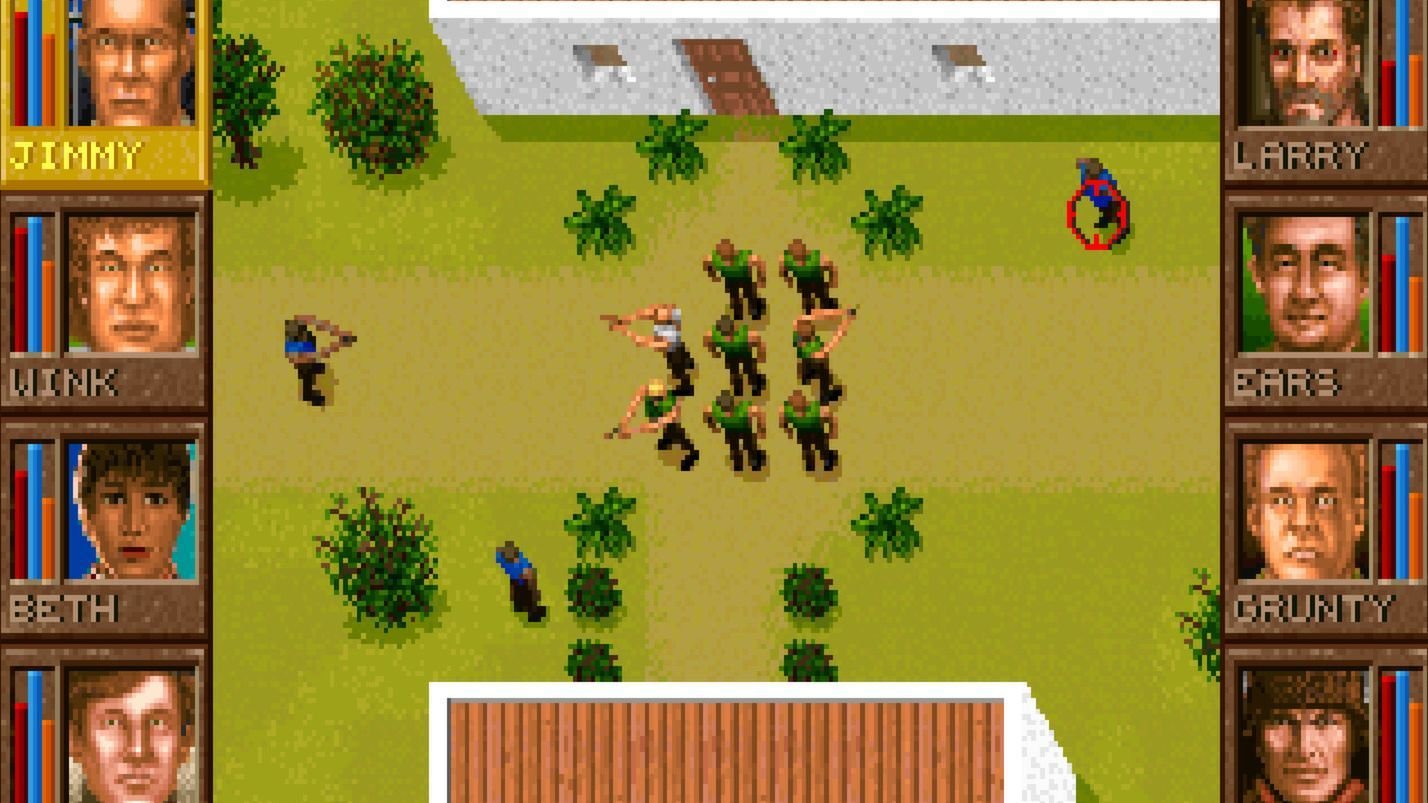
Weird Weekend
Weird Weekend is our regular Saturday column where we celebrate PC gaming oddities: peculiar games, strange bits of trivia, forgotten history. Pop back every weekend to find out what Jeremy, Josh, Ted, and Rick have become obsessed with this time, whether it’s the canon height of Thief’s Garrett or that time someone in the Vatican pirated Football Manager.
It’s easy to be cynical about the modern games industry, what with developers being laid off left and right and hardware prices skyrocketing thanks to AI datacentres gobbling up all the components. But it’s also worth pointing out the positives too. For starters, games are more abundant than ever before. More games get released in a single day than most people could feasibly play in an entire year, and those games cover every genre and experience imaginable. If you can think of a game you want to play, it probably exists in some form. If it doesn’t, someone is probably trying to make it.
As well as being omnipresent, games are cheaper than they’ve ever been too. This statement might seem spurious in the era of £70 games. But aside from the fact that, relative to inflation, games are technically cheaper than they were thirty years ago, it doesn’t account for the endless stream of bundles and giveaways across all digital platforms. They’re so frequent that, by the time you’ve finished playing your current game, there’s a good chance you’ll be able to grab what you want to play next on some form of discount.
In short, we’re spoiled for choice in a way that’s drastically different from how the gaming scene was thirty years ago, when games were significantly less numerous and generally less accessible financially. It’s hard to estimate because everybody’s experience varies. But I think, in 1996, if you were buying a new game every month, you would have been considered to be doing pretty well. For most people, new games would have been limited to Christmases and birthdays, and a lot of people would have experienced games through shareware demos or hooky copies burned onto a CD by your mate.
Latest Videos FromPC Gamer
I don’t want to turn this article into a Facebook post by your grandad, so let’s stress that even if the number of game releases was far fewer, it didn’t feel like that. Still, the idea of being able to hoover up a whole bunch of PC games for pennies was virtually unthinkable.

There was one big exception though—the MegaPak. The MegaPak was the closest thing we had to Humble Bundle (without the charity element), a big-box compilation of games that had typically been released one or two years prior. The MegPak was the production of Megamedia Corp, which has relatively little footprint online. But I can tell you that its handful of other publishing credentials include the Ukrainian Quake clone Chasm: The Rift.

The first Megapak was released in 1994, featuring eleven games. You can tell this because the box proudly displays the number 11 in massive yellow font, which I suppose indicates how novel the concept was. It has also led some database sites to label it as “Megapak 11”, which was incredibly confusing for me when researching for this article because the Megapak line ended at number 10.
Nonetheless, it was probably right for Megapak to focus on the number of games for marketing purposes, because the quality of the titles in the pack is, shall we say, variable? The highlights of the first Megapak are Ultima spinoff World of Ultima: The Savage Empire, combat flight sim F-14 Tomcat, and Test Drive 3: The Passion—a title that makes it sound like a vehicular reimagining of Christ’s crucifixion. Also included was Dinosaur Safari, an edu-tainment game that was halfway between an adventure game and Microsoft Encarta. I bring this up for no reason other than I played a ton of it on my dad’s PC—Megapak notwithstanding.
This is a typical overview of the content of a Megapak, a lesser title from a big franchise, a bunch of fair to middling vehicle simulators, and a couple of oddball picks thrown in. As time went on, juicier games began to appear. Megapak 2 included Ocean’s Jurassic Park, which people fondly remember today. Megapak 3, meanwhile, had TFX, a jet-fighting sim that was a cut above most combat sims of the era.

The heyday of the Megapak came in 1996, when Megapak 5 arrived. Among the pinball game and pool simulators were several genuine PC gaming heavyweights. Most notable was Jagged Alliance, the mercenary turn-based tactics games which alongside X-COM helped formalise the genre. Also included was Apogee’s Descent rival Terminal Velocity, and Looking Glass’ Flight Unlimited, a well-regarded flight sim which has been somewhat forgotten in the wake of games like Thief and System Shock 2.

These weren’t the best games that would eventually feature on a Megapak. Megapak 7 has Caesar 2 and Heroes of Might and Magic, while Megapak 8 treated players to SimCity 2000 and Mechwarrior II. But Megapak 5 was the best expression of what a Megapak was meant to be, a snapshot of PC gaming in the present moment.
Megapak 5 was also the first of them I personally owned, gifted as a Christmas present in 1997. The main thing I remember about it, outside of the games themselves, is the weight of the box. Each game came on its own CD in a paper sleeve, and if I remember rightly, the pack had a bespoke manual thick enough to kill a large insect or small rodent. You could feel the value of it in your hands.
The grab-bag nature of it was also part of the appeal. I was too young to have much foreknowledge of which games in the box were worth my time and which weren’t, so there was an element of discovery in playing them. It was through Megapak 5 that I discovered Entomorph: Plague of the Darkfall, which was my introduction to roleplaying games and has been lodged in my head ever since.

The Megapak era burned bright and faded quickly, with nine volumes released between 1994 and 1998. What happened to Megapak Corp afterwards isn’t entirely clear. A tenth and final Megapak collection appeared in 2001. But it was published by Empire Interactive rather than Megamedia Corp. All the games featured on this Megapak were also Empire-published titles.
Clearly then, the Megapak license transitioned from Megamedia Corp to Empire in some fashion. Unfortunately, I couldn’t find any information online to confirm this, and there seems to be no mention of the Megapak name or Megamedia Corp in Empire’s published accounts.

Either way, there is a clear indication of why the Megapak line came to an end. In 2000, Empire launched Xplosiv, its own range of budget titles, which, alongside Sold Out, became one of the two main brands you’d find piling up in the bargain bin of UK game stores nationwide. Hence the likely scenarios are that Empire bought Megapak to kill the competition, opted not to continue with the series after a poor performance from Megapak 10, or entered into a publishing agreement with Megamedia Corp for Megapak 10 while spinning up its own budget range on the sly.
Whatever happened, the upshot was that the era of big-box PC compilations ended, and the era of lurid orange DVD cases began. I don’t begrudge that—I had plenty of fun with those later budget lines too. Nor would I choose to go back to the Megapak era over our modern age of abundant, easily accessible games.
There is one thing that I miss from that time though, and that’s how much easier it was to judge a game on its own terms. Between algorithms pushing what they deem worthwhile to the surface of every storefront, and every game being user reviewed to oblivion the second it comes out, every game release is surrounded by huge amounts of noise. Perhaps that, ultimately, was the true value of a Megapak. Not getting cheap games that you knew you’d love. But getting cheap games that you didn’t.