dailynewsnblog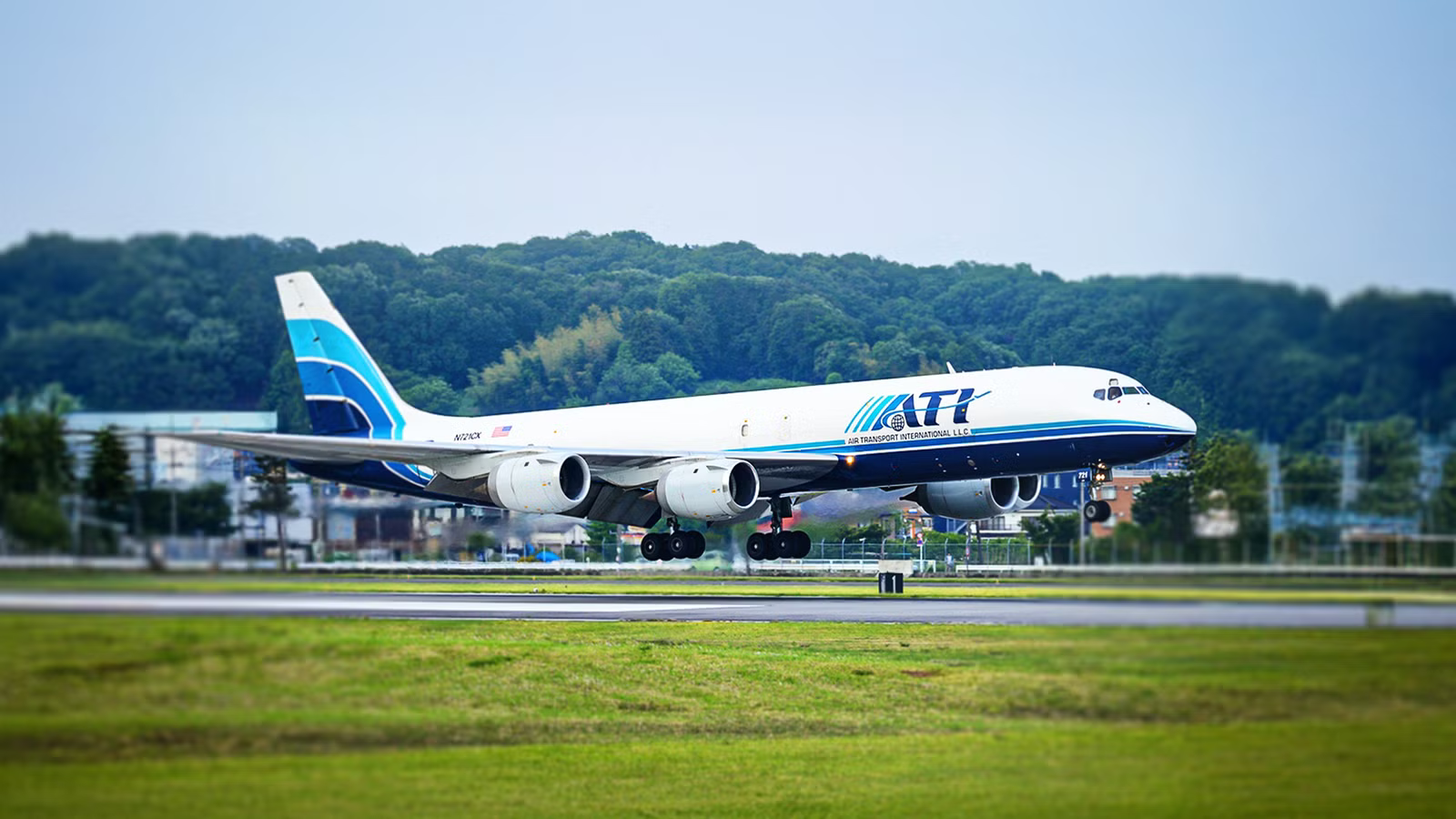
The Douglas DC-8 holds an important place in the history of commercial aviation. The four-engine narrowbody was among the first long-range jet airliners to enter service and marked the dawn of the commercial jet age in the US. It entered the market as a direct rival to Boeing’s 707 and initially attracted strong interest from airlines. Airlines including Pan Am,  United Airlines, and
  Delta Air Lines were among the major carriers to operate.
But Douglas soon struggled to keep pace with its Seattle-based competitor. The DC-8 entered service with performance shortcomings, leaving the planemaker with an aircraft that was capable but increasingly difficult to position against the 707 family. Even so, the company kept improving the aircraft. Over the years, it introduced several variants with different engines, weights, and ranges. One major change came in 1960, when it re-engined the DC-8 to improve performance and operating economics.
Douglas Developed The DC-8 From A Failed Military Project

The DC-8’s development dates back to 1952. Douglas initially designed the aircraft as an aerial refueling aircraft for the US Air Force, but the company lost the contract to Boeing and its KC-135 Stratotanker. The planemaker then turned its attention to the commercial market. In 1955, it committed $450 million to develop the DC-8 as a civil jet airliner. Pan Am was the first airline to order the DC-8, and other major carriers soon followed.
United, National Airlines, Eastern Air Lines, and Japan Air Lines (JAL) were among the early customers. The DC-8 made its maiden flight from Long Beach Airport on May 30, 1958, and received its certification from the Federal Aviation Administration (FAA) the following year. Later, on September 18, 1959, the quadjet entered commercial service with Delta and United. Indeed, the aircraft gave airlines a major speed increase compared with piston-powered airliners.
The initial variants, the DC-8-10 and DC-8-20, were designed for domestic and medium-range routes. The DC-8-10 used Pratt & Whitney JT3C-6 turbojets, while the Series 20 used more powerful JT4A engines and featured refined wingtips. These changes increased range by about 10%, making the aircraft better suited for transcontinental routes. The Series 30 brought further changes and gave the DC-8 the range it needed for reliable intercontinental operations.
Douglas then introduced the Series 40 with Rolls-Royce Conway engines. The turbofans improved fuel efficiency and reduced noise and smoke compared with the earlier turbojets. Douglas also added a 4% extension to the wing leading edge, which increased range by roughly 8% and cruise speed by more than 10 knots.
The Early DC-8s Fell Short Of Their Promised Performance

However, these early variants still faced significant performance problems. According to Airline Ratings’ history of the DC-8, the very first flight exposed an aerodynamic problem that Douglas had not expected. The aircraft produced 13% more drag than Douglas had estimated and 10% more than the company had guaranteed to its airline customers. The problem was linked to both the wing and the engine pods. Additionally, Douglas had chosen an airfoil that had not been fully tested in flight.
As a result, the initial JT3C-powered aircraft could achieve an economical cruise speed of only Mach 0.798, well below the promised Mach 0.84. The planemaker made several changes to improve the aircraft. These included wing slots, longer wingtips, and changes to the shape of the wing’s leading edge. The modifications improved the aircraft, but range could still fall short of expectations on longer routes. The engines were another problem.
Specifications | Series 10 | Series 20 | Series 30 | Series 40 |
|---|---|---|---|---|
Length | 150 feet, 7 inches (45.9 meters) | 150 feet, 7 inches (45.9 meters) | 150 feet, 7 inches (45.9 meters) | 150 feet, 7 inches (45.9 meters) |
Wingspan | 139 feet, 7 inches (42.6 meters) | 142 feet, 3 inches (43.3 meters) | 142 feet, 3 inches (43.3 meters) | 142 feet, 3 inches (43.3 meters) |
Height | 42 feet, 3 inches (12.9 meters) | 42 feet, 3 inches (12.9 meters) | 42 feet, 3 inches (12.9 meters) | 42 feet, 3 inches (12.9 meters) |
Max Takeoff Weight | Series 11: 265,000lb (120,202 kg); Series 12: 273,000lb (123,831 kg) | 276,000lb (125,191 kg) | Series 31: 300,000lb (136,078 kg) Series 32: 310,000lb (140,614 kg) Series 33: 315,000lb (142,882 kg) | Series 41: 300,000lb (136,078 kg) Series 42: 310,000lb (140,614 kg) Series 43: 315,000lb (142,882 kg) |
Max Payload | 46,103lb (20,912 kg) | 43,624lb (19,788 kg) | 51,870lb (23,528 kg) | Series 41/42: 52,000lb (23,587 kg); Series 43: 43,691lb (19,818 kg) |
Range | 4,330 miles (6,968 km) | 4,660 miles (7,500 km) | 4,609 miles (7,417 km) | 5,450 miles (8,771 km) |
Powerplant | Pratt & Whitney JT3C-6s; 13,500lb thrust each | Pratt & Whitney JT4A-3s; 16,800lb thrust each | Pratt & Whitney JT4A-9s; 17,500lb thrust each (Series 31/32) Pratt & Whitney JT4A-11s; 17,500lb thrust each (Series 33) | Rolls-Royce Conway 509s; 17,500lb thrust each |
The early DC-8s used pure turbojets, which consumed more fuel and produced more noise and smoke than the newer turbofans. Douglas addressed this with the Conway-powered Series 40, but the variant struggled to attract US airline customers, who shunned foreign engines at the time. Furthermore, Douglas also had to contend with the 707. The two aircraft were direct competitors, but the 707 had a 35-degree wing sweep compared with 30 degrees on the DC-8. At the time, some engineers estimated that the difference gave the Boeing aircraft an inherent speed advantage of about 20 mph.
The 1960 Test That Changed The DC-8’s Future

To address these shortcomings and close the performance gap with the 707, Douglas announced its most significant change to the DC-8 in February 1960. The planemaker would re-engine the aircraft with Pratt & Whitney JT3D turbofans. Douglas retrofitted its original DC-8 prototype, Ship 1, with four JT3D turbofan engines. The modified aircraft made its first flight on December 20, 1960, and became the testbed for what would later enter production as the DC-8 Series 50.
Indeed, it was an early example of how a jetliner’s commercial fate could hinge on its engines rather than its airframe. The JT3D was Pratt & Whitney’s first commercial production turbofan. It was developed from the JT3C and could be installed with a relatively simple modification kit. This meant operators could convert existing engines rather than replace the aircraft itself. Compared with the JT3C turbojets, the new engine offered more takeoff thrust, better fuel consumption, and more range.
It also offered a range advantage over the larger JT4. According to industry data, the JT3D conversion increased thrust by about 35% and reduced fuel consumption by 15% to 22%. The change also reduced takeoff noise by about 10 dB. The DC-8-50 could now offer airlines better economics and performance on comparable missions. This helped revive interest in the aircraft and led to new orders.
The DC-8’s Second Major Re-Engining

Indeed, the early re-engining of the DC-8 set a precedent for the aircraft’s later life. By the late 1970s, the DC-8-60 series still had tens of thousands of structural flight hours remaining, but two problems pressured operators to retire the aircraft. The first was rising fuel costs. The oil crisis of the 1970s had made the JT3D engines increasingly expensive to operate because of their relatively high fuel consumption.
At the same time, the US Congress introduced Stage 3 noise standards in March 1977, which were due to take effect by 1985. Airports in the US and Europe were already restricting or banning noisier jets, particularly at night. Without a major upgrade, many DC-8-60s risked being forced out of service despite having plenty of structural life left. Therefore, in 1977, former Douglas Aircraft president Jackson R. McGowen formed Cammacorp to develop a re-engining program for the DC-8-60 series.
The company worked with McDonnell Douglas to replace the JT3Ds with CFM International CFM56-2 high-bypass turbofans. The conversions began in 1982. Cammacorp and McDonnell Douglas eventually converted 110 Super Sixties, creating the DC-8-71, -72, and -73. Each aircraft received four CFM56-2 engines rated at 22,000 lb of thrust. The new engines made the aircraft roughly 70% quieter than the original -60 series and reduced fuel consumption by up to 23%. The re-engined DC-8s remained useful for decades after the program began.
The Second Re-Engining Saved The CFM56

Notably, the DC-8 re-engining program also helped save the CFM56 itself. By early 1979, the engine program was in serious trouble. CFM International, the joint venture between GE Aerospace and Snecma, had spent about five years and more than $500 million on the CFM56, but had yet to secure a commercial order. The parent companies were growing impatient.
In fact, at the time, GE Corporate Chairman Reginald Jones described the lack of a CFM56 launch as a “personal embarrassment.” GE and Snecma had set an internal deadline for the program. If no firm orders came in, they would freeze further development, and some accounts suggest the decision was only about two weeks away. The FAA’s move towards stricter noise regulations for early commercial jetliners then gave the CFM56 a new advantage.
The breakthrough came from the DC-8 re-engining program managed by Cammacorp. On March 29, 1979, United Airlines announced that it would re-engine 29 of its DC-8-61s with CFM56-2 engines. It was the first commercial order for the CFM56. Delta Air Lines and Flying Tiger Line soon followed, ordering 13 and about 18 engines, respectively. These orders gave CFM International the launch customers it needed to keep the program going.
The DC-8 Remains One Of Aviation’s Notable Airliners

To conclude, the DC-8 remains one of the most notable airliners in commercial aviation history. It offered several advantages over the piston-powered aircraft it replaced. It cut flying times between major airports by up to 40%, carried nearly twice as many passengers and cargo as the larger piston aircraft of the time, and reached speeds of more than 600 mph (966 km/h). During a test flight, a DC-8 also became the first commercial aircraft to break the sound barrier, although it did so in a dive.
But the aircraft still had its problems, particularly in the early variants. The December 20, 1960, test flight was important because it showed that changing the engines could address some of those problems without replacing the airframe. The JT3D-powered DC-8-50 gave the aircraft better performance and operating economics, and the same approach would later be used with the CFM56. By the end of the 1960s, however, orders for the DC-8 had started to fall sharply.
Airlines were increasingly turning to larger widebody aircraft such as the Boeing 747, McDonnell Douglas DC-10 and Lockheed L-1011 TriStar. Their higher capacity and better seat-mile economics made them more suitable for many long-haul routes. McDonnell Douglas was also shifting its attention to the DC-10. The company wanted to use production capacity and resources at its Long Beach plant for the new widebody, while continued low-rate DC-8 production was becoming less attractive. Production ended in 1972, and the last active DC-8 was retired on November 14, 2025, by Samaritan’s Purse.
Catch what other trackers miss
Emergency squawks, holds, NOTAMs — live signals, no signup.
Open tracker
Catch what other trackers miss
Emergency squawks, holds, NOTAMs — live signals, no signup.
Open tracker