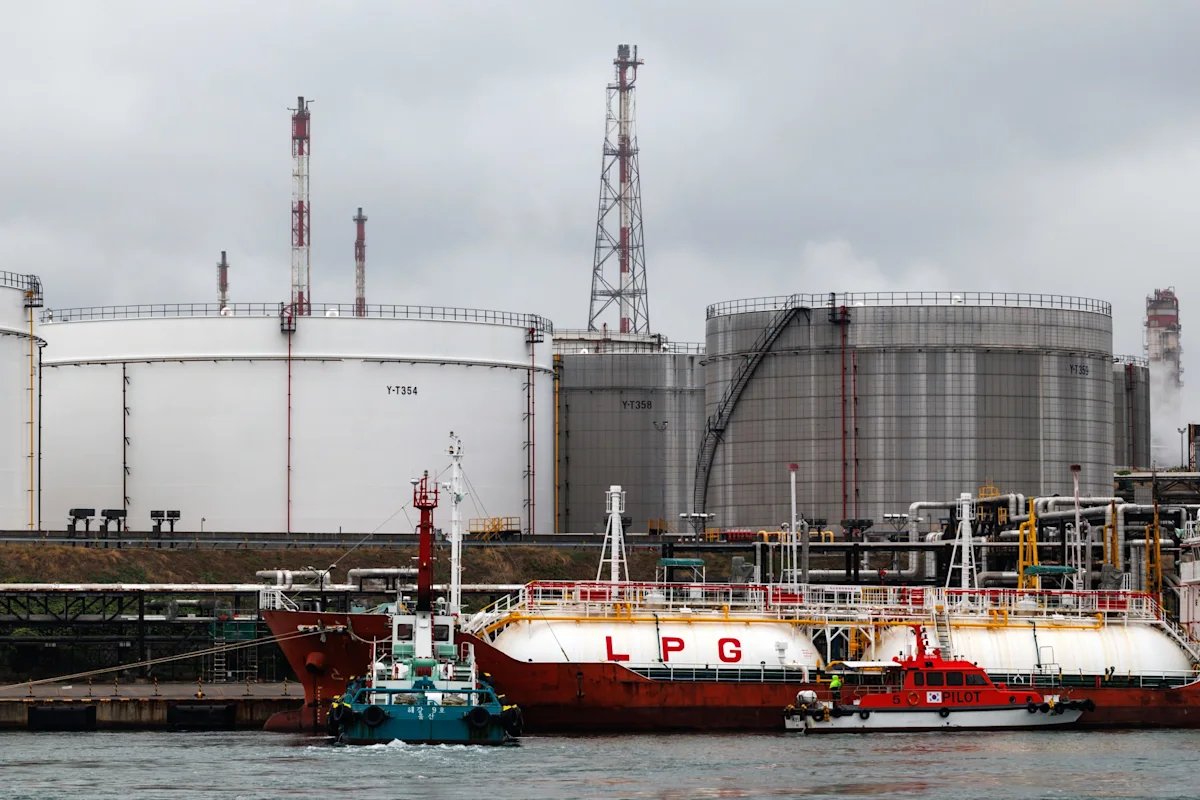
The Iran war exposed just how much the world relied on a narrow 20-mile-wide waterway. Soon after the U.S. launched strikes on Iran, the latter threatened to strike ships trying to traverse the Strait of Hormuz, the channel for much of the Middle East’s oil and gas exports. The threat of shortages pushed countries across Asia to impose export bans, cut import duties, and start rationing fuel to maintain supplies.
Six months since the onset of the war, doomsday scenarios—price spikes, long lines at gas stations, power outages, and grounded flights—haven’t quite come to fruition, as increased production and hefty stockpiles blunted some of the damage.
It seems that normality, in some form, could be returning to the Strait. On Wednesday, Iran announced a new revenue-sharing agreement over the waterway, though a military spokesperson blamed the U.S. for “obstructing this process.”
Yet the revelation of how easy it was for Iran to block, and continue blocking, one of the world’s most important waterways is pushing governments to diversify their sources of energy.
And now, with the prospect of a U.S.-Iran deal in the near-term on life support and Iranian control of Hormuz now looking secure for years to come, what previously saved the global oil market in the first half of the year might not work for a second time.
“Global oil and gas supply is still a major point of geopolitical leverage,” says Saul Kavonic, head of energy research at MST Financial. “Notwithstanding the rise of alternative and green technologies over the past decade, the global economy is still very reliant on oil and gas.”
“Hostile actors can threaten that for their geopolitical ends.”
A ‘big wake up call’
Before the war, roughly a fifth of the world’s oil trade passed through the Strait of Hormuz, which sits between Iran and Oman. More than 80% of that cargo was bound for Asia, primarily China, India, Japan, and South Korea.
“Before this crisis many market observers would have told you it would be impossible to block or completely close the Strait of Hormuz, because a country like Iran did not have the capabilities. They tried in the 1980s, but they did not succeed,” says Carole Nakhle, CEO at Crystol Energy, an energy consultancy.
Yet the conflict has shown “how easy and inexpensive it has become to threaten very expensive energy infrastructure,” she added, with relatively cheap drones capable of putting refineries, pipelines, ports, and other multibillion-dollar facilities at risk.
“This has been the big wake-up call for the entire global energy industry. It’s a fundamental paradigm shift of the last 50 years of the energy industry,” says Kavonic. “We’re moving from just-in-time supply chains to just-in-case supply chains.”
Energy importers are starting to diversify. Before the war, the Middle East accounted for 90% of Japan’s crude oil imports, and roughly 11% of its liquefied natural gas. “Japan found it was more vulnerable than expected, particularly when it comes to LNG—it imports 100% of its energy,” says Kavonic. “In Japan, if the LNG doesn’t arrive, the lights go off and the country shuts down.”
Now, Tokyo is investing elsewhere to shore up future supplies. Japan’s Inpex, for example, formed a joint venture to expand its LNG investment in Australia’s Northern Territory.
“It’s boomtime for Woodside and Chevron, two big LNG players who aren’t too concentrated in the Middle East. The oil majors are now also rapidly ramping up their investment in LNG,” Kavonic says, spotting an opportunity for buyers to diversify their sources of gas away from the Middle East.
Exporters, too, are diversifying. For oil exporters, the major lesson has been the need to invest in alternate supply routes. That includes ploughing billions into building out ports in ports on both the western side of Saudi Arabia and the Gulf of Oman, effectively bypassing the strait entirely. Oil producers are also investing in pipelines, like Saudi Arabia’s East-West pipeline. If all these additional investments pan out, only 10% of the world’s oil will need to travel through the Strait of Hormuz, down from 20% before the war.
Gas, far more than oil, could become the key energy commodity hurt by a prolonged closure of the Strait of Hormuz. While crude oil can be carried via pipeline–perhaps from oil producers in the Persian Gulf to ports on the western side of the Arabian Peninsula–gas can’t, meaning there are no alternative routes to get LNG to Asia if Hormuz is blocked.
Qatar, one of the world’s leading producers of LNG, is trying to find some way to keep its export routes open, through diplomacy, finding new customers, and taking rare opportunities to get their product through Hormuz. It has also set up a fast recovery timeline so it can restart production once the strait reopens.
Escaping an energy collapse
Things didn’t collapse as analysts feared at the beginning of the conflict. In April, for example, the head of the International Energy Agency predicted that flights may soon need to be grounded in Europe due to jet fuel shortages.
While oil prices did surge to as high as $126 per barrel, they didn’t hit the $150 to $200 a barrel level that some analysts feared. And while several Asian countries imposed emergency measures to conserve fuel, a lengthy and catastrophic shortage never materialized. “The global market is proving to be more resilient to major supply shocks than many thought,” Kavonic says.
One reason was the sheer amount of oil sitting in reserve. The IEA mandates that its 32 member countries stockpile at least 90 days’ worth of oil; similar mandates for gas stockpiles were imposed after Russia’s invasion of Ukraine.
In March, the agency coordinated the release of 400 million barrels from these emergency oil stockpiles, the largest such intervention in its history.
Oil producers like the U.S., Saudi Arabia and the UAE also increased their production and carrying capacity. Yet perhaps the unsung hero in the market was China, which drew on its huge stockpiles, leaving more oil in the market for other economies.
“OPEC has lost its primary role as global oil market manager,” Kavonic says, referring to the cartel that tries to maintain the global prices of oil. “It’s now moved to China.”
He notes that China’s increased leverage in oil markets will have repercussions throughout the Pacific. “We can see how dependent Pacific Island nations are on diesel to keep the lights on. So we’ve seen countries in Asia not just have to manage their own imports but support the Pacific as well. Otherwise 30 years of Pacific policy could be undermined in a few months.”
But how long this will last is unclear, particularly now that tensions between Iran and the U.S. have flared up again, and a prolonged closure of the Strait of Hormuz now looks likely.
“We spent the last four months living on the oil market credit card. And if we continue at that rate, that credit card will be maxed out in a few months,” Kavonic says.
Fortune will host several sessions on what a more complicated geopolitical world means for Asia’s businesses at the upcoming Fortune Leaders Forum, hosted in Macau on Sep. 8. Learn more here.
This story was originally featured on Fortune.com


 dailynewsnblog