dailynewsnblog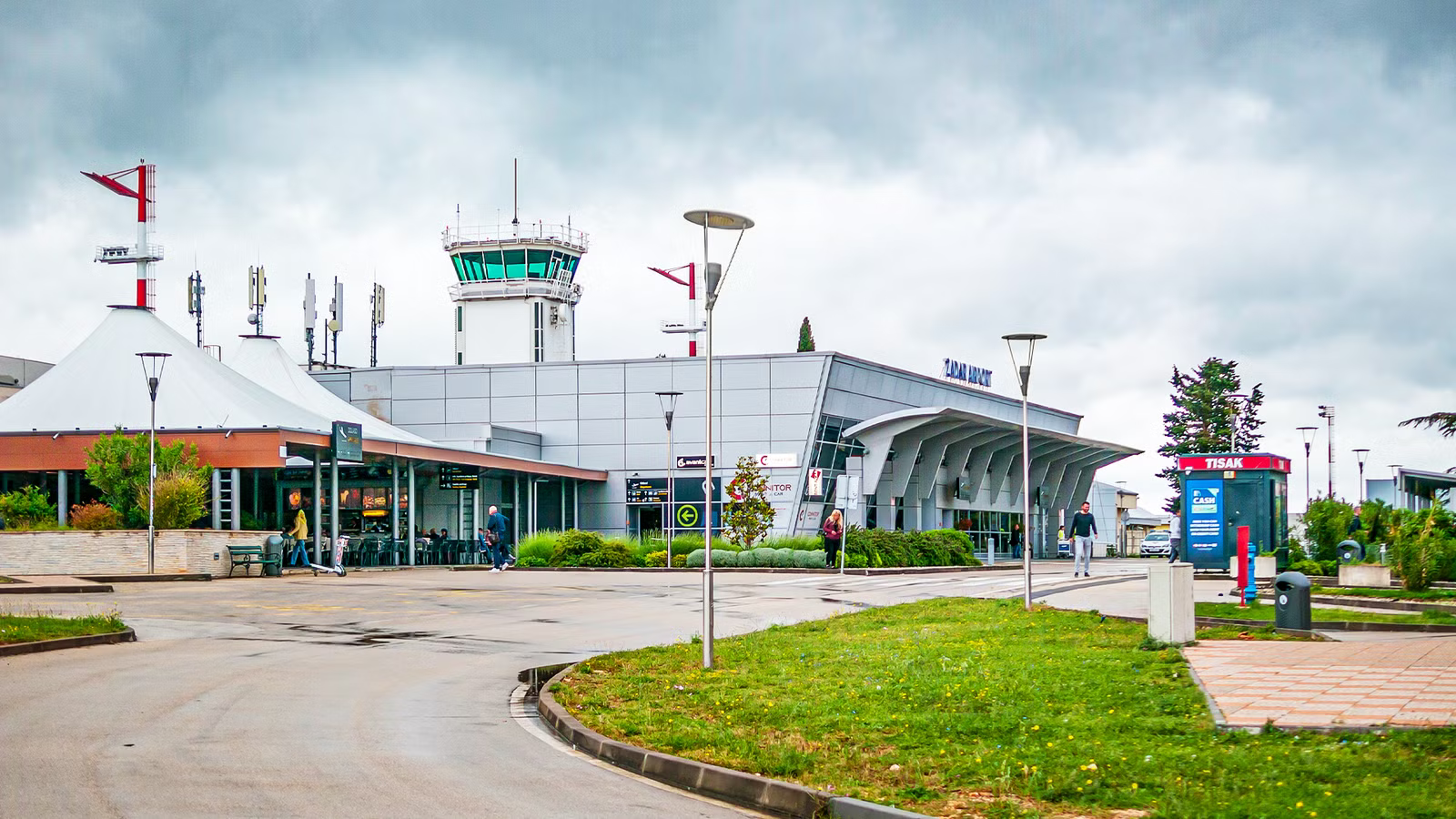
During the hub-and-spoke era of aviation, there were two types of airport. We had megahubs like  London Heathrow Airport (LHR) which would receive jumbo jets flying in hundreds of passengers from around the world. Regional aircraft would then transport these passengers to their final destination.
However, the hub-and-spoke model has now largely died, replaced with point-to-point flying. That has been made possible by highly flexible twinjet widebody planes, like the Boeing 787. Point-to-point has been further solidified by the arrival of long-range narrowbody planes like the Airbus A321XLR, which can fly niche routes.
As a result, European secondary airports like Zadar Airport (ZAD), Munich Airport (MUC), and Paros National Airport (PAS) are investing to fulfill their expanded international and long-range aviation roles. Developments include larger terminals to accommodate more passengers and larger aprons and runways to accommodate larger, more numerous aircraft.
How Is Zadar Airport Leading The Way?

Croatia’s Zadar Airport is the exemplar for small European airport investment. This July, the airport announced the unveiling of a new departures terminal. The airport describes it as “one of the most important infrastructure projects for the further development of air traffic, tourism and the economy of Zadar County, worth 17 million euros.“
The funding has been gathered through a loan taken out by the airport. It sits within a 35 million euro investment cycle drawing funds from Croatia’s National Recovery and Resilience Plan. The capacity increase is immense, roughly doubling the number of passengers it can handle, with a limit of around three million people.
Zadar Airport hopes the development will inspire carriers to open new routes, raise the number of passengers using it, and lead to services running year-round. The facility has also taken on more than just economic significance. It was opened in the 1960s, while Croatia was part of Yugoslavia, and Zadar Airport faced devastation during the Croatian War of Independence (1991-1995).
The emergence of the airport and the growth to its enormous size today is symbolic of the broader recovery of Zadar County in the decades of peace that have followed. County Prefect Josip Bilaver described what will come next. He said that “the next major project is the extension of the runway by a further 2,300 ft (700 meters), worth around 95 million euros, which will give Zadar Airport a completely new strategic and traffic dimension.”
Paros Airport’s Terminal & Runway Extensions

A larger investment has been pushed towards Paros Airport, located on the island of Paros in Greece. NavInvest Greece reported that the Greek Ministry of Infrastructure and Transport had approved the 45.44 million euro funding as part of the National Development Program 2026–2030. This program aims to boost the island’s infrastructure and passenger capacity, with completion expected in 2030. Several improvements are included in the investment.
The first is a new 130,400 square foot (12,117 square meter) passenger terminal to improve passenger capacity. Paros Airport will also be able to accommodate larger planes due to a runway extension from 4,600 ft (1,400 m) to 5,900 ft (1,800 m). A new control tower and fire and security upgrades will ensure the increase in traffic can be executed safely. The Instagram post embedded below shows airport infrastructure that is creaking under the weight of demand.
The enormous increase in passenger traffic after the pandemic justifies the need for such an expansion. Fewer than 100,000 people used the airport in 2020. This rose to 362,140 people in 2024. Total arrivals on the island are also rapidly increasing, totaling 970,000 in 2025 when ferry and cruise traffic is factored in.
Investment In Secondary Airports Has Also Been Directed At Building New Airports

Madrid could have a second airport in years to come thanks to a recently revived 400 million euro plan, as reported by Euro Weekly News. It will be based at the small and private Aerodrome of Casarrubios del Monte and eventually serve up to a million passengers a year. Managed by Aerohobby, this aerodrome currently has a runway length of just 3,100 ft (950 m) and a single parallel taxiway.
This aerodrome also has no air traffic control. It is primarily used for general aviation and pilot training. The scheme aims to lighten the burden on Adolfo Suárez  Madrid Barajas Airport (MAD). This airport reached a record passenger number of 68.2 million in 2025. The table below uses Aena Statistics data to show the overall traffic increase, including cargo and passenger flights, over the last several years. These numbers now well exceed pre-pandemic patterns.
Year | Annual passengers | Aircraft movements | Annual cargo (tonnes) |
|---|---|---|---|
2019 | 61,734,037 | 426,376 | 558,567 |
2020 | 17,112,389 | 165,740 | 401,133 |
2021 | 24,135,220 | 217,537 | 523,395 |
2022 | 50,633,652 | 351,906 | 566,372 |
2023 | 60,220,984 | 389,179 | 643,534 |
2024 | 66,196,984 | 420,182 | 766,818 |
2025 | 68,179,054 | 430,616 | 840,331 |
Due to the total absence of the infrastructure needed to deal with large commercial jets, substantial development would be needed. The existing runway would grow to 5,900 ft (1,800 meters), while an additional runway of 10,500 ft (3,200 m) would be used by larger jets. Private aviation would use two terminals, while there would be one large passenger terminal.
These are major developments, but are far less substantial than the initial proposal submitted in 2018. That document envisioned an airport capable of dealing with ten million passengers annually. Furthermore, Rus Spain reports that Aena has rejected the second airport idea in the near future, meaning plans will likely be kicked down the road even further while the government focuses on Barajas expansion.
The Currently-Rejected Development Plans For A New Airport Are Smaller Than In 2018

Plans to turn Casarrubios into Madrid’s second airport were made previously in 2018. This rejected plan was even larger than the plan that Aena has just pushed away. As reported by Aviation 24, the airport would begin by serving just 300,000 passengers in its first year. However, by ten years of operation, it would have been used by seven million passengers across 55,000 flights.
This airport would deliver 5,600 jobs for the local economy, and countless more indirect jobs in the local area. The demand would be centered around low-cost and regional carriers. These airlines are as significant in European aviation as was the case back in 2018.
The airport development would have cost 180 million euros. This investment would come from a combination of the Spanish state and private investors. The project would be spread across the Madridand Toledo regions, with 70% in the Madrid towns of Navalcarnero and El Álamo and 30% in Casarrubios itself.
Investment Is Also Impacting Secondary Hubs

Investment isn’t just being directed towards the small European airports that have growth potential. Aviation Direct has reported on infrastructure development and billions of euros spent on investment at Munich Airport. This example shows how some airports, while not megahubs, are certainly hubs and have been a target for growth.
It also shows that, when hub investment programs are launched, nothing else matches them for financial spending, along with just how expensive it is to produce tangible hub development. The table below shows the greatly increasing passenger numbers at Munich Airport since the pandemic, with them almost having returned to pre-pandemic levels.
Year | Commercial passengers (in millions, per Munich Airport) |
|---|---|
2019 | 47.9 |
2020 | 11.1 |
2021 | 12.5 |
2022 | 31.6 |
2023 | 37 |
2024 | 41.6 |
2025 | 43.4 |
Deutsche  LufthansaAG and Flughafen München GmbH have built a partnership to develop Germany’s second-largest hub. The main focus of the project will be an expansion to the existing Terminal 2, increasing annual passenger numbers by ten million by 2035. The cost of this project alone will be several billion euros. Officials insist that there will be no third runway constructed.
Similar Patterns Have Been Observed In The United States

Point-to-point aviation has also changed the makeup of airports across the Atlantic. Simple Flying recently reported on five small US airports that have recently received large investment, showing that capital isn’t just interested in the largest US hubs like Los Angeles International Airport (LAX).
The five airport investments identified were $12 million for Wilmington Airport (ILG), $173 million for Northwest Arkansas National Airport (XNA), $776.5 million for Lexington Blue Grass Airport (LEX), $2 billion for John Glenn Columbus International Airport (CMH), and $2.5 billion for San Antonio International Airport (SAT). An interesting note is that at most of these airports, the investment has been framed as just the start of broader expansion projects.
In San Antonio, for example, a new terminal complex is being introduced, which will feature 17 additional high-capacity gates, substantially boosting passenger capacity. The development isn’t just about updating aging infrastructure, but giving the flexibility needed for further capacity increases.
Airport investment has also been focused on improving the broader metropolitan economy of the relevant city. For example, Columbus, Ohio, has recently been attracting capital investments in the technology, logistics, advanced manufacturing, and healthcare sectors. John Glenn Airport’s infrastructure investment and development exist to support the expansion of these industries, enhancing the city’s overall prosperity.
Catch what other trackers miss
Emergency squawks, holds, NOTAMs — live signals, no signup.
Open tracker
Catch what other trackers miss
Emergency squawks, holds, NOTAMs — live signals, no signup.
Open tracker