dailynewsnblog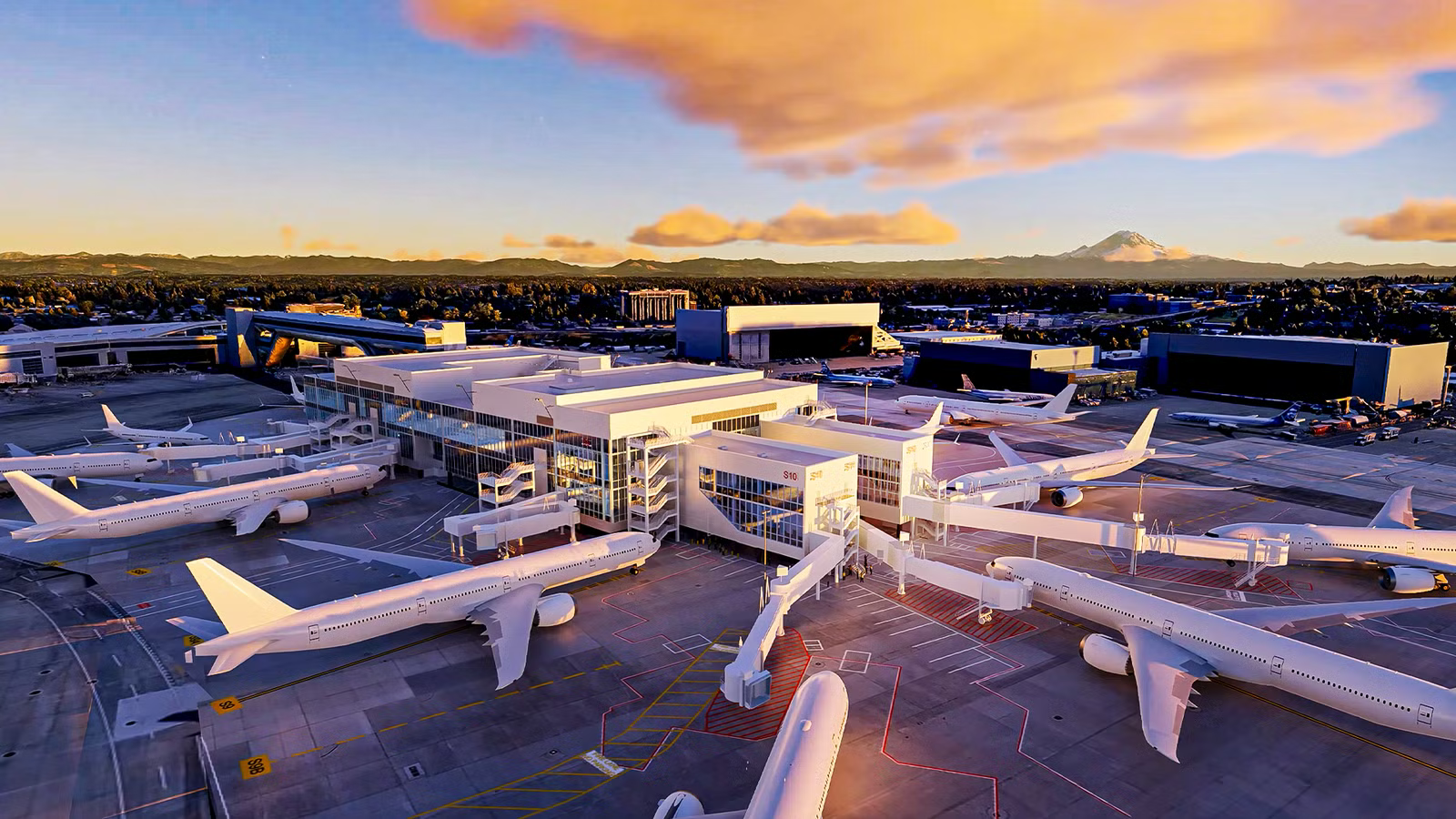
Airports across the US have been receiving upgrades to their terminals, transforming the American travel experience from one defined by aging infrastructure to one that’s genuinely world-leading. Now, it’s  Seattle-Tacoma International Airport’s (SEA) turn, as the Port of Seattle authorized over $1 billion in initial funding to modernize its S Concourse. The initial work will begin later in 2026, while major construction will commence in 2027, and the project is meant to run until 2034.
The update to the concourse will add significantly more interior space. In addition, SEA will design the concourse with a modern visual design, as you’d expect from a new terminal project. However, the most noteworthy aspect of the project is that the S Concourse will feature 12 gates, the same number as today. Airports generally focus on adding capacity when they renovate or replace older buildings, which makes SEA’s decision to not do so unconventional.
An Updated Concourse For SeaTac

The Port of Seattle has approved $1.1 billion in initial funding for a modernization of SeaTac’s S Concourse (formerly known as the South Satellite), a project that is projected to cost a total of $2.5 billion and has been dubbed the S Concourse Evolution (SCE). The airport has one main terminal with four primary concourses, as well as the N Concourse (formerly named the North Satellite) and the S Concourse, which are connected to the main concourses by an underground automated people-mover named the ‘SEA Underground’.
This project is part of a $5.5 billion capital plan to upgrade SEA, and the SCE is being led by AECOM for engineering and design work, while HOK will serve as the project’s design partner. It aims to add 150,000 square feet (13,935 square meters) of interior space, primarily through a vertical expansion rather than increasing the building’s footprint. The upgrade will result in better circulation while increasing retail and dining options for customers. In addition, the new building will offer more lounge space as well as additional passenger amenities.
Notably, SeaTac is not increasing the number of gates available, which is especially notable because the airport is close to its maximum capacity. However, SEA has one of the smallest footprints of any airport in the United States with its passenger volumes, and it has no space to add additional gates to the S Concourse. Instead, this project is mainly about improving the airport’s ability to accommodate its passengers rather than increasing flight capacity, while also improving the customer experience.
Construction Of The Updated S Concourse

The S Concourse is one of two concourses used for international arrivals, alongside Concourse A. Traditionally, the S Concourse contained the airport’s Customs and Border Protection (CBP) facility, but this was vacated when SEA opened the dedicated International Arrivals Facility (IAF) in 2022, connected to Concourse A by sterile walkways and the S Concourse by an overhead walkway. The space vacated by the original CBP facility is now being used for the building’s upgrade.
The modernization will include a new Upper Concourse level for added retail, dining, and passenger amenity options, while the Penthouse level will be expanded for more lounge space, which is crucial to further meeting modern customer demands. The structural system of the building will be strengthened through the addition of new gate pods, and the concourse will incorporate new seismic features. The project will also aim to cut greenhouse gas emissions by 58% compared to today, with SEA promising LEED Silver certification.
Early work will begin in the fourth quarter of 2026, but real construction will begin in early 2027 and will stretch until 2034, led by AECOM, which will work closely with the design partner HOK. The airport is focusing on minimizing the project’s operational impact and will construct a temporary annex building east of the S Concourse for ground boarding. With this, the airport won’t have any more than three gates out of commission at a time during construction, which is crucial considering just how constrained SeaTac Airport is today.
Seattle-Tacoma Airport’s Recent Projects

The current S Concourse building dates back to 1973, making it over 53 years old as of the time of writing. It is, however, only the latest in a long series of improvements that the Port of Seattle has implemented to modernize the airport. In 2021, the airport completed its modernization of the N Concourse, which added eight new gates to the facility while also introducing a new interior design to celebrate the Pacific Northwest region. This included new art pieces to reflect the culture, environment, history, and diversity of the region.
Catch what other flight trackers miss
Emergency squawks, holds, NOTAMs — live signals, no signup.
Open tracker
Catch what other flight trackers miss
Emergency squawks, holds, NOTAMs — live signals, no signup.
Open tracker
The new IAF opened in 2022, and it was a major step forward for improving SEA’s ability to function as an international hub. The airport has been increasingly popular in recent years in terms of international travel, and it’s a major business hub home to companies like Amazon and Starbucks. The new IAF not only frees up space for the airport to modernize the S Concourse, but it also increases the number of international-capable arrival gates (up to 20) since the facility is connected to Concourse A.
In addition to the big updates, the airport has also completed smaller projects, such as a restroom renovation completed in 2025. The SEA Gateway Project reconfigured the terminal’s ticketing, check-in, security, and baggage claim areas for more efficient passenger flows, while also refreshing the visual design.
The C Concourse Expansion added four additional floors to the existing building and was completed in 2026. Meanwhile, roadway improvements, a baggage optimization project, and the SEA Underground Controls Replacement project are currently underway, with the S Concourse modernization soon to join this list.
Seattle’s Increasing Popularity

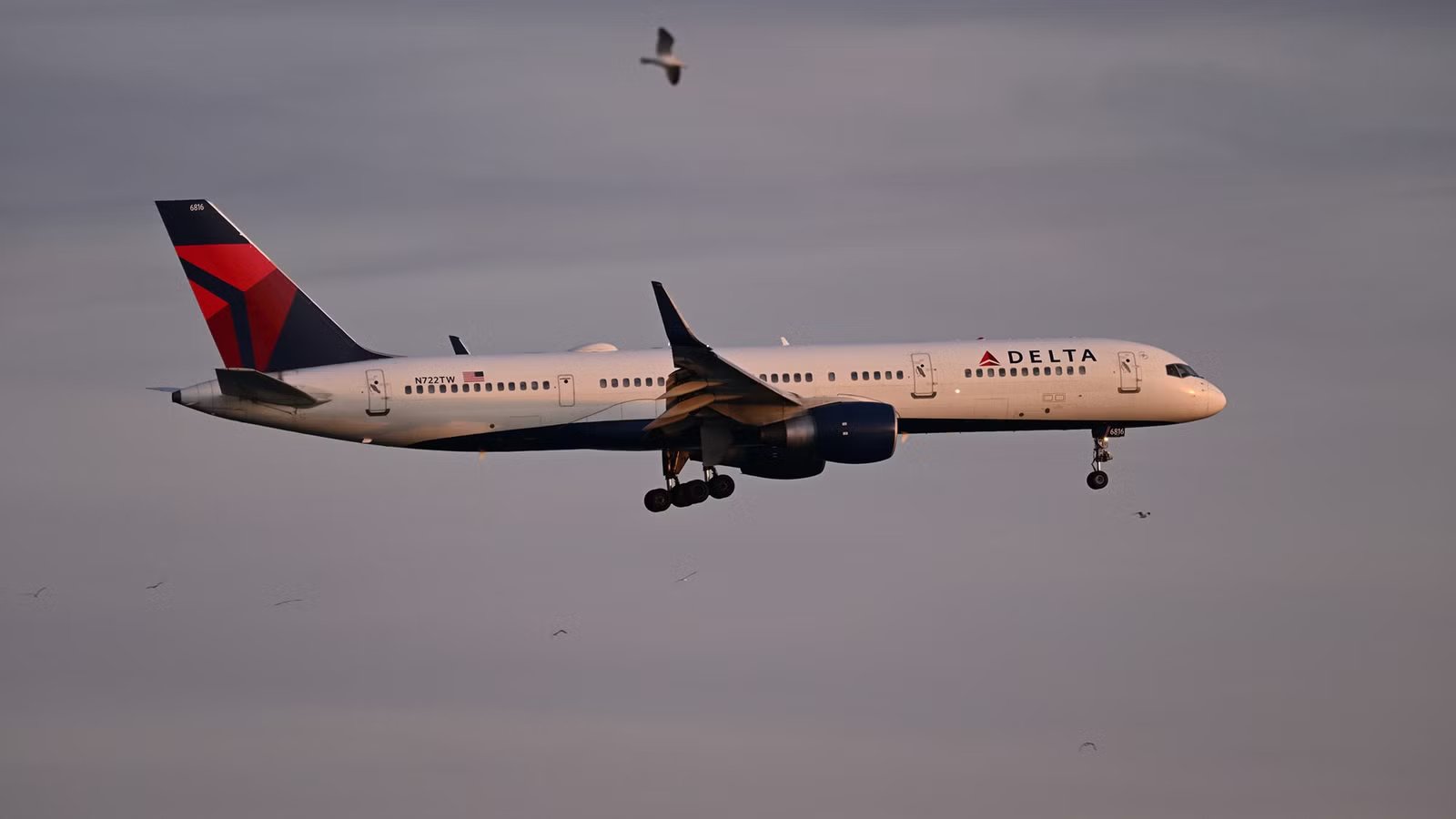
SEA has generally been seeing strong demand, and the airport reported some of its strongest international numbers ever during the peak of the World Cup. The airport sees service from 27 foreign airlines and is connected to 36 destinations in Europe, Asia, and Latin America. The largest international airline at SEA is  Delta Air Lines, which has built SeaTac as its primary gateway for transpacific flights, while also maintaining some European flights, but Delta is now being challenged in this domain by
  Alaska Airlines.
Seattle has long been Alaska Airlines’ home, and it remains by far the largest airline at the airport. However, it has historically only operated narrowbodies, and while Delta’s domestic operations out of Seattle continue to face difficulty, it’s essentially been unchallenged with its long-haul network. However, Alaska has now acquired Hawaiian Airlines and begun launching flights using Hawaiian-branded widebodies to Tokyo and Seoul, while it’s now also expanded to Rome, London, and Iceland with Alaska-branded 787s inherited from Hawaiian.
Delta Air Lines Long-Haul Destinations Served From Seattle In 2026 | |
|---|---|
Amsterdam Schiphol Airport (AMS) | Seoul Incheon International Airport (ICN) |
Josep Tarradellas Barcelona–El Prat Airport (BCN) | Shanghai Pudong International Airport (PVG) |
London Heathrow Airport (LHR) | Taipei Taoyuan International Airport (TPE) |
Paris Charles de Gaulle Airport (CDG) | Tokyo Haneda Airport (HND) |
Rome Fiumicino Leonardo da Vinci International Airport (FCO) | |
Alaska aims to launch 12 long-haul routes out of Seattle by 2030, and it recently announced new flights to Athens as well as Paris. Meanwhile, Delta has responded to Alaska’s route additions with its own flights to Rome and also launched Barcelona, while further building up its transpacific network. With these two engaging in a long-haul showdown, Seattle’s international facilities are about to get as busy as ever, and the airport’s recent investments will be crucial to ensuring that it can handle the added passengers.
Constraints At Seattle Tacoma

SEA was designed to accommodate 30 million passengers per year, but in 2025, the airport actually handled over 52 million passengers and over 435,000 aircraft movements. SeaTac is well over its capacity, but the airport is relatively compact at only 2,500 acres (roughly ten square kilometers). It physically has no room to expand beyond its current facilities, which is why many of the airport’s latest projects have been focused on building upwards. The IAF was built above Concourse A, which was reconfigured to allow eight gates to use the facility.
The IAF allowed SEA to accommodate around 2,600 passengers per hour, more than double what it was before, while improvements like the S Concourse project aim to increase the airport’s passenger capacity and flows even if their footprint is the same as before. Given the airport’s general popularity and especially the expansion plans of its two largest airlines, these improvements are necessary for it to function well in the future.
Because of the constraints in Seattle, Alaska Airlines has been focusing more heavily on its secondary hub in Portland as a reliever while still expanding to new markets out of Seattle, in addition to the new long-haul flights. Meanwhile, Delta Air Lines has not been dramatically expanding its domestic network, instead focusing on long-haul services. While Seattle is continuing to improve the design of its facilities to increase capacity, it’s anticipated that SEA will be at maximum capacity in 2032, and it remains to be seen whether these or subsequent improvements will address this.