dailynewsnblog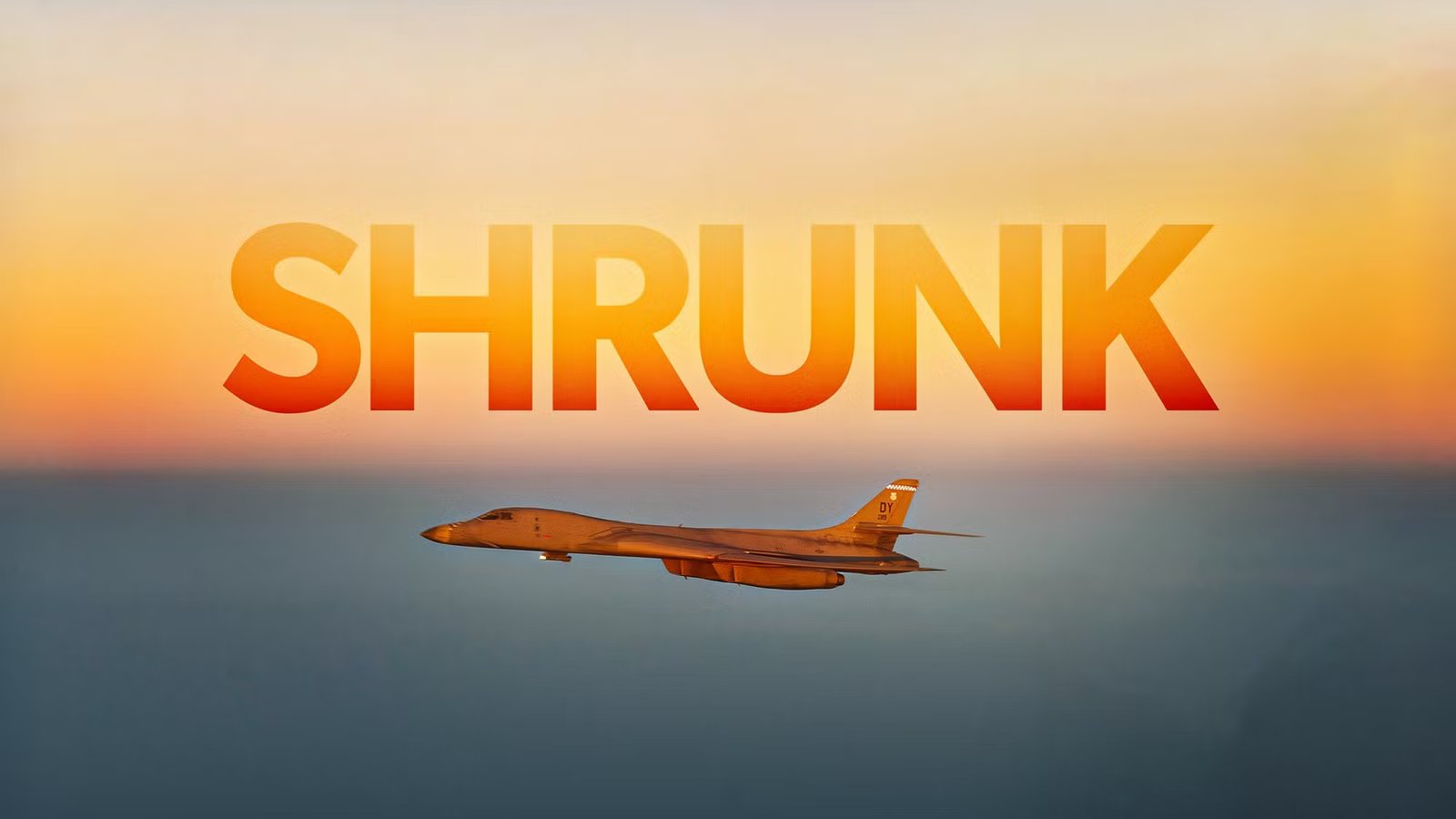
A Bomber Task Force (BTF) is a deployment of United States Air Force (USAF) bomber aircraft and supporting personnel that allows the Department of War to demonstrate its ability to command and control bomber forces anywhere in the world, on short notice if required. The first BTF mission took place in 2018 and was undertaken by the 23rd Expeditionary Bomb Squadron. These missions not only rapidly move heavy, lethal strike capacity to forward areas of the world on short notice, but also provide deterrence, training opportunities with partner nations, and on-call firepower unmatched by lighter aircraft.
BTFs demonstrate resolve and a willingness to use force if necessary. At issue, however, is the fact that these deployments have continued with increasing regularity despite the USAF’s bomber fleet having declined significantly since the conclusion of the Cold War. From hundreds of bombers at the turn of the millennium to just over 100 airframes today, an increasingly small fleet is answering the ever-growing demand for BTFs around the world. This has, in turn, led to the need for extensive modernization of the USAF’s bomber fleet while the clock ticks toward the arrival of its sixth-generation bomber.
A Shrinking Bomber Fleet Is Being Asked to Do More

During the Cold War, the USAF’s Strategic Air Command was first and foremost tasked with conducting an all-out nuclear retaliation in the event of a nuclear confrontation with the Soviet Union. This mission required immense global infrastructure and a massive bomber fleet to ensure not only deterrence, but also the ability to conduct immediate, wide-ranging, and crippling attacks against Soviet military sites and industrial capacity.
As this nearly 45-year competition ended in 1991, the USAF maintained a fleet of more than 500 bombers. Fast-forward 35 years, and that once-massive bomber fleet has dramatically diminished to a force of around 140 aircraft. The reasoning was obvious and practical: the existential threat to the US and Western Europe had essentially disappeared, and there was no longer a perceived need to maintain such a large bomber force or, more broadly, such a massive military.
During the 1990s, the US military underwent a sweeping force reduction, declining from 2.17 million personnel across all branches in FY 1987 to 1.37 million by FY 2000, a reduction of approximately 37 percent. Presently, the active-duty force of the US Military stands at 1.35 million as of March 31, 2026. This significantly smaller force comes at a time of increased operational tempo, particularly with ongoing deployments near Iran and efforts to restructure the military to deter aggressive moves by the Chinese military against traditional US allies in the Asia-Pacific.
Regarding the USAF, the need for its bombers has risen, and the crews of these aircraft, particularly those operating the Rockwell B-1B Lancer, Northrop Grumman B-2A Spirit and  Boeing B-52H Stratofortress, have been called upon to do more. To this point, General Thomas Bussiere, commander of Air Force Global Strike Command, pointed out that its BTFs have been deployed globally 48 times in the past 18 months, to such dispersed locations as Australia, South Korea, and Sweden. This demonstrates the USAF’s unique ability to deploy bombers to INDOPACOM, EUCOM and CENTCOM simultaneously in support of US strategic objectives.
The general also mentioned that there were “eight no-notice activations” involving all three operational platforms—the B-1, B-2 and B-52, most of which were strikes directed at the Houthis in Yemen who were targeting shipping and aircraft in the vicinity of the Arabian Peninsula. These activations are particularly important because they demonstrate that the force maintains sufficient aircraft, personnel and readiness to deploy unexpectedly.
The Air Force Is Stretching The Existing Fleet Until The B-21 Arrives

With ongoing operations and ongoing global deployments, maintaining the USAF’s bomber fleet is of the utmost importance, particularly as it awaits the arrival of the Northrop Grumman B-21 Raider. The ability to deploy BTFs, particularly on short notice, requires continual maintenance and upgrades and, in some cases, the regeneration of older aircraft from the “Boneyard” at Davis-Monthan Air Force Base in Tucson, Arizona.
In an effort to keep its bombers lethal, the USAF has pulled at least two Lancers out of storage at Davis-Monthan following a reduction in the aircraft’s fleet size from 62 to 45 aircraft in 2021. To maintain the current fleet, the USAF has a FY2027 budget request of $342 million (£252.5 million) for B-1 modernization through 2031, helping to ensure its lethality and relevance through 2037. These bombers are particularly valuable because they not only have some stealth characteristics, but also have the greatest ordnance-carrying capacity in the USAF bomber fleet, with an internal payload capacity of 75,000 lb (34,019 kg).
The 19 remaining B-2s have undergone significant modernization, including improved communications, avionics, and software; radar upgrades; enhanced stealth and survivability; and integration with newer weapons such as the B61-12 and JASSM-ER. These upgrades help preserve the Air Force’s requirement for an aircraft capable of penetrating sophisticated integrated air defenses while remaining difficult to detect, a capability demonstrated by the B-2 during combat operations such as Operation Midnight Hammer.
While the B-1 and B-2 are slated for retirement, likely in the 2030s, the B-52 will be maintained and flown through 2050. Although the aircraft’s airframes are old in terms of years, they remain relatively young in terms of accumulated flight hours. A key factor in its continued operational use is the fact that it has proven to be an excellent standoff platform for cruise missiles such as the AGM-158 JASSM. This missile has a range of approximately 200 nautical miles (370.4 km), allowing the B-52 to strike targets from outside the effective range of many enemy radars and surface-to-air missile systems. Further, with its 70,000 lb (31,751 kg) payload capacity, it remains a highly capable platform for both precision strikes and the delivery of large numbers of weapons.
The B-52’s capabilities have led the USAF to invest heavily in an extensive modernization program. This includes the allocation of $15 billion (£11.06 billion) for the Commercial Engine Replacement Program, which will see the installation of Rolls-Royce F130 engines across the fleet, as well as other subsystem upgrades. In addition, $3.4 billion (£2.51 billion) is being spent on a fleet-wide radar upgrade that will replace the legacy system with a modern Active Electronically Scanned Array (AESA) radar developed by Raytheon Technologies. The new radar will provide the Stratofortress fleet with improved all-weather navigation, targeting and situational awareness capabilities.
100, 145 or 200 B-21s? The Force-Structure Question

As the USAF begins to look squarely at retiring its B-1 and B-2 fleets, the future of its deep-penetration stealth strike capability lies with the B-21. Initial acquisition projections for the aircraft called for a fleet of 100 bombers, manufactured under a program involving 8,000 industry and USAF personnel and supported by an ecosystem comprising more than 400 suppliers across 40 states. The overarching goal is for the first bombers of this class to enter operational service by 2027. To this end, the USAF awarded Northrop Grumman an additional $4.5 billion (£3.32 billion) to accelerate production by 25 percent in 2026.
While the initial baseline of 100 Raiders was seemingly sufficient, United States Strategic Command is proposing to increase that number to 145 aircraft to deter simultaneous threats from China and Russia. However, that fleet size could prove conservative, as Admiral Samuel Paparo, commander of US Indo-Pacific Command, supports a fleet of 200 B-21s. The admiral’s area of responsibility encompasses North Korea and China and represents one of the greatest deterrence challenges the US military has faced since the Soviet Union.
Paparo’s reasoning is understandable, as Operation Epic Fury required the Abraham Lincoln Carrier Strike Group and components of the Tripoli Amphibious Ready Group to deploy to the Middle East. These vessels and the capabilities they provide would normally have been available in the Pacific, where they contribute to deterring increasingly assertive moves by the Chinese military, particularly around Taiwan, Japan, and the Philippines. The admiral stressed that while his normally assigned carriers and destroyers were operating near Iran, he faced a capability gap that could potentially have been exploited. By contrast, the B-2s flying from Whiteman Air Force Base could provide long-range strike capability without requiring US Indo-Pacific Command to reposition its own forces from the Pacific.
Beyond reductions in available naval assets, a Taiwan contingency would require superior asymmetric and stealth strike capabilities if the Chinese military were to launch an amphibious assault on Taiwan. In such a scenario, strikes would likely be required to attrite China’s sophisticated anti-access/area-denial network, which is composed of hundreds of launch platforms. Further, the Chinese military has approximately 2,250 combat aircraft operating from more than 70 military airfields. Any US operation in defense of Taiwan would therefore have to significantly degrade China’s ability to employ these aircraft, airfields, and supporting systems effectively.
In addition to providing a capable fleet of stealth bombers to serve as a deterrent in Asia, a substantial fleet of B-21s would give the Air Force additional airframes available for operational duty while others undergo maintenance, repairs, or upgrades. Further, a potential force of 200 Raiders would allow military planners to sustain BTFs in multiple theaters while retaining additional B-21s on standby to provide surge capacity in the event of unforeseen contingencies. Finally, a larger B-21 fleet would reduce dependence on aging B-52s and regenerated B-1s while giving commanders greater survivable penetrating-strike capacity through the B-21. This brings the argument back to the original arithmetic: the more aircraft available, the more BTFs the USAF can generate without exhausting the force.
The Bomber Force Has A Demand Problem, Not Just An Age Problem

The USAF’s bomber fleet is undergoing a significant transition as the B-1 and B-2 approach retirement, the B-52 receives billions of dollars in modernization, and the B-21 Raider begins to enter service. These efforts are not separate developments, but rather components of a broader effort to maintain a capable bomber force while meeting an increasingly demanding global mission. Regenerating B-1s, extending the B-52’s service life and accelerating B-21 production all provide the USAF with ways to generate the BTFs required by combatant commanders.
However, the fundamental arithmetic remains difficult to ignore. The USAF operated more than 500 bombers near the end of the Cold War, compared with roughly 140 today, while BTF deployments are occurring with increasing frequency. The Air Force has spent decades making individual bombers more capable, yet the growing demand for these aircraft demonstrates that capability cannot completely substitute for capacity. Whether the eventual B-21 fleet numbers 100, 145, or 200 aircraft could therefore determine how effectively the USAF can meet its global bomber commitments in the decades ahead.