dailynewsnblog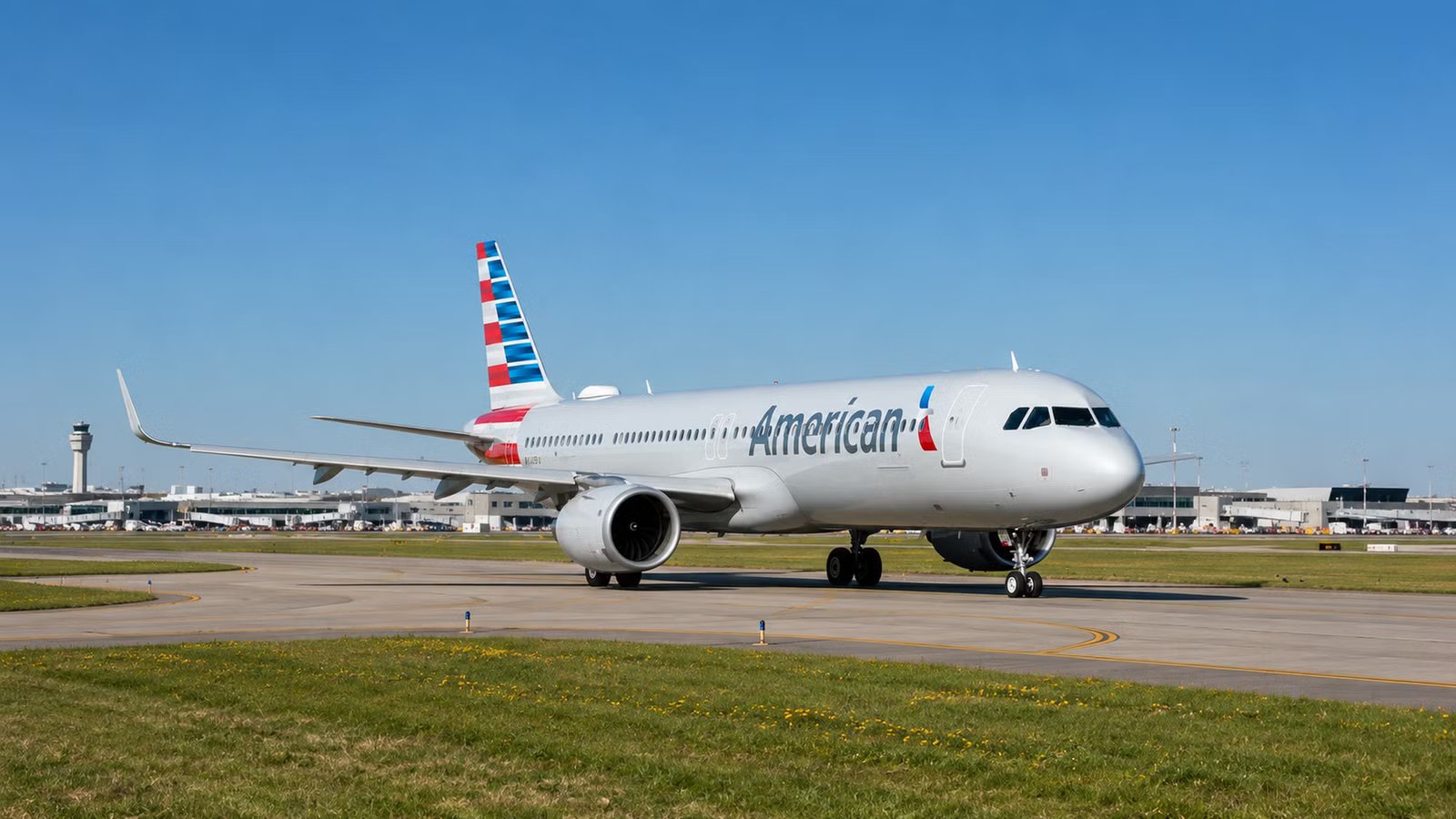
 American Airlines is taking its new Airbus A321XLR fleet farther than ever before. The carrier has unveiled four additional transatlantic routes for the 155-seat jet in 2027, including daily Philadelphia-Vienna service from May 6. At 4,321 miles (6,955 km), the route is set to become the longest scheduled A321XLR service in the world. American will also be the only US airline serving Vienna, with the seasonal route unusually continuing through the Christmas market period into early January 2028.
 Philadelphia International Airport (PHL) also gets a new XLR route to Porto, while
  New York JFK Airport (JFK) adds XLR routes to Amsterdam and Nice, substantially expanding an international deployment that began with JFK-Edinburgh in March. The aircraft is increasingly doing exactly what its extra range and relatively low capacity were designed to do: open thinner long-haul routes, extend seasons, and replace widebodies when demand does not justify their extra seats.
American Is Rapidly Expanding Its A321XLR Network

American’s international XLR network now encompasses nine transatlantic route assignments that are either active or scheduled. Some are entirely new services, while others demonstrate a different side of the aircraft’s economics: Philadelphia to Amsterdam, Edinburgh and Lisbon will temporarily switch from the Boeing 787 to the smaller XLR during lower-demand winter periods.
Route | Status | XLR Period/Start | Distance | Westbound Block Time |
|---|---|---|---|---|
New York JFK – Edinburgh | Active | March 8, 2026 | 3,245 mi (5,225 km) | 7h 00m |
New York JFK – Barcelona | Announced | October 25, 2026 | 3,829 mi (6,162 km) | 8h 40m |
Philadelphia – Edinburgh | Announced | October 25, 2026–Jan. 4, 2027 | 3,345 mi (5,383 km) | 7h 30m |
Philadelphia – Lisbon | Announced | January 5–February 24, 2027 | 3,444 mi (5,543 km) | 7h 45m |
Philadelphia – Amsterdam | Announced | February 25–March 27, 2027 | 3,724 mi (5,993 km) | 8h 15m |
Philadelphia – Porto | New | March 28, 2027 | 3,405 mi (5,480 km) | 8h 15m |
New York JFK – Amsterdam | New | March 28, 2027 | 3,635 mi (5,850 km) | 8h 40m |
New York JFK – Nice | New | May 6, 2027 | 3,981 mi (6,407 km) | 9h 20m |
Philadelphia – Vienna | New | May 6, 2027 | 4,321 mi (6,955 km) | 9h 30m |
Vienna International Airport (VIE) and Porto’s Francisco de Sá Carneiro Airport (OPO) are the genuinely new destinations, as American has never previously served either city. Vienna is notable in that it reinforces American’s 2026 return to Central Europe, where it added new Philadelphia flights to Budapest and Prague. American also says Vienna will run through early January rather than ending with the normal summer season, opening the route to Christmas-market traffic. Meanwhile, Porto complements the airline’s existing year-round Philadelphia-Lisbon operation, and Brian Znotins, American Airlines SVP of network planning, points out that the XLR is crucial to the route working:
“Porto is exactly the type of new market the Airbus A321XLR enables us to serve… a market that we would be unlikely to fly to with a larger aircraft.”
Amsterdam and Nice, meanwhile, are proven destinations receiving additional gateways. American already flies to Amsterdam year-round from Philadelphia and seasonally from  Dallas/Fort Worth International Airport (DFW), while its Philadelphia-Nice route was inaugurated in May 2024 using a Boeing 787-9. The new JFK services therefore allow American to add another nonstop without having to dedicate another widebody.
Loading map…
Drag to explore
That illustrates just how many jobs American is finding for the XLR. The same aircraft can operate a roughly six-and-a-half-hour eastbound flight to Edinburgh, replace a 787 during the European winter, and then tackle a nine-hour-plus westbound sector from Vienna. All the while, American has been pushing the aircraft with ever-longer routes.
Philadelphia-Vienna Will Be The World’s Longest A321XLR Route

The scale of that jump becomes clearer when American’s Vienna flight is compared with the longest XLR routes across the five airlines currently operating or firmly planning transatlantic service with the type. At around 4,321 miles (6,955 km), Philadelphia-Vienna is 340 miles beyond American’s planned JFK-Nice route, and more than 350 miles beyond the current  Iberia route from
  Madrid Barajas Airport (MAD) to Santa Domingo. That service has been the benchmark in long XLR missions since the aircraft entered service.
Rank | Airline | Route | Status | Distance |
|---|---|---|---|---|
1 | American | Philadelphia – Vienna | Announced | 4,321 mi (6,955 km) |
2 | Iberia | Madrid – Santo Domingo | Active | 4,162 mi (6,698 km) |
3 | American | New York JFK – Nice | Announced | 3,981 mi (6,407 km) |
4 | Iberia | Madrid – San Juan | Active | 3,964 mi (6,379 km) |
5 | United | Washington Dulles – Toulouse | Announced | 3,947 mi (6,352 km) |
6 | United | Newark – Marseille | Announced | 3,915 mi (6,300 km) |
7 | Iberia | Madrid – Recife | Active | 3,908 mi (6,289 km) |
8 | Aer Lingus | Dublin – Nashville | Active | 3,896 mi (6,270 km) |
9 | Air Canada | Toronto – Copenhagen | Announced | 3,895 mi (6,269 km) |
10 | United | Newark – Ibiza | Announced | 3,882 mi (6,248 km) |
The comparison with  United Airlines is especially striking. United unveiled five new summer 2027 XLR destinations on Tuesday, but its longest, from Washington Dulles International Airport (IAD) to Toulouse, is nearly 400 miles shorter. However, United is reportedly taking a more conservative approach to deploying its XLRs after determining that the aircraft’s practical range is less than Airbus originally suggested.
In that regard, American has something of an advantage over its rival. Znotins says that the airline has been collaborating with  oneworld partner Iberia to better understand the XLR’s real-world range and performance, giving it greater confidence when planning future routes:
“They’ve been giving us their experience with the airplane. So we feel like we’re honed in on what the range and the performance of the airplane is.”
Even with partner data in hand, American is making a bold gamble by stretching the XLR further than any other carrier. While the airline hasn’t yet published schedules, we can expect an eastbound block time of approximately 8 hours and 10 minutes. But coming back westbound against the prevailing Atlantic winds will likely lead to a block time of up to 9 hours and 30 minutes during the winter months, making it the longest regularly scheduled narrowbody route in the world.
American Will Be The First US Airline In Vienna Since 2008

 Delta Air Lines was the last US carrier to serve Vienna, operating a nonstop from
  Hartsfield-Jackson Atlanta International Airport (ATL) that launched in May 2007. But the service proved short-lived, ending in August 2008 as Delta reassessed individual markets amidst surging fuel prices and a weaker economic outlook, making marginal long-haul routes increasingly difficult to justify. American’s arrival in May 2027 will therefore restore US carrier service to Vienna after an absence of nearly 19 years.
That long absence is particularly remarkable because Vienna is hardly disconnected from the United States. Austrian Airlines currently serves six US airports from its Vienna hub, including three  Star Alliance hubs in Chicago, Newark, and Washington DC. The airline has effectively had a years-long monopoly on flights between Austria and the US.
Austrian’s US Routes From Vienna | Frequency | Aircraft | Distance |
|---|---|---|---|
Boston | 3x weekly | Boeing 787-9 | 4,042 mi (6,505 km) |
Chicago O’Hare | 6x weekly | Boeing 787-9 | 4,702 mi (7,567 km) |
Los Angeles | Daily | Boeing 777-200ER | 6,123 mi (9,854 km) |
Newark | Daily | Boeing 787-9 | 4,242 mi (6,827 km) |
New York JFK | 6x weekly | Boeing 787-9 | 4,228 mi (6,805 km) |
Washington Dulles | Daily | Boeing 787-9 | 4,452 mi (7,165 km) |
Notably, United doesn’t fly to Vienna, also a large Star Alliance hub. That’s because Austrian is part of Lufthansa Group, and so participates in the same revenue-sharing Atlantic Joint Venture alongside Lufthansa, SWISS, Air Canada, Brussels Airlines and Eurowings. That gives United little reason to duplicate Austrian’s existing widebody flights from its own hubs.
For American, however, that concentration creates an opportunity. A US-based AAdvantage or oneworld passenger currently has no alliance nonstop to Vienna, and may instead connect through a gateway such as  London Heathrow Airport (LHR). Znotins points out that the XLR now allows American to provide a nonstop option:
“Vienna has always been on the radar, but just never seemed to make the list. Having an airplane that allows us to go into another alliance’s hub with the right level of capacity and offer the only US carrier service to Vienna — that schedule differentiation is a big deal for us.”
And that may ultimately be the more important story. The XLR does not merely allow airlines to fly farther with a narrowbody — it gives them a right-sized tool to disrupt alliance strongholds that previously could not support a widebody. Vienna, a Star Alliance hub untouched by a US carrier for almost two decades, may be one of the best examples yet.