dailynewsnblog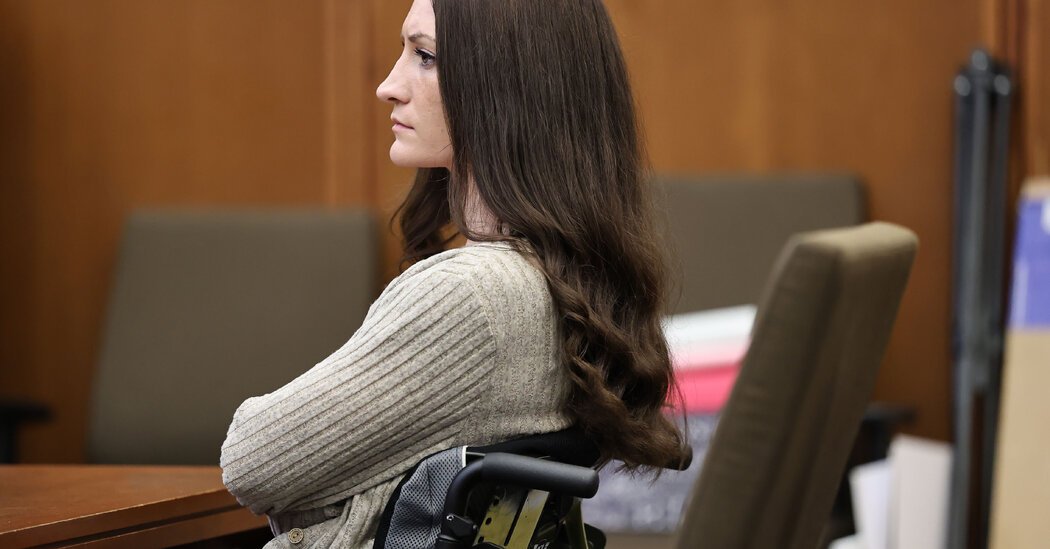
Closing arguments have begun in the trial of Lindsay Clancy, the Massachusetts woman charged with murder for strangling her three young children in 2023.
After more than four weeks of testimony that was by turns emotional, harrowing and combative, lawyers on each side will make their final pitches to the jury as to whether or not Ms. Clancy should be held criminally responsible for the children’s deaths.
Ms. Clancy, 36, does not deny that she killed the children at her home in Duxbury, Mass., a Boston suburb. But her lawyers have pursued an insanity defense, maintaining that she should not be held criminally responsible because she was suffering from postpartum psychosis and had experienced auditory hallucinations of a man’s voice ordering her to kill her children and then herself.
Prosecutors have argued that Ms. Clancy planned the killings rationally and plotted to get her then-husband, Patrick Clancy, out of the house on Jan. 24, 2023. Mr. Clancy returned home from picking up takeout food to find the children in the basement with exercise bands around their necks, he said during his testimony. Cora, 5, and Dawson, 3, were dead. Callan, 8 months, died days later.
Mr. Clancy also found Ms. Clancy lying injured in the backyard. She had cut her wrists and neck and jumped from a second-story window of the home in what her lawyers have called a suicide attempt, which left her partially paralyzed.
Witnesses for the trial, which is taking place in Plymouth, Mass., have also included Ms. Clancy’s mother, her sister, and health professionals who treated Ms. Clancy before the killings or evaluated her afterward. The prosecution rested early last week after calling more than 70 witnesses, and the defense rested on Friday after calling 10.
Rebuttals, which give prosecutors an opportunity to respond to claims made by the defense, took up the last few days of the trial. The three witnesses for the prosecution, all forensic psychologists, pointed to evidence that Ms. Clancy may not have been suffering from postpartum psychosis.
The cross-examinations were combative. Ms. Clancy’s lawyer, Kevin Reddington, grilled the rebuttal witnesses and at one point asked the judge to grant a mistrial after a psychologist mentioned the concept of mortal sin while discussing Ms. Clancy’s Catholic upbringing.
On many days, demonstrators have gathered outside the courtroom. Many have been women, wearing pink to support Ms. Clancy, and to call attention to what they see as the health care system’s failure to care for new mothers with postpartum depression and other mental illnesses.
In order to secure a guilty verdict, the prosecutors must prove beyond a reasonable doubt not only that she committed the crime, but also that she was criminally responsible for it. Jurors will be instructed to choose among first-degree murder, second-degree murder and manslaughter if they find Ms. Clancy guilty.
The judge, William Sullivan, has told the jurors that Ms. Clancy would not be criminally responsible if she had a mental disease or defect that prevented her from appreciating the criminality of her conduct, or from conforming her conduct to the requirements of the law.
After closing arguments, the jury will begin deliberations. Ms. Clancy faces life in prison without parole if convicted of first-degree murder.