dailynewsnblog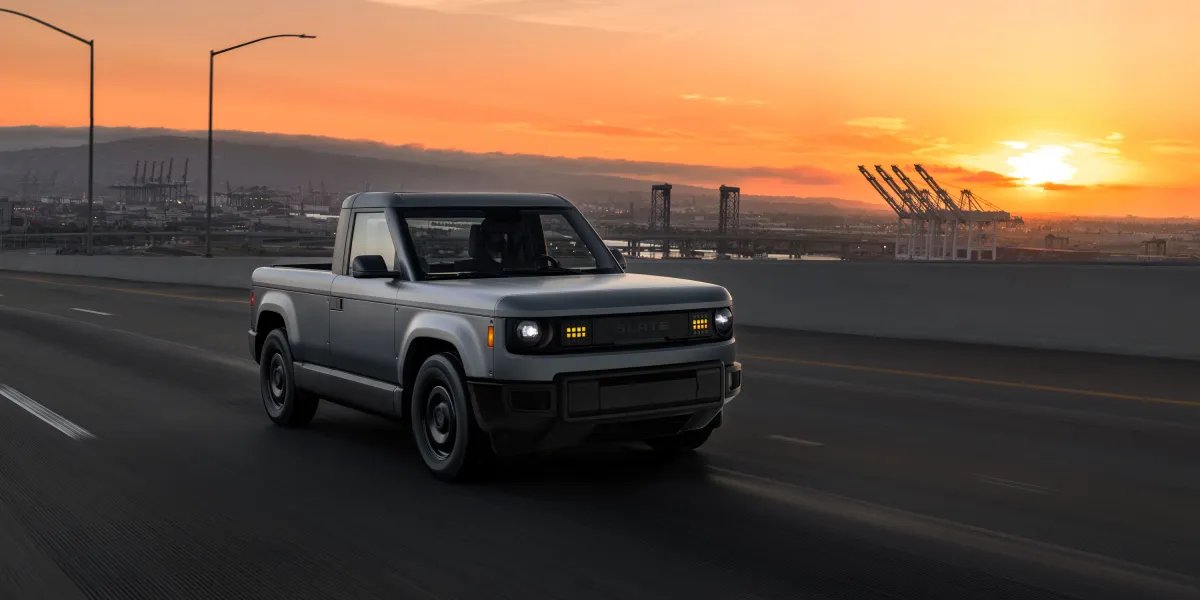
The company is going all in on simplicity, to the point of austerity. The Slate is a tiny, two-door pickup that’s shorter than a Honda Civic. Much of the media coverage has obsessed over the fact that the base model’s windows use hand cranks, a feature straight out of the 20th century.
Slate is also breaking away from other EV manufacturers’ efforts to compete with gas-powered vehicles on range. The truck sports a small lithium iron phosphate battery, ringing in at 65 kilowatt-hours, and its quoted top range is just 205 miles. For comparison, the most basic Tesla Model 3 can go over 320 miles on a charge.
By accepting a shorter range and forgoing the frills that Americans have come to expect in vehicles, Slate is able to offer the base model of its truck for less than $25,000. Some customers will choose to upgrade their truck with optional add-ons, like a Bluetooth stereo system, vinyl wraps, or even power windows. But the price will still likely come in well below the roughly $50,000 average for a new vehicle in the US.
It might seem an odd choice to go so small and simple in a market that’s increasingly sizing up—but the status quo hasn’t exactly been working for EV makers. A few years back, the hero for US automotive electrification was supposed to be the Ford F-150 Lightning. Announced in 2021, it was an electric version of the country’s best-selling vehicle.
But Ford discontinued the truck in December 2025, just four years after its introduction. It’s not entirely the Lightning’s fault: The second Trump administration slashed tax credits and other support designed to boost EVs.