dailynewsnblog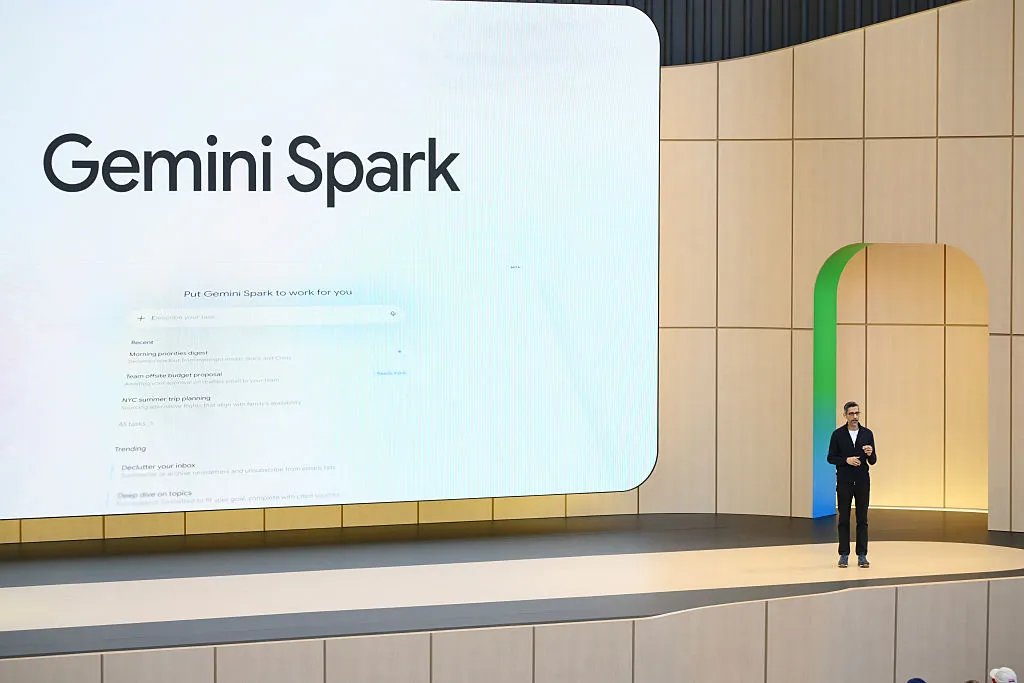
Google gets something right in its Wednesday announcement about new Gemini Live voice features when it says, “You shouldn’t have to guess whether a task requires Spark, a Daily Brief, or a quick inbox search.” Google means that as a promise — that the updated Gemini app can handle a variety of tasks via voice commands. But there’s a ridiculousness here: Google has given every Gemini AI feature under the sun its own branding, which undercuts that very message.
In the Gemini app, users can switch between chat, Spark, and Daily Brief — three separate features, each with its own icon and place in the app’s navigation. This clutters up what could otherwise be a more straightforward consumer experience, and it suggests that Gemini is still struggling to find a killer feature.
Take Daily Brief, for example. The feature comes across as the kind of thing an AI engineer, not an everyday user, would think is clever. It’s essentially an AI-enabled agenda that offers “proactive, personalized updates” using data pulled from Google’s apps, like Gmail and Calendar. In practice, though, the Brief can’t tell the difference between information that’s urgent or actionable and unsolicited nudges to follow up on other things — like prompting you to continue research you started in the chatbot, or worse, resurfacing your prior Google searches.
That second part doesn’t feel useful; it feels creepy. So what if I had been researching college scholarships or animal rescues on Google? That doesn’t mean I want an AI tapping me on the shoulder about them later.
Spark has the opposite problem. It’s one of the more useful aspects of Gemini’s app — an AI agent that can take action on your behalf — but Google has packaged it as its own standalone brand, which it doesn’t need to be. Sure, internally, Google engineers may want to be on the Spark team, and that’s fine — but a mainstream AI app user definitely does not need to think about which “side” of the AI app they need to be in for a given task. They should just be able to type their request, and the AI figures out how to handle it, spinning up an agent if the task calls for one.
In fairness, the problem isn’t limited to Gemini. The AI industry at large seems to expose its internal architecture directly to consumers rather than hiding it behind a simpler interface.
Today, people have to think about whether they want to “chat” with Anthropic’s Claude or “Cowork” with its help. (Until this week, those two modes inside the Claude app didn’t even share a memory of past conversations.) ChatGPT is the same, requiring you to swap between “Chat” and “Work.” This is the kind of engineering-minded design that makes engaging with AI feel unnatural. Consumers are being asked to learn the brand names for what are essentially interaction modes or surfaces, powered by a company’s AI model.
This may be why Apple’s somewhat anticlimactic approach to Siri could ultimately win over consumers. iPhone and Apple device owners don’t have to change any of their existing behavior to take advantage of it. Apple simply makes the apps and features that people already use — like Spotlight Search, the Photos app, the iPhone’s Camera, and Siri voice requests — smarter without asking users to learn a new interface.
This same principle may explain the rise of text-based AI services, where users simply text a chatbot — like Poke, Ollie, Lindy, Orchid, Lucas, Folk, Tomo, Instinct, or others — and the assistant just does what’s asked.
Text messaging is a clean and simple, well-understood user interface, and it doesn’t require extra mental effort to figure out which feature or product inside a larger app you’re supposed to use.
As a16z investment partner Justine Moore recently wrote, “People don’t want to open an app every time they need help – they want a contact they can text like a friend. And the gold standard is iMessage.”
When you purchase through links in our articles, we may earn a small commission. This doesn’t affect our editorial independence.