dailynewsnblog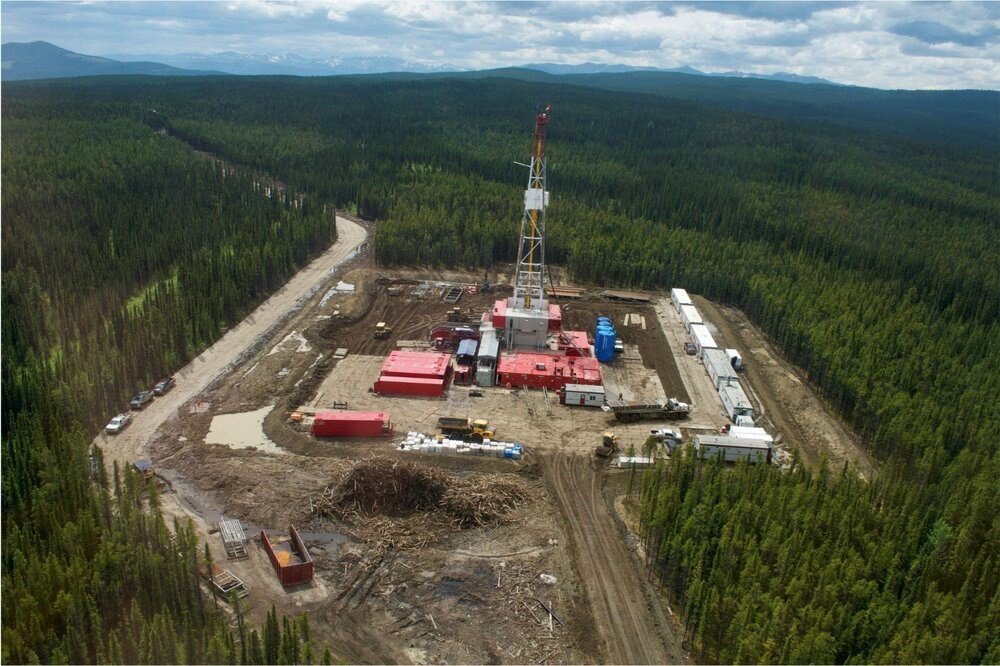
B.C. hinges its economic future on a massive natural gas boom, but experts warn a critical budget oversight and concessions to industry risk wiping out billions in expected public revenues
On June 29, 2026, B.C.’s energy minister defended the province’s proposed natural gas royalty framework in a closed-door meeting in Fort St. John. As the government moved to collect its share of natural gas profits, Adrian Dix told Treaty 8 First Nations that the province and its taxpayers would see a windfall over the next five years.
“We put our estimates to $2.4 billion more in royalty revenues than what we had proposed before,” Dix said in a recently obtained recording.
B.C.’s gains, added the minister, were calculated based on numbers in the government’s Budget 2026.
But according to experts interviewed by Business in Vancouver, those budget numbers appear to contain an apparent accounting error that could cost B.C. billions of dollars.
Under the province’s current transitional system, the government calculates monthly gas royalties using the “plant inlet price”—the market price of gas minus the cost of getting it to processing plants.
Nancy Olewiler, an economist at Simon Fraser University who verified the error, said the province failed to subtract those transportation and processing costs in its latest budget forecasts, leading to a major overestimation of its share of industry profits.
Olewiler estimates the flawed price forecasts could reduce the natural gas royalties B.C. collects by roughly $500 million per year. Applying the budget data to the new royalty framework—slated to come into effect Jan. 1, 2027—risks compounding the errors and completely wiping out expected government gains, said the economist.
Over five years, the sum of lost revenue could nearly pay for the B.C. government’s entire three-year health-care expansion plan, or rival all the money spent fighting wildfires between 2021 and 2024.
“It’s a substantial overestimate,” Olewiler said.
B.C. Premier David Eby denied knowledge of any accounting missteps, stating at an Aug. 25 press conference in Vancouver that he was “not familiar with any error in the budget related to oil and gas revenues.”
However, on July 14, the chiefs of four Treaty 8 First Nations—groups whose territory overlaps with B.C.’s richest gas fields—handed Eby a letter identifying the alleged budget error and its long-term consequences.
When confronted with the letter, Eby said there had been “vigorous back and forth” negotiations with the nations over the development of the oil and gas royalty regime.
“There was definitely a different perspective and views at certain points,” said the premier.
The finance and energy ministries did not provide responses to questions from BIV in the days leading up to publication of the story.
To date, the government has failed to respond and appears to be “trying to sweep it under the rug,” said James Tate, a lawyer representing a Treaty 8 First Nation.
“The people of B.C. are about to be robbed of billions of dollars over decades because a new royalty design is being chosen based on a mistake,” said the lawyer.
B.C.’s $1-trillion resource
At stake is a massive public asset. Deep beneath the foothills of the Rocky Mountains, a vast deposit of combustible gas worth an estimated $1 trillion sits encased in a dense rock known as the Montney formation.
Over the past 20 years, horizontal drilling and fracking technology have allowed fossil fuel companies to rapidly exploit the resource. As a result, the number of active gas wells in British Columbia climbed to nearly 10,000 by 2024, according to the BC Energy Regulator.
The deposit is also the main source of energy that has spurred the accelerated construction of a series of gas export terminals, including LNG Canada, which at $40 billion, remains the largest private investment in Canadian history.
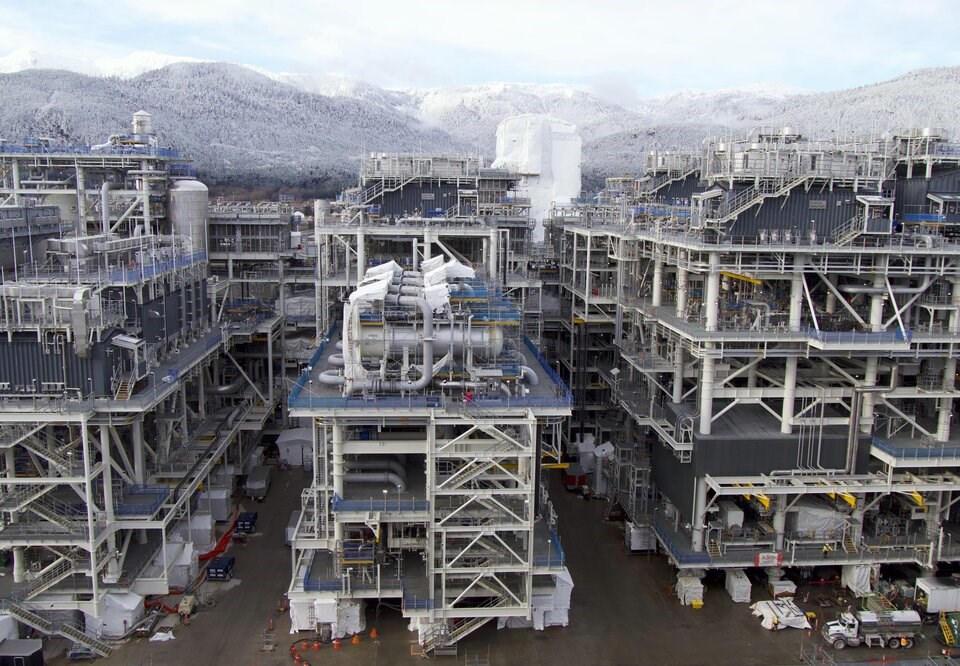
Praised by industry as a major step forward for Canada’s economy, the LNG projects have also drawn sharp rebukes from groups worried about their impacts on the environment and human health.
Behind those debates, billions of dollars are on the line. Because most of the province’s gas wells extract a public resource drilled on Crown land, the B.C. government has the power to decide how much of those profits should flow to taxpayers.
But getting that share has proven elusive for decades.
Inter-generational wealth on the line
Other jurisdictions, like Norway, have chosen to put the job of fossil fuel extraction into the hands of government-owned entities. That has allowed the country to capture and redirect a large share of its oil and gas riches into a sovereign wealth fund—assets which are now worth more than US$2 trillion.
Such a policy path was most clearly advocated by Canadian resource economist John Hartwick, who first proposed the idea—now known as Hartwick’s Rule—in 1977. The concept centres around how best to manage a non-renewable resource like oil or gas.
Under the rule, Hartwick argued that governments should capture and invest enough natural resource wealth in buildings, roads or other assets, so they will continue to generate genuine savings and sustain long-term living standards for generations to come.
In the mid-1970s, Alberta launched the Heritage Fund to build a long-term financial endowment by saving 30 per cent of its oil and gas revenue. The province halved this contribution to 15 per cent in 1983 before halting deposits entirely when oil prices crashed in 1987.
Though the fund reached $31.9 billion by late 2025, researchers have estimated it could be worth between $577 billion and $688 billion had Alberta maintained its original vision.
Werner Antweiler, an energy economist at the University of British Columbia, said the Heritage Fund has evolved into a “shadow of itself.”
“My biggest criticism of the whole system is that Canadian politicians have never understood the Hartwick Rule,” said Antweiler.
“We have private companies that are making money and that are paying dividends to their shareholders, wherever they may be. And so in that sense, some of the inter-generational wealth is already being distributed away to other shareholders and through private companies.”
Industry profits surge amid royalty negotiations
When B.C. designed its original oil and gas royalty system in 1992, it did so using a scheme that was explicitly meant to jump-start the province’s industry and allow it to catch up with Alberta, said Antweiler.
But as the province’s gas industry began to boom, critics began to question the division of natural resource wealth flowing to government and industry.
In 2021, an independent review co-authored by Olewiler found that B.C.’s oil and gas royalty system was built on a credit framework that had handed producers billions of dollars that could have gone toward public services. The system, concluded the report, was “broken” and in deep need of reform.
In response, the province attempted to launch a revised royalty framework in 2022. Its explicit goal was to capture the public’s fair return on natural resources while balancing economic development with environmental protection. In so doing, the B.C. government stated that it sought to capture 50 per cent of the oil and gas industry’s net profits after accounting for production costs.
“There’s no magic number,” said Antweiler of the 50-50 profit target. “It’s just basically whatever the government decides it’s going to be, and based on what is politically acceptable.”
What is clear, said Olewiler, is that her review found the share of gas profits captured by B.C. has consistently dropped over the decades.

Since her work was published, major companies extracting gas in B.C. have seen record cash flow and investor dividends. Global gas prices surged following Russia’s invasion of Ukraine.
As the government deliberated a new royalty system, energy producers reaped unprecedented windfalls. Tourmaline Oil Corp., B.C.’s largest gas producer, saw its net profits more than double to $4.5 billion in 2022.
At the same time, B.C.’s royalty system continued to cede a bigger share of net profits to producers than its neighbours.
In March 2026, Tourmaline reported that its gas wells on the B.C. side of the Montney formation doubled the average rate of return compared to wells on the Alberta side. In some cases, returns spiked to 140 per cent.
For Antweiler, that financial success is evidence that B.C.’s gas industry has matured. Now, he said, is the time for a new royalty regime to level the playing field—especially with neighbouring jurisdictions like Alberta.
But according to experts familiar with B.C.’s plans, the government appears to be moving in the opposite direction.
Failed proposals and intense lobbying
On the surface, Olewiler and Antweiler agree the government’s efforts to modernize the gas royalty system appear to be moving in the right direction.
Both support greater transparency and accountability—goals ostensibly advanced by the government’s latest plan to replace a patchwork of fossil fuel subsidies and credit programs with a simpler “revenue-minus-cost” formula.
In all of its iterations, Olewiler said B.C.’s royalty system has sought to avoid penalizing producers when prices are low. Reforms were only meant to increase the share of captured net profits when wars and other economic factors send gas prices up.
“We’re not trying to penalize and trying to inhibit production, because we want to protect our industries,” said Olewiler. “But when they’re making a lot of money, are we making pennies on the dollar?”
“I think that’s what British Columbians have a right to know.”
In her 2021 assessment, Olewiler called for greater transparency, an end to special credit programs and industry deductions, and a system that would make it easier to understand who gets what share of B.C.’s gas resources.
To date, however, the province has kept most of the discussions about replacing the old royalty system out of public view.
Two years after proposing a new royalty framework, a joint internal analysis carried out by the B.C. government and Treaty 8 First Nations conceded the system proposed in 2022 would miss the province’s 50 per cent target by a wide margin. According to the 2024 report, obtained by BIV, the province expected to capture just 20-30 per cent of industry profits under the rules.

Beyond its flaws, the report also revealed B.C.’s staggering reliance on royalties over taxes to capture fossil fuel wealth. Royalties accounted for up to 94 per cent of what the province collected from the sector, against about five per cent from the industrial carbon tax and up to one per cent from corporate income taxes.
At the time, experts who crunched the numbers for Treaty 8 First Nations found that, compared to the old system, the 2022 framework would have lost up to $50 billion of public revenue over the life of the Montney gas fields.
Tate, the lawyer for one of the Treaty 8 nations, said that report prompted the government to scrap the proposed 2022 framework and attempt to negotiate yet another replacement.
As negotiations continued, fossil fuel companies and their professional associations appear to have accelerated their influence campaigns.
In the 12 months leading up to the end of June, oil and gas companies and their industry groups lobbied senior public office holders at least 192 times regarding royalties. Nearly 98 per cent of those communications have come since Jan. 1, with the Ministry of Energy and Climate Solutions and the Office of the Premier among the main targets.
Thomas Green, a climate economist with the David Suzuki Foundation, said he is worried that the spike in lobbying activity—almost entirely driven by the oil and gas industry—could lead to unbalanced policy.
“It’s a very skewed approach, and because of that, I fear that we’re going to wake up and discover that we’ve been robbed blind,” Green said.
Province slammed over new royalty framework
During the late-June meeting in Fort St. John, Energy Minister Dix pitched Treaty 8 First Nations leaders the benefits of the government’s new gas royalty framework. The new “adapted plus bridging” system would be recommended to cabinet with the goal of putting it into effect by early 2027, the minister said.
In response, industry experts employed by the Treaty 8 nations told the minister they had serious concerns that Dix and his ministry were relying on flawed budget data and a series of new measures that would undermine the new gas royalty framework.
On July 14, the chiefs of four Treaty 8 First Nations hand-delivered a letter to Premier David Eby, warning him that the government’s new royalty plan is far worse than what was proposed in 2022.
Under most gas price scenarios, the government’s new system would capture between 11 and 14 per cent of producer profits—far short of its 50 per cent target—experts who work with the Treaty 8 nations calculated.
At those rates, B.C. taxpayers would be locked into generations of massive losses, said Tate, who as a lawyer for a Treaty 8 First Nation has spent five years deeply involved in the development of the new royalty framework.
“We are not back to square one, we have regressed to square zero,” he said.

In their letter, the chiefs claimed that the province had “cast aside” work done jointly with the nations’ own technical staff, and had “capitulated to the aggressive lobbying of multi-jurisdictional major corporations.”
The letter also identified the budget error, stating the province “appears to have fundamentally misled” its citizens and its creditors, and is “poised to make another massive mistake” with the new royalty framework.
“Essentially, your government is stacking mistake upon mistake upon mistake,” they concluded.
“This is your last chance to avoid a basic—and embarrassing—mistake that will cost the province billions of dollars. You cannot afford to get this wrong.”
New system would continue to provide industry loopholes: lawyer
Marc Lee, an economist at the Canadian Centre for Policy Alternatives, said that while the budget error is a small share of the province’s nearly $100-billion budget, he is worried B.C. is selling its non-renewable gas resources at “fire-sale prices.”
Antweiler’s biggest concerns with the new system centre around loopholes where companies can subtract inflated operational costs before the royalty is ever applied.
“That is where it gets dicey,” he said. “The industry, of course, is lobbying for lower rates. And the question now is how far is the government prepared to go?”
Critics like Green warn that royalty shortfalls could leave taxpayers doubly burned if foreign energy companies leave B.C. to pay to clean up their old well sites.
Tate said those concerns—from royalty exemptions to who foots the cost for environmental reclamation—are founded, and go far beyond the B.C. government’s gas pricing error in its budget.
The lawyer cited a drilling and completion allowance (DCA) that, under the new royalty system, would effectively resurrect the financial consequences of the old regime’s deep well credit program, and in the process, forgo up to $1 billion more in revenue.
Tate said that while producers pay Treaty 8 Nations for environmental disturbances in their territories, in certain cases, the new system would allow them to claim those payments as royalty deductions. If true, that would shift the financial burden back onto the public and affected communities.
“Under the proposed system, energy companies won’t even pay their own carbon price: it will be deducted from their royalties,” said the lawyer. “This turns a ‘polluter pay’ system into a ‘public pay’ system. We, the citizens of B.C., will be subsidizing producers’ carbon costs.”
“Every feature of the new proposed system is favourable to industry with no discernible rationale.”
BIV’s free newsletters cover daily business, real estate, B.C. politics and more. Sign up here for B.C.’s most important business news delivered directly to your inbox.