dailynewsnblog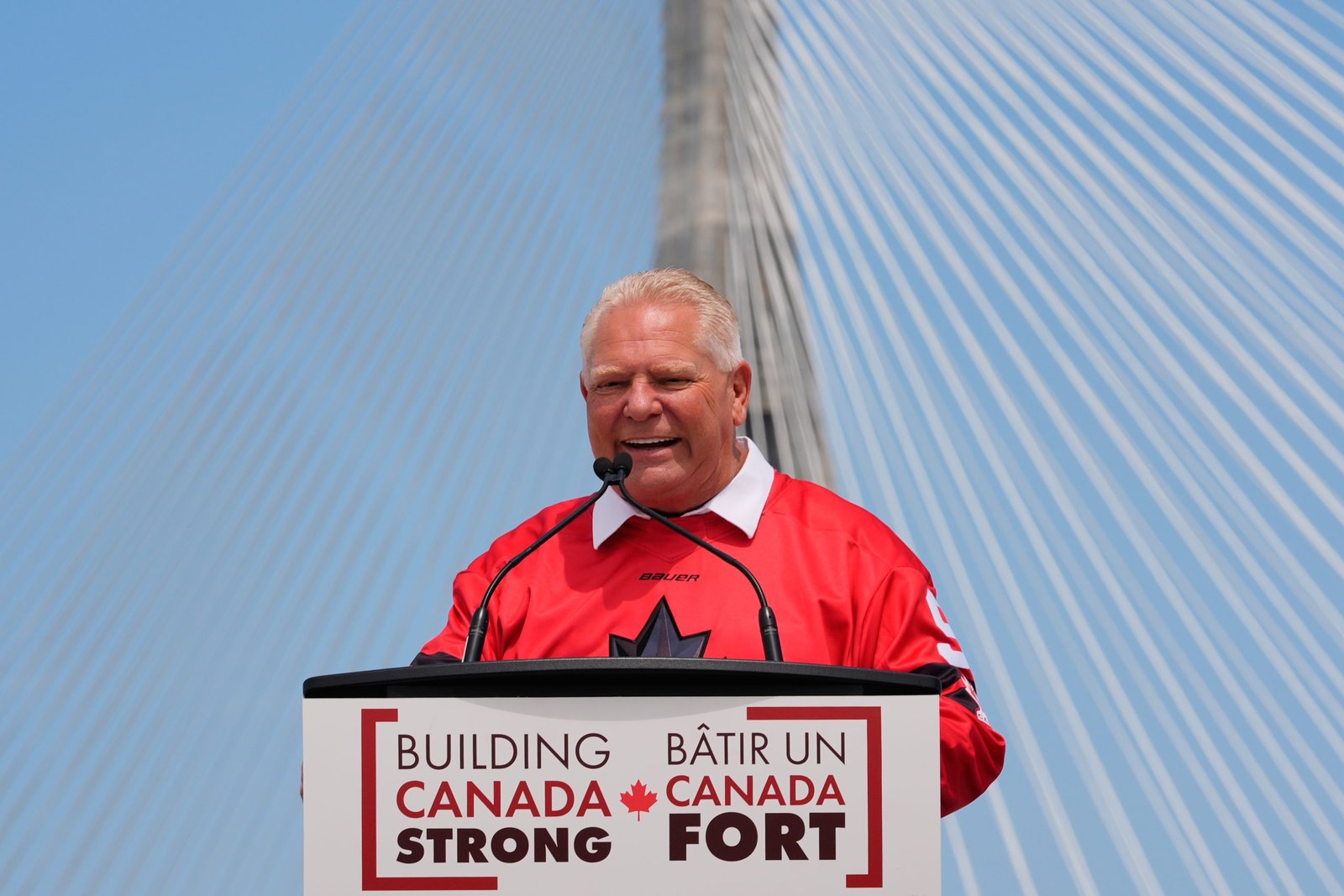
In a four-page letter to Carney dated Aug. 17, later released by the Premier’s Office, Ford said Ontario continues to support negotiations aimed at securing relief from U.S. Section 232 tariffs on Canadian autos and auto parts, steel, aluminum and forestry products.
Premier Doug Ford is urging Prime Minister Mark Carney to prepare a forceful retaliation against any new U.S. tariffs, including leveraging Canadian electricity, energy and critical minerals and targeting imports from states politically important to the U.S. administration.
In a four-page letter to Carney dated Aug. 17 and released by the Premier’s Office, Ford said Ontario continues to support negotiations aimed at securing relief from U.S. Section 232 tariffs on Canadian autos and auto parts, steel, aluminum and forestry products.
But the premier warned Ottawa against accepting an agreement that fails to provide meaningful relief.
“While we share the goal of an agreement that brings relief and certainty to workers and businesses, we must be clear that no deal is better than a bad deal that would only embolden the United States to continue seeking concession after concession,” Ford wrote.
The letter lays out in unusually specific terms how Ford believes Canada should respond if the U.S. follows through with additional tariffs under Section 338.
Ford called for a “coordinated dollar-for-dollar, tariff-for-tariff response” and the continuation of existing Canadian countermeasures, arguing that backing down in response to further U.S. tariffs would weaken Canada’s negotiating position.
“We cannot back down in the face of economic coercion,” Ford wrote. “Capitulation in response to Section 338 tariffs will only weaken Canada’s position. We must remain strong.”
Ford points to energy, minerals as leverage
The premier also urged Ottawa to consider Canada’s energy and natural resources as negotiating tools, specifically to electricity, energy and critical minerals, as strategic advantages that could be deployed as part of a broader Team Canada response.
“Electricity, energy and critical minerals infrastructure should be viewed as Team Canada assets that contribute to Canada’s broader negotiating leverage,” Ford wrote.
Ford said provinces and territories should be directly involved in discussions over how those assets could be used, including the potential role of electricity exports and other cross-border economic ties if Washington escalates its trade actions.
The position matches Ford’s previous threats to use Ontario’s electricity exports as leverage in the trade dispute, but the letter puts that approach within a broader proposed national strategy involving energy and critical minerals.
Target Alabama, Texas and Florida
Ford is also calling for Canadian retaliation to be designed with U.S. domestic politics in mind.
The premier said Ottawa should impose additional retaliatory tariffs on goods originating from states that are politically important to the current U.S. administration’s base of support.
He specifically named Alabama, Arkansas, Florida, Iowa, Missouri, Montana, Texas and Wisconsin.
“Products from these states should face the full force of Canada’s response,” Ford wrote.
The proposal would represent a targeted approach to retaliation, seeking to increase political pressure inside the United States.
Ontario wants details before interim deal
The letter also shows some frustration from Queen’s Park about how much information provinces have received from Ottawa about the negotiations.
Ford acknowledged an Aug. 14 briefing from Canada-U.S. Trade Minister Dominic LeBlanc to provincial and territorial trade ministers, but said Ontario still does not have enough information to judge what a possible interim agreement could mean, especially if provinces are expected to quickly lift their own retaliatory measures.
Ford asked Carney to brief First Ministers before finalizing any interim arrangement, including on the measures being considered and their expected economic effects.
If no arrangement is reached before the proposed Section 338 tariffs take effect, Ford said Carney should convene First Ministers to discuss contingency plans and then further retaliation.
“Ontario’s position remains unchanged: we will not remove retaliatory measures without a deal that brings significant relief to Ontario workers, businesses and key sectors of our economy,” Ford wrote.
Push for regulatory relief
Ford also outlined what he wants Ottawa to do if an eventual agreement leaves some U.S. tariffs in place.
In that scenario, he called for domestic regulatory changes aimed at lowering costs for affected Canadian industries until zero tariffs are achieved.
The premier renewed Ontario’s push for changes to federal automotive greenhouse gas emissions standards, arguing regulatory relief is needed to narrow the competitiveness gap with the U.S.
Ford said Ontario is separately considering exempting tariff-hit industries from provincial emissions performance standards that he said impose tens of millions of dollars in compliance costs.
Ford told Carney that Ottawa should “keep all options on the table” and be prepared for further escalation.