dailynewsnblog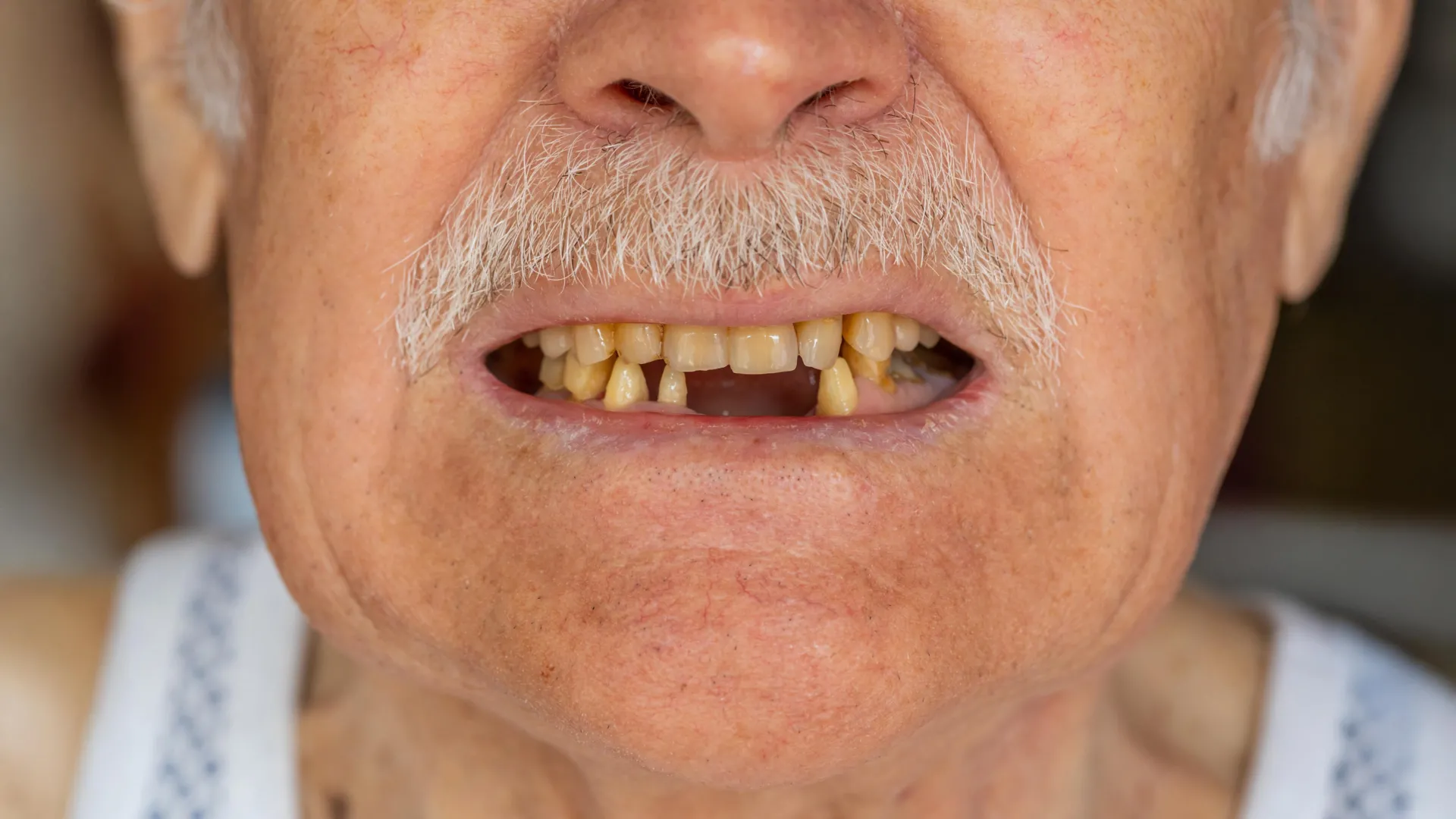
Researchers at Hiroshima University have found that the number of natural teeth a person has may provide useful clues about long-term survival after surgery for pancreatic ductal adenocarcinoma.
Oral health has long been connected with broader health outcomes, and previous research has linked poor dental health with prognosis in colorectal and esophageal cancers. Earlier studies have also found connections between oral health and complications after surgery for pancreatic ductal adenocarcinoma (PDAC), one of the deadliest forms of cancer.
The Hiroshima University team set out to determine whether oral health was also associated with how long patients survived after undergoing resection, the surgical removal of all or part of an organ, for PDAC.
The findings were published in the Journal of Hepato-Biliary-Pancreatic Sciences.
Oral Health and Pancreatic Cancer Survival
“Pancreatic cancer remains one of the deadliest malignancies worldwide, and even after curative resection, prognosis is often poor,” said Kenichiro Uemura, associate professor at Hiroshima University’s Graduate School of Biomedical and Health Sciences and corresponding author of the study. “Recently, several high-impact studies have suggested that periodontal pathogens such as Porphyromonas gingivalis may contribute to pancreatic carcinogenesis and tumor progression. However, it has remained unclear whether oral health itself influences postoperative survival outcomes in patients with pancreatic cancer.”
The study included 339 consecutive patients who underwent radical pancreatectomy (surgery where all or part of the pancreas is removed, occasionally along with parts of other organs) between 2014 and 2022 at the Department of Surgery, Hiroshima University Hospital.
Before surgery, every patient received a dental examination. Researchers assessed oral health using two main measures: the number of natural teeth remaining and the status of occlusion (contact between upper and lower teeth) of the premolars and molars.
Nearly Two Years of Difference in Median Survival
The results showed a substantial survival difference based on natural tooth count. Patients who had 21 or more natural teeth had a median overall survival of 60.7 months. Those with 20 or fewer teeth had a median survival of 39.1 months.
The relationship remained statistically significant even after the researchers accounted for well-established prognostic factors, including tumor stage, lymph node metastasis, surgical margins, chemotherapy, and nutritional status.
“One striking finding was the large survival difference between the groups: patients with more natural teeth survived nearly two years longer than those with fewer teeth,” Uemura says. “Another surprising finding was that chewing function itself, evaluated by posterior teeth occlusion, was not independently associated with survival. This suggests that tooth loss may represent more than oral function alone. Instead, it may reflect lifelong chronic inflammation, frailty, nutritional condition, lifestyle factors, and overall systemic vulnerability accumulated over decades. A simple way to express this concept is: ‘The mouth may reflect the body’s long-term resilience.'”
Tooth Loss May Reflect Broader Health
The fact that chewing ability itself was not independently tied to survival suggests that the number of teeth may be acting as a broader marker of health rather than simply a measure of how well someone can eat.
According to the researchers, tooth loss could reflect the accumulated effects of chronic inflammation, frailty, nutritional health, lifestyle, and other systemic stresses experienced over many years.
Because the research was conducted at a single center and involved patients of Japanese ethnicity, the researchers say the findings will need to be tested in larger multicenter and international studies. They also want to investigate more closely how oral bacteria, chronic inflammation, and pancreatic cancer progression may be biologically connected.
“Our ultimate goal is to establish a new perspective in pancreatic cancer care: prognosis may depend not only on tumor biology, but also on the patient’s long-term systemic condition and oral health environment,” Uemura concludes. “We hope oral health assessment may eventually become part of personalized risk stratification and perioperative management for pancreatic cancer patients.”
Kaoru Seo, Kenichiro Uemura, Kenjiro Okada, Tatsuaki Sumiyoshi, Ryuta Shintakuya and Shinya Takahashi at Hiroshima University; Hiromi Nishi and Hiroyuki Kawaguchi at Hiroshima University Hospital; and; Yoshiaki Murakami at Hiroshima Memorial Hospital co-authored the study. Kaoru Seo was first author of the study; Kenichiro Uemura was Principal Investigator (PI).