dailynewsnblog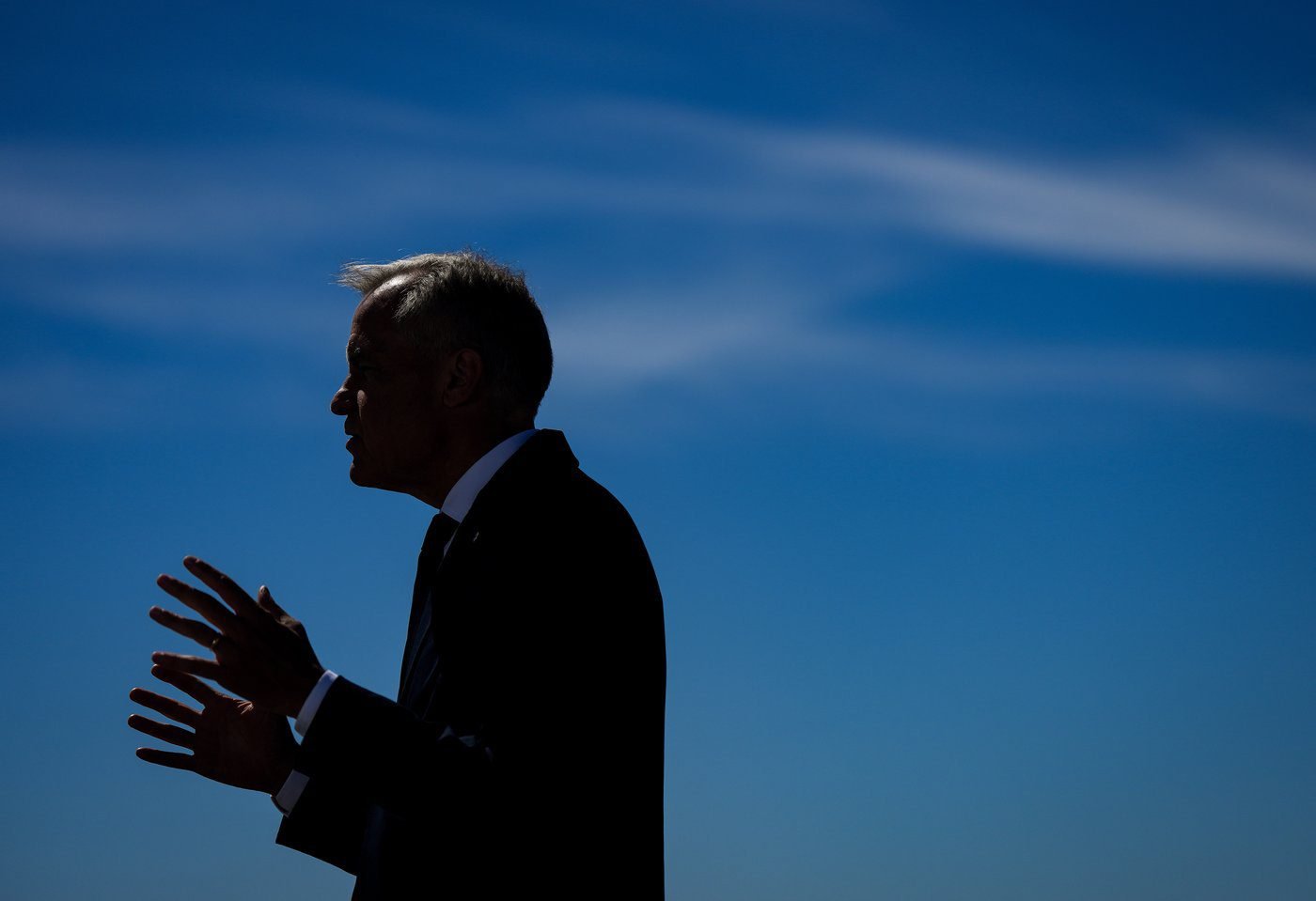
OTTAWA — Prime Minister Mark Carney is set to make a public statement and take questions from reporters Saturday after a last-ditch effort to reach a new trade deal with the U.S. collapsed before a midnight tariff deadline.
A press conference is scheduled to take place on Parliament Hill at 11 a.m.
Later Saturday, the prime minister will hold a virtual meeting with his cabinet followed by another with Canada’s premiers.
Carney has suspended talks with the United States and summoned his negotiators back to Ottawa.
The failed trade talks mean new 50 per cent tariffs on billions of dollars in Canadian exports to the U.S. took effect at 12:01 a.m.
Carney vowed Canada would retaliate with equal measures of its own, but has not yet stated where those tariffs will hit.
“In recent weeks, we made important progress toward improving Canada’s position as having the best deal in the world with the U.S.,” Carney said in a statement just before Trump’s tariff deadline.
“However, that progress has not been enough to meet our objectives for Canadians.”
Carney also said the government will introduce measures to support Canadian workers and businesses in the coming days.
The new U.S. tariffs target $28 billion in Canadian goods ranging from hockey sticks and honey to essential oils and dairy products.
U.S. Trade Representative Jamieson Greer said Friday that the U.S. and Canada had “declined” to finalize a tentative agreement, and laid the blame entirely on Canada.
“Despite the U.S. offer to Canada to receive the best treatment of any major exporter to our market, new demands and walk-backs of other commitments by Canada have upended the careful balance reached in the past days,” said Greer.
“In addition, Canada is continuing to maintain its prolonged retaliation against the United States, including, among other things, flat-out prohibitions on certain American goods and services.”
Greer told reporters the failed deal represented a “missed opportunity,” noting that the U.S. was offering significant tariff reductions on steel, aluminum, autos and lumber in exchange for concessions from Canada.
He said the deal also included an economic and national security partnership, as well as the announcement of formal U.S.-Mexico-Canada agreement negotiations.
The Trump administration did not extend CUSMA in July. That triggered an annual rolling review of the trade deal for up to a decade, at which point it would expire if all three countries cannot come to an agreement for an extension.
Mexico and the United States have launched official CUSMA negotiations, but Ottawa and Washington have not started such talks.
Earlier Friday, Trump said a deal with Canada was “moving along,” though LeBlanc told reporters there was still “more work to do” to seal a trade deal.
Some of Canada’s premiers have already banded together with Carney following the announcement.
After days of silence, Ontario Premier Doug Ford said on social media late Friday that the prime minister has his “full support” for a strong response.
“As we fight to protect Canadian sovereignty and economic security, everything needs to be on the table,” said Ford. “Ontario is ready to do its part.”
Alberta Premier Danielle Smith, on the other hand, said on social media she is “deeply disappointed” that Canada and the United States have not been able to reach a trade agreement.
“No one benefits from a trade war,” she said.
Smith also said she welcomed the federal government’s intention to provide relief for those businesses that are impacted.
“Alberta will continue to advocate for a strong tariff-free relationship between Canada and the U.S., and I will be urging the federal government to restart negotiations as soon as possible,” she said.
Ford suggested to Carney in a letter Monday that Canada respond to new tariffs with a dollar-for-dollar approach.
“We cannot back down in the face of economic coercion,” he said in the letter.
Ford also said electricity, energy and critical minerals infrastructure should contribute to Canada’s negotiating leverage. He said the federal government should also consider retaliatory tariffs on imports from “politically significant states to the current administration’s base of support.” He named Alabama, Arkansas, Florida, Iowa, Missouri, Montana, Texas and Wisconsin.
“Products from these states should face the full force of Canada’s response,” he said.
Conservative Leader Pierre Poilievre said Saturday that Conservatives are disappointed that the United States has chosen to impose further unjustified tariffs on Canada.
“Canadians must stand united to defend our country against these unfair attacks on our jobs and businesses,” he said. “Canada cannot accept one-sided tariffs that will deindustrialize our country. Nor can we accept a bad deal. Instead, we must continue the fight for tariff-free trade.”
Poilievre said he hoped to speak with the prime minister Saturday about how to support Canadian workers and businesses.
“Conservatives support action to protect Canadians and our industries targeted by these unfair U.S. tariffs,” said Poilievre.
This report by The Canadian Press was first published Aug. 22, 2026.
— With files from David Baxter
Catherine Morrison, The Canadian Press