dailynewsnblog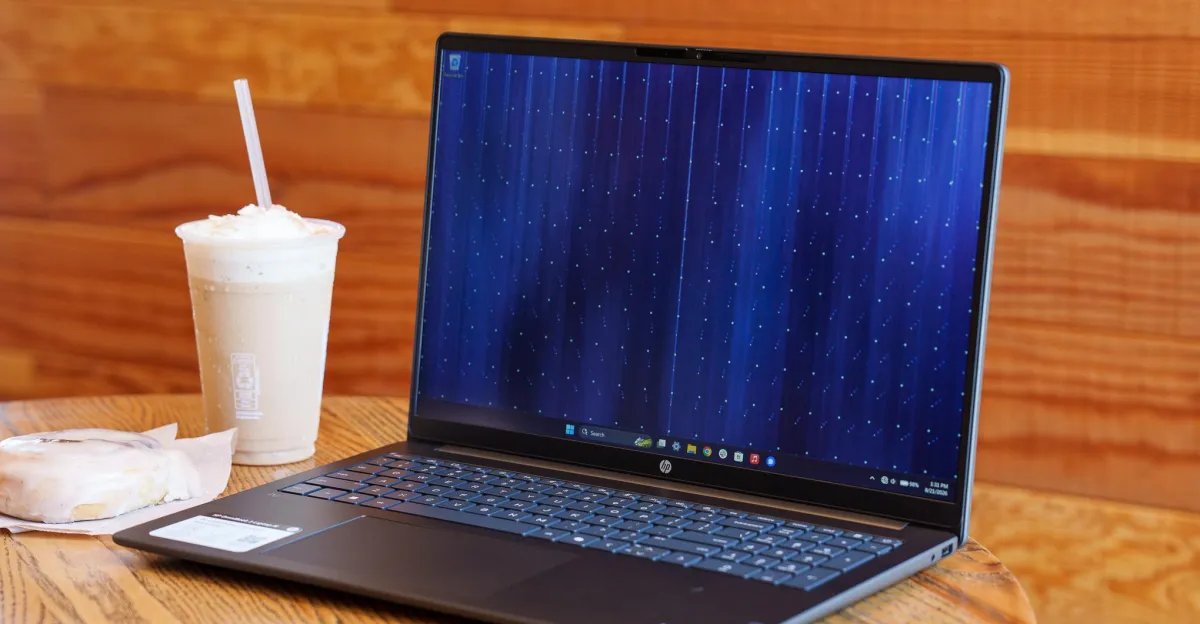
Laptop prices are out of whack. $500 used to get you a tolerable laptop, and $900 got you a really good one. They often had similar CPU, RAM, and storage options because that stuff was comparatively cheap; the difference was often in build quality and screen rather than power. But RAMageddon has thrown everything off. Even laptops like the $950 Surface Laptop now start with 8GB of RAM, which isn’t enough. And on the lower end, where manufacturers are struggling to compete with the $700 MacBook Neo, they’re cutting corners on storage, CPU, and build quality too.
However, one low-cost laptop has bucked this and genuinely surprised me. HP’s 16-inch OmniBook 3 is a basic productivity laptop that regularly goes for around $520 at Walmart and Amazon. It has Qualcomm’s base Snapdragon X chip, meaning passable everyday performance and excellent battery life. But it also has a humdrum screen, mediocre speakers, a run-of-the-mill trackpad, and a plastic build. Pre-RAMageddon, it would be nothing to write home about.
But 16GB of RAM and a 512GB SSD in an okay laptop for around $500? That counts as good news in 2026.


$516
The Good
- Very affordable for a 16-inch with 16GB of RAM in 2026
- Great battery life
- Ample-sized number pad for you number pad folks
- Mostly decent all around — and for around $500 that makes it pretty good
The Bad
- Screen and speakers are basic
- Some chassis flex and plastic creaks
- Keyboard a little stiff, leading to some typos
The entry-level OmniBook 3 I tested has an 8-core Snapdragon X processor, 16GB of RAM, 512GB SSD, and a 16-inch 1920 x 1200 anti-glare IPS LCD. And the OmniBook 3 is fairly portable for a larger laptop with lots of ports. It’s barely heavier than a 14-inch MacBook Pro, and at a maximum thickness of 0.63 inches / 16mm it’s decently thin. This big laptop doesn’t feel big. And despite a plastic chassis and low price it doesn’t feel too cheap either.
- Screen: D
- Webcam: C
- Keyboard: C
- Trackpad: C
- Port selection: B
- Speakers: D
- Number of ugly stickers to remove: 2
As much as I would like to see more cheap Windows laptops with the sleek looks and sturdy all-metal build of the MacBook Neo, I wouldn’t mind if more of them were like the OmniBook 3. Its screen, keyboard, trackpad, and webcam are all at least passable to decent. There isn’t anything special here, but unlike the Chuwi UniBook there’s also nothing that feels like a punishment.
The 1920 x 1200 / 60Hz screen isn’t high-quality or bright enough to combat the sun when taken outside (it maxes out at 300 nits of brightness and covers a paltry 62.5 percent of the sRGB color space), but it isn’t washed out or bleeding light at its edges. The mechanical trackpad has a basic diving board-style hinge, but a confident and decent-feeling kachunk-y click. The 1080p webcam is actually fairly sharp, and it does a good job handling backlight from a bright window — with only a hint of green color cast. But hey, at least it has Windows Hello face unlocking. And at least this not-too-large large laptop has lots of ports and charges via USB-C with a very compact 65W GaN charger.


My biggest gripe is the dual speakers (unsurprisingly), which lack bass and sound too treble-y, but they’re just tolerable enough to live with. My next biggest is the keyboard (surprisingly). I usually like HP keyboards, but this one feels too stiff. If you’re the type to hammer your fingers down and you love a generously sized number pad you might be fine, but I get more typos than I’m used to from keys not registering. I could learn to live with it, but I’d still prefer not to have to.
HP OmniBook 3 16 / Qualcomm Snapdragon X X1-26-100 / 16GB / 512GB | MacBook Neo / Apple A18 Pro / 8GB / 256GB | Chuwi UniBook / Intel Core 3 304 “Wildcat Lake” / 8GB / 256GB | Microsoft Surface Laptop 13-inch (2026) / Qualcomm Snapdragon X Plus X1P-46-100 / 8GB / 256GB | Acer Aspire 14 AI / Intel Core Ultra 7 256V / 16GB / 1TB | Lenovo IdeaPad Slim 3x / Qualcomm Snapdragon X X1-26-100 / 16GB / 256GB | |
|---|---|---|---|---|---|---|
| CPU cores | 8 | 6 | 5 | 8 | 8 | 8 |
| GPU | Adreno X1-45 | A18 Pro (5 GPU cores) | Intel Graphics (1 GPU core) | Adreno X1-45 | Intel Arc 140V (8 GPU cores) | Adreno X1-45 |
| Geekbench 6 CPU Single | 2142 | 3402 | 2385 | 2348 | 2769 | 2137 |
| Geekbench 6 CPU Multi | 10593 | 8508 | 6187 | 9421 | 10930 | 9728 |
| Geekbench 6 GPU (OpenCL) | 9577 | 19798 | 6019 | 9554 | 28556 | 9689 |
| Premiere 4K Export (lower is better) | 12 minutes, 8 seconds | 8 minutes, 30 seconds | 1 hour, 9 minutes, 29 seconds | Crashed | 7 minutes, 28 seconds | 12 minutes, 59 seconds |
| Sustained SSD reads (MB/s) | 5017.12 | 1735.91 | 2394.57 | 3804.31 | 6391.51 | 5738.86 |
| Sustained SSD writes (MB/s) | 4370.35 | 1684.05 | 2092.66 | 3310.94 | 5524.22 | 2801.02 |
| Price as tested | about $520 | $699 | $449 | $949.99 | $1,049.99 | $749.99 |
What I can totally live with is the performance. The OmniBook’s 8-core Snapdragon X processor is a little slower than the one in the $950 Surface Laptop I tested, but the OmniBook’s day-to-day performance is better because it’s not starved for RAM and its larger SSD is a little faster. Like other lower-end Snapdragon laptop chips it’s not going to wow you with graphics performance or tackle heavy content creation in Adobe apps, but it’s perfectly adequate for everyday multitasking work. Even when running several apps with a couple dozen Chrome tabs left open, including a video podcast playing, I didn’t feel it slow down the way the Surface Laptop or Chuwi UniBook, each with only 8GB of RAM, did.
And while a Snapdragon chip means this Windows laptop isn’t ideal for gaming, it does make it great on battery. You can pretty easily get around 12 hours of mixed web usage with a bit of music or video streaming.
It feels like the money went into the core specs of the OmniBook 3, and HP just barely stuck the landing on the right compromises elsewhere. As much as I adore the build quality of Microsoft’s Surface Laptops, if I were spending my own money I’d choose the OmniBook 3, never worry about how much RAM is in use, and save over $400.
1/8
If we reviewed the OmniBook 3 a year ago I might feel different, but it’s been a tiny breath of fresh air to use something this cheap and mostly think, “Not too bad!” Especially coming right after I tested the $450 Chuwi UniBook. An employee being issued this laptop for work shouldn’t feel like their IT department totally hates them. And while I think a MacBook Neo would still be a better all-around experience for a school-age kid, I’d totally understand saving nearly $200 to get the OmniBook 3 if a budget can’t be stretched.
My only worry is that the OmniBook 3’s price will go up like everything else. While there are more sub-$800 laptops coming, and I’ll be testing more very soon, the OmniBook 3’s price — and that of the OmniBook 5 I reviewed back in December — feel anomalous right now. The RAMageddon storm could eventually ruin them like it did many other laptops and devices. But, for now, there’s some safe harbor with this lowly OmniBook.
HP OmniBook 3 16 specs (as reviewed)
- Display: 16-inch 1920 x 1200 60Hz IPS LCD, 300 nits, anti-glare
- CPU: Qualcomm Snapdragon X X1-26-100 (8 cores)
- GPU: Adreno X1-45
- RAM: 16GB LPDDR5x
- Storage: 512GB NVMe M.2 SSD
- Webcam: 1080p IR camera
- Connectivity: Wi-Fi 6E, Bluetooth 5.3
- Ports: 2x USB-C (10Gbps, DisplayPort 1.4, Power Delivery 3.0), 2x USB-A (5Gbps), HDMI 2.1, 3.5mm audio jack
- Biometrics: Windows Hello face unlock
- Weight: 3.65 pounds / 1.66kg
- Dimensions: 14.12 x 9.91 x 0.58 to 0.63 inches / 358.65 x 251.71 x 14.73 to 16mm
- Battery: 68Wh (65W USB-C charger included)
- Price: about $520
Photography by Antonio G. Di Benedetto / The Verge