dailynewsnblog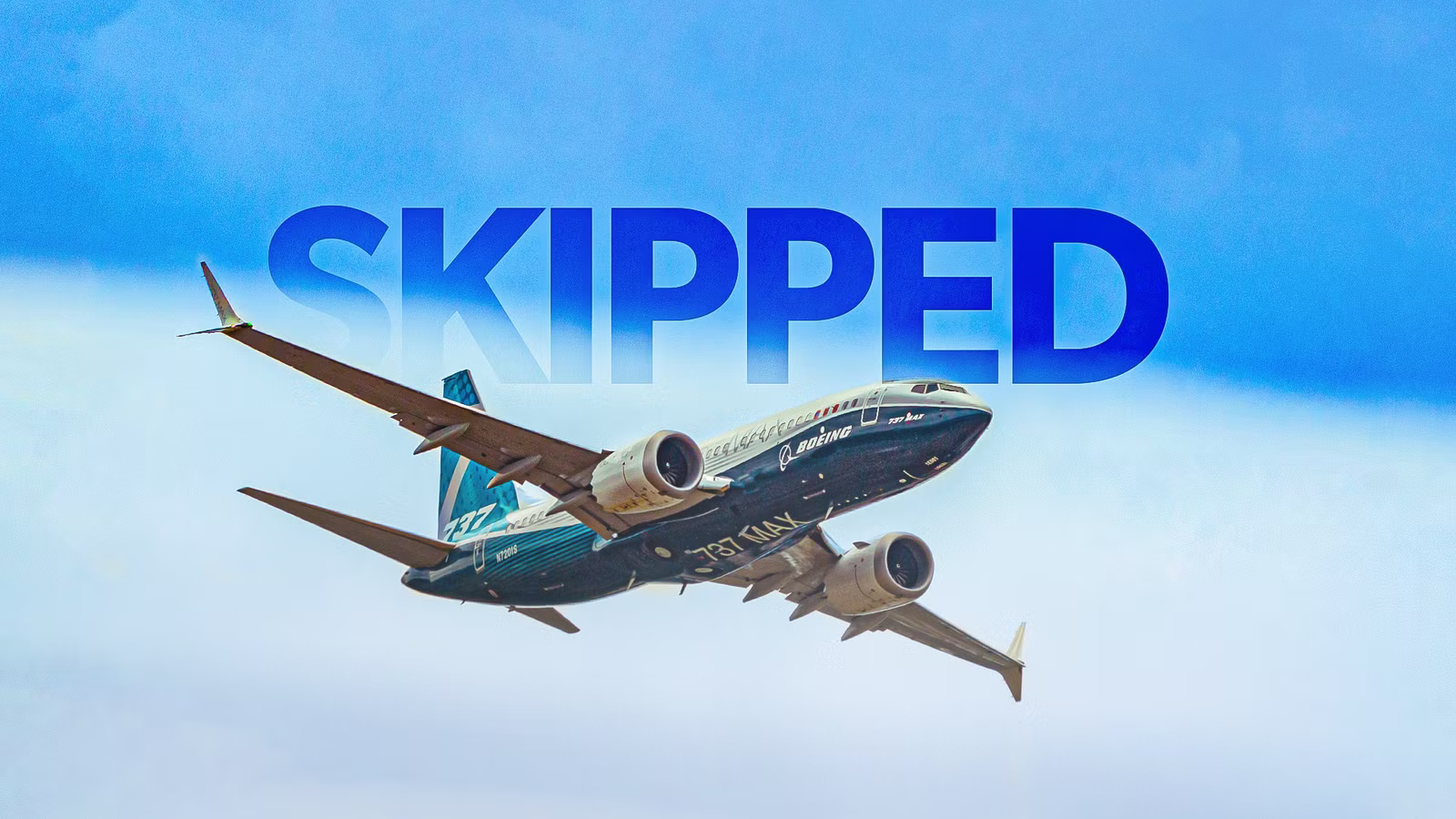
 Boeing has secured US certification for the Boeing 737 MAX 7 without simultaneously pursuing European validation, a decision that reflects the aircraft’s unusually concentrated customer base rather than a rejection of European regulatory oversight. The Federal Aviation Administration issued the amended type certificate for the MAX 7 on August 3, 2026, clearing the way for Boeing to begin deliveries in early 2027.
  Southwest Airlines, which accounts for roughly 90% of MAX 7 orders, is expected to be the principal operator when the aircraft enters service.
The decision makes commercial sense because the MAX 7 currently has little reason to undergo a parallel European approval process. Under the US-European Union aviation safety framework, the European Union Aviation Safety Agency (EASA) validates US certificates rather than independently certifying every foreign aircraft from the beginning. That validation still requires regulatory work, however, and EASA’s scrutiny of Boeing has become considerably more independent since the two 737 MAX accidents exposed weaknesses in the previous approach to international oversight. For an aircraft whose immediate market is overwhelmingly American, Boeing has chosen to concentrate its certification resources where the demand exists.
The MAX 7 Is Essentially A Southwest Aircraft

The strongest explanation for Boeing’s certification strategy is found in the MAX 7’s order book. Southwest has placed the overwhelming majority of orders for the smallest member of the MAX family, all but eliminating this variant’s broader international appeal. Southwest’s fleet strategy is built around a single-family Boeing fleet, and the MAX 7 offers additional range and capacity flexibility while retaining the operating characteristics of the 737. That order concentration gives Boeing a clear commercial priority: the company needs the FAA certificate to deliver the aircraft to Southwest. There is little immediate revenue attached to securing approval in markets where few or no customers are waiting for the type. Southwest has been preparing for the aircraft’s arrival for years, and its management has linked the MAX 7’s certification directly to its fleet plans.
The FAA’s August certification milestone therefore resolves the regulatory requirement that matters most to Boeing’s immediate delivery schedule. Southwest has targeted early 2027 for receiving the aircraft, with revenue service expected during the first quarter. Obtaining FAA approval now allows Boeing to move toward production and delivery rather than delaying the program while pursuing regulatory validation for a market that currently contributes little to the business case.
Manufacturers frequently prioritize certification in jurisdictions where customers are located, particularly when an aircraft has limited global demand. The MAX 7’s situation simply makes that calculation more pronounced because one US carrier accounts for such a large share of its backlog.
EASA Validation Is Different From Starting Over

The distinction between certification and validation is important to understanding Boeing’s decision. EASA does not normally require Boeing to repeat the entire US certification process before allowing a US-certified aircraft to operate in Europe. Instead, the agency validates the foreign type certificate under the framework established by the US-EU Bilateral Aviation Safety Agreement and its associated technical procedures. That system exists to prevent aviation manufacturers from having to undergo completely duplicative regulatory processes in every major market. Authorities recognize each other’s certification systems and establish procedures for determining which findings can be accepted and which require additional technical review. In principle, that makes international aircraft certification substantially more efficient.
However, validation still requires resources. EASA reviews the aircraft, its certification basis, and the work performed by the exporting authority. Depending on the aircraft and the issues involved, European regulators can request additional information, analysis, testing, or other evidence before accepting the foreign certificate. For Boeing, pursuing that process for the MAX 7 would therefore create additional engineering and regulatory work without an immediate commercial requirement.
The arrangement also means that Boeing cannot simply treat FAA approval as automatic European acceptance. The bilateral agreement facilitates cooperation, but it does not eliminate the importing authority’s responsibilities. That distinction became especially significant after the two fatal 737 MAX crashes changed how regulators approached Boeing’s safety assessments.
The MAX Crashes Changed The FAA-EASA Relationship

Before the 737 MAX accidents, international regulators relied heavily on the certification work performed by the FAA. The crashes of Lion Air Flight 610 in 2018 and Ethiopian Airlines Flight 302 in 2019 fundamentally altered that relationship. Both accidents involved the aircraft’s Maneuvering Characteristics Augmentation System, or MCAS, and the subsequent investigations exposed problems involving aircraft design, assumptions, pilot information, and regulatory oversight.
EASA subsequently adopted a more independent approach to Boeing’s 737 MAX certification. Rather than simply accepting the FAA’s conclusions, European regulators conducted their own technical assessments and required additional work before allowing the aircraft to return to European service. That scrutiny established a precedent for greater regulatory independence even within a bilateral system designed to promote mutual recognition.
The shift matters for future Boeing programs because validation is no longer merely a procedural formality. European regulators have demonstrated that they are willing to examine safety-critical aspects independently when they believe additional scrutiny is warranted. Boeing therefore has to account for the possibility that European approval could introduce additional engineering questions, testing, or schedule requirements. For the MAX 7, postponing that process avoids those costs while the aircraft remains concentrated in the US market. Boeing can revisit European validation if commercial circumstances change, so the strategy is not necessarily an abandonment.
A More Complex Situation With The MAX 10

The logic surrounding the larger Boeing 737 MAX 10 differs substantially because the aircraft has a broader international customer base. Ryanair is particularly important because the Irish carrier has publicly followed Boeing’s certification progress and has expressed interest in adding the MAX 10 to its fleet. Once European airlines become major customers, European validation becomes commercially consequential.
That difference could make the MAX 10 a much more revealing test of Boeing’s relationship with EASA. Boeing cannot realistically treat European approval as optional if a substantial number of aircraft are destined for European operators. A delay in validation could affect deliveries, fleet planning, and airline growth strategies even if the FAA has already certified the aircraft. The MAX 10 also presents a more complex certification challenge due to its size and the regulatory requirements governing its landing gear, systems, and other design characteristics.
Ryanair 737 Fleet | |
|---|---|
Current | |
Aircraft | Total |
737 MAX 8-200 | 210 |
737 NG | 411 |
On Order | |
Aircraft | Total |
737 MAX 10 | 300 |
The aircraft’s certification timeline has already attracted close attention from airlines and regulators. Boeing therefore faces a different balance between speed, regulatory coordination, and global market access than it does with the MAX 7. The contrast illustrates why certification strategy cannot be separated from commercial demand. The same manufacturer can rationally pursue different regulatory sequences for aircraft in the same family because their customer bases and market requirements are different. What appears to be inconsistent treatment can instead reflect the economics of where each airplane is expected to fly.
Why The Decision Matters Beyond The MAX 7

Boeing’s FAA-first approach could establish a useful precedent for how manufacturers manage certification in an increasingly independent global regulatory environment. The bilateral system remains designed to encourage cooperation between authorities, but the MAX experience demonstrated that mutual recognition does not necessarily mean identical conclusions. Manufacturers must now plan for greater regulatory scrutiny when seeking access to major international markets.
For the MAX 7, that scrutiny can wait because its commercial future is currently centered in the United States. Boeing can focus engineering resources on completing deliveries to Southwest while preserving the option to pursue European validation later if demand develops. That approach minimizes immediate certification complexity without permanently closing the European market.
The more important question will be how Boeing handles the MAX 10. With European customers watching the program closely, the company will have stronger commercial reasons to seek EASA validation and less ability to defer it. The process could reveal whether the post-accident FAA-EASA relationship can provide efficient cooperation while preserving the independent safety judgments that regulators now consider essential.
What Will Certification Look Like In The Future?

Boeing’s decision to certify the MAX 7 through the FAA first is ultimately a calculation based on where the airplane is going. With Southwest representing roughly 90% of the variant’s orders, US certification unlocks the overwhelming majority of the aircraft’s immediate commercial opportunity. Spending additional resources on European validation before there is meaningful European demand would provide limited near-term financial benefit.
The strategy does not mean Boeing has permanently abandoned EASA approval, nor does it indicate that European regulators have lowered their standards. Instead, it reflects a deliberate sequencing of certification work around customer demand. The MAX 7 can begin its US career while Boeing preserves the option of expanding its market later.
The more consequential test will come with the MAX 10. Its European customer base gives Boeing a much stronger incentive to complete EASA validation, while the regulator’s post-MAX independence means the process cannot simply be treated as an administrative rubber stamp. How Boeing navigates that relationship could provide an early indication of whether international certification becomes more collaborative or more fragmented as regulators demand greater authority over aircraft entering their markets.