dailynewsnblog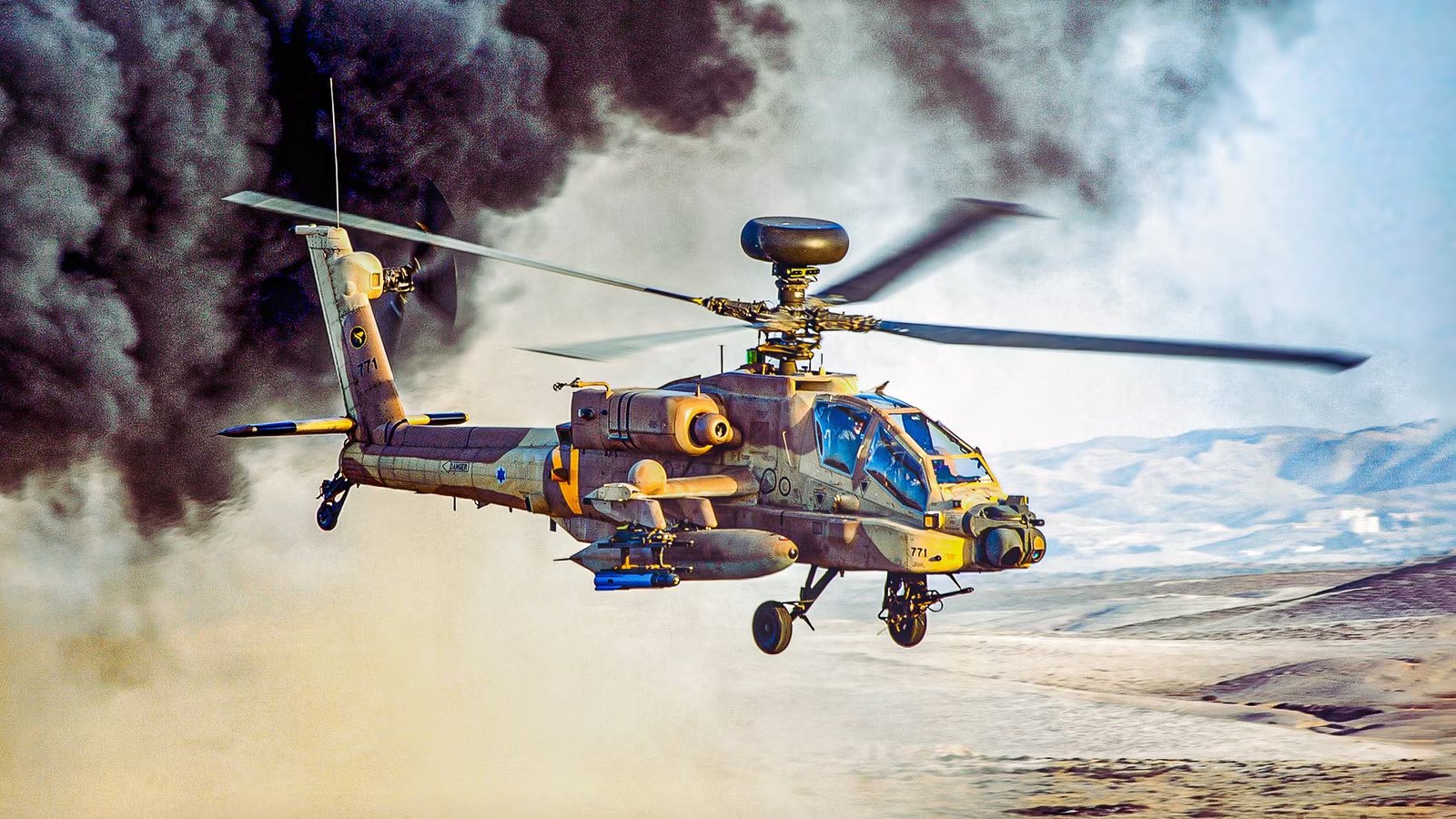
Helicopters are highly effective and lethal war machines that have historically been utilized for various tactical purposes, such as attacking ground targets, transporting soldiers, and providing logistical support. However, under certain circumstances, they have also proven adept at striking and destroying fighter aircraft.
This interesting and little-known facet of military rotary-wing aircraft came to light in 1978 and 1979 during a little-known exercise called “Joint Countering Attack Helicopter” (J-CATCH). During this testing and evaluation operation, helicopters of the United States Air Force (USAF) 20th Special Operations Squadron (20th SOS) were placed in simulated combat scenarios with fighter jets, with very surprising results. An additional exercise of a similar nature was undertaken in Hungary, reinforcing what had been demonstrated three decades earlier.
The exercises highlighted the versatility of combat helicopters when faced with a rare yet plausible interaction between these aircraft and fixed-wing jets. The ability of these aircraft to perform such an unlikely feat is due in part to their ability to exploit terrain to their advantage and take advantage of gaps in an enemy aircraft’s radar coverage.
How A Helicopter Remains Hidden Until It’s Ready To Strike

An aircraft in its natural operating environment, at altitude and against a blue sky, is fairly easy to spot. Conversely, military helicopter pilots are trained to operate at very low levels. Aiding their ability to conceal themselves are terrain features, often referred to as “clutter,” which can include hills, trees, mountains, and structures such as homes and buildings.
According to Nick Lappos, Technical Fellow Emeritus at Sikorsky and former US Army AH-1 Cobra attack helicopter pilot: “A helicopter immersed in ground clutter is very hard to detect by almost any means, and so is hard to engage. Meanwhile, the helicopter can be equipped with air to air [sic] missiles and large caliber guns that easily engage fighters as they maneuver at low altitudes against a blue sky in their attempts to engage the helicopter.”
Further, in terms of tracking and gaining a weapons lock, a fast-moving fighter engaging a helicopter is more difficult than it may seem. Fighter radar and weapons systems are optimized to detect, track, and engage relatively fast-moving aircraft, while a helicopter’s low speed and small radar signature can make establishing a reliable track more challenging. Infrared-guided missiles can also have difficulty acquiring a helicopter against the background, while using a fighter’s guns requires careful management of the high closure rates involved. These factors can complicate detection, tracking, and weapons employment against a helicopter, particularly at close range.
A final factor to look at is called the “Doppler notch”, which can further complicate a fighter’s ability to track a helicopter with radar. By maneuvering perpendicular to the radar’s line of sight, a helicopter can reduce its relative radial velocity and cause its Doppler signature to blend with stationary background returns. This can make the helicopter more difficult for the fighter’s radar to distinguish and maintain as a track, giving the rotary-wing aircraft another potential advantage during an engagement.
J-CATCH: The 20th SOS Proved That Helicopters Can Defeat Fighters in Close Combat

By 1978, the USAF 20th Special Operations Squadron (20th SOS), 1st Special Operations Wing, had been involved in an ongoing rebuilding phase since its reactivation at Hurlburt Field, Florida, on January 1, 1976, mere months after the end of the Vietnam War. By the time J-CATCH began, the 20th SOS had essentially reached its authorized strength of six Bell UH-1N Iroquois “Hueys” and four CH-3E Sea Kings.
The first appearance of the 20th SOS came in 1978 at Fort Rucker, Alabama, while the 1979 iteration of the event took place at Eglin Air Force Base. It was during the latter that the unit was given the task of acting as Red Force aggressor units, simulating the Mi-24 Hind, which was increasingly gaining presence in the Soviet attack helicopter force. This phase of the exercise was intended to pit the unit’s helicopters against such fighters as the McDonnell Douglas F-4 Phantom II, Ling-Temco-Vought A-7 Corsair II, Fairchild Republic A-10 Thunderbolt II, and McDonnell Douglas F-15 Eagle.
This would all take place during Phase III of J-CATCH. At the outset, the fighters would target an unarmed, non-maneuvering threat helicopter and gradually progress to engaging the entire Red Force operating together, posing a much more complex threat scenario. This particularly rings true as the pilots were trained in precision low-level flight and navigation at altitudes as low as 25 feet (7.62 meters) above ground level.
For the purpose of the training, the USAF states that the Hueys were equipped “…with various captive missiles and gun systems to replicate anticipated enemy threats and with video recording systems to record the engagements and flight parameters for data and kill analysis.” During the operation, the 20th SOS logged 700 flight hours on 547 sorties across all phases of the operational test.
In terms of encounters with the fighters, the helicopters demonstrated how versatile and dangerous they could be when operating in their natural environment and exploiting the surrounding terrain. To the surprise of many involved in J-CATCH, the helicopters, when properly employed, achieved up to a 5-to-1 kill ratio over the fighters at close range.
Major John W. Grove, USAF (Ret.) (1942–2008), a J-CATCH participant on many of the missions, stated:
“…our tactics were pretty much restricted to what we thought the Russians would do, except when it came to our fighters. The more arrogant they thought they were, the harder we fought with them. But it’s easy to do in a helicopter because…you point the nose to one side or the other and go in the opposite direction. . . . Fighter guys couldn’t figure out why we were pointing that way…All you have to do is break lock once and you are home free. So we did that to them…and that really pissed them off.”
Ops In Hungary

A similar encounter occurred roughly 30 years later during the 2008 Load Diffuser exercise in Hungary. Ten F-15Cs from the Louisiana Air National Guard participated in the two-week exercise alongside the Hungarian Air Force, which supplied two Mi-24V Hind attack helicopters. The F-15s were tasked with locating and engaging the Hinds, which were operating as a simulated enemy force.
Mi-24 Hind General Specifications | Related Data |
|---|---|
Length | 64.9 feet (19.79 meters) |
Height | 21.3 feet (6.5 meters) |
Weight | 18,520 pounds (8,400 kilograms) |
Main Rotor Diameter | 56.8 feet (17.3 meters) |
Engines | 2 x Kilmov TV3-117 turbo shafts |
Maximum Speed | 193 mph (310 km/h) |
Service Ceiling | 14,763.8 feet (4.5 kilometers) |
Range | 279.6 miles (450 kilometers) |
Crew | 3 |
The Eagles were equipped with AIM-9X Sidewinder training missiles and helmet-mounted sights, while the Mi-24Vs were restricted to their 30mm onboard cannons, a seemingly gross mismatch. The F-15 crews initially proved successful at locating and engaging the helicopters. However, the Hungarian crews soon learned to exploit the surrounding terrain and ground clutter to conceal their location. With additional tactical information supplied by an AWACS aircraft, the helicopter crews were able to maintain an awareness of the fighters’ movements while remaining difficult to locate.
The exercise produced an especially surprising result when Lt. Éva “Vivi” Horváth, flying one of the Mi-24Vs, was able to maintain a simulated gun lock on an F-15 without the Eagle pilot realizing he was being targeted. The simulated hits were subsequently honored by painting “Eagle Down” silhouettes on the helicopter. According to the account, additional simulated hits might have been possible had exercise restrictions such as the hard deck and maximum speed not limited the engagements.
When Helicopters Turn the Tables on Fighters

At first glance, it would appear that helicopters have little chance of engaging fighter jets; the fundamental mismatch seems too obvious. Fighters possess vastly greater speed, range, fuel capacity and payload, while helicopters are comparatively slow and cannot compete in terms of ordnance. However, when appropriately armed and operating at low altitudes among features that allow for terrain masking, a highly trained helicopter crew can prove more than a match for fighters, as demonstrated both during J-CATCH and again in Hungary.
This does not mean that helicopters have suddenly become the preferred choice for air-to-air combat, nor that they would routinely defeat modern fighter aircraft; far from it. Rather, J-CATCH and the later Hungarian exercise demonstrated that the assumptions surrounding a fighter’s overwhelming advantage can quickly change when the engagement occurs at close range, particularly at low altitude. By exploiting their unique maneuverability, low-speed handling and ability to operate close to the surface, helicopter crews can create an engagement that is far less favorable to the fighter than it might initially appear.
Today, the US Army is reshaping its attack-helicopter force. To this end, it is retiring its legacy AH-64D Apaches while transitioning to the more capable AH-64E. Nearly 60% of the D models have already been divested, while roughly 80% of the planned E-model fleet has been received, allowing the service to maintain effective tactical close air support. Although the Army is reducing its overall Apache force, the AH-64E remains an important part of its aviation fleet, demonstrating that despite a changing battlefield, attack helicopters are still expected to have a role in future combat.