dailynewsnblog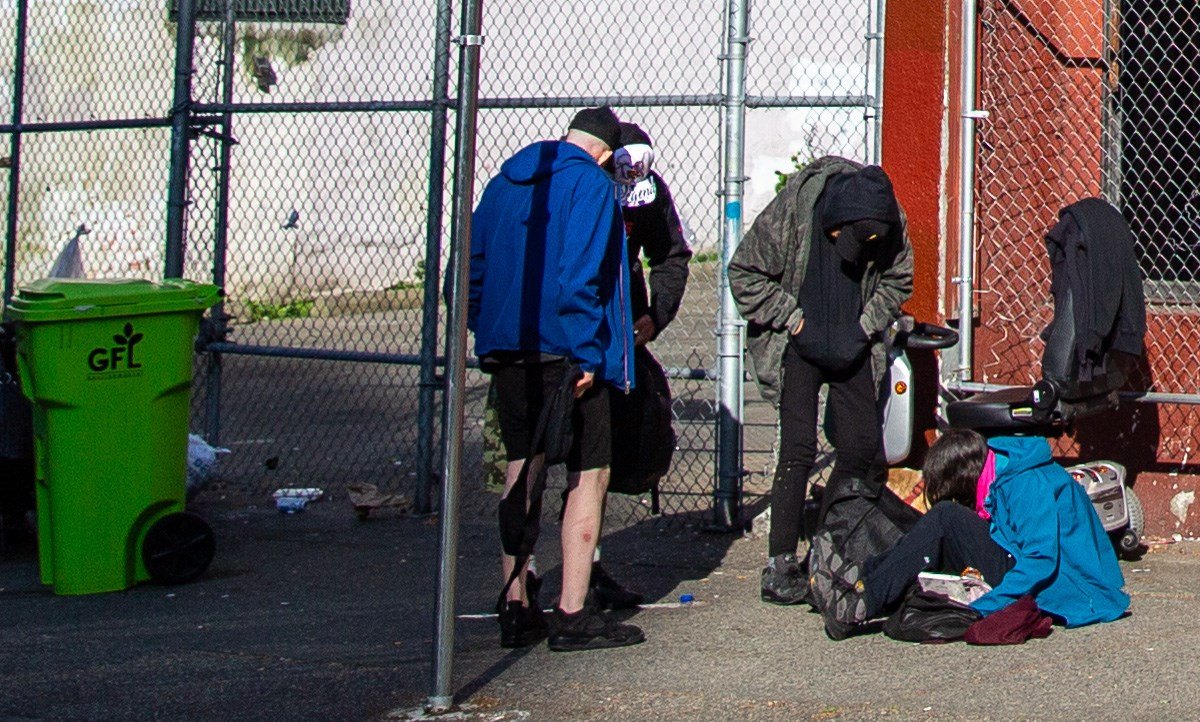
Sim says: ‘I challenge any future mayor or council to go against the will of the people. I challenge anyone who’s in Victoria to go against the will of the Vancouver voters.’
People using hard drugs in public spaces, growing street disorder and violent crime linked to people with mental illness who are not getting the treatment or housing they need to stabilize their lives have been longstanding concerns in Vancouver.
Those issues have been raised by Vancouver mayors going back to Philip Owen in the early 2000s, followed by Larry Campbell, Sam Sullivan, Gregor Robertson, Kennedy Stewart and now Ken Sim.
Each mayor has offered or implemented various strategies, with heavy dependence on the provincial and federal governments to address addiction, mental health and housing. The conclusion from all mayors is that not nearly enough has been done.
That is an understatement when considering the number of overdose deaths, apprehensions of people under the Mental Health Act and the growing number of people experiencing homelessness in Vancouver.
The latest move by Sim and his ABC Vancouver colleagues to tackle what the mayor has described as a humanitarian crisis is to put two questions on the Oct. 17 municipal election ballot.
The questions:
• Are you in favour of the City of Vancouver strengthening its laws to forbid open-air hard drug use—like heroin, meth, fentanyl and crack—in public spaces?
• Should the City of Vancouver formally ask the province of B.C. to convert portions of the old St. Paul’s Hospital, or another similar site, into a secure medical facility that provides acute voluntary and 100-plus involuntary care beds for individuals posing a serious risk to themselves or others due to severe substance use and mental health disorders?

‘Have a say on this issue’
Adding the questions to the ballot was panned by the four non-ABC councillors, who accused Sim and his party of electioneering and wasting an estimated $400,000 to $550,000 on what are two non-binding questions.
Regardless, the questions will be on the ballot, adding another chapter to the city’s history of municipal administrations considering ways to tackle large-scale social issues that continue to persist in Vancouver.
“I think it’s super important that Vancouverites have a say on this issue,” said Sim Thursday from his party’s campaign office, where he answered questions about the plebiscite.
The following interview has been condensed and edited.
You and your ABC Vancouver party won a majority in the 2022 election. During the campaign, you talked about your concerns with street disorder and open-air drug use. You also talked about people living with a mental illness, a drug addiction, or both, and concerns that they weren’t getting help. So why now do you need a plebiscite to have voters answer questions around issues you highlighted in 2022?
We are attempting to re-establish social expectations as to what’s acceptable and not acceptable behaviour in public spaces. The City of Vancouver’s health bylaw 9535 says you cannot smoke within six metres of the door of a building. Makes sense, and it works for the vast majority of people who are trying to enjoy the use of the building.
All we’re asking the residents of Vancouver is whether or not they think it’s appropriate for a person to be using hard drugs like fentanyl, meth, crack—what have you—in public spaces. This is not going after people for possession. It’s going after people who are using in public where drug use could be deemed inappropriate.
Did the police come to you and say they want this?
These two plebiscite questions have been informed through numerous conversations with health-care professionals, different advocacy groups and the [Vancouver Police Department] VPD and Vancouver Fire and Rescue Services. So while we cannot direct how the VPD do what they do, it wouldn’t be a surprise if there’s a very collaborative approach to tackling this issue.
Presently, a police officer can arrest someone for smoking or injecting a hard drug such as fentanyl on a sidewalk, or street corner. So how would a new or amended bylaw change anything?
The current tools we have, they don’t get used super often because it’s actually cumbersome. In some situations, it could tie up one or two police officers from start to finish with the paperwork. With all the follow-up, it could be four, five, six, seven hours.
For an arrest for simple possession of a hard drug?
Yeah. Police have to file a report. So this bylaw change will give us the tool to say, ‘Look, there’s an infraction against the bylaw. We’re going to write you a ticket.’ So it’s not a report, it’s a ticket. And the VPD can seize the drugs, and it acts as a deterrent. We couldn’t do this up until a few months ago because the federal rules around decriminalization prohibited us from doing stuff like this.
The new situation would be similar to writing a speeding ticket. Someone speeds, give them a ticket, then it’s pretty much done, and then we have the data there. If someone continuously speeds, then it’s like, ‘Hey, wait a sec, maybe we should be looking at that person because that person has 16 speeding tickets, and it might be a problem.’
I’m just trying to envision a scenario of someone at Main and Hastings right now who is living with a mental illness, a drug addiction —or both—and then a bylaw officer or police officer pulls up and tickets that person?
That could be a police officer, yes.
But would it be a bylaw officer, as well?
I don’t think anyone’s expecting a bylaw officer to issue a ticket and confiscate hard drugs. The reality is that’s not going to happen. So there will be a police officer involved at some point in that process.
The document ABC Vancouver prepared in advance of the council debate regarding the plebiscite questions mentions the city’s ticket offences bylaw, which allows bylaw officers and police officers to issue tickets for a wide range of health bylaw offences, including public urination and smoking near a building entrance. That can carry a fine of $250. Can the public expect that a drug user will be ticketed $250, if the plebiscite questions pass?
The reality is this is not meant to be a money-maker at all. The reality is we probably won’t collect any funds. That’s not the point. The point is it can act as a deterrent. If someone has their drugs confiscated on a regular basis, they are not going to go to those public spaces because they know they’re going to lose their drugs.
From a humanitarian perspective, it allows us to now start to identify problem spots and also individuals who may have a significant substance use disorder. So if a person is a significant risk to themselves or others, and facing a serious risk of deterioration or death, it can highlight someone that could and should be assessed by a medical health professional and get them into the right place.
Many harm reduction advocates have raised questions about this. If someone is dependent on drug use daily and their drugs are taken away, what happens to that person? Do they turn to crime to pay for more drugs? Do they go inside and die of a drug overdose? There’s a lot of questions about taking someone’s drugs away. What happens to that person? Are they left on the street without any help?
That’s why we’re lobbying for the voluntary and involuntary care beds. Having enforcement without treatment, without prevention, doesn’t work. You can’t just have one. You have to have everything. I’ll give you an example. Safe supply [of medical-grade drugs]. Safe supply is arguably the biggest disaster in B.C. health history. More people died when safe supply came up. Once it was modified, guess what? Deaths went down.
Didn’t you support decriminalization in your 2022 campaign?
Absolutely. We 100 per cent did. Then we saw the results of it, and then we were the first ones to lobby to get rid of it. Look, we’re trying to deal with a humanitarian crisis. What I can tell you is what we’ve done in the past didn’t work. And so the natural thing is to try new things.
A recent memo to council from the city clerk says adding the two questions to the ballot will cost $400,000 to $550,000 to do this. That’s a lot of money.
Do you know what’s a lot of money? The fact that we spend roughly $100 million a year above what a normal city should spend. Failed provincial policies have us dealing with the indirect downloading costs of dealing with public disorder and the challenges on the street.
So I’m going to assume that you would answer ‘yes’ to both of those plebiscite questions?
Personally, I would, yeah.
You currently represent the majority of voters, so why not just go ahead and act on these two questions without a plebiscite?
I actually think this is incredibly important, not just for myself and my views, and not just for the 11 elected [council] members. I look at a future council. We don’t know what the composition of that council [will be after the election].
On top of that, what would you rather have: the voices of 11 people on council, or if you have an opportunity while we’re having an election to ask all the residents in a safe environment where there’s no coercion or intimidation or risk of people getting trolled online? We could have a situation where 85 per cent of the residents are against it, and that message will get out there. I don’t think that will happen.
Based on our conversations with residents across the city, there’s a lot of support.
Your opponents at city hall have accused you of electioneering for adding the plebiscite questions to the ballot? Their parties have all issued news releases panning the idea. What do you say to that?
I think they’re electioneering. The way they handled the issue, it wasn’t a big deal until they made it a big deal. When you have three councillors [Rebecca Bligh, Pete Fry and Sean Orr] who basically complained about it, chirped about it, and then they walk out [of the meeting] and they don’t even vote on it. I’m sorry, I think it’s incumbent on every single councillor to vote in that chamber.
Regarding the second plebiscite question related to involuntary care, have you spoken to Concord Pacific, which purchased the current St. Paul’s property from Providence Health Care in 2020?
Yes, we have.
And what’s the response from Concord on using the property?
They said they will work with any government who’s in Victoria to help with this challenge.
So do you mean that they will offer up the current St. Paul’s as an involuntary care centre?
You know, the actual specifics, you’re going to have to speak with Concord. From our conversation, they’re receptive. They’re great corporate citizens. They will help out. What people have to realize is there’s going to be a big transitionary block of time between when St. Paul’s is finally empty—because everyone’s migrated over to the new St. Paul’s—and by the time they actually start construction on housing or whatever they decide to do.
And so that could be nine, 10 years, maybe more. They already have about approximately 70 [involuntary, voluntary] beds [at the current St. Paul’s] that they use right now. So this is as close to a turnkey solution as possible.
But when campaigning, how do you explain that at the doorstep when somebody questions you on wanting to set up an involuntary care centre while also pushing successfully during your term in office to not allow any net new supportive housing in Vancouver?
Yes, we’ve put a hold on net new supportive housing. And remember, there are exclusions [for type of supportive housing] for women, children—there’s like a bunch of different groups. We have approximately 7,800 units of supportive housing, as well. The next city that’s the closest is Surrey at about 900. So there’s an imbalance.
We are already taking care of 75 per cent of the supportive housing in this region and we only represent 25 per cent of the population. But the bigger issue is, we have so much crumbling [single-room-occupancy] stock that is not livable—they’re inhumane. Let’s fix that first. The province should step up. Fix what you currently have before you even think about adding another one.
So there’s a lot of what-ifs here. For example, what if you’re not re-elected but the majority of Vancouverites agree with the plebiscite questions?
I actually think that’s great, because let’s play that one out. What if I’m not elected, or what if I’m elected and we don’t have a majority to see this one through? Let’s say 99 per cent of residents said we do not want the use of hard drugs in public spaces like schoolyards. Guess what? I challenge any future mayor or council to go against the will of the people. I challenge anyone who’s in Victoria to go against the will of the Vancouver voters.
[email protected]
X/@Howellings
BIV’s free newsletters cover daily business, real estate, B.C. politics and more. Sign up here for B.C.’s most important business news delivered directly to your inbox.