dailynewsnblog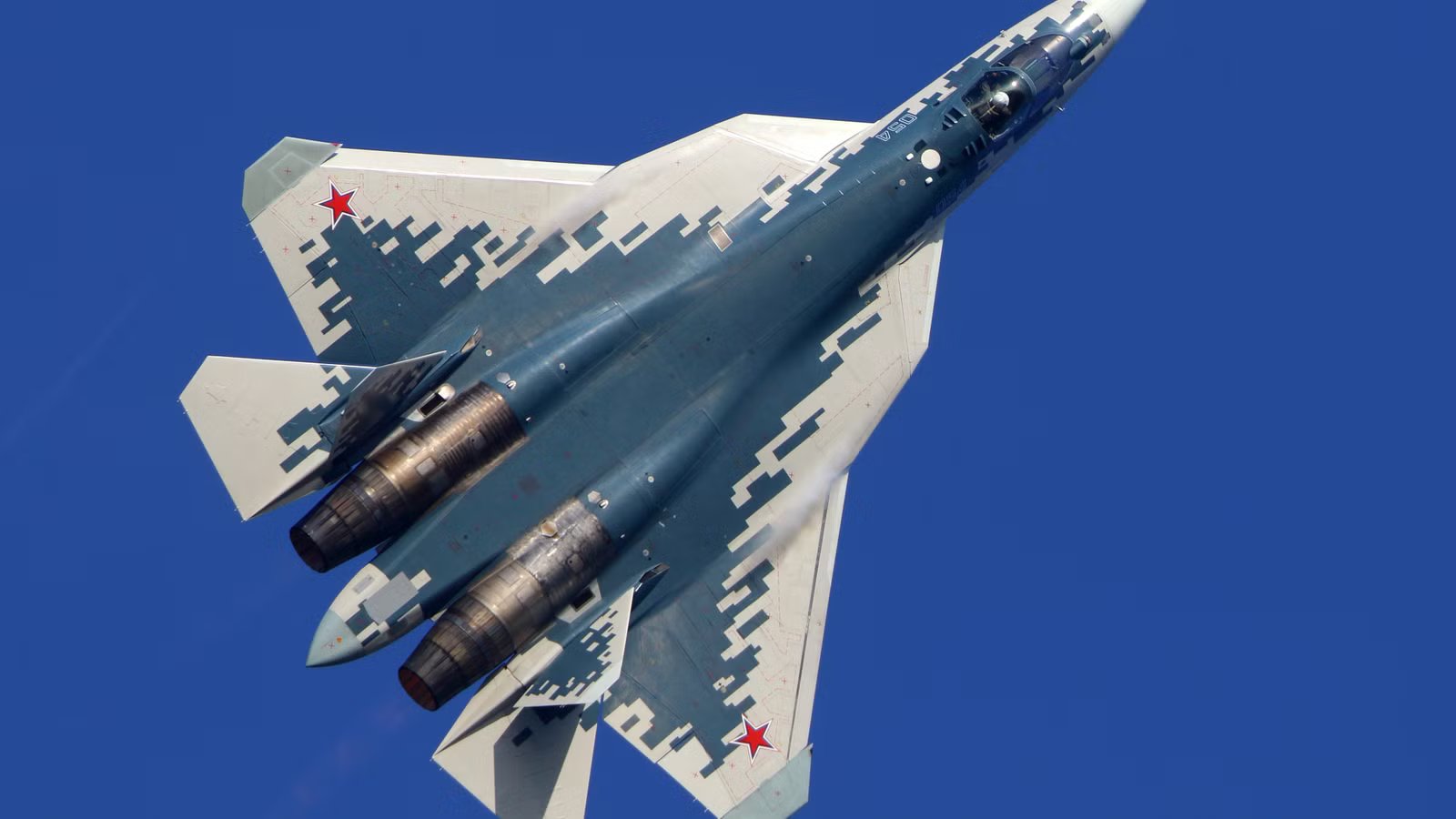
The world’s fifth-generation fighter jets are generally considered to be the F-22 Raptor, the F-35 Lightning II, the Shenyang J-35, the Chengdu J-20, and the Sukhoi Su-57. There is debate about whether the Su-57 should be considered a true fifth-generation fighter jet or a 4.5th-generation fighter with some low-observable characteristics. But for the purposes of this article, it will be included as a fifth-generation fighter.
The fighter jet entered Russian service in 2020 while Norway received its first F-35As in 2017. Today, Norway may have around double the number of fifth-generation fighters in service compared with Russia. In fact, Russia may or may not even be in the top ten countries by number of fifth-generation fighter jets in service as of mid-2026, as it’s unclear if it has more or less than Denmark.
The Number Of Su-57s Russia Has

Estimating the number of Sukhoi Su-57s Russia has in service is tricky, as these numbers are not publicly reported. United Aircraft Corporation (UAC) does typically report every time it delivers a batch of fighters to the Russian Air Force, but it doesn’t normally specify how many are in each batch. Typically, there are two fighter jets in each batch, but this can vary. Russia often doesn’t report aircraft lost from mishaps, but sometimes these are reported by other channels.
In January 2026, Rusi estimated that Russia had around 20 Su-57s in service as of the end of 2025 (excluding prototypes). So far in 2026 (mid-year), UAC has only disclosed delivering a single “substantial” batch of Felons in February; it is estimated this batch included two to four fighter jets. The Russian website, RuAviation, wrote at the time, “the total number of Su-57s in service as of early 2026 is estimated at approximately 30 aircraft.” It appears the aircraft in that batch were delivered to the Russian Air Force rather than exported to Algeria.
At the same time, Russia has lost Felons. In April, Ukraine reported having hit and damaged or destroyed one or two Su-57s at Shagol airfield in Russia’s Chelyabinsk region. Satellite imagery was difficult to interpret, and the strike is not considered independently verified. In early August 2026, a Su-57 crashed outside Moscow. It is unclear whether it was hit by friendly fire or suffered a technical malfunction. As of August 2026, a reasonable estimate is for the Russian Air Force to have 25 Felons, plus or minus up to five.
Norway Has Twice Russia’s 5th-Gen Fighters

In April 2025, Lockheed Martin reported that Norway had completed its program of record for 52 F-35As. This made the Nordic country the first country to complete its program of record. At the time, Lockheed Martin reported, “Lockheed Martin today completed the delivery of the 51st and 52nd F-35As to the Royal Norwegian Air Force, making Norway the first F-35 partner nation to fulfill its program of record.”
This means that the small Scandinavian country with a population of around 5.5 million currently has roughly twice as many fifth-generation fighter jets in service as Russia. Meanwhile, the Netherlands is nearing the end of its program of record. It has a program of record for 58 F-35As, of which it has received around 50, also around double Russia’s mid-2026 count.
Countries with fifth-gen fighters | Approx. quantity (per Lockheed etc.) | Countries with fifth-gen fighters | Approx. quantity |
|---|---|---|---|
United States (F-35, F-22) | 1,000+ | China (J-20, J-35) | 300-500+ |
Australia (F-35) | 72 | Japan (F-35) | 55 |
Norway (F-35) | 52 | The Netherlands (F-35) | 50 |
Israel (F-35) | 48 | United Kingdom (F-35) | 47 |
Italy (F-35) | 47 | Russia (Su-57) | 25 (20-30) |
Denmark (F-35) | 23 | Poland (F-35) | 14 |
Belgium (F-35) | 11 | Finland (F-35) | 8 |
Algeria (Su-57) | 2 |
Elsewhere in Europe, the UK has more fifth-generation fighters than Russia (47 after losing one), as does Italy, which has up to 47. Denmark has now received 23 of its initial order for 27 aircraft. Denmark is increasing its planned F-35 procurement, but for now, the number of jets it has received is within the plausible range of the number of Felons Russia has. Overall, European countries have now taken delivery of around 240 fifth-generation F-35 fighter jets, with a portion remaining in the United States for training.
Australia May Have Triple Russia’s Count

Australia has a program of record for 100 F-35As but has decided to stop at three squadrons made up of 72 jets. Interestingly, Australia is currently the largest operator of the F-35s outside the United States and the third-largest operator of fifth-generation fighter jets after the US and China. Australia had plans to purchase a fourth squadron of 28 F-35As to replace its Super Hornets.
However, the Labor government campaigned that they wouldn’t pursue this purchase and won re-election. Australia is currently focusing on sustaining the aircraft it has while working to bring its domestically developed Boeing Australia MQ-28 Ghost Bat loyal wingman drone into service. It is also keeping its options open to purchase more F-35s or another aircraft, such as the upcoming sixth-generation GCAP/Tempest.
With the estimate that Russia has 20–30 Su-57s in service, Australia could have as many as three times the number of fifth-generation fighter jets. Interestingly, Russia’s planned purchase (finalized in 2019) covers only 76 Su-57s (supposed to be delivered by 2028). This would place Russia’s planned Su-57 fleet very close to Australia’s F-35 fleet (76 vs 72). It is unclear whether Russia is adjusting the purchase number due to mishaps (at least two have been lost), so the Russian fleet could be smaller.
Europeans With Larger Planned Fifth-Gen Purchases

Currently, Russia has not announced plans to procure more than 76 Sukhoi Su-57 Felons, although this could change. Taking that figure as a fixed target, two European countries have larger programs of record for fifth-generation fighter jets. The UK has purchased and received 48 F-35s (minus one destroyed) and is gearing up to place the next order for 27 jets. This will take its procurement to 74 jets (plus one lost).
Britain’s long-term F-35 fighter jet program remains unchanged at 138 jets. The UK Defence Journal reported in 2026 that the UK has reaffirmed this long-term target. At the same time, the UK’s GCAP/Tempest sixth-generation fighter jet program (with Japan and Italy) is considered one of the best funded and most advanced in its development cycle. Its planned in-service date is around 2035.
Meanwhile, Italy has increased its program of record for F-35s to 115 jets, while also purchasing more Eurofighters and developing the GCAP/Tempest fighter jet. Italy’s F-35s are assembled in the country, as it hosts one of only two final assembly and checkout facilities for the F-35 outside the US (the other is in Japan).
Russia’s Focus Is Su-35S

Around 4.5 years into the Ukraine conflict, the Su-57 remains largely absent. Russia is known to have used it cautiously in some capacity, typically at stand-off ranges rather than in fifth-gen-like penetration missions. This includes a 2024 incident involving a malfunctioning S-70 Okhotnik unmanned combat aircraft. The program is believed to remain immature, and it is unclear to what extent Western sanctions are limiting its ability to meet the advertised capabilities. Leaked documents show some Su-57s have been delivered lacking key systems in the past, but public insight is patchy and often dated.
Russia is working to integrate new missiles, the new engines it was originally intended to have, and get the bomb bay doors working. It would seem that Russia’s emphasis on the Su-57 is more on maturation than large-scale production. Over the last five years, Russia’s production emphasis appears to be on its mature Flanker family, including the Su-30SM2, Su-35S, and Su-34.
For now, it appears that Russia continues to rely on its Su-30 and Su-35 series of fighter jets to replace aging fighters (e.g., Su-27s) and to form the backbone of its air-superiority fleet. Defense Express estimated that in 2024, Russia received ten Su-34s, six Su-35Ss, six Su-57s, and two Su-30s. It also reported it may have received around 20 Su-35S fighters during 2025 and the first three months of 2026.
The US & China Are In Their Own League

Regarding fifth-generation fighter jets, Russia does not belong in the same league as the US and China. Russia’s current procurement target of 76 Su-57s is comparable in scale to the fleets planned by some middle powers. Australia, for example. In 2024, OSINT China watchers appear to have identified the 300th Chinese J-20 Mighty Dragon. Based on a new number seen on an aircraft, China-watcher @Rupprecht_A posted that it was “further strong evidence—if not outright confirmation—that there are now well over 500 J-20s.” China also has a few J-35s in service.
The United States remains the undisputed leader in fifth-generation fighter jets in service. It plans to procure a total of 2,456 F-35s across the Air Force, Marine Corps, and Navy. The Air Force is thought to have around 500 in service, the Marines around 250, and the Navy around 70+. Adding the roughly 185 F-22s, the US likely has around 1,000 fifth-generation fighter jets in service.
Put another way, China may now have around 20 times as many fifth-generation fighter jets as Russia, while the United States has around 40 times. This is an imbalance that does not appear likely to change. While China is publicly flying its next-generation J-36 and J-50 prototypes, the US is developing the F-47 and F/A-XX, and the UK/Italy/Japan is developing GCAP/Tempest no significant reports of progress on Russia’s PAK DP (MiG-41) next-generation fighter. It is unclear if the program is fully funded. Publicly observable procurement suggests Russia continues to prioritize the production of mature Flanker-family aircraft while continuing to mature the Su-57.