Trending News:PSG favorite to win another French title with spending power unmatched by rivals in Ligue 1How Fashion and Film Became Great CollaboratorsJapanese second-quarter growth weaker than expectedKelly McParland: Trade talks with Trump are pointlessCould Microsoft spin off Xbox? Why it might be worth billionsWhy Aerospace Companies Keep Choosing MontréalActress Hayden Panettiere remembered as ‘amazing talent’ after death at 36This week in PC games: survival horror in a waterlogged city, kaiju chaos in a destructible city, and old school GTA vibes in an isometric insurgency simulatorWhisker’s AI-powered litter robot thinks my cats swapped bodiesA McDonald’s provides normalcy in Ukraine and actor Hayden Panettiere dies: Morning RundownJared Kushner to meet with Israel’s Netanyahu after Hamas talksBackgrounder: Canada imposes sanctions against Venezuelan officials involved in human rights violationsAsante Reports Q2 & H1 2026 Operating & Financial ResultsBen Woodfinden: All hail the judicial smackdown of bike lane rightsWomen’s Super League: Leicester’s Sam Tierney on not jumping shipSkylight Buddy Review (2026): Kid Routines Just Got EasyMichael Higgins: Toronto Metropolitan University is a disgraceThe iNaturalist app – Mixing science with funWhere’s the weirdest place you’ve heard videogame music?6 Pacific Air Bases The US Is Quietly Building Up To Back Up Andersen AFBThese Are the Best Sweaters To Shop For Fall 2026How Japan Averted a Major Earthquake DisasterPM Carney to join Nfld., Quebec premiers for “energy security” announcement in St. John’sVista Gold Appoints Gavin Ferguson as Managing Director, Vista Gold AustraliaThis Toronto student can talk physiology, solve advanced math and read for hours. He’s also just 5Unlock a Cheat Code for Your Wallet With $219 Off the Lenovo Legion Tab 5FAQ: Latest on FIFA, Infantino mess as opposition applies pressureTrade talks with Trump are pointlessKushner meets with Netanyahu after rare Hamas talks over stalled Gaza planEl Niño and Saharan Dust Silence Atlantic Hurricane SeasonThousands await aid after deadly Indonesia quake as rescue work conducted | Earthquakes NewsCRA looking into pharmaceutical giant Eli Lilly Canada’s taxesWhy indie games are the next big tech investment: Gaming CEOThis Canadian Hells Angel is serving time for a drug bust and is accused in a Toronto-area hit. He also trolled Drake for talking like a gangsterWho Is the New White House Counsel?Call of Duty studio Sledgehammer reportedly worked on a Halo multiplayer prototype before it got cannedCharlie Dean: All-rounder to captain England in one-day international series against IrelandHow Much Do Boeing 787 Dreamliner Pilots Make In 2026?External review finds antisemitism, harassment and fear at TMUHow much hydrogen awaits us underground?JCPenney’s Retail Regrets Trade-inTrump cuts military drills with South Korea citing ‘very good relationship’ with Kim Jong-un – US politics live | Donald TrumpCanada imposes new sanctions against Venezuelan officials involved in human rights violationsBusiness in Vancouver — Aug. 17, 2026Election Officials Are Preparing for Prediction Markets to Sow Chaos in the MidtermsPassage: In memoriam – CBS NewsRasooli to lead new-look Afghanistan side in Asian Games 2026Will King of the Hill Pit Hank And Buck Against Each Other?Zambia elections: Top opposition figures arrested days after presidential voteCarney to make announcement in St. John’s with Quebec, N.L. premiersInternational Petroleum Corporation Announces Results of Normal Course Issuer BidWhat happens when a kid’s robot best friend dies?Here’s How Much More Efficient New Engines Are Compared To Older GenerationsThis business owner's credit card purchases can be approved with the wrong PIN. TD says there's nothing wrongCitizens of Humanity and Jennifer Meyer’s 6-Piece CapsuleThere’s a New Link Between Gut Health and Alzheimer’s DiseaseFirstFT: Dimon warns UK against higher bank taxesCarney to make announcement in St. John’s with Quebec, N.L. premiersSTUDY: 63 Per Cent of Canadians Have Bought Refurbished, Open Box or Traded in Technology in the Past Year, Driven by Cost, Environmental Impact, and Product ValueFantasy baseball: Noah Cameron leads Week 22 streamersDemocratic Socialists Look for Upsets in Hostile Territory: FloridaRobert Downey Jr. Returns as Iron Man in Avengers Infinity Defense at Disneyland’s Avengers CampusOpenAI Reportedly Disbanded Its Preparedness Team As Part Of A ‘Streamlining’ ProcessIran’s Supreme Leader Signals Intention to Keep Country on a War FootingG7 denounces the lack of democratic legitimacy of today’s presidential inauguration in VenezuelaThe 60-day deadline for an Iran peace deal is expiring. Here’s where things standUncovered texts reveal alleged gun-for-hire network tied to attempted Project South hit5 Hottest College Football Head Coaching Prospects for 2026Demand for Canadian citizenship certificates soaring, fuelled by AmericansField of Study by Pacsun: The Elevated Menswear Brand Targeting Gen Z GrowthThis ‘n’ That: Updates from “Sunday Morning”Carve Some Time Out Of A Busy September For This Adorable-Looking 3D PuzzlerCincinnati Open: Sabalenka takes six match points to defeat Gibson | Tennis NewsLeBlanc meets with U.S. trade representative as tariff deadline loomsWho’s Lobbying Whom: Aug. 17, 2026Where do Canada-U.S. trade negotiations stand? Here’s a sector-by-sector breakdownAmerican & Delta Jets Cross São Paulo Runway As LATAM A320 Begins Takeoff Without ClearanceRussian enriched uranium shipped to Canadian-owned Westinghouse in U.S.Women’s Super League: Lucy Bronze explains why she decided to stay at ChelseaA little-known protein may be fueling Alzheimer’s — and scientists found a way to block itHousebuilding near train stations to get ‘default yes’ under new planning changes – UK politics live | PoliticsMinister Hussen announces humanitarian assistance for Syria following visit to Middle EastXsolla Adds 15+ New Local Payment Methods, Letting Game Developers Reach Players Across Asia-Pacific, Europe, and the AmericasCRA looking into Eli Lilly Canada’s taxesIran live updates: Tehran can adopt 'offensive aspect,' IRGC official saysTwitch are scraping streams for AI training by default, and even their own execs don’t know what user data may have been swept upThe Best Zara Finds to Buy For Fall 2026Transfer rumors, news: Barcelona eye Arsenal striker Viktor GyökeresUkrainian strikes kill six in Russia, officials sayMinister Joly to travel to Washington, D.C.SES Expands into Global Direct-to-Device Services through Strategic Collaboration with Elveo Mobile8/16: Face The Nation – CBS NewsSomalia facts of the dayThe Elder Scrolls 6 is probably subtitled Sentinel, and there’s been an easter egg in Starfield hinting at it this whole timeChina’s economy shows signs of weakness in JulyForeign Affairs Minister Mélanie Joly to hold a virtual media availability in Washington D.C.China’s industrial output slows in July, retail sales miss forecastsWomen’s T20 World Cup 2026: What is the skill scale and how does it work?U.S. Polo Assn. Aims for $4 Billion in Sales: Global Expansion and Strategy Insights7 Bomber Aircraft Still Flying Combat Missions Years After Their Intended Retirement Date
Welcome to Daily News & Blog – your go-to source for the latest news, insightful blogs, and trending stories from around the world.
Who We Are
At Daily News & Blog, we are passionate about delivering accurate, timely, and engaging content across various categories, including world news, economy, technology, sports, gaming, travel, fashion, health, and more. Our goal is to keep you informed, inspired, and ahead of the trends.
What We Offer
✔ Breaking News & In-Depth Analysis – Stay updated with real-time updates and well-researched articles. ✔ Diverse Topics – Covering everything from global events to lifestyle, entertainment, and innovation. ✔ Engaging Blogs – Thought-provoking opinions and expert insights on trending subjects. ✔ Reliable Sources – We curate information from trusted news providers and industry experts.
Our Mission
We aim to be more than just another news website. Our mission is to create a platform where information meets authenticity, helping our readers navigate an ever-changing world with clarity and confidence.
Join Us
Follow us for daily updates and be part of a growing community that values knowledge and meaningful discussions.
📩 Have a story or feedback? Contact us at info@dailynewsnblog.com
Trending News:PSG favorite to win another French title with spending power unmatched by rivals in Ligue 1How Fashion and Film Became Great CollaboratorsJapanese second-quarter growth weaker than expectedKelly McParland: Trade talks with Trump are pointlessCould Microsoft spin off Xbox? Why it might be worth billionsWhy Aerospace Companies Keep Choosing MontréalActress Hayden Panettiere remembered as ‘amazing talent’ after death at 36This week in PC games: survival horror in a waterlogged city, kaiju chaos in a destructible city, and old school GTA vibes in an isometric insurgency simulatorWhisker’s AI-powered litter robot thinks my cats swapped bodiesA McDonald’s provides normalcy in Ukraine and actor Hayden Panettiere dies: Morning RundownJared Kushner to meet with Israel’s Netanyahu after Hamas talksBackgrounder: Canada imposes sanctions against Venezuelan officials involved in human rights violationsAsante Reports Q2 & H1 2026 Operating & Financial ResultsBen Woodfinden: All hail the judicial smackdown of bike lane rightsWomen’s Super League: Leicester’s Sam Tierney on not jumping shipSkylight Buddy Review (2026): Kid Routines Just Got EasyMichael Higgins: Toronto Metropolitan University is a disgraceThe iNaturalist app – Mixing science with funWhere’s the weirdest place you’ve heard videogame music?6 Pacific Air Bases The US Is Quietly Building Up To Back Up Andersen AFBThese Are the Best Sweaters To Shop For Fall 2026How Japan Averted a Major Earthquake DisasterPM Carney to join Nfld., Quebec premiers for “energy security” announcement in St. John’sVista Gold Appoints Gavin Ferguson as Managing Director, Vista Gold AustraliaThis Toronto student can talk physiology, solve advanced math and read for hours. He’s also just 5Unlock a Cheat Code for Your Wallet With $219 Off the Lenovo Legion Tab 5FAQ: Latest on FIFA, Infantino mess as opposition applies pressureTrade talks with Trump are pointlessKushner meets with Netanyahu after rare Hamas talks over stalled Gaza planEl Niño and Saharan Dust Silence Atlantic Hurricane SeasonThousands await aid after deadly Indonesia quake as rescue work conducted | Earthquakes NewsCRA looking into pharmaceutical giant Eli Lilly Canada’s taxesWhy indie games are the next big tech investment: Gaming CEOThis Canadian Hells Angel is serving time for a drug bust and is accused in a Toronto-area hit. He also trolled Drake for talking like a gangsterWho Is the New White House Counsel?Call of Duty studio Sledgehammer reportedly worked on a Halo multiplayer prototype before it got cannedCharlie Dean: All-rounder to captain England in one-day international series against IrelandHow Much Do Boeing 787 Dreamliner Pilots Make In 2026?External review finds antisemitism, harassment and fear at TMUHow much hydrogen awaits us underground?JCPenney’s Retail Regrets Trade-inTrump cuts military drills with South Korea citing ‘very good relationship’ with Kim Jong-un – US politics live | Donald TrumpCanada imposes new sanctions against Venezuelan officials involved in human rights violationsBusiness in Vancouver — Aug. 17, 2026Election Officials Are Preparing for Prediction Markets to Sow Chaos in the MidtermsPassage: In memoriam – CBS NewsRasooli to lead new-look Afghanistan side in Asian Games 2026Will King of the Hill Pit Hank And Buck Against Each Other?Zambia elections: Top opposition figures arrested days after presidential voteCarney to make announcement in St. John’s with Quebec, N.L. premiersInternational Petroleum Corporation Announces Results of Normal Course Issuer BidWhat happens when a kid’s robot best friend dies?Here’s How Much More Efficient New Engines Are Compared To Older GenerationsThis business owner's credit card purchases can be approved with the wrong PIN. TD says there's nothing wrongCitizens of Humanity and Jennifer Meyer’s 6-Piece CapsuleThere’s a New Link Between Gut Health and Alzheimer’s DiseaseFirstFT: Dimon warns UK against higher bank taxesCarney to make announcement in St. John’s with Quebec, N.L. premiersSTUDY: 63 Per Cent of Canadians Have Bought Refurbished, Open Box or Traded in Technology in the Past Year, Driven by Cost, Environmental Impact, and Product ValueFantasy baseball: Noah Cameron leads Week 22 streamersDemocratic Socialists Look for Upsets in Hostile Territory: FloridaRobert Downey Jr. Returns as Iron Man in Avengers Infinity Defense at Disneyland’s Avengers CampusOpenAI Reportedly Disbanded Its Preparedness Team As Part Of A ‘Streamlining’ ProcessIran’s Supreme Leader Signals Intention to Keep Country on a War FootingG7 denounces the lack of democratic legitimacy of today’s presidential inauguration in VenezuelaThe 60-day deadline for an Iran peace deal is expiring. Here’s where things standUncovered texts reveal alleged gun-for-hire network tied to attempted Project South hit5 Hottest College Football Head Coaching Prospects for 2026Demand for Canadian citizenship certificates soaring, fuelled by AmericansField of Study by Pacsun: The Elevated Menswear Brand Targeting Gen Z GrowthThis ‘n’ That: Updates from “Sunday Morning”Carve Some Time Out Of A Busy September For This Adorable-Looking 3D PuzzlerCincinnati Open: Sabalenka takes six match points to defeat Gibson | Tennis NewsLeBlanc meets with U.S. trade representative as tariff deadline loomsWho’s Lobbying Whom: Aug. 17, 2026Where do Canada-U.S. trade negotiations stand? Here’s a sector-by-sector breakdownAmerican & Delta Jets Cross São Paulo Runway As LATAM A320 Begins Takeoff Without ClearanceRussian enriched uranium shipped to Canadian-owned Westinghouse in U.S.Women’s Super League: Lucy Bronze explains why she decided to stay at ChelseaA little-known protein may be fueling Alzheimer’s — and scientists found a way to block itHousebuilding near train stations to get ‘default yes’ under new planning changes – UK politics live | PoliticsMinister Hussen announces humanitarian assistance for Syria following visit to Middle EastXsolla Adds 15+ New Local Payment Methods, Letting Game Developers Reach Players Across Asia-Pacific, Europe, and the AmericasCRA looking into Eli Lilly Canada’s taxesIran live updates: Tehran can adopt 'offensive aspect,' IRGC official saysTwitch are scraping streams for AI training by default, and even their own execs don’t know what user data may have been swept upThe Best Zara Finds to Buy For Fall 2026Transfer rumors, news: Barcelona eye Arsenal striker Viktor GyökeresUkrainian strikes kill six in Russia, officials sayMinister Joly to travel to Washington, D.C.SES Expands into Global Direct-to-Device Services through Strategic Collaboration with Elveo Mobile8/16: Face The Nation – CBS NewsSomalia facts of the dayThe Elder Scrolls 6 is probably subtitled Sentinel, and there’s been an easter egg in Starfield hinting at it this whole timeChina’s economy shows signs of weakness in JulyForeign Affairs Minister Mélanie Joly to hold a virtual media availability in Washington D.C.China’s industrial output slows in July, retail sales miss forecastsWomen’s T20 World Cup 2026: What is the skill scale and how does it work?U.S. Polo Assn. Aims for $4 Billion in Sales: Global Expansion and Strategy Insights7 Bomber Aircraft Still Flying Combat Missions Years After Their Intended Retirement Date
The deal that U.S. President Donald Trump signed at Versailles in June set an ambitious 60-day deadline for ending the war with Iran and reaching an accord on its nuclear program.
The deadline was Monday, and the two sides are further apart than they were then.
Talks, such as they are, have focused on reopening the Strait of Hormuz and lifting a U.S. blockade on Iran, both of which were supposed to have happened under the interim deal. There has been no sign of any compromise on the strait, or that detailed nuclear talks have even begun.
The U.S., meanwhile, has no good options for getting out of the war it started alongside Israel.
Acceding to Iran’s latest demands would mean giving it control over a critical international waterway that carried a fifth of the world’s traded oil and gas before the war — and would be tantamount to admitting defeat. Escalating the deeply unpopular war would further draw down U.S. supplies of advanced missile interceptors, jolt the world economy, and drive up gas prices ahead of U.S. congressional elections.
So both sides have dug in, hoping the other will blink first. So far, neither has.
The interim deal collapsed weeks later
The June deal, known as the Memorandum of Understanding, called for a halt to all military operations and set a 60-day deadline for an agreement to permanently end the war and resolve the longstanding dispute over Iran’s nuclear activities.
It called for the Strait of Hormuz to be reopened but gave Iran a vaguely defined role in facilitating traffic, leaving open the possibility it could charge fees after the 60-day deadline. Iran has seized on that clause to claim control over the waterway.
A week after the deal was signed, Iran began firing on vessels using a route along the coast of Oman, on the other side of the strait, that is overseen by the U.S. military and intended to bypass Tehran’s control.
The U.S. responded by striking Iran, which retaliated by attacking Arab countries hosting American forces, like Jordan, Kuwait and Bahrain. The U.S. canceled waivers issued as part of the deal that had allowed Iran to sell its oil internationally and Trump restored a blockade of Iran’s ports.
Each side accused the other of violating the June agreement, of which almost nothing remains.
The fighting eventually died down. A related truce in Lebanon between Israel and the Iran-backed Hezbollah has mostly held, even as Israeli troops occupy large areas in the country’s south. Lebanon’s “territorial integrity and sovereignty” were to have been ensured under the June deal.
Iranian officials say they stopped negotiating with the U.S. in June, while acknowledging that messages have been relayed by intermediaries. Trump says the talks have continued, occasionally claiming progress after pulling back from threatening major strikes.
Pakistan, which played a key role in brokering the June agreement, noted last week that the deadline was Monday while expressing hope it would be extended.
“We are not closing the chapter,” Foreign Ministry spokesman Tahir Andrabi said. “Pakistan is making all-out efforts to bring the two parties to the negotiating table.”
Iran’s leaders think they can force Trump to give up the strait
Earlier this month, Iran issued a list of demands for reopening the strait, including the lifting of the American blockade, the withdrawal of U.S. forces from around Iran and the payment of reparations for damage inflicted in the war started by the U.S. and Israel on Feb. 28.
Even then, Iran has said it would control the strait — and potentially charge fees — through an agreement it is negotiating with Oman, and that the strait will not go back to being an open, toll-free waterway as it was before the war.
Iran-backed Houthi rebels in Yemen have meanwhile begun attacking Saudi oil tankers in the Red Sea, threatening another crucial trade route that had been used to relieve some of the pressure from the strait being closed.
Trump has rejected Iran’s demands — saying it’s Tehran that should pay war reparations and claiming the U.S. controls the strait. He appears to be banking on economic pressure — in the form of the blockade and longstanding sanctions — to bring Iran’s rulers to their knees.
Iran’s economy has been battered by the war and isolation, and inflation has soared. The crisis could stoke renewed anti-government protests, like those that were brutally crushed in January.
Traffic through the Strait of Hormuz, which rose immediately after the interim deal, is back to a small fraction of what it was before the war. Rising prices of fuel and other goods are expected to climb further the longer this continues with effects far beyond the Middle East.
The clock is still ticking for both sides.
___
Associated Press writer Munir Ahmed in Islamabad contributed.
Joseph Krauss, The Associated Press
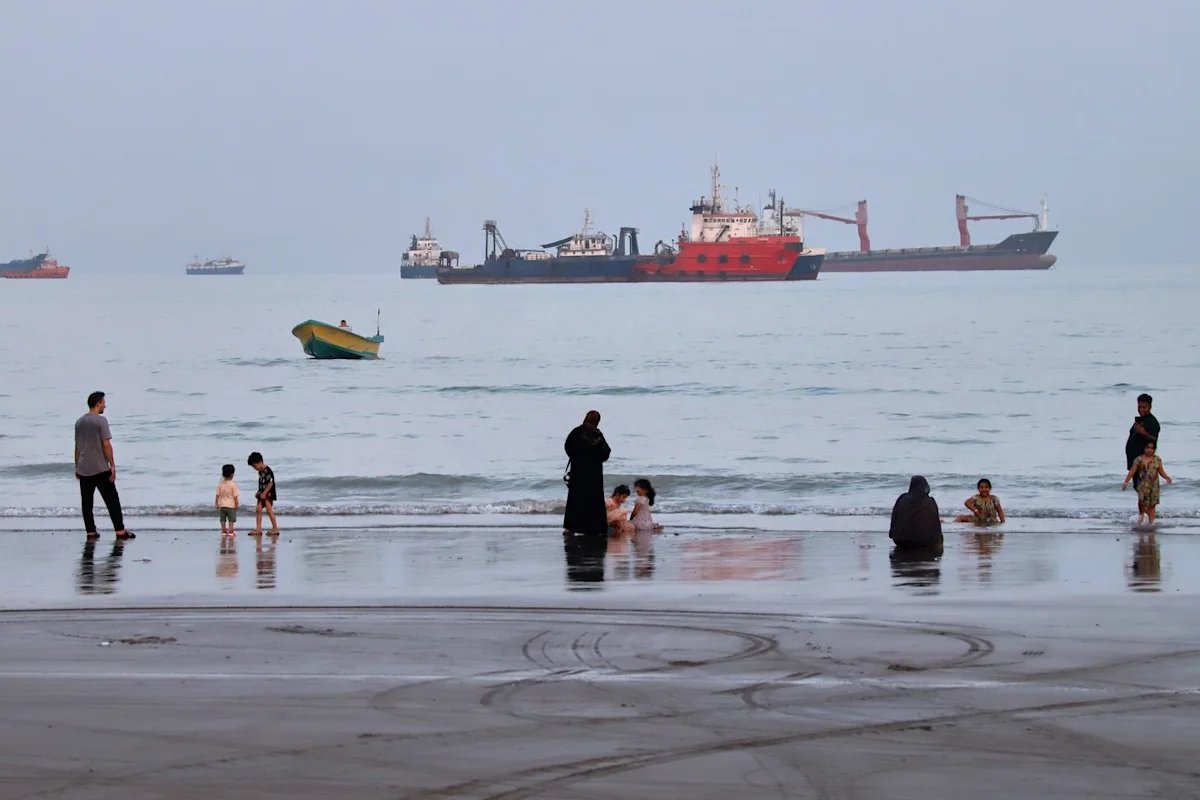
People spend time at a beach as commercial vessels are anchored in the Strait of Hormuz off Bandar Abbas, Iran, Wednesday, Aug. 5, 2026. (Amirhosein Khorgooi/ISNA via AP) – The Associated Press
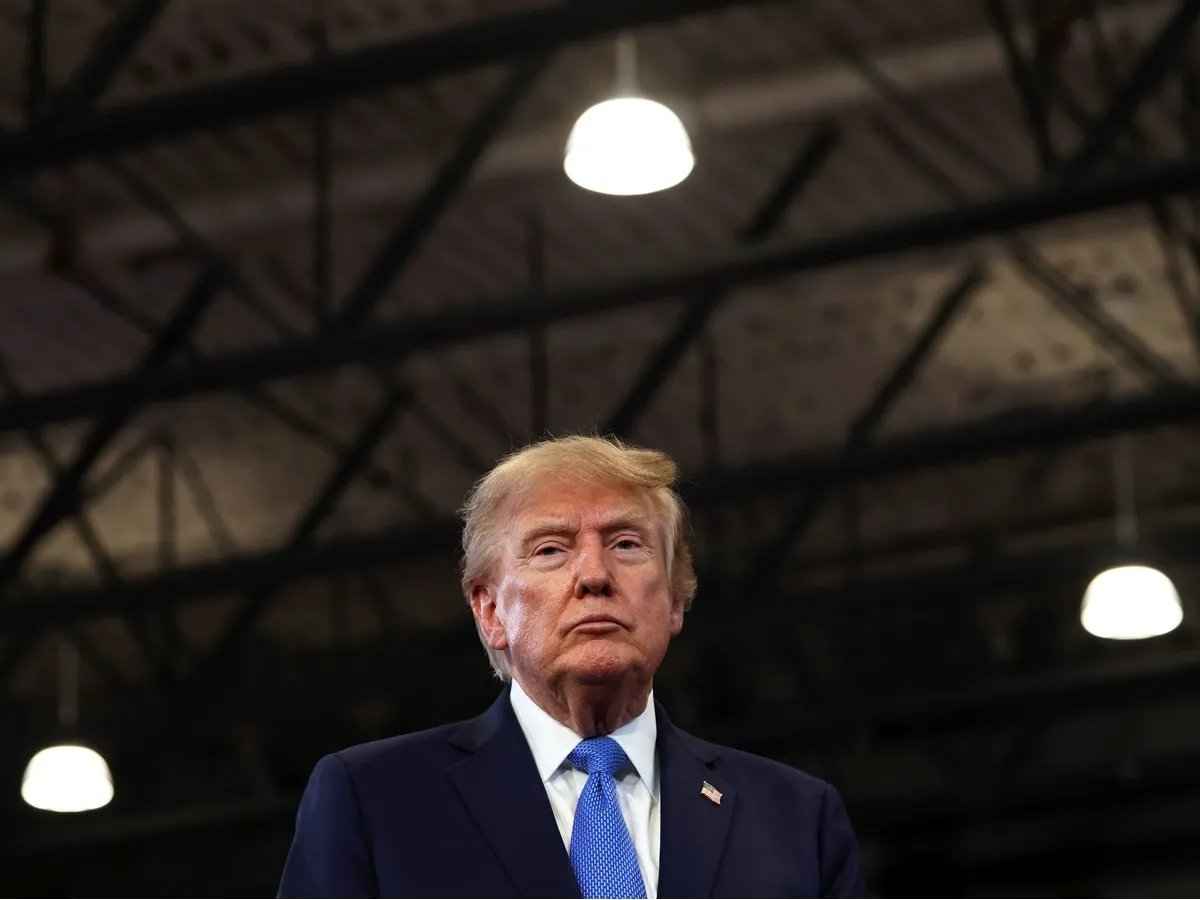
President Donald Trump gestures as he walks to board Marine One on the Ellipse, Friday, Aug. 14, 2026, near the White House in Washington. (AP Photo/Mark Schiefelbein) – The Associated Press
A woman holds up a poster of Iranian Supreme Leader Ayatollah Mojtaba Khamenei and waves a flag during a pro-government gathering at a square in Tehran, Iran, Tuesday, Aug. 11, 2026. (AP Photo/Vahid Salemi) – The Associated Press
FILE – Sailors and marines line the deck of aircraft carrier USS Abraham Lincoln (CVN-72) as it deploys from San Diego,, Jan. 3, 2021. (K.C. Alfred/The San Diego Union-Tribune via AP, File) – The Associated Press
In this photo released by the Iranian Presidency Office, Iranian President Masoud Pezeshkian, right, greets Pakistan’s Interior Minister Mohsin Naqvi at the start of their meeting in Tehran, Iran, Tuesday, Aug. 11, 2026. (Iranian Presidency Office via AP) – The Associated Press
Could Microsoft spin off Xbox? Why it might be worth billions
Peter Levin of Griffin Gaming Partners explains to Yahoo Finance Executive Editor Brian Sozzi why Xbox could be strategically expendable within Microsoft while its franchises, platform, and intellectual property may…
A McDonald’s provides normalcy in Ukraine and actor Hayden Panettiere dies: Morning Rundown
How a McDonalds in Ukraine became a refuge for residents through Russian bombardments. Tupac Shakur’s murder trial begins decades after his killing. And an NBC News review shows few cases…


 dailynewsnblog