From coffee to hotpot, brands race to grab a bite of China’s growing burger market


By Sophie Yu and Casey Hall

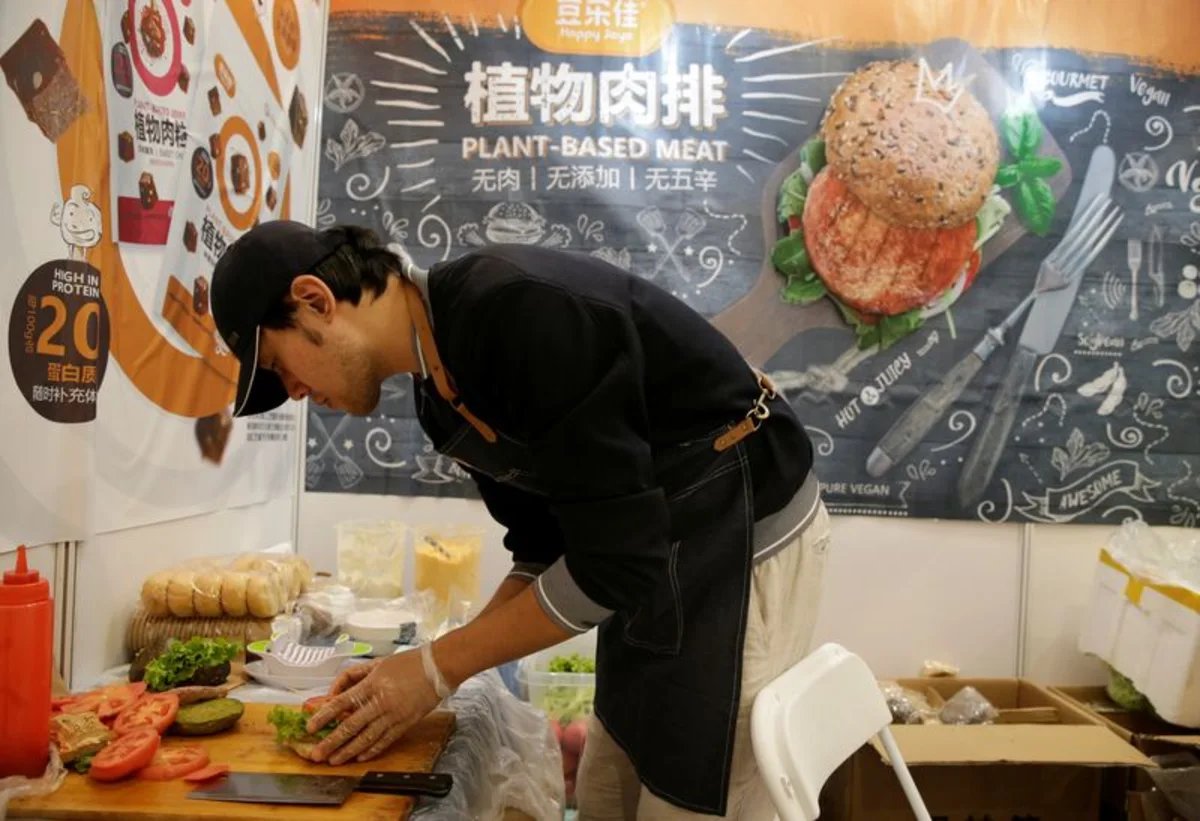
BEIJING, Aug 17 (Reuters) – Burgers are having a moment in China, with budget-conscious diners and smaller households turning the humble sandwich into one of the country’s hottest fast-food battlegrounds, drawing in everyone from global restaurant chains to hotpot operators and ‌coffee brands.

Yum China’s Pizza Hut Burger Bar format, in which a burger counter operates alongside an existing Pizza Hut restaurant, expanded to over 200 ‌outlets in six months, the company said in July. It plans to grow the format to 500-600 outlets by the end of 2026, or about 10% of its total Pizza Hut store network.

The ​rush into burgers reflects broader shifts in China’s consumption habits. As households get smaller and economic uncertainty keeps spending in check, diners are favouring lower-cost, portable meals that offer convenience without sacrificing value.

That is turning burgers from a niche Western import, dominated by McDonald’s, KFC and Burger King, into one of the most hotly contested segments of China’s restaurant market as new brands race to cash in.

Last month, hotpot chain Haidilao entered the segment with Huanxianbao, or “Fresh Burger”, a chain selling burgers, as well as pizza, ‌pasta and fried chicken. Coffee chain M Stand has also ⁠opened burger-focused outlets in some cities.

China’s Western fast-food market was valued at 499.65 billion yuan ($74.1 billion) in 2025 and is expected to reach 587.09 billion yuan by 2027, according to data provider iiMedia Research, despite recent high-profile challenges for many global brands.

Burgers ⁠topped consumer preferences, with 55% of respondents selecting them. While still a relatively small segment of China’s fast-food market, the burger category was worth $18.4 billion in 2025 and is projected to grow 8.7% annually through 2035, according to Emergen Research.

Part of the appeal is economics.

As consumer spending remains cautious, burgers offer a lower-cost alternative to full-service restaurant meals while still ​serving ​as a substantial meal option, said Zhu Danpeng, a China food industry analyst.

“It’s a good ​value-for-money choice,” Zhu said.

Wang Fang, a university student in Beijing, said ‌burgers have become a go-to lunch option for her and her classmates because they are cheaper than ordering multiple dishes at a restaurant.

“With meat, vegetables and butter, it makes a very affordable balanced meal,” she said.

The category also aligns with changing demographics. Rising numbers of one-person households, smaller families and young urban workers have fuelled demand for convenient individual meals, a trend Yum China says is creating opportunities across its brands.


Pizza Hut added burgers to its menu in 2024. By 2025, burgers accounted for a mid-single-digit percentage of Pizza Hut sales, the company said, adding that it expects the category to generate more than 1 billion yuan in sales ‌this year, or 5% to 6% of the brand’s revenue.

The company said burgers appeal to takeaway ​and delivery customers in China, where 43% of consumers order delivery at least once a week, ​compared with a global average of 23%, according to Euromonitor.

The growing appetite is ​drawing players from across the industry. Domestic chains such as Tasiting are competing with McDonald’s, Yum China’s KFC and Shake Shack.

International ‌brands are also eager to grab a seat at the table.

When ​U.S. chain Five Guys opened stores in ​Beijing this month, consumers waited more than two hours to be served. Wendy’s said in May it plans to enter China and open up to 1,000 franchised restaurants over the next decade.

Liu Tao, a 48-year-old musician in Beijing, regularly takes his 11-year-old son to McDonald’s on Sundays, squeezing in ​a meal between the boy’s maths and English classes.

“We only ‌have an hour, and we’re rushing from one place to the next,” Liu said. “When you want food that’s clean, quick and something children ​don’t get bored of, nothing is better than a burger. My son eats it in the car as we head to his ​English class.”

($1 = 6.7439 Chinese yuan renminbi)

(Reporting by Sophie Yu, Casey HallEditing by Shri Navaratnam)


Source link

  • Related Posts

    Japan’s economy manages 1.1% growth rate despite headwinds

    TOKYO (AP) — Japan’s economy grew an annual rate of 1.1% in the April-June quarter even as private consumption stayed flat and the growth of exports declined, according to government…

    Endeavour Silver Reports an Illegal Blockade and Suspension of Operations at its Terronera Mine

    Forward-looking statements or information involve known and unknown risks, uncertainties and other factors that may cause the actual results, level of activity, production levels, performance or achievements of Endeavour and…

    Leave a Reply

    Your email address will not be published. Required fields are marked *

    You Missed

    Former Oklahoma TE Jaren Kanak receives unfortunate news

    Former Oklahoma TE Jaren Kanak receives unfortunate news

    Fitz the grizzly bear briefly escapes his enclosure at the Calgary Zoo – Calgary

    Fitz the grizzly bear briefly escapes his enclosure at the Calgary Zoo – Calgary

    Hayden Panettiere dies at 36

    Hayden Panettiere dies at 36

    ‘Spider-Man: Brand New Day’ Hits $2 Billion at the Box Office

    ‘Spider-Man: Brand New Day’ Hits $2 Billion at the Box Office

    Ebola outbreak in Democratic Republic of Congo now deadliest in country’s history | Ebola

    Ebola outbreak in Democratic Republic of Congo now deadliest in country’s history | Ebola

    Media Registration – Minister Mélanie Joly to hold a virtual media availability in Washington D.C.