dailynewsnblog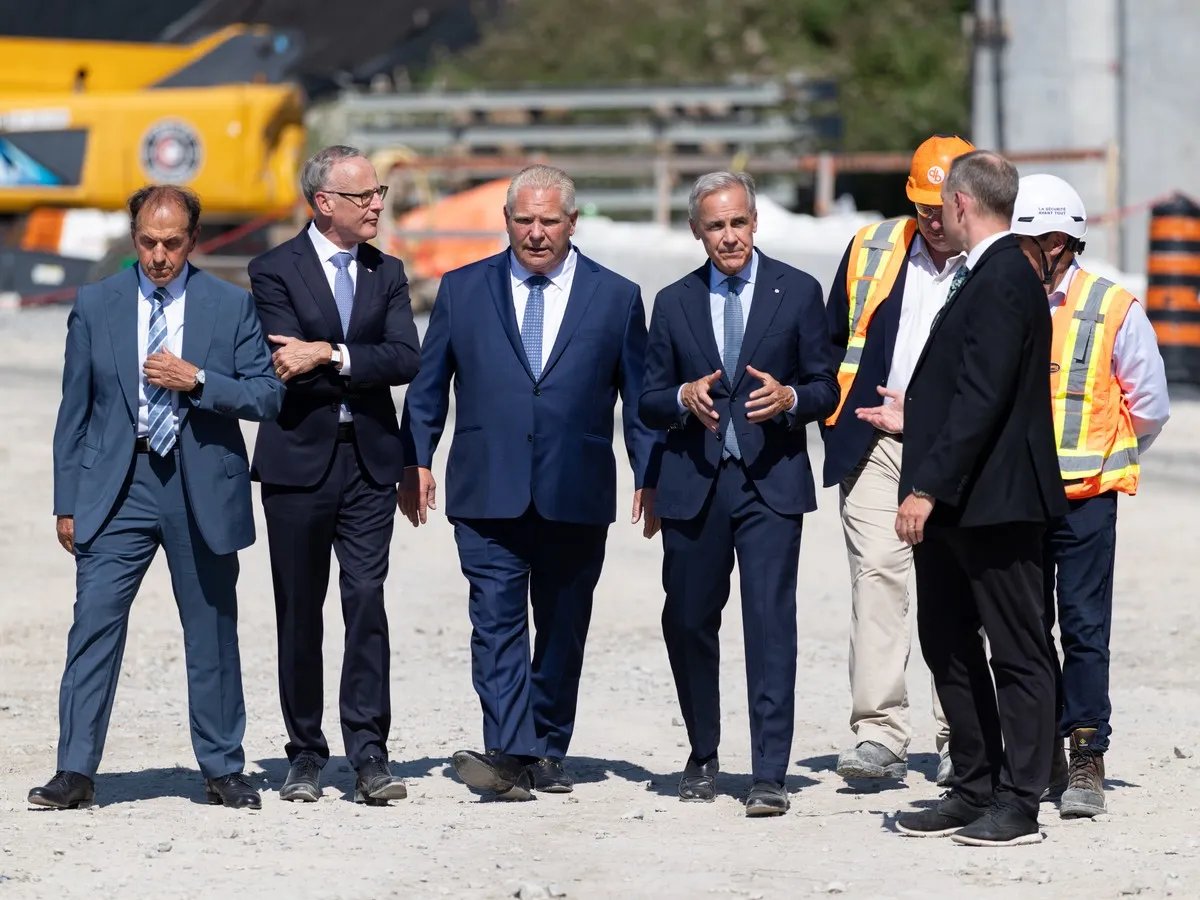
Thirty-four billion Canadian dollars ; $2.2 billion per kilometre. Three times more than projected, with more increases possible, we are warned, which is to say certain.
“Impossible” is a big word, but that’s the new estimate from Metrolinx, the Frankenstein’s monster of a Crown agency whose thundering herd of 7,000-odd employees — 124 of them vice-presidents, at last report — is nominally in charge of building transit in the Greater Toronto Area, with nominal oversight from Queen’s Park. And while almost nothing will shock those who follow this file closely, this is at the very least well beyond the realms of what should be possible.
In 2025, the Ontario Line’s three VPs with “Ontario Line” in their titles, two of them sharing the title of “executive vice president, subway delivery, Ontario Line,” made $902,0000 between them. They should be fired for cause and the entire agency closed down. The Ministry of Transport can screw this up perfectly well on its own, and own it.
Of the Ontario Line’s 15.6 kilometre running length, 57 per cent is at grade or (mostly) elevated, rather than tunnelled. London opened the Elizabeth Line in 2022, featuring 21 kilometres of new twin-bore tunnels under, over and around all 11 existing Underground lines and through 2,000-odd years of city history, for something like $1.7 billion per kilometre (that’s 2025 Canadian dollars, at the current exchange rate, per the Transit Costs Project at NYU’s Marron Institute of Urban Management — as are all subsequent figures).
As it turned out it was actually 9,000-odd years of history, workers having discovered stone-age tools near the Thames, along with the Bethlem mental hospital’s cemetery, the tusk of a woolly mammoth, a “rare Tudor bowling ball ,” “horseshoes … near a well-preserved Roman road, … ancient DNA in the skeletons of victims of the Black Death and 13,000 well-preserved pickle pots and jam jars from (a) 19th-century … factory at Tottenham Court Road,” as a fascinating 2017 exhibit at the London Museum Docklands recounted.
Oh, and there were untold quantities of unexploded German ordnance to keep an eye out for. ( Safety glasseson , people!)
Legions of archeologists would swoop in blowing whistles and waving their fine brushes around — or so I like to imagine — whenever the latest treasure was unearthed. It wasn’t finished quite on schedule, but if Ontario could build things only as behind schedule and within a telescope’s vision of the original cost, as the Elizabeth line was, it would be like landing the Governor General on one of Jupiter’s moons.
Other Canadian (and American) jurisdictions have similar problems. The Expo Line SkyTrain extension from Surrey to Langley , B.C., currently slated for completion in “late 2029”: $437 million per kilometre. Calgary’s Blue Line LRT extension: $223 million per kilometre. Suffice to say France’s, Germany’s or Spain’s transport ministers would chase you up a tree if you proposed those costs for similar projects. China’s would probably throw you and your whole family into a quarry.
The amazing thing about Ontario is it’s getting worse at this. The Ministry of Labour shut down Toronto’s most recent completed subway-extension project for four months after a worker tragically died on the job. That extension, wildly late and over budget as it was, only wound up costing $578 million per km, all of it underground. Tunnelling through downtown Toronto is more difficult than at its outer reaches, but there aren’t and plague pits or Roman roads or bombs down there waiting to be unearthed. If we could just pay $1 billion per kilometre, Ontario would have roughly Toronto’s entire operating annual budget left over to cut taxes , improve health care, (ahem) build more transit … whatever our priorities are. (It’s often quite difficult to tell in Ontario.)
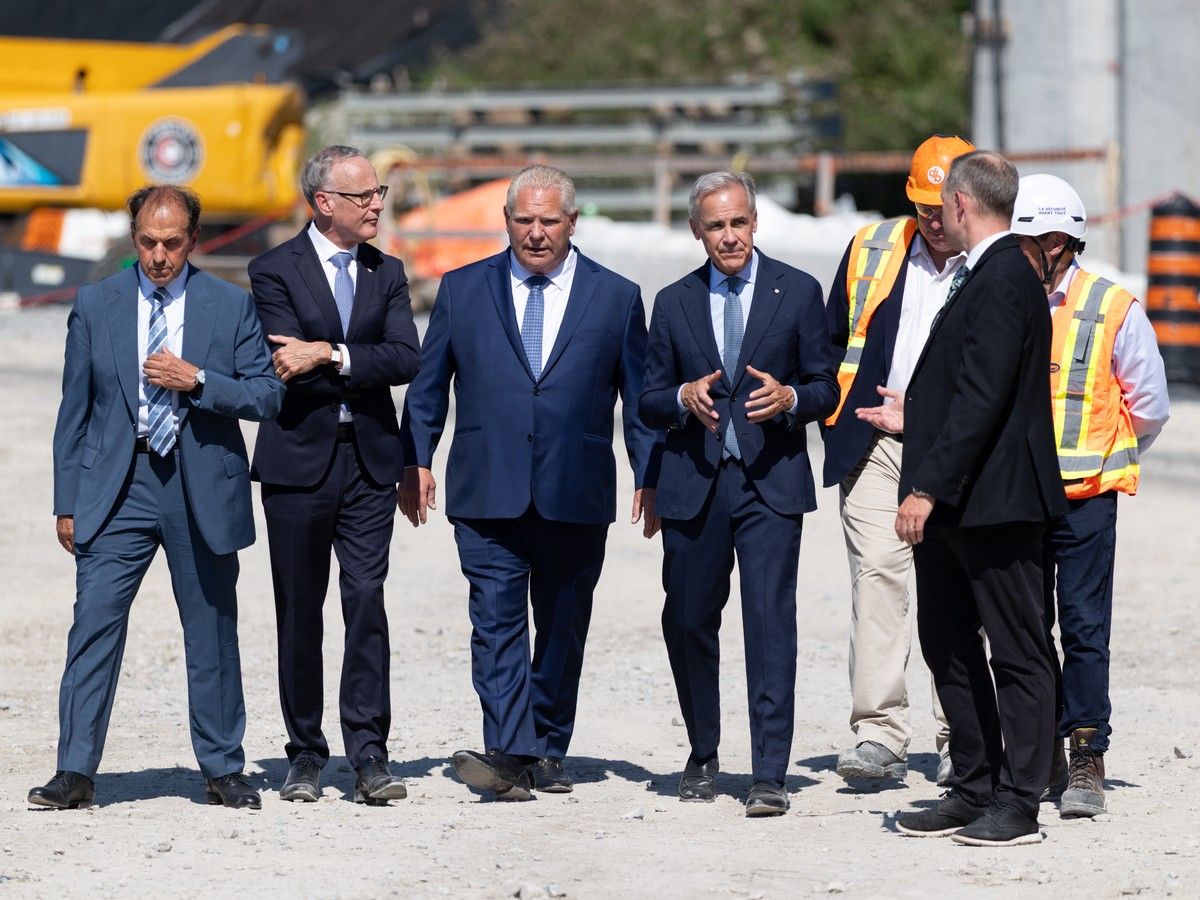
Blaming Doug Ford will not help. Obliterating Metrolinx might be a good first step — another $2.2 billion per annum saved. But the simple fact is we don’t know how to do this better, no matter who’s in charge. Or rather, we do know; we just won’t do it.
Restrictive labour practices . An incurable protectionism fetish across the board. (Toronto’s subway trains must come from Thunder Bay!) A focus (as Prime Minister Mark Carney puts it) not just on “what we build, but how we build it” — i.e., infrastructure isn’t the ultimate goal; jobs are the ultimate goal. Wrong. Hopeless. Guaranteed disaster. As long as we often take getting “shovels in the ground,” we often start digging without enough nearly enough planning underway. We don’t standardize between projects like European and Asian countries do. As we’re seeing with the doomed high-speed rail debacle, politicians think it’s their job to wrestle transit lines around to help people in their wards and ridings. (The Liberals clearly cannot tolerate the idea of winning beet-red Kingston, Ont., by fewer than 20 points; thus, the Alto high-speed rail quango has suddenly fallen in love with dramatically changing the route to include that teeming metropolis.)
Some have suggested a royal inquiry. We could royally inquire into much less important things. But what we really need is for just one province to start doing this properly. People would notice. It certainly won’t be Ontario.
National Post
cselley@postmedia.com