dailynewsnblog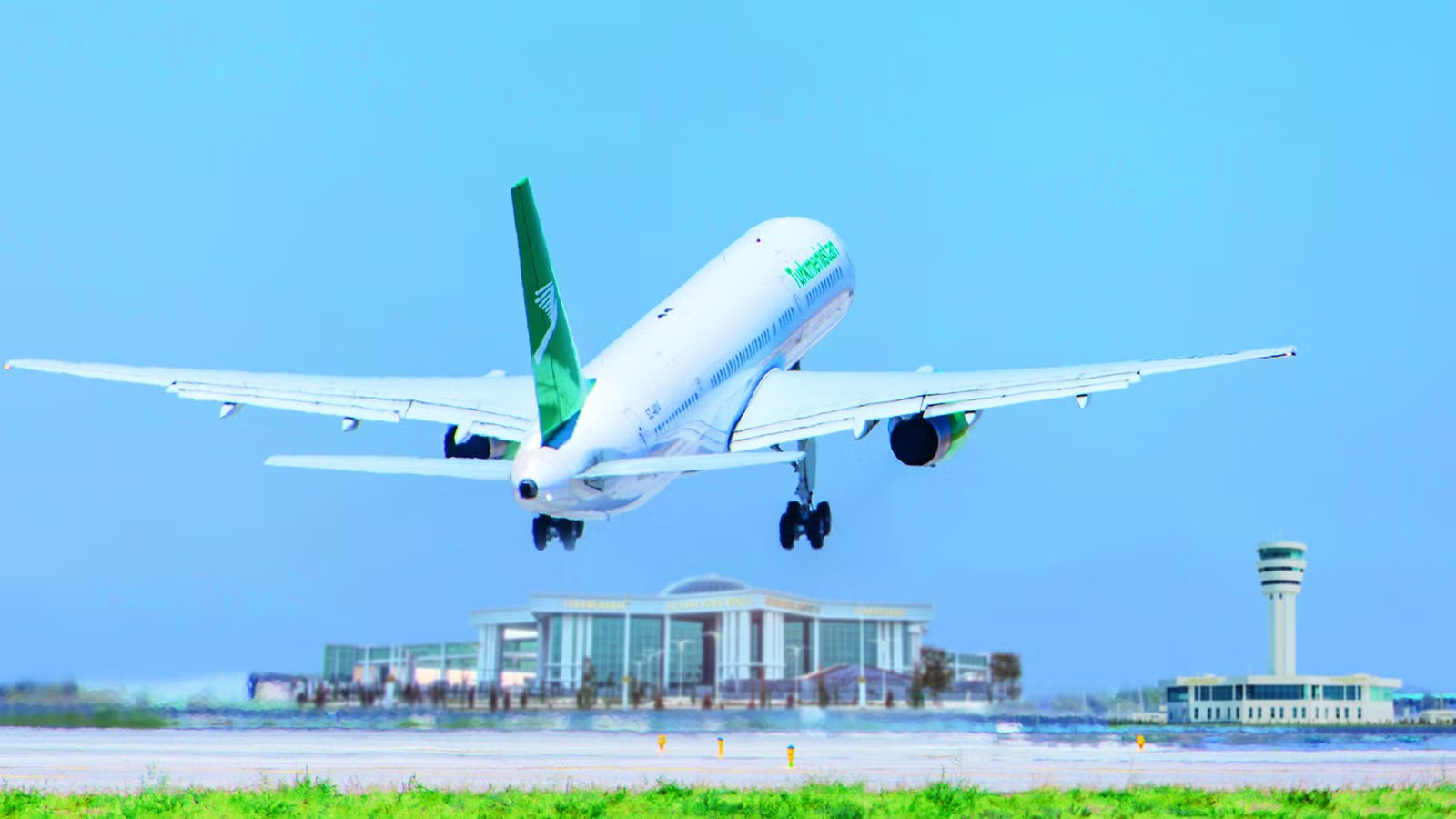
Turkmenistan Airlines is one of the least familiar international airlines around today. The state-owned carrier operates a broad network of over 20 destinations, flying to notable cities like Beijing, Dubai, Frankfurt, London, Istanbul and Milan. It is also an unusually difficult airline to fly, as it doesn’t sell its international flights through mainstream booking sites, does not offer online check-in, does not serve alcohol, and asks passengers not to take photographs onboard.
I recently had the chance to travel on two Turkmenistan Airlines flights, the first from  London Gatwick Airport (LGW) to Ashgabat International Airport (ASB), then a connecting flight from Ashgabat to
  Bangkok Suvarnabhumi Airport (BKK). During this trip, I was lucky enough to experience both of the carrier’s widebody aircraft types (the Boeing 777-200LR and Boeing 777-300ER), both in business class.
Novelty aside, price was the other reason I booked with Turkmenistan Airlines. Fares for my travel period were noticeably cheaper than other one-stop itineraries with the likes of Etihad Airways and Emirates, despite offering a similar total journey and stopover length. Business class upgrades are also very affordable compared to the competition, particularly on a long-haul itinerary like this.
Itinerary And Booking Process

Turkmenistan Airlines does not sell its international flights through mainstream channels, so you will probably not see them for sale on your usual booking website. Customers typically book directly with the airline or via a select few third-party Passenger Sales Agents (PSA). For foreign travelers, it is currently not possible to purchase international fares directly through the Turkmenistan Airlines website.
I got my ticket through the airline’s official UK-based sales partner, Skyloom Travel, which can make instant bookings as it is directly connected to the airline’s booking system via API. Skyloom is not just limited to UK passengers, also selling Turkmenistan Airlines tickets worldwide.
Turkmenistan Airlines flies to London twice a week, although the through-connection from Gatwick to Bangkok is only bookable on a Saturday. The Ashgabat-Bangkok leg also runs twice-weekly, and the carrier is the only airline flying nonstop between Thailand and Turkmenistan. The second leg leaves Ashgabat at 4:20 AM, which is 12:20 AM in the UK, making this portion of the journey ideal for sleeping ahead of a 1:05 PM arrival in Bangkok.
Checking In At London Gatwick

Turkmenistan Airlines operates out of Gatwick’s South Terminal — with no online check-in available, every passenger flying needs to go to a check-in desk, so I arrived just under three hours before the 4:55 PM departure. Although I had heard a lot about these flights operating with low load factors, the economy lane was already very busy, suggesting that word of these fares has spread well.
Flight No. | T5 428 |
Route | London Gatwick (LGW) – Ashgabat (ASB) |
Aircraft | Boeing 777-200LR |
Scheduled departure | 16:55 |
Scheduled arrival | 02:35 (+1) |
Block time | 5 hours 40 minutes |
Fortunately, I got to skip the queue in the dedicated business lane, receiving my boarding pass and checking a suitcase within a matter of minutes. My business class fare allowed for two items of baggage at 27 kg each; however, it does not grant automatic access to an airport lounge at Gatwick. I was able to book a spot at My Lounge in the South Terminal for around £20 ($25) and waited out the next couple of hours until boarding.
From the lounge’s vantage point, I could see the distinct green and white of the Turkmenistan Airlines jet I was to fly on in the distance. The aircraft is a 12-year-old Boeing 777-200LR (one of two -200LRs in the fleet) featuring two cabin classes, seating 28 in business and 263 in economy. My flight was leaving from Gate 19, which was just a few minutes’ walk away. After passing through a final round of gate checks, I was ready to board.
Boeing 777-200LR Boarding And Seat First Impressions

The business cabin features fully lie-flat, forward-facing seats arranged in a 2-3-2 layout. I was seated in 1J, an aisle seat at the front of the cabin. The seat predates the era of suites and sliding doors, but it holds up well in terms of comfort. Crucially, it folds out into a fully flat bed, along with a complex control panel allowing for various adjustments, like footrest and headrest position, recline, and a built-in massage function.
The tray table folds out from the armrest and is large enough for a full meal service. Amenities comprised a pillow, large blanket, branded slippers, and a set of headphones. Almost immediately after I reached my seat, a flight attendant asked me not to take photographs. This was something I anticipated, as the policy is well documented at Turkmenistan Airlines. While there’s no official reason given, it is generally thought to be a combination of passenger and crew privacy alongside broader state sensitivities around photography.
 Credit: Luke Bodell | Simple Flying
 Credit: Luke Bodell | Simple Flying
- Credit: Luke Bodell | Simple Flying
 Credit: Luke Bodell | Simple Flying
 Credit: Luke Bodell | Simple Flying
 Credit: Luke Bodell | Simple Flying
What surprised me was how full the business cabin was, with almost every one of the 28 seats occupied. I was offered pre-departure refreshments soon after taking my seat — Turkmenistan is a Muslim-majority country, meaning its national airline does not serve any alcohol. Instead, it offers a variety of hot and cold drinks, like teas, coffee, and fruit juices. After a short wait, we were taxiing toward Gatwick’s runway, taking off around 20 minutes behind schedule.
Meals, Entertainment And Service

The meal service began around an hour into the flight, with a choice of veal or chicken for the main. I opted for the veal, and it was very good, coming with a complement of other dishes, including a meat and cheese platter, two types of fresh bread, a salad bowl, and interesting condiments of date honey and apple sauce.
Everything came out on proper plates with a white tablecloth laid over the tray table. Given the quality and variety on offer, I would rate this meal as one of the better dining experiences I’ve had flying business with any airline. One of the crew cleared my table and then brought out dessert — another eclectic offering of tiramisu, served alongside a hot black tea and, rather unusually, a small Snickers bar. I was also told that ham and cheese croissants and other snacks were available on demand for the rest of the flight.
In-flight entertainment (IFE) on this flight was acceptable, although my front-row seat meant my screen was mounted to the bulkhead ahead, a noticeably longer distance than a conventional seatback screen. I flicked through the entertainment catalog, which featured a decent selection of Western movies and television shows alongside a range of local offerings. More interesting was the in-flight magazine in the seat pocket, half-translated into English, which ran features on Turkmen culture, offering a window into a country known for its isolation on the global stage.
The one downside of the onboard experience is that the airline does not offer in-flight WiFi of any kind, and I would soon find that you can’t get WiFi in the airport either. Service was a strong point across both flights — the cabin crew was very professional and capable as expected of a long-haul international crew, speaking strong English and providing attentive service throughout.
The Ashgabat Airport Experience

We landed at 2:44 AM local time — just nine minutes behind schedule (which officially counts as an on-time arrival) — and were greeted by the striking terminal building of the modern Ashgabat International Airport. Opened in 2016 at a reported cost of $2.3 billion, the white marble complex is shaped like a falcon, one of Turkmenistan’s national symbols.
After getting off the plane, transit passengers had to pass through a small security checkpoint, which took less than five minutes. Transit is straightforward, and passengers who stay airside do not require a visa. This is an important point, given that Turkmenistan is one of the least-visited countries in the world and its tourist visa process is notoriously difficult.
I was surprised at how busy the terminal was at this hour. Based on other reviews, I expected a deserted building at nearly three in the morning, but there was plenty of passenger traffic, while a couple of cafés and shops were still open, selling drinks and snacks. While lacking in options compared to a large, established transit airport, everything felt professional and efficient.

One thing that stands out at Ashgabat is the large security presence, with uniformed guards stationed throughout the terminal. There are a lot of them relative to passenger numbers, all wearing the tall, military-style peaked caps common across the region. The one drawback at the airport is connectivity, as Turkmenistan has some of the most restricted internet access in the world. There was no airport WiFi or coverage from my UK phone provider, with access apparently available only for Turkmenistan-registered phone numbers.
Second Flight Experience On The Boeing 777-300ER

My second flight to Bangkok was also busy at the gate, although the business cabin this time around was mostly empty. I had another front-row seat, 11A, and counted just two other passengers in a cabin with space for up to 40. The aircraft that morning was the one I’d been hoping for — one of two 777-300ERs in the carrier’s fleet that formerly flew with Hong Kong airline Cathay Pacific.
Flight No. | T5 647 |
Route | Ashgabat (ASB) – Bangkok Suvarnabhumi (BKK) |
Aircraft | Boeing 777-300ER |
Scheduled departure | 04:20 |
Scheduled arrival | 13:05 |
Block time | 6 hours 45 minutes |
The airline acquired these two airframes around three years ago — they are the largest aircraft the airline has ever operated, accommodating 368 passengers across three cabins, with 40 in business, 32 in premium economy and 296 in economy. The business class seats — Safran Cirrus II seats in a 1-2-1 reverse herringbone layout — are definitely a step-up on the 777-200LR. It’s a larger and more private unit with guaranteed aisle access, and you also aren’t sitting next to anyone if occupying one of the window seats.
- Credit: Luke Bodell | Simple Flying
- Credit: Luke Bodell | Simple Flying
- Credit: Luke Bodell | Simple Flying
 Credit: Luke Bodell | Simple Flying
 Credit: Luke Bodell | Simple Flying
 Credit: Luke Bodell | Simple Flying
This flight ended up departing over an hour late as the airline attempted to track down a family booked on the flight. I was served a cherry juice with ice while we waited and checked out the entertainment catalog on a large swing-out screen in front of my seat (see above). We took off from Ashgabat at 5:48 AM local time, almost 90 minutes later than the scheduled 4:20 AM, but would arrive in Bangkok with only 40 minutes’ delay.
A meal service was offered after an hour, but given the time, I decided to get a few hours’ sleep instead. A flight attendant prepared the lie-flat bed in less than two minutes, applying a fitted sheet and comforter, along with a pillow and blanket. I managed an uninterrupted five-hour sleep, which I find almost impossible to do in economy class.
Final Thoughts On Turkmenistan Airlines

Despite its curious reputation, my experience of flying with Turkmenistan Airlines was smooth and professional, and it seems the airline is getting more popular with foreign travelers. The value is difficult to argue with, as I found the overall experience to match that of established full-service carriers.
What I didn’t really encounter was much of the quirkiness the airline is so often associated with. Beyond the photography rule, absence of alcohol and heavy guard presence at the airport, this felt like a straightforward long-haul trip and layover run by an airline that knows what it is doing.
In terms of the transit experience, there are few places that can compete with the shops, food and facilities at airports like Abu Dhabi, Dubai or Singapore, but Ashgabat had the essentials (except WiFi) even in the early hours of the morning. The timings on this particular itinerary were also very good, getting me into Bangkok in the early afternoon feeling refreshed.