dailynewsnblog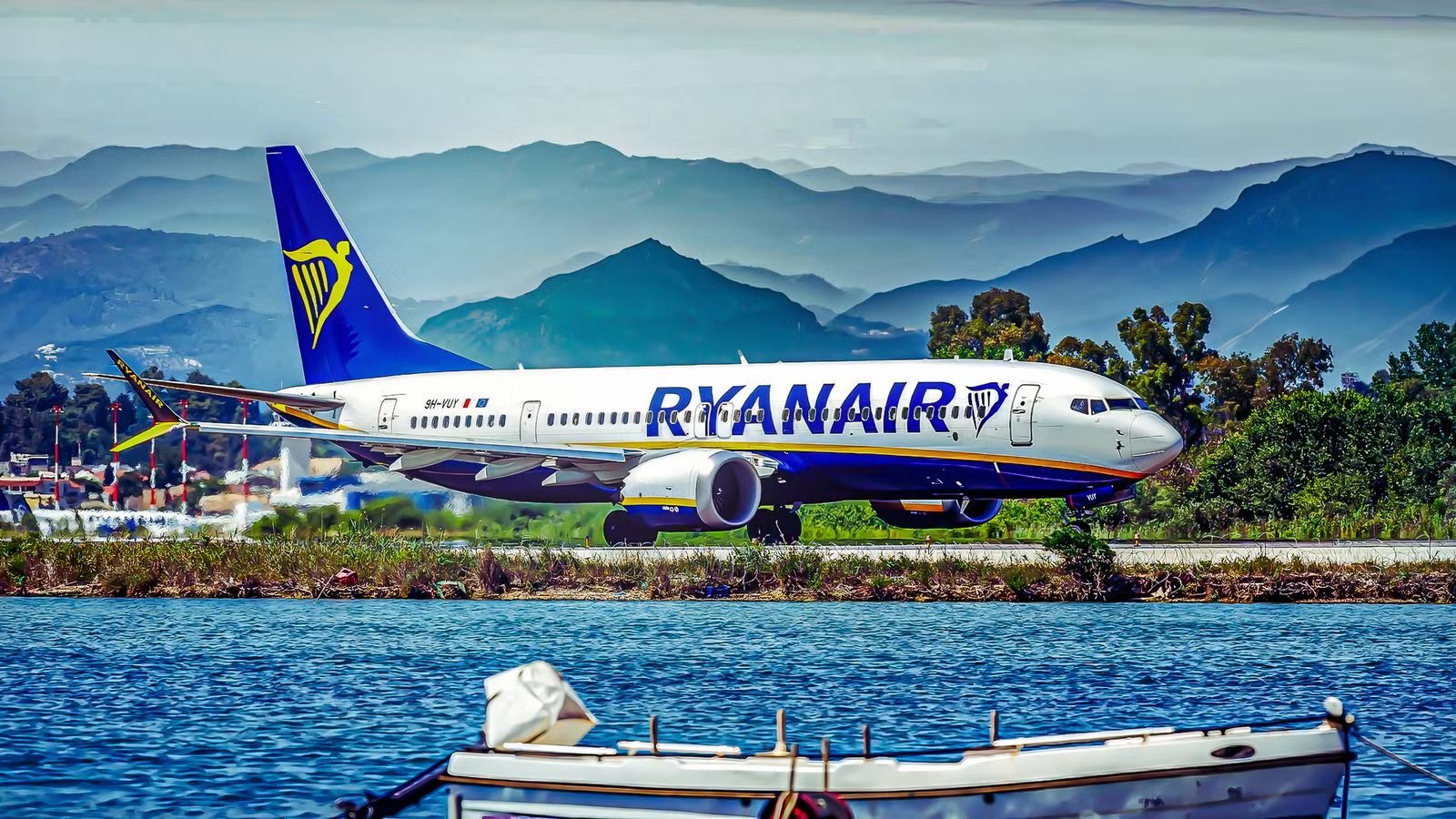
Ultra Low-Cost Carrier ( ULCC) Ryanair has been making some significant adjustments to its route network in recent years, with a plethora of further changes in 2026 alone. Founded in 1984, the Dublin-based carrier has adapted through nearly four decades of change in a dynamic global aviation landscape: Ryanair prevailed through the COVID-19 pandemic shock, the 2008 global financial crisis, and the 1990–1991 Gulf War recession. As with any ULCC, Ryanair’s management makes cost savings a top priority to maintain margins on its already low fares, regardless of market conditions.
According to Aerospace Global News, Ryanair has exited several markets in 2026, citing two main factors: rising airport costs and government fees. One of the first dominoes to fall was the closure of their Thessaloniki base in 2026, according to Ryanair. This base closure represented a broader trend of rising fees not only by Greek airport authorities, but also by other European countries.
Where Ryanair Has Exited In 2026

Ryanair’s route changes vary between a base closure, a full exit, a suspension, or general route cuts. At the time of writing, Ryanair has fully exited the following markets:
- Azores (Portugal) — all flights end March 29, 2026
- Asturias (Spain) — complete withdrawal
- Vigo (Spain) — no service from start of 2026
- Tenerife North (Spain) — no flights scheduled into 2026
- Jerez (Spain) — earlier withdrawal continues into 2026
- Valladolid (Spain) — earlier withdrawal continues into 2026
- Dortmund (Germany) — remains closed to Ryanair
- Dresden (Germany) — remains closed
- Leipzig/Halle (Germany) — remains closed
- Maastricht Aachen (Netherlands) — no return after Oct 2025
- Brive (France) — suspended, no return scheduled
- Strasbourg (France) — suspended, no return scheduled
- Aalborg (Denmark) — no service in 2026
- Billund (Denmark) — no service in 2026
- Lappeenranta (Finland) — no service in 2026
- Örebro (Sweden) — no service in 2026
- Araxos (Greece) — withdrawn, no 2026 service
- Poprad‑Tatry (Slovakia) — no service in 2026
- Tel Aviv (Israel) — suspended with no return date
While Tel Aviv’s suspension was due to airspace restrictions and safety concerns, many of these destinations are no longer served due to various fees and costs. Airport fees, air traffic control fees, Emissions Trading System (ETS) costs, and general travel taxes imposed by both the airport authority and the local governments are factors in several of the aforementioned destinations.
The Azores, a remote, volcanic archipelago of nine islands in the North Atlantic Ocean, is a key destination for which Ryanair has suspended all operations. Belonging to Portugal and located about 1,500 km west of Lisbon, the Azores not only serve as a key tourism hotspot for North American and European tourists alike, but are also home to Azores Airlinesmany existing routes from airports such as Ponta Delgada to mainland Europe and North America.
The Portuguese ANA

ANA, Aeroportos de Portugal, is an airport operator in Portugal and the governing authority for ten Portuguese airports, including Lisbon Airport and Ponta Delgada, according to the official website. The acronym ANA originally came from Aeroportos e Navegação Aérea in Portuguese, not to be confused with All Nippon Airways in the aviation world. Having full jurisdiction over Ponta Delgada’s airport, ANA and Ryanair have come head to head in the wake of Ryanair’s exit.
Today, ANA focuses solely on airport management and is part of the Vinci Airports group. However, ANA has been under scrutiny by Ryanair due to its monopolization, as well as rising costs at its airports. These disputes have intensified scrutiny of ANA’s pricing structure and its influence on regional air connectivity, particularly in markets where airlines have limited alternative airport options.
ANA often gets framed as a faceless monopoly in Ryanair’s narrative, but in practice it operates much like other major European airport authorities that balance commercial pressures with public‑interest obligations. As a concessionaire overseeing ten airports, including Lisbon and Ponta Delgada, ANA’s mandate resembles that of AENA in Spain or ADP in France: maintain infrastructure, regulate charges, ensure safety and capacity, and support national connectivity across both mainland and island regions.
Three Arguments Against ANA From Ryanair

Airport fees, air traffic control fees, Emissions Trading System (ETS) costs, and general travel taxes imposed by airport authorities and local governments collectively shape the overall cost structure of flying to many European destinations. As airlines must pay for the use of airport infrastructure, navigation services, and carbon‑emission allowances while also passing along government‑mandated passenger taxes, together, these charges influence ticket prices, route economics, and the financial performance of carriers operating within the region.
Ryanair has specifically cited air traffic control fees, colloquially known as navigation fees, as a main factor in the exit. These are payments airlines make to national or regional air navigation service providers for managing and guiding aircraft through controlled airspace. In Europe, these fees are often structured as route charges based on distance flown and aircraft weight. They fund essential services such as en‑route navigation, approach control, and communication systems, ensuring safe and efficient airspace management across multiple countries. A +120% navigation fee increase by ANA was cited by Ryanair as justification.
Ryanair has also highlighted that general travel fees have also contributed to the Azores suspension. These are government‑imposed levies, such as passenger departure taxes, tourism taxes, and environmental surcharges, applied by local governments or airport authorities. These taxes are added to the final ticket price and vary widely across destinations. They are often used to fund airport development, tourism infrastructure, or environmental programs, and they contribute to the overall cost of flying to or from certain regions. A €2 ($2.20) travel tax has been introduced by ANA for all airlines to comply with.
Tourism Per Seat Math

Ryanair’s decision to end all Azores operations on 29 March 2026 removes six routes and approximately 400,000 annual seats, creating a significant capacity loss that directly aligns with this guide’s focus on how airline network changes affect regional markets. Portuguese authorities dispute this explanation, stating that Azores airport fees are among the lowest in Europe and attributing the exit instead to the expiration of regional subsidies. The six routes affected by the cancellation are:
-
Ponta Delgada
– João Paulo II Airport (PDL) - Terceira – Lajes Airport (TER)
- Faial – Horta Airport (HOR)
- Pico Airport (PIX)
- São Jorge Airport (SJZ)
- Santa Maria Airport (SMA)
The projected economic impact is substantial. The Chamber of Commerce and Industry of Ponta Delgada (CCIPD) estimates an annual loss of up to €165.8 million, equal to 1.5% to 1.7% of the region’s expected 2026 GDP, according to Travel Tomorrow. Tourism models forecast a reduction of 339,000–391,000 overnight stays per year, affecting hotel occupancy, seasonal employment, and local service sectors. The withdrawal also represents a 22% reduction in Ryanair’s total capacity in Portugal, as reported by The Portugal News. This is a proportionally larger impact than similar cuts made in Spain, Germany, or France, where diversified markets can absorb capacity shifts more effectively.
Ryanair’s move fits a broader strategy of reallocating aircraft from higher‑cost regional airports to lower‑cost markets across Europe. However, the Azores case is notable because ANA reports that its regulated passenger charge of €8.14 has remained unchanged since 2024, contradicting Ryanair’s claims of sharply rising fees, per the Times of Madeira. With multiple sources confirming the withdrawal but offering conflicting explanations for its cause, the situation highlights a clear dispute between the airport operator and Europe’s largest low‑cost carrier. The resulting capacity loss is expected to have long‑term implications for tourism, regional development, and the stability of air service in the Azores.
Thessaloniki Deja-Vu

Ryanair’s exit from the Azores aligns with a broader pattern of capacity reallocation seen across its European network, including the recently announced closure of its three‑aircraft Thessaloniki base for Winter 2026. While the Azores’ withdrawal removes six routes and 400,000 annual seats, the Thessaloniki decision eliminates over 30 routes and reduces the airport’s winter traffic by more than 50%, according to Ryanair’s corporate release. In both cases, the airline framed the move as a response to rising operational costs, citing increased airport charges, higher air traffic control fees, and escalating environmental taxes. The Azores dispute centers on alleged fee inflation by ANA, whereas the Thessaloniki closure is tied to what Ryanair describes as “excessive Greek aviation taxes” and insufficient government support for low‑cost carriers.
Ryanair’s previous withdrawals from  Frankfurt Airport, Berlin, Bordeaux-Mérignac Airport, and Vienna International Airport all follow the same operational principle: when airport charges or local taxes rise, the airline rapidly shifts aircraft to lower‑cost markets. In Frankfurt and Berlin, fee increases at major hubs prompted Ryanair to cut or eliminate service entirely, redirecting capacity to cheaper secondary airports. Bordeaux and Vienna saw similar exits after cost structures became “uncompetitive,” reinforcing the pattern that rising airport expenses consistently triggered Ryanair’s departure from the market.
Looking ahead, both cases suggest Ryanair will continue consolidating operations around airports that maintain low fees, stable regulatory costs, and proactive support for high‑volume, low‑fare traffic. The airline’s cost‑per‑passenger model leaves little tolerance for fee increases, making island and regional airports, where operational costs are structurally higher. For the Azores, the long‑term challenge will be replacing lost low‑cost connectivity in a market where legacy carriers operate at higher fare levels. For Thessaloniki, the winter base closure may be temporary, but it reinforces Ryanair’s broader message: airports and governments that do not maintain competitive cost structures risk losing substantial seasonal traffic.
Catch what other trackers miss
Emergency squawks, holds, NOTAMs — live signals, no signup.
Open tracker
Catch what other trackers miss
Emergency squawks, holds, NOTAMs — live signals, no signup.
Open tracker