dailynewsnblog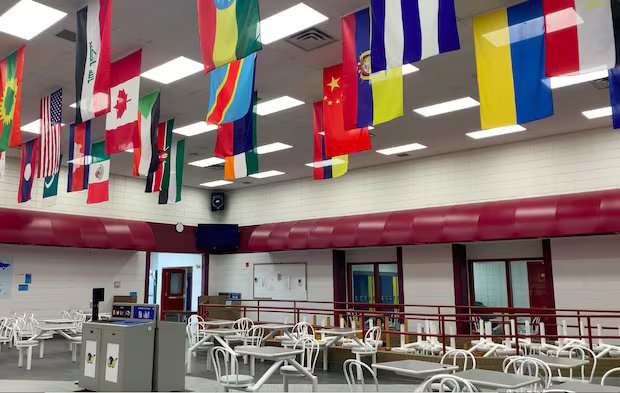

Listen to this article
Estimated 5 minutes
The audio version of this article is generated by AI-based technology. Mispronunciations can occur. We are working with our partners to continually review and improve the results.
Alberta’s government will delay incoming new rules about which flags schools can fly or display, as well as a requirement to play the Canadian national anthem weekly at schools across the province, a spokesperson says.
A press secretary for Education and Childcare Minister Demetrios Nicolaides said in an email on Wednesday that the provincial government is also postponing a change that would empower Nicolaides to name or rename public schools. That power currently rests with school trustees.
Nicolaides was not made available for an interview on Thursday.
However, a statement issued by the ministry Thursday night said the government “remains committed to implementing the legislative and regulatory changes under An Act to Remove Politics and Ideology from Classrooms and Amend the Education Act, 2026.”
“We are taking a thoughtful and measured approach to implementation to ensure these changes are introduced effectively and that education partners have the support they need to successfully transition to the new requirements,” the statement reads. “We will continue to engage with stakeholders, communicate updated timelines and provide the resources and guidance necessary to support implementation.”
Alberta Teachers’ Association president Jason Schilling says he hopes the government takes additional time to broadly consult the public and that it will choose to take a more inclusive approach to displaying flags.
He said teachers are concerned about the implications of an incoming law that permits only Canadian and Alberta flags on school grounds.
“The biggest question was around the Pride flag, the Métis flag, the francophone flags,” Schilling said. “Can we still have these in our classrooms?”
The changes were to take effect on Sept. 1 to coincide with the start of a new school year. They’re part of an omnibus education bill the legislature approved in the spring.
The bill follows a demand from the ruling United Conservative Party’s grassroots members to outlaw flags other than Canadian and Alberta flags at public buildings.
Nicolaides has said the province — where francophones have a constitutional right to education in French — will also allow schools to fly the Franco-Albertan flag.
The legislation includes numerous other changes, which an email sent to educational groups on Wednesday said will take effect Sept. 1. The changes include introducing a new student code of conduct disallowing violence in schools, giving the minister the power to approve superintendents’ contracts, allowing the minister to set school boards’ priorities, moving provincial exams to digital formats, requiring lessons to include a variety of perspectives and allowing the province to reassign unused school properties, among others.
Some current and former school trustees have said they believe the legislation will erode the already limited powers of school boards, and that it appears to be a step toward eliminating the local bodies.
Nicolaides has said he has no plan to disband Alberta school boards, as some other provinces have done.
Critics say flags symbols of belonging and welcome
Should the government put time limits on when schools can display flags such as those belonging to First Nations, Métis settlements, the Metis Settlements General Council or francophone communities, people belonging to those communities are going to see that as a problem, said Amanda Chapman, the Alberta NDP’s education critic.
“It’s not simply about recognizing particular days,” she said. “It is about creating a welcome, safe and caring classroom for students, where they feel that they are included and they belong.”
Several schools in Chapman’s riding of Calgary-Beddington hang flags from the countries where newcomer students have moved from to increase their sense of belonging, she said.
“A flag is one of those small pieces … that can help kids identify, connect, learn more about their fellow students, and just create a space to celebrate the diversity that is a reality in Alberta’s classrooms today,” she said.
Chapman said parents, students and educators are raising concerns about adequate staffing in classrooms, overcrowded schools, a lack of specialized workers to help students with additional needs, and the long wait for new school construction in the Edmonton and Calgary areas. She said constituents aren’t approaching her with concerns about flags or political symbols in classrooms.

Schilling said teachers are concerned about whether promised new staff and complexity teams will be hired and ready to work in schools this fall, and about a controversial new school curriculum that will now be tested in some subjects at the junior high level.
He said he doesn’t understand the point of a bill requiring teachers to present diverse viewpoints on divisive issues when the education ministry already publishes a guide on how to handle controversial topics in class.
The Public School Boards’ Association of Alberta and College of Alberta School Superintendents declined to comment on the matter. CBC News has also contacted the federation of francophone school boards for its perspective.