dailynewsnblog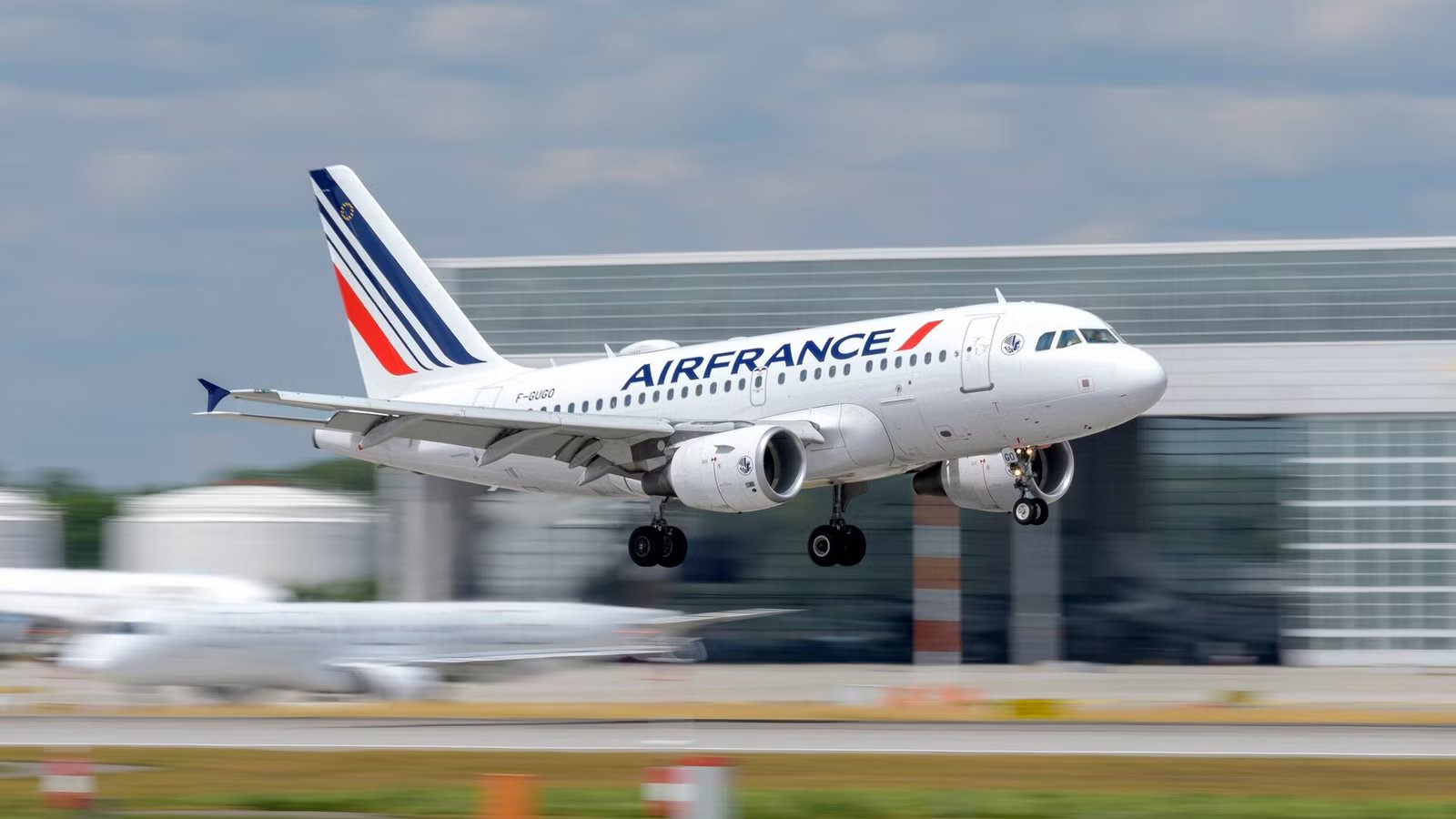
 Air France has given the Airbus A318 one final reprieve, extending scheduled operations until November 8. The French flag carrier has just four examples remaining, and AeroRoutes shows the type scheduled on more than 20 routes from
  Paris Charles De Gaulle Airport (CDG) during its additional two weeks. But unless the schedule is extended again, November will mark the end of scheduled passenger operations for the A318.
That would represent an unusual milestone for Airbus. Despite only entering service in 2003, the A318 will become the first Airbus model line to disappear from scheduled passenger service. The much older A300 and A310 remain in passenger operations in Iran, while a limited number of A340s continue flying with carriers like  Lufthansa. While a small number of government and corporate A318s will continue, just a few weeks remain for paying passengers to fly on the “Baby Bus.”
Just Four Airbus A318s Remain

Air France’s remaining fleet consists of F-GUGM, F-GUGN, F-GUGO and F-GUGP, all delivered during 2006, and therefore 20 years old at the time of their scheduled retirement. Air France has operated the type for considerably longer: its first A318, F-GUGA, was delivered in October 2003, making the French carrier the first European operator of the model. The airline ultimately had 18 examples — more than one-fifth of the 80 A318s Airbus delivered — and is now the world’s only airline still flying the type in scheduled passenger service.
Registration | MSN | Delivered | Age (Years) | Seats |
|---|---|---|---|---|
F-GUGM | 2750 | April 2006 | 20.4 | 131 |
F-GUGN | 2918 | October 2006 | 19.8 | 131 |
F-GUGO | 2951 | November 2006 | 19.7 | 131 |
F-GUGP | 2967 | December 2006 | 19.7 | 131 |
The four survivors have not been reduced to ceremonial or enthusiast-oriented flying. Some 23 routes will receive A318 service between now and November 8, giving enthusiasts a range of options for one last flight on the Baby Bus. These range from short domestic sectors such as Paris-Lyon and Paris-Nantes, to European destinations including Lisbon, Copenhagen, Venice and Zagreb. While Air France has not yet officially confirmed the final retirement of the type, it has been gradually withdrawing it from service over the past few years, and November 8 is now the last A318 date filed in the airline’s schedule.
Their retirement is no surprise, and the replacement explains why the end is inevitable. Air France ordered 60 A220-300s to progressively replace its A318 and Airbus A319 fleets, with the first arriving in September 2021. Its A220 accommodates 148 passengers against 131 on the A318, while Air France says it consumes 20% less fuel, produces 20% less CO2, and has a 34% smaller noise footprint than the aircraft it replaces.
“Overall, the A220 provides a cost reduction per seat of 10% compared to the Airbus A318 and A319.”
Why Did Airbus Build Just 80?

The A318 entered airline service with Frontier Airlines in July 2003 as the smallest member of the A320 family. The selling point was that it could operate thinner routes, while offering airlines commonality and a shared type rating with the A319, A320 and A321 aircraft already in their fleets. But its small size created a fundamental economic problem: it retained much of the weight, crew requirements and complexity of a larger mainline narrowbody while spreading those costs across fewer passengers.
The program was also hit by problems largely outside Airbus’ control. Demand for aircraft weakened sharply after September 11, while the original Pratt & Whitney PW6000 engines failed to meet their specific fuel-consumption targets, prompting customers including Frontier to switch engines, and others to reconsider A318 plans. One particularly painful loss came when  American Airlines acquired TWA and canceled the latter’s planned order for 50 A318s.
Airline | A318s Operated | First Delivery | Final Operation | Replacement |
|---|---|---|---|---|
Frontier Airlines | 11 | 2003 | 2013 | A319/A320 family |
Air France | 18 | 2003 | 2026 | A220-300 |
Mexicana | 10 | 2004 | 2010 | Airline ceased operations |
TAROM | 4 | 2006 | 2024 | Larger Boeing narrowbodies |
LAN Airlines | 15 | 2007 | 2013 | A319 |
British Airways | 2 | 2009 | 2020 | LCY–JFK service discontinued |
Avianca | 10 | 2011 | 2019 | Larger A320-family aircraft |
Avianca Brasil | 15 | 2011 | 2019 | Airline ceased operations |
Titan Airways | 1 | 2017 | 2021 | No direct replacement |
As time went on, airlines repeatedly migrated toward larger aircraft instead. LAN replaced its A318s with A319s, Frontier ultimately concentrated on larger A320-family jets, and Avianca simplified around other A320-family aircraft. British Airways eliminated the unique mission for which it used the A318, while Mexicana and Avianca Brasil disappeared altogether. Air France, by virtue of holding on to its A318s for so long, is the only airline to have a clear next-generation successor in the Airbus A220-300, an aircraft purpose-built for the lower end of the mainline single-aisle market.
The result is that Airbus delivered just 80 A318s before A318 production ended in 2013, a tiny total within the over 20,000 A320-family aircraft that the manufacturer has sold. The A318 is therefore an evolutionary dead end: the smallest member of Airbus’ most successful aircraft family will also become the first Airbus jetliner model to disappear from scheduled passenger service.
LCY-JFK: The Most Iconic A318 Service

There is no A318 operation that became more famous than the  British Airways route from London City Airport (LCY) to
  New York JFK Airport (JFK). Launched in 2009, the service was promoted as connecting the heart of London’s financial district with the United States’ financial capital, allowing bankers and stockbrokers to avoid the long trek between the City and
  London Heathrow Airport (LHR)
British Airways configured two A318s with only 32 lie-flat Club World seats, and assigned them the prestigious BA001-BA004 flight numbers that had previously been associated with Concorde. Westbound flights stopped at Shannon Airport (SNN), where the aircraft refueled and passengers could clear US immigration before continuing to JFK; eastbound flights operated nonstop to London City.
That service was possible because the A318 possessed another unusual capability. Airbus developed a steep-approach mode allowing specially equipped aircraft to descend at up to 5.5 degrees, compared with roughly three degrees at most airports, enabling operation at London City’s short runway and constrained Docklands location. British Airways crews trained specifically for the 5.5-degree approach before the service began, with Airbus also modifying the aircraft’s flight controls to provide the extra drag required.
Sadly, the transatlantic A318 service ended during the pandemic and never returned, and most recently, TAROM became the second-last A318 operator when it retired its final examples in 2024. This left Air France, the A318’s largest airline operator, to carry the type into its final chapter. Sadly for an aircraft that lacked sales success but won the hearts and minds of so many aviation enthusiasts, that chapter just has a few weeks left to run.