dailynewsnblog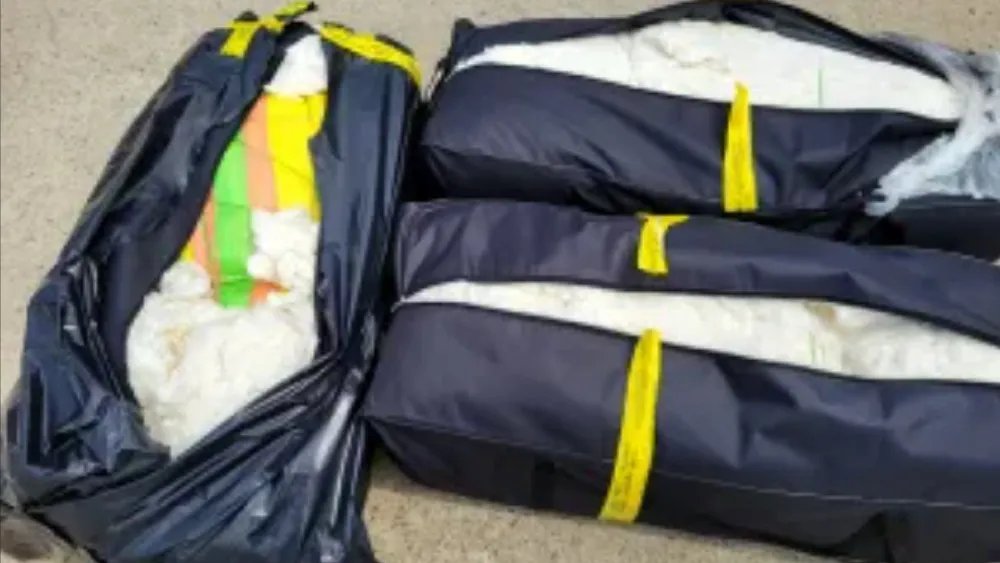
A strange scene unfolded at Dulles International Airport in northern Virginia on Thursday when Customs and Border Protection agriculture specialists seized around 440 pounds of unprocessed cotton from passenger baggage arriving in the country from Afghanistan.
After referring the family that transported the luggage for a secondary examination, CBP officers were told that the cotton had been bought at a store and brought to the United States with the goal of fabricating bedding products for their own personal use.
The illicit cotton, which was stuffed into three large duffel bags, still contained seeds—a big no-no for CBP. Both cotton fibers and seeds are strictly prohibited without a permit from the U.S. Department of Agriculture, as well as phytosanitary certificate denoting details about the plants.
Raw cotton must also be fumigated, CBP said in a statement, as it could serve as a vector for invasive and harmful insects like the cotton seed bug or the pink bollworm, which, if turned loose, could harm American crops and cause problems for farmers and the domestic textile industry.
The family was released from CBP custody, but their cotton cargo was confiscated.
“It’s important for travelers to know that something that they consider traditional and innocuous may be inadmissible because it could pose a serious threat to our nation’s agriculture and textile industries,” CBP area port director for Washington, D.C., Christine Waugh, said in a statement.
“Customs and Border Protection agriculture specialists have a very important role and that is to educate travelers about these potential threats while they also protect our nation’s vital agricultural resources, and by extension, our nation’s economic security,” she added.
Customs agriculture specialists guard against the introduction of harmful or invasive exotic species—whether they be animals or plants. Bringing them into the country could introduce new diseases or disrupt the U.S. ecology. Tens of thousands of inspections are conducted daily, and on a typical day in 2025, agents confiscated 4,691 prohibited plant, meat, animal byproducts, and soil, and intercepted 222 insect pests at U.S. ports of entry.