dailynewsnblog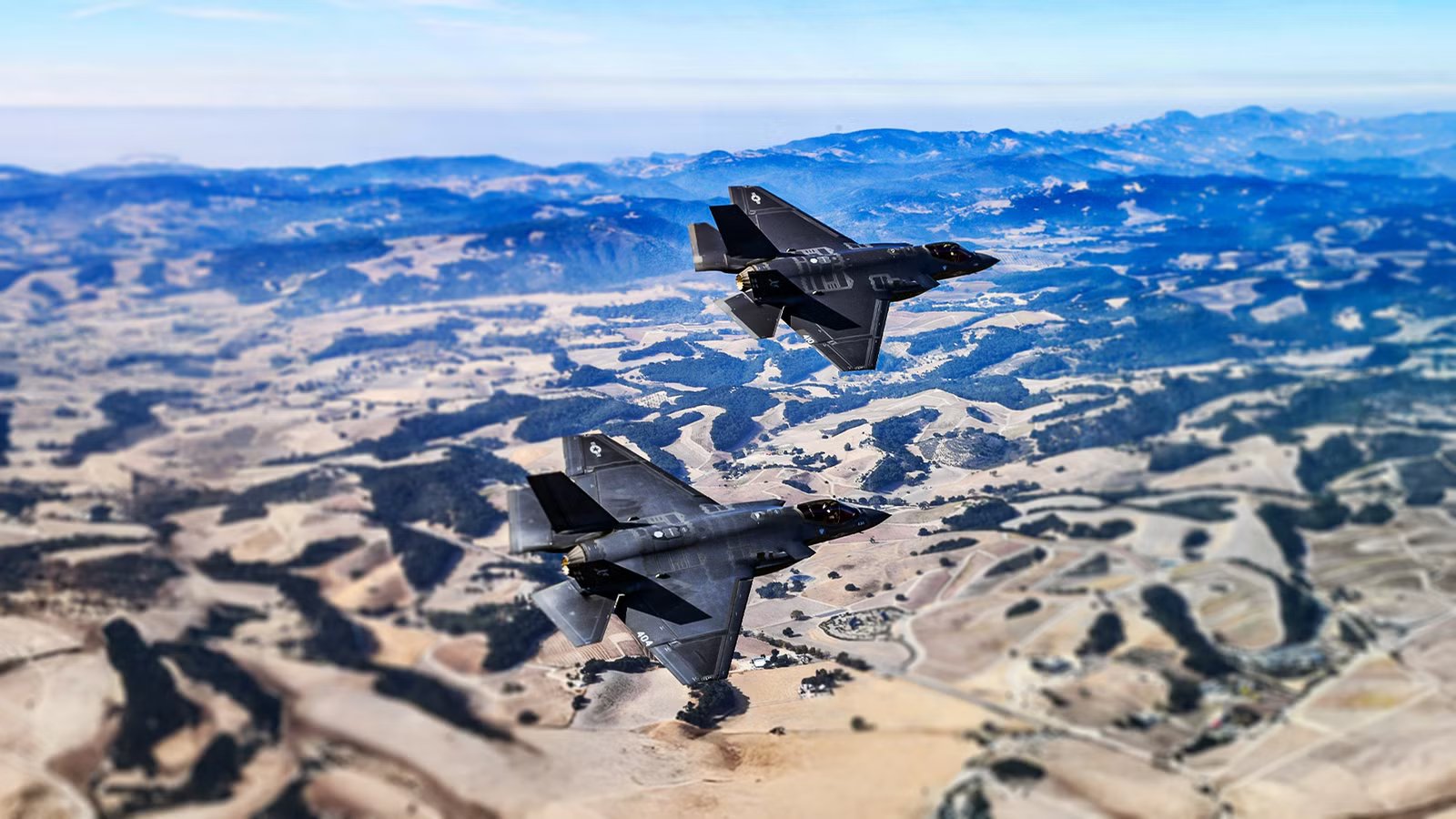
The US Navy operates a network of 16 naval air stations around the world, with three of those being dedicated Master Jet Bases. These bases serve a fleet of over 250,000 aircraft, with almost 1,000 of them being tactical combat platforms. The  Boeing F/A-18E/F Super Hornet remains the backbone of the Carrier Air Wing as the primary Strike Fighter for the US Navy. At the same time, the Lockheed Martin F-35C Lightning II has become the tip of the spear as the first carrier-capable stealth fighter.
Aside from the famous Top Gun school at NAS Fallon in Nevada, each of these hubs for the Navy’s ‘Tailhook’ aviation community has vital roles in sustaining the combat readiness levels of carrier strike groups that are constantly at sea. They range far and wide across the planet from the Cradle of Naval Aviation at NAS Pensacola, to NAS Atsugi in Japan, or NAS Sigonella in Italy.
More than 80 squadrons are divided between the nine wings, or CVWs, which constantly train to deploy aboard the 11 super carriers currently in service. The Navy flies many types of aircraft, from Sikorsky helicopters to Boeing Maritime Patrol planes, but the list below is dedicated to the Strike Fighters that support the core CVW mission of projecting power from the sea to the shore.
NAS Lemoore
The Navy’s largest arsenal of strike fighters

Far from the coast, in California’s Central Valley, NAS Lemoore serves as the central hub for the Navy’s West Coast strike fighters. NAS Lemoore provides the shore infrastructure for 16 squadrons and four of the Navy’s wings: CVW-2, CVW-9, CVW-11, and CVW-17. It hosts Commander, Strike Fighter Wing Pacific to maintain, train, and deploy the strike fighter squadrons that make up the backbone of the Pacific Fleet’s carrier air wings.
Lemoore’s unique dual parallel runways are 13,500 feet (4,115 meters) long, some of the longest in the NAS network. It sits underneath a specialized Military Operations Area which allows pilots to fly supersonic immediately after takeoff. Lemoore’s location gives its pilots immediate access to extensive overland military training routes and close proximity to the advanced testing ranges at NAWS China Lake and NAS Fallon.
The base is also home to VFA-125, the Fleet Replacement Squadron responsible for training all Navy and Marine Corps pilots transitioning to the fifth-generation F-35C Lightning II. The base logs roughly 210,000 flight operations every year. Of the roughly 270 tactical combat jets permanently stationed on the base, approximately 70 are F-35s while 200 are single-seat F/A-18E or two-seat F/A-18F Super Hornets.
NAS Oceana
Master jet base of the East Coast

Located in Virginia Beach, Virginia, NAS Oceana serves as the Atlantic counterpart to NAS Lemoore. Oceana hosts Commander, Strike Fighter Wing Atlantic and manages 15 operational squadrons exclusively composed of Super Hornets. There are 15 squadrons among four air wings that call Oceana home: CVW-1, CVW-3, CVW-7, and CVW-8. The base can host over 300 fighter jets at any given time and is also home to an FRS, VFA-106.
Oceana sits just 15 miles (24 km) away from Naval Station Norfolk, which is the largest naval base in the world. This makes the coordination between the Navy’s different commands very efficient, especially as Norfolk hosts the highest number of aircraft carriers of any port in the USN. On the other hand, Oceana is entirely surrounded by the booming resort city of Virginia Beach. Decades of suburban growth have built neighborhoods directly adjacent to the base, which have incurred more restrictions on flight operations.
The sky above the Mid-Atlantic is a dense highway of commercial air traffic and other aircraft from nearby Langley Air Force Base. Still, the base conducts over 200,000 sorties a year, 24 hours per day, 365 days a year. In achieving high readiness levels, Oceana relies heavily on Naval Auxiliary Landing Field Fentress, a nearby secure runway dedicated entirely to practicing Carrier Vessel Landing Practice.
The Top Gun School At NAS Fallon
The Top Gun experience minus maverick

The source of inspiration for Hollywood’s loosely based fighter jet movies starring Tom Cruise, Top Gun, is officially known as the Naval Aviation Warfighting Development Center. Hosted at NAS Fallon, it is not an entry-level flight school, but rather a grueling graduate-level masterclass for the fleet’s top pilots and weapon systems officers. NAWDC is famous for hosting pre-deployment Air Wing training exercises on over 230,000 acres of secure bombing ranges and expansive air training corridors in the Nevada desert.
The base provides advanced Strike Fighter adversary training and other tactical training for virtually every community of aviators in the Navy and Marines. TOPGUN instructors fly a dedicated pool of specialized adversary aircraft. This includes Lockheed F-16 Vipers, upgraded Northrop F-5N/F Tiger IIs, and Super Hornets painted in distinct camouflage patterns to mimic foreign threat aircraft.
Top Gun trains select aviators as Strike Fighter tactics instructors, or patch wearers, who are pulled from their active squadron and given a higher level of training than the other members. These pilots and Naval flight officers serve as an embedded source of NAWDC’s expertise. While historically focused on close-range dogfighting, today’s 9-week TOPGUN course heavily emphasizes Beyond Visual Range missile tactics and Electronic Attack countermeasures.
NAS Key West
Florida’s strike fighter school

Looking back to the East Coast, NAS Key West in the Florida Keys is a massive offshore training laboratory where active-duty fighter pilots from all over the country come to master advanced dogfighting and air combat tactics. The base sits immediately adjacent to a massive, secure military training airspace tracking over the Gulf of Mexico and the Atlantic Ocean.
As at NAS Fallon, Key West is an important base for ‘red air’ exercises, also known as dissimilar air combat training. With an average of 300+ days of clear flying weather per year, Key West suffers far fewer training flight cancellations than virtually any other site in the US Armed Forces. The offshore ranges are equipped with complex tracking instrumentation. Every maneuver, missile lock, and simulated dogfight kill is recorded digitally in real-time.
NAS Key West’s primary unit is a Naval reserve squadron. Fighter Squadron Composite 111 flies legacy Northrop F-5N/F Tiger II fighter jets painted in specialized camouflage patterns to serve as simulated aggressors. Throughout the year, active-duty Super Hornet and F-35C squadrons from Oceana and Lemoore rotate down to Key West for 2-to-4-week training detachments.
NAS Patuxent River
The headquarters of naval aviation

Commonly known as Pax River, NAS Patuxent River in Maryland does not host frontline, deployment-ready fighter wings or operational carrier squadrons. Instead, Pax River is the Navy’s premier site for Research, Development, Test, and Evaluation. It also hosts the massive headquarters for the Naval Air Systems Command, the Naval Air Warfare Center Aircraft Division, and the Naval Test Pilot School.
Every single aircraft, drone, missile system, flight helmet, and software patch used by Navy and Marine Corps aviators must be thoroughly tested, broken, refined, and legally certified at Pax River. The base commands over 5,000 square miles (12,949 sq km) of highly restricted military training airspace stretching over the Chesapeake Bay and the Atlantic Ocean.
As a research-driven installation, Pax River’s operational environment is vastly different from fleet bases like Lemoore or Oceana. Its primary mission is to provide indirect life cycle, technical, and logistical fleet support to ensure those deployed operational squadrons survive and win. The workforce of roughly 20,000 personnel is highly unique, with civilian scientists, engineers, and private contractors outnumbering active-duty military personnel by a wide margin.
If a test pilot discovers a software glitch in an F-35C Lightning II flight system over the Chesapeake Bay, they can land, walk into a briefing room, and sit down directly with the civilian computer engineers who wrote the code and the NAVAIR procurement officers who control the funding to fix it immediately. Simultaneously, testing classified, next-generation prototypes means Pax River must maintain some of the strictest information and physical security protocols in the entire Department of Defense.
NAS Whidbey Island
Growler Country in the Puget Sound

NAS Whidbey Island is the premier naval aviation installation in the Pacific Northwest. It lies in Oak Harbor, Washington, about two hours northwest of Seattle. Whidbey serves as the sole home to the entire Department of Defense airborne electronic attack fleet. It functions as a massive joint-service hub, supporting more than 50 tenant commands and roughly 9,000 active-duty personnel. Whidbey Island’s primary tactical mission is its monopoly over the USN’s EA-18G Growler fleet.
Unlike regular fighter squadrons that live with their air wings at Lemoore or Oceana, every single Carrier Air Wing in the Navy draws its Growler squadron from Whidbey Island. When an aircraft carrier prepares to deploy on either coast, a VAQ squadron flies out of Whidbey to meet it. While tactical jets dominate the skies, Whidbey Island is also the West Coast home port for the Navy’s maritime patrol force of Boeing P-8A Poseidon, based on the 737-800 jetliner.
Situated directly over the Puget Sound, Whidbey Island is laid out as a unique dual-field base. Ault Field is the main 4,000-acre tactical runway grid handling the Growlers and Poseidons, while the WWII Seaplane Base serves logistics and base ops. Additionally, because the US Air Force retired its own specialized jamming aircraft, Air Force electronic warfare officers train and integrate directly into Whidbey Island’s squadrons.
Chambers Field At Naval Station Norfolk
Where the Navy’s eye in the sky goes to roost

Unlike standalone installations like Lemoore or Oceana, Chambers Field is not an independent Naval Air Station. Originally commissioned as NAS Norfolk in 1918, it was formally disestablished as a standalone base in 1999 and fully integrated into the broader naval base infrastructure. Chambers Field does not house active-duty strike fighter squadrons. Instead, its single 8,370-foot (2,551 meters) runway, two heliports, and six helipads are dedicated to filling the critical support missions that crowd out all functional needs of an operational Carrier Air Wing.
It is the primary East Coast hub for the E-2D Advanced Hawkeye and hosts the Airborne Command & Control Wing. These seemingly obsolete turboprop radar planes were the most expensive airframe procured by the Navy until the F-35 arrived due to the incredibly powerful radar mounted on top of them in a spinning dome. The ‘Hummers,’ as they are called, act as the “eyes of the fleet,” flying from Chambers Field to provide aerial scanning and battle management for East Coast carrier strike groups.
The airfield hosts the logistics squadrons flying the C-2A Greyhound, and increasingly the CMV-22B Osprey. These aircraft act as the physical pipeline to the aircraft carriers, ferrying cargo, mail, and personnel out to ships deployed at sea. While there are many helo bases in the Navy, Norfolk is a major hub for Sikorsky CH-53E Sea Stallion, MH-60S Seahawk, and MH-60R Seahawk, which perform anti-submarine warfare, search and rescue, and vertical replenishment.