dailynewsnblog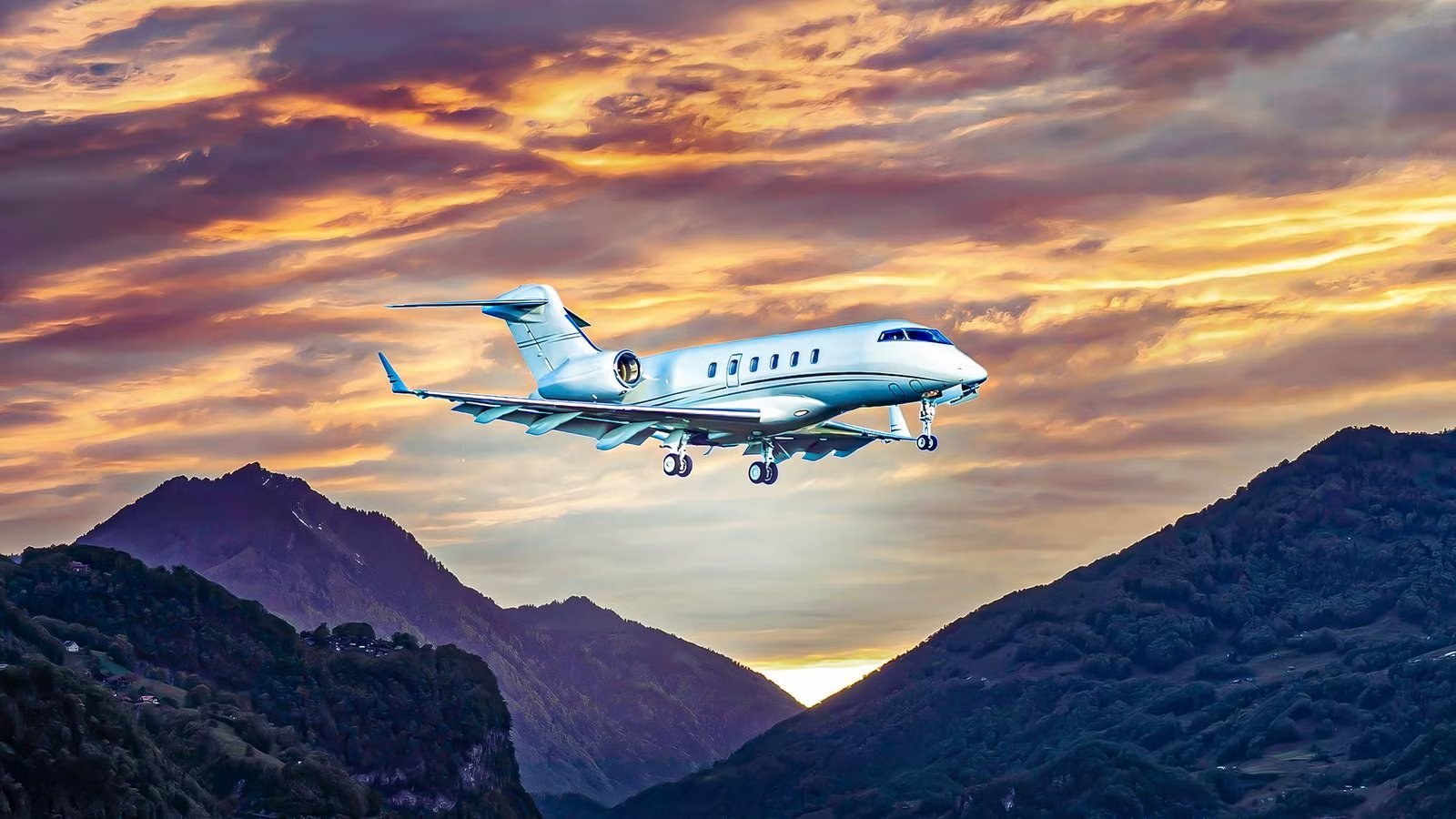
200 hours of flight time is the most commonly cited figure for when it makes more sense to purchase a private jet than charter one. However, the exact number of flight hours depends heavily on the cost of charter and the aircraft in question. To take the BombardierChallenger 300 as an example, charter rates are usually between $5,950 (low-end quote) and $9,525 (billable average) per hour, according to the Air Charter Journal. The latter is the figure that this article will use.
Meanwhile, a used Challenger 300 costs around $10.5 million for acquisition alone, according to Aircraft Cost Calculator. That suggests you would need to fly a chartered aircraft for 1,100 hours before it would make sense to buy one. However, things aren’t that simple, with the operating and maintenance costs for owning a jet also needing to be factored into the equation.
Challenger 300 Overview

The Challenger 300 is one of the aircraft that defined and set the standard for a super-midsize business jet. It was designed and developed by the Canadian Bombardier Aerospace and formally launched at the Paris Air Show in 1999. Its maiden flight came over 20 years ago. Back when Simple Flying’s Dr Omar Memon wrote his overview of this jet for Simple Flying in January 2004, the manufacturer had delivered close to 500 examples.
The table below shows specifications for the aircraft according to Global Air:
Wingspan | 63 feet, 10 inches (19.5 meters) |
|---|---|
Cabin length | 28 feet, 7 inches (8.7 meters) |
Baggage capacity | 106 cubic feet (3 cubic meters) |
Maximum takeoff weight | 38,850 lb (17,600 kg) |
Max payload | 3,350 lb (1,520 kg) |
Max range | 3,065 nautical miles (5,700 km) |
Max speed | 476 knots |
Powerplant | 2 x Honeywell Engines HTF7000 |
Latitude 33 Aviation writes: ““The Challenger 300 has a spacious stand-up cabin that can comfortably fit up to nine passengers in either a double-club or three-place divan configuration.” The cabin can also be furnished according to the customer’s preferences, which is only available for those who purchase the jet. For example, the lavatory flooring can be stone, marble, or wood, and the seats can be easily moved for additional comfort and flexibility.
Cost Of Chartering A Challenger 300

The cost of chartering an aircraft depends largely on the service provider, how the customer plans to use the jet, how modern the jet is, and whether the customer is prepared to be flexible. For mathematical purposes, this article uses Air Charter Journal’s middle-point cost for chartering a super-mid-size jet like the Challenger 300: $9,525 per hour. As expected, smaller aircraft are substantially cheaper to charter. Turboprops are the cheapest, averaging $4,610 per hour. Meanwhile, chartering heavy jets is staggeringly expensive. Customers at the pinnacle of heavy jet chartering could be forking out $20,000 per hour.
The table below uses Air Charter Journal data to show the costs that can usually be expected when hiring corporate aircraft across categories, with a low, average, and high price point:
Category | Low | Average | High |
|---|---|---|---|
Turbo Props | $2,612 | $4,610 | $6,024 |
Light Jets | $4,450 | $6,895 | $9,168 |
Mid Jets | $6,150 | $8,626 | $11,356 |
Super Mid Jets | $6,282 | $9,525 | $14,930 |
Heavy Jets | $8,231 | $12,991 | $19,519 |
Some chartering models bring customers closer to the benefits offered by owning a jet. For example, jet card programs give consumers guaranteed access to a private aircraft when they need it. But the absence of flexibility on the customer’s side leads to a significantly higher hourly rate. For a super-mid-sized aircraft like the Challenger 300, Private Jet Card Comparisons states that jet cards can cost around $11,230 an hour.
How Ownership Costs Compare

The cost of buying a used Challenger 300 business jet is around $10.5 million, but that hefty price point only tells part of the story of ownership. The first cost is the fixed annual cost, which owners must pay to cover crewing, hangar space, insurance and management. According to Private Jet For Sale, this cost is $793,115. That is broken down into crew salaries ($670,100), hangar space ($72,100), hull insurance ($15,915) and liability insurance ($35,000). Another fixed cost is maintenance, which will be $400,000 to $600,000 depending on the age and condition of the aircraft. Let’s put that at $500,000 for mathematical purposes. Finally, as with your car, a private jet’s value depreciates each year, with the first year of ownership being the most costly. For a $10.5 million Challenger 300, the depreciation rate is 4% per year, according to Craft Aviation: $420,000.
Private jet owners also have to worry about variable costs per flight hour. Private Jet For Sale puts this variable cost at $3,781.71 per hour. At $6.28 per gallon of aviation fuel, the cost for fueling is $1,853. Maintenance per hour is $1,360, while the engine program will be $569.
A $3,781.71 hourly operating cost means a $5,773.29 saving per hour over the expected $9,525 charter cost. That means a Challenger 300 owner would have to fly it for 86.6 hours to offset the $500,000 annual maintenance cost, 137.4 hours to offset the annual fixed cost, and 72.7 hours to offset depreciation. This total is 296.7 hours per year, with the figure decreasing each year slightly as depreciation becomes less significant.
It is important to note that this calculation assumes the jet has been purchased with cash upfront, rather than a loan having to be taken out. In this case, further flight hours would be needed to offset the interest charged on the loan. The exact figure would depend on the amount of money borrowed and the size of the deposit. The calculation also doesn’t include the less tangible benefits of private jet ownership, such as being able to access it with minimal notice.
Fractional Ownership Programs Act As A Middleground

With around 300 hours of annual flight time being needed for private jet ownership to make sense financially, only businesses and ultra-wealthy individuals that spend a huge amount of time in the skies can justify the cost. A better option for those wanting to fly less often could be fractional ownership.
Under this model, an individual or business buys a part share in a private jet in return for having access to it for a fixed number of hours per year. Simple Flying’s Luke Diaz writes that fractional ownership is ideal for those needing access to a private jet for between 50 and 300 hours per year. There is overlap here with those who benefit from private charters over full ownership. Fractional ownership offers a number of benefits for those in this flight hours bracket. The upfront cost is lower, and operating expenses are fixed and predictable. These costs can often be offset against a business’ profits when filing tax returns (depending on business structure and the jurisdiction it operates in). Fractional ownership customers also outsource responsibility for maintenance and staffing. They also don’t need to worry about ensuring that operations are in line with FAA regulations and responsibilities. Customers of fractional programs can also access many different types of jet, with the ability to choose the best one for their needs each flight. These aircraft can be accessed rapidly, usually with just four to ten hours of notice. Finally, these customers don’t need to worry about empty legs or repositioning, another cost that private jet owners have to deal with that is not factored into the 300-hour calculation.
Challenger 350: A More Advanced, And Expensive, Development

Following the success of the Challenger 300, Bombardier launched the Challenger 350. This version improved the jet’s range and introduced a modern interior and avionics. Customers can expect to pay more to charter or purchase the aircraft due to these advancements. Bombardier’s new aircraft made its first flight in March 2013, and it officially unveiled the Challenger 350 that May at the EBACE Air Show. It received type certification in Canada, Europe, and the United States by September 2014.
Simple Flying’s Alexander Mitchell writes that the Challenger 350 has 20% taller cabin windows, better Honeywell engines, and a strengthened wing with upgraded winglets. All this came at a cost of around $1 million extra on the purchase price compared with the Challenger 300. This could be offset by presumably lower operating costs, due to the jets’ enhanced efficiency. According to Aviation Week, the Challenger 350 entered service with NetJets. The firm put in a firm order for 75 jets, with another 125 options. By 2018, it was delivering 50 Challenger 350s per month, quickly achieving a 58% share of the super-mid-size business jet market. The 300th Challenger 350 was delivered in July 2019.
This jet has already been improved upon by the Challenger 3500 program, launched in September 2021. Improvements include an enlarged cabin, pushing the plane’s capacity to 10 passengers. At Mach 0.83, the Challenger 3500’s top speed is also higher than its predecessors. Finally, the range is also going to extend to 3,400 nautical miles (6,300 km). The longer flight will also be more efficient again due to significant aerodynamic improvements.